

Welcome to another week of our Castle Chronicle.
This week we explore some of the AI-related exposure you can get onchain through tokens like Venice and Pearl and why it might be a better opportunity to allocate than waiting for Anthropic and OpenAI IPO.
While we explore that, we also discuss:
The Airdrop positioning for Metric, a capital-efficient DEX launched in mid-October, categorising the platform’s activity by risk and effort.
In Q4, two perp tokens, Extended and Variational, are launching. It will be interesting to see whether they can follow Hyperliquid’s and Lighter’s trajectory and continue the perp narrative.
We also cover some of the carry trade opportunities around tokenised stocks available on Base and Robinhood Chain through the two largest lending protocols, Aave and Morpho.
Platforms like Toros enable closing your options positions before expiry (built on Derive infrastructure).
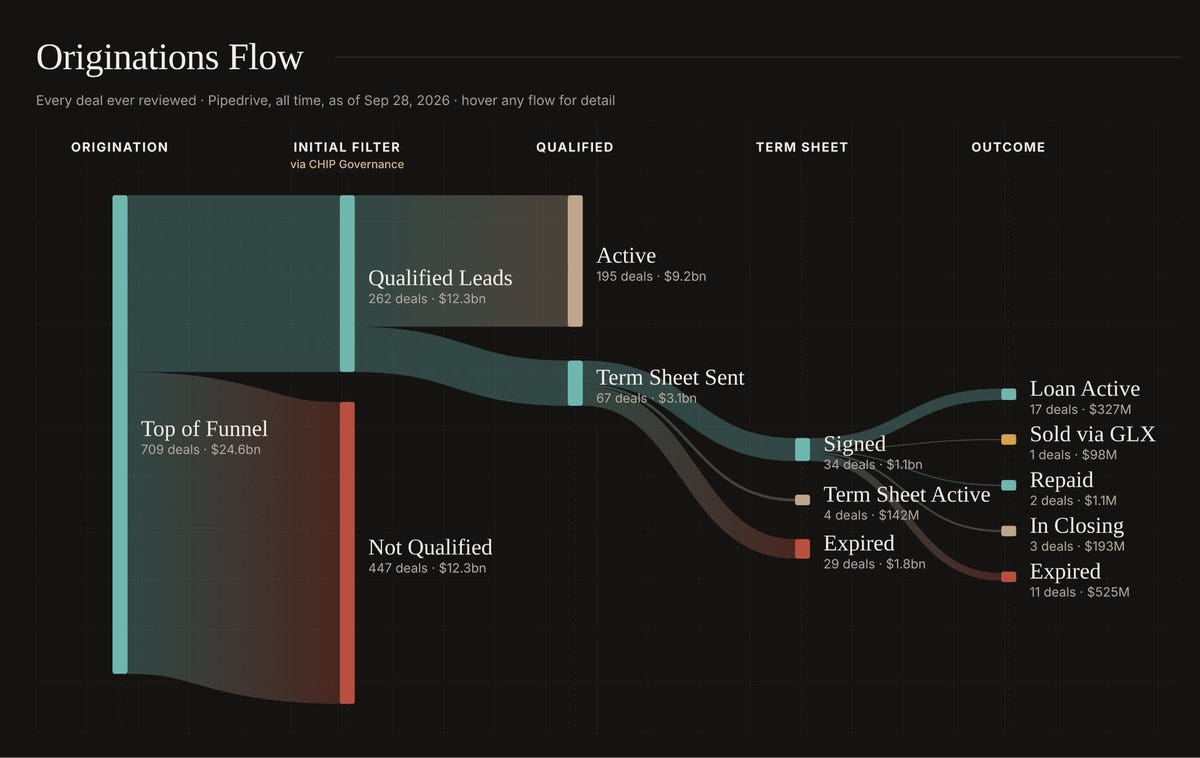
USDAi performed a $1 million burn of its governance token $CHIP and has over $9 billion in active deals.
And more.

AI Exposure onchain: $PRL and $VVV
From the time you wake up until you go to bed, I am sure you use AI in some form, whether for work or to help with cooking.
However, gaining exposure to this tech from a portfolio perspective has been difficult for a daily investor because these companies are private and already diluted, with companies like Anthropic expected to trade at ~$1.7 trillion.
With these companies, you are essentially betting on the tech everyone in the modern world will use, so a premium is expected. Additionally, revenue is only growing. Anthropic made $16.3 billion in H1 2026 according to its S-1 filing, which is ~$32 billion annually, 6x more than what it made in 2025.
It is also important to look beyond these huge companies and see the market more broadly, since any product that provides AI-related services competes in the same niche.
In this section, we explore some onchain products you can gain exposure to right now. It includes Venice and Pearl. There are other projects too, but today I am going to cover these two because I think they are the most interesting.
Venice provides private, uncensored model access for its users, as an alternative to Claude and ChatGPT.
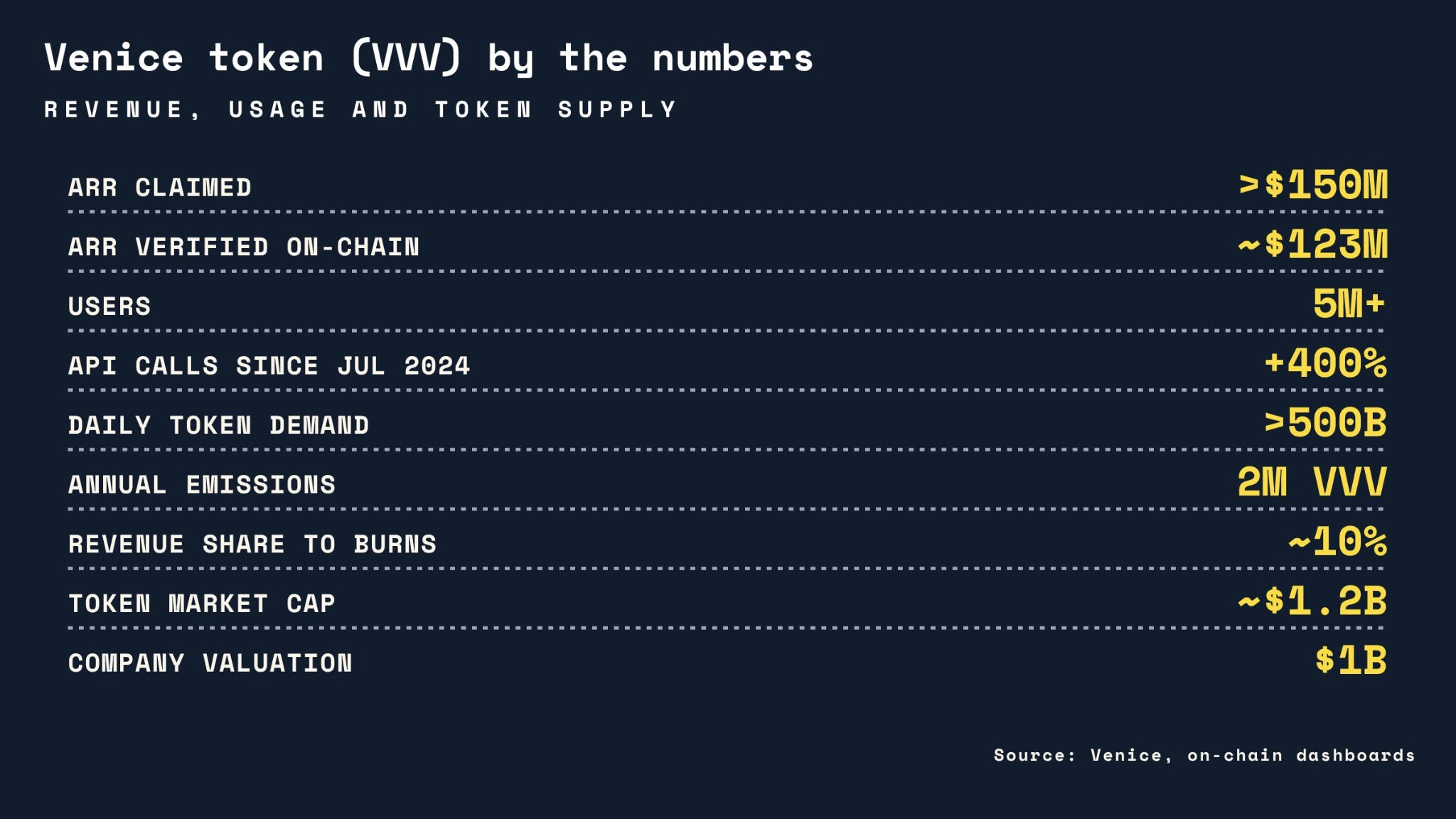
Its annualised revenue is $123 million, putting $VVV P/S at ~10, which is less premium than Anthropic. However, $VVV doesn’t capture all this value, and Venice equity is involved too, creating a disparity between tokenholders and equity holders and raising questions around who gets the most value when the project succeeds.
However, to ensure token alignment, Venice runs discretionary and automated buybacks for $VVV (part of the sale returns to the token). In the last 30 days, these burns totalled $1.02 million, or $12.19 million annualised, putting the revenue share for buybacks at 10%.
The team also reduced token emissions from 2.5 million a year to 2 million this month, reducing net-new sell pressure on the token. However, at current rates, the burns remove only 500k VVV tokens from the supply, leaving the token inflationary; but given the growth, we expect the revenue to increase from here, helping push the token to the deflationary path.


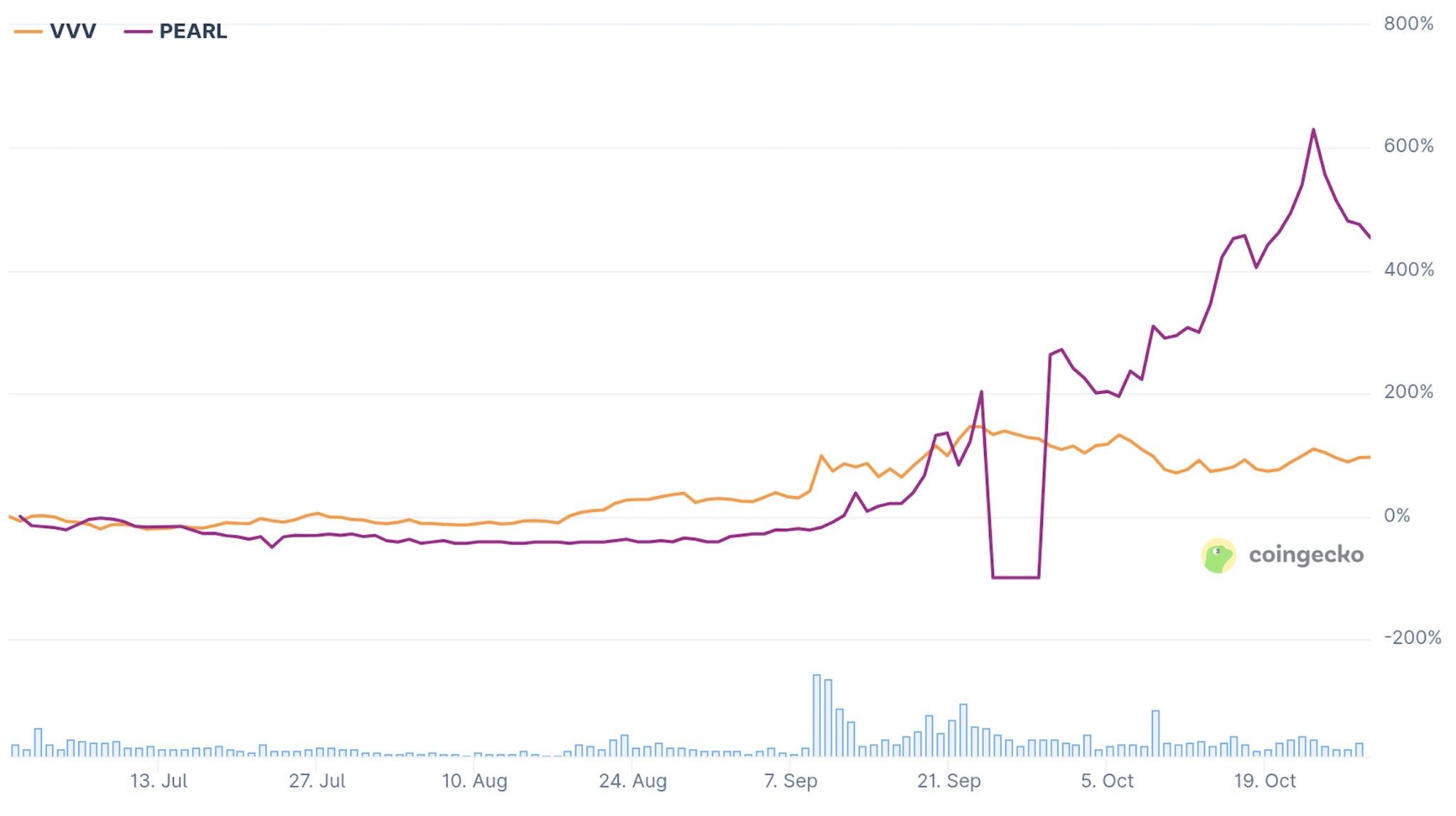
The second token is $PRL, and it has caught everyone’s attention because it meets AI’s compute demand.
On Pearl Network, miners perform matrix multiplication on their GPUs, the core operation behind every chatbot, “proof of useful work (PoUW)”.
It is also important to understand that, in the current network, most mining compute isn’t paid-inference revenue; only one partner, Together AI, uses it to fund discounts on its services.
While this is worrying, the scope of this tech is much larger than many expect, and if multiple customers start using inference and paying for it, it helps build miner revenue through burns, as users can be charged in $PRL.
Also, while we are talking about $PRL, its launch was fair, and anyone can mint the token by mining the network or buy it on exchanges.
If you don’t want direct exposure, you can farm funding rates of $PRL as well.
We also recommend reading this article from Sparsity if you are looking for more such projects in onchain AI: https://sparsitydata.com/research/ai-onchain
How to position yourself for the Metric Airdrop
This week we released an article on Metric.
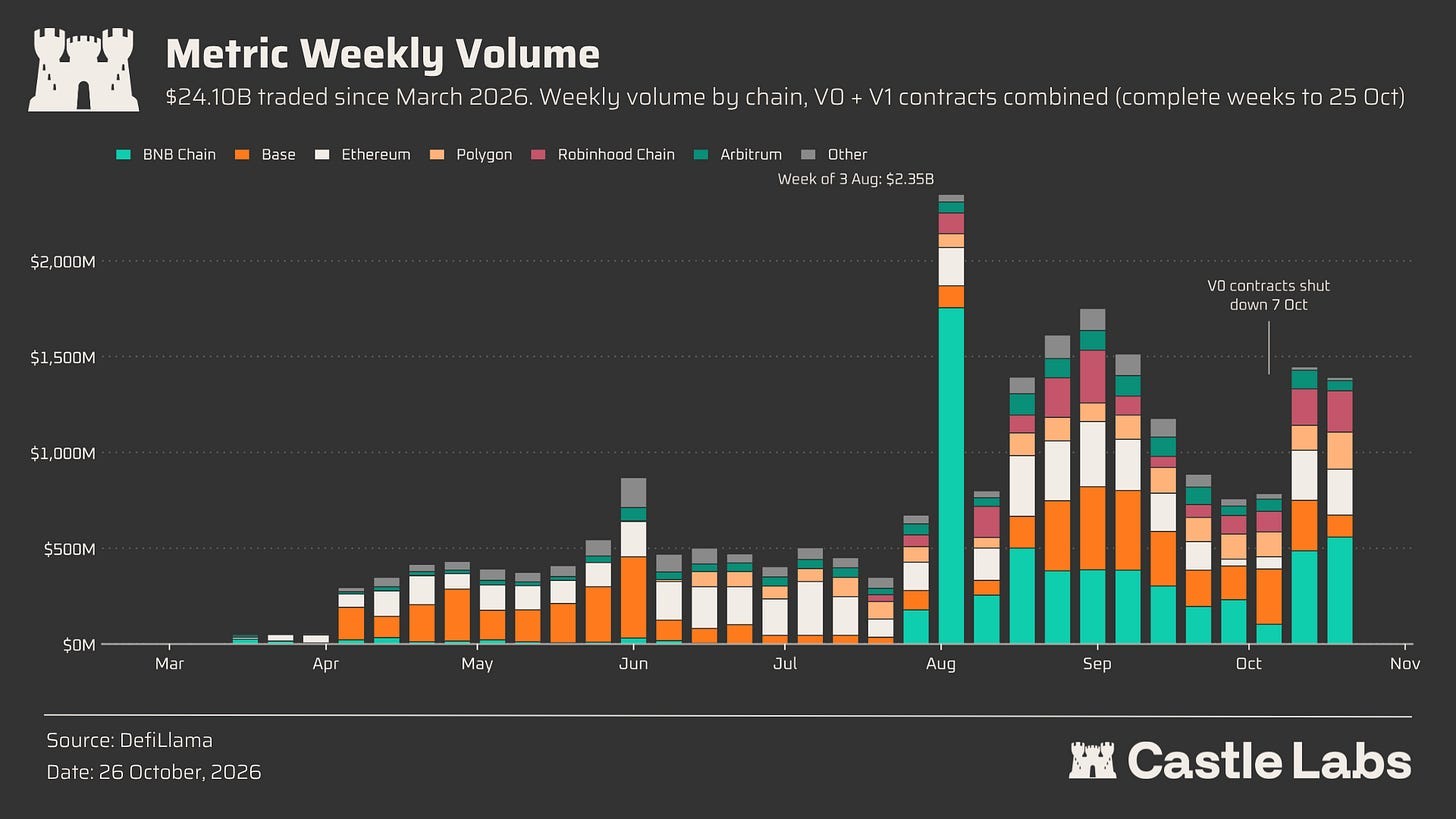
Here is a small guide on how you guys can use the platform to position for a potential future airdrop.
The key contributors to the Metric design include Curators/Market makers, LPs, and traders.
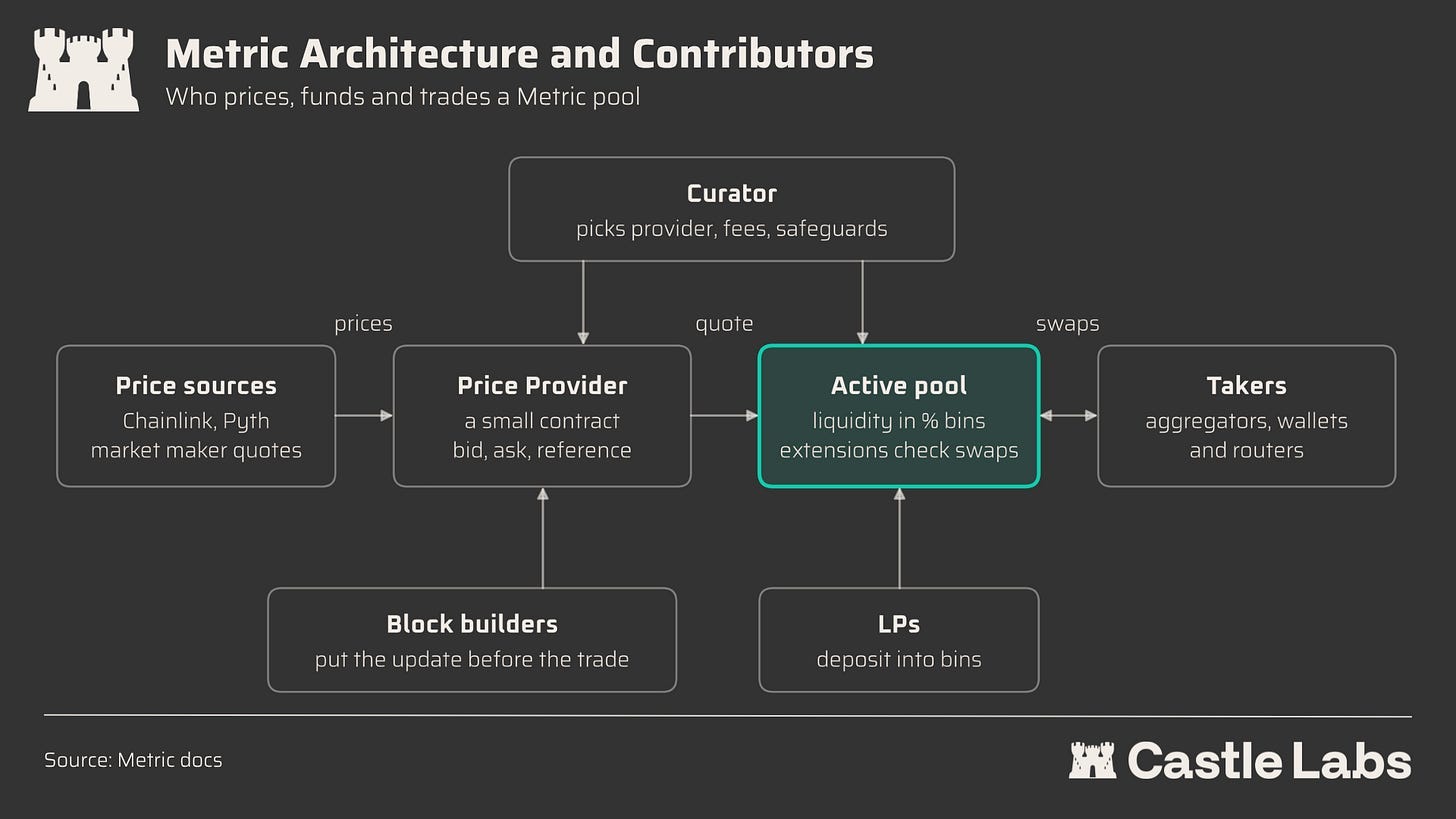
While it is not yet clear how each will be rewarded, we can get a rough idea based on each participant’s work and the value it provides to the platform’s growth.
The first one is curators.
1. Curators run the pool, and it can be profitable as they configure the pools and decide the spread split between LPs and themselves, but it will attract flows only if you perform KYB, since unverified curators attract only a fraction of flows, as our analysis above shows.
Additionally, it requires significant management, which is difficult for individual curators, and even with successful KYB, attracting genuine flows can take time.
If you are a normal onchain participant, LPing and trading on Metric is the best choice.
2. For LPs, it is as simple as providing liquidity on the platform, and you can start earning yield today.
You can provide liquidity in either one token or both tokens in the pool.
Currently, LPing in tokenised stock pools seems like the best choice, as they generally yield better; even if you end up holding one side of the pool, stocks are generally less volatile than crypto, so choosing a blue-chip stock and a green-tier pool that yields well is an efficient strategy.
3. It is hard to say whether traders have an advantage, since platform fees are zero, which can attract tons of volume targeted at farming the platform.
However, every fill spread goes to LPs, curators and the platform, so they create value, making it the lowest-risk option in the category and the cheapest to perform. For reference, generating $1 million in volume costs about $16 on stablecoin pools.
Given the platform’s newness, Metric can offer strong returns, with a potential airdrop while you keep doing daily onchain activities like LPing and trading.
If you are planning to use Metric, you can use our link: https://app.metric.xyz/r/castle
In the full article, we also cover the Metric architecture in detail and compare its performance on the real-time pools: https://castlelabs.io/research/metric-the-next-gen-dex
Will Perp Narrative Continue?
Q4 2026 could be the quarter when some of the most-awaited perp tokens finally launch.
Will this end the perp narrative, or confirm a trend that can continue?
In particular, two names are staying above the rest: Extended and Variational.
Extended has postponed its TGE once, with all the drama that came with it. Nonetheless, on October 23, they announced the $XTEN token, coming in November 2026.
They will announce more tokenomics details on October 31, 2026.
So far, we know that $XTEN will have a 1 billion genesis supply, with 30% allocated to eligible participants in the point program, which will receive it in their Arc wallet.
The second, and arguably the most awaited airdrop, is the one by Variational, also set fo happen in Q4 2026.
We don't have any details yet, and we think it will probably be later, around December.
Variational released the details of their $VAR token in a blog post at the end of September.
About 32% of the total supply is expected to be distributed with the genesis airdrop, 18% will be reserved for ecosystem incentives and development programs, and about 50% (a significant allocation) is reserved for teams and investors, with a 12-month lock after TGE.
All revenues will be directed to the Variational treasury, which will use them (not clear if all) to buy and burn $VAR tokens.
It will be interesting indeed to monitor how perp tokens perform after the first initial wave of big projects like Hyperliquid and Lighter.
Will there be continually decreasing returns?
Will Extended and Variational be cooks instead?
Something to keep in mind is that these TGEs can have broader implications for the perps sector as a whole and the future direction of upcoming TGEs:
Point campaigns will go on for both projects until TGE, so if you haven’t been active yet, there is still a last window of time to position yourself before the point program closes
Perps for XTEN are already on Hyperliquid, allowing anyone with exposure to hedge and play the airdrop more safely.
This second perp wave will become increasingly important in shaping the sector’s future. If Variational and Extended can confirm perps tokens that go up after TGE, that will reinforce new platforms with open point programs such as TxFlow, Entropy, QFEX, and more.
Tokenised Stocks in DeFi and how to earn beyond basic APY
There are multiple issuers tokenising public equities right now and pushing their DeFi use cases.
Two recent deployments which I find interesting are Coinbase Stocks deployment on Aave and Robinhood Stocks on Morpho.
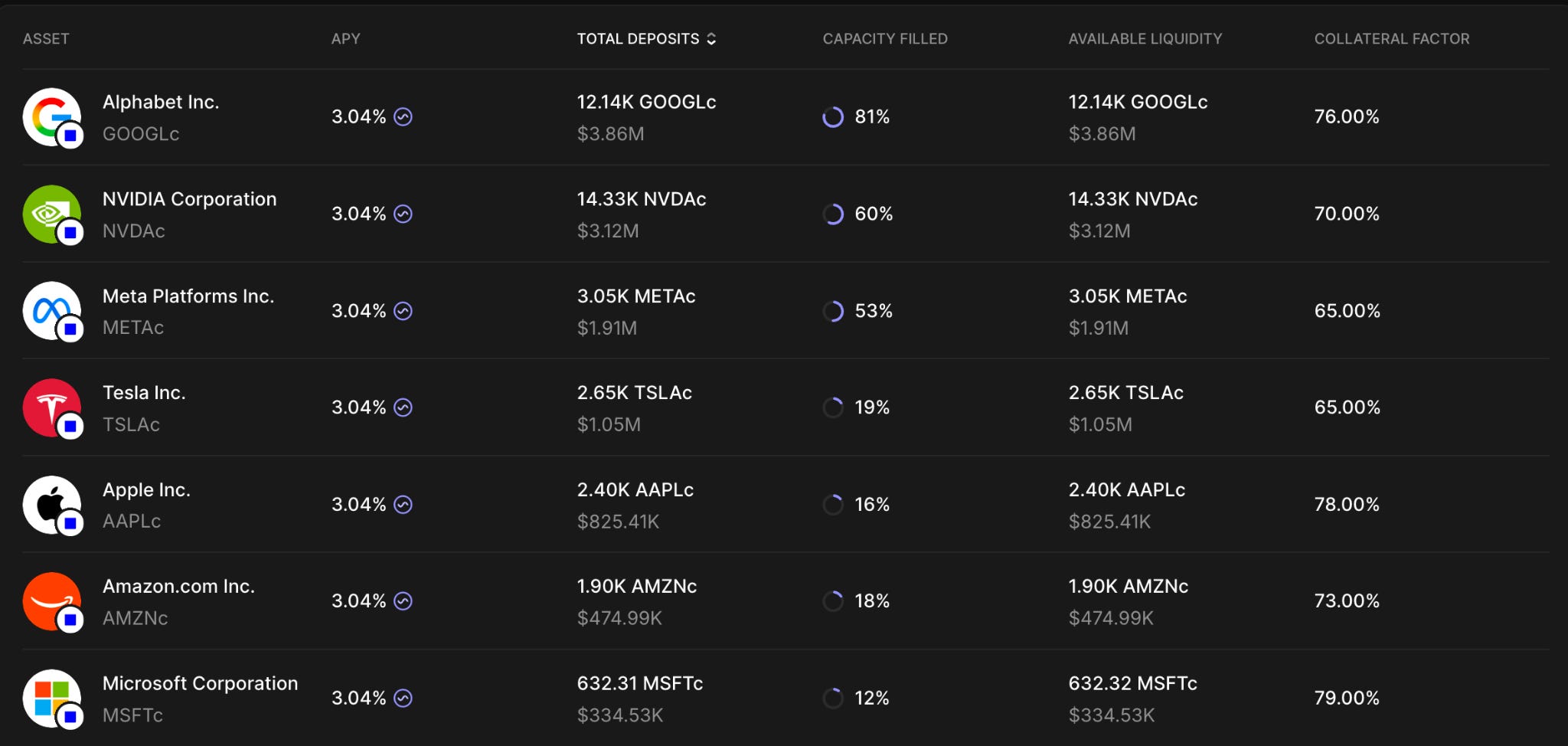
Coinbase Stocks hub on Aave has reached over $18 million in deposits with borrowed liquidity of $5 million.
On Aave, with ongoing incentives, you can earn 3% APY on your stocks, or you can deposit the stocks and borrow USDC at a rate of 2.06% and deploy it on other yield opportunities on base and keep the spread, all while you keep exposure to the stock you hold, which is called a carry trade. There are also products by Superform and Dialectic Vaults which automate this carry trade for you.
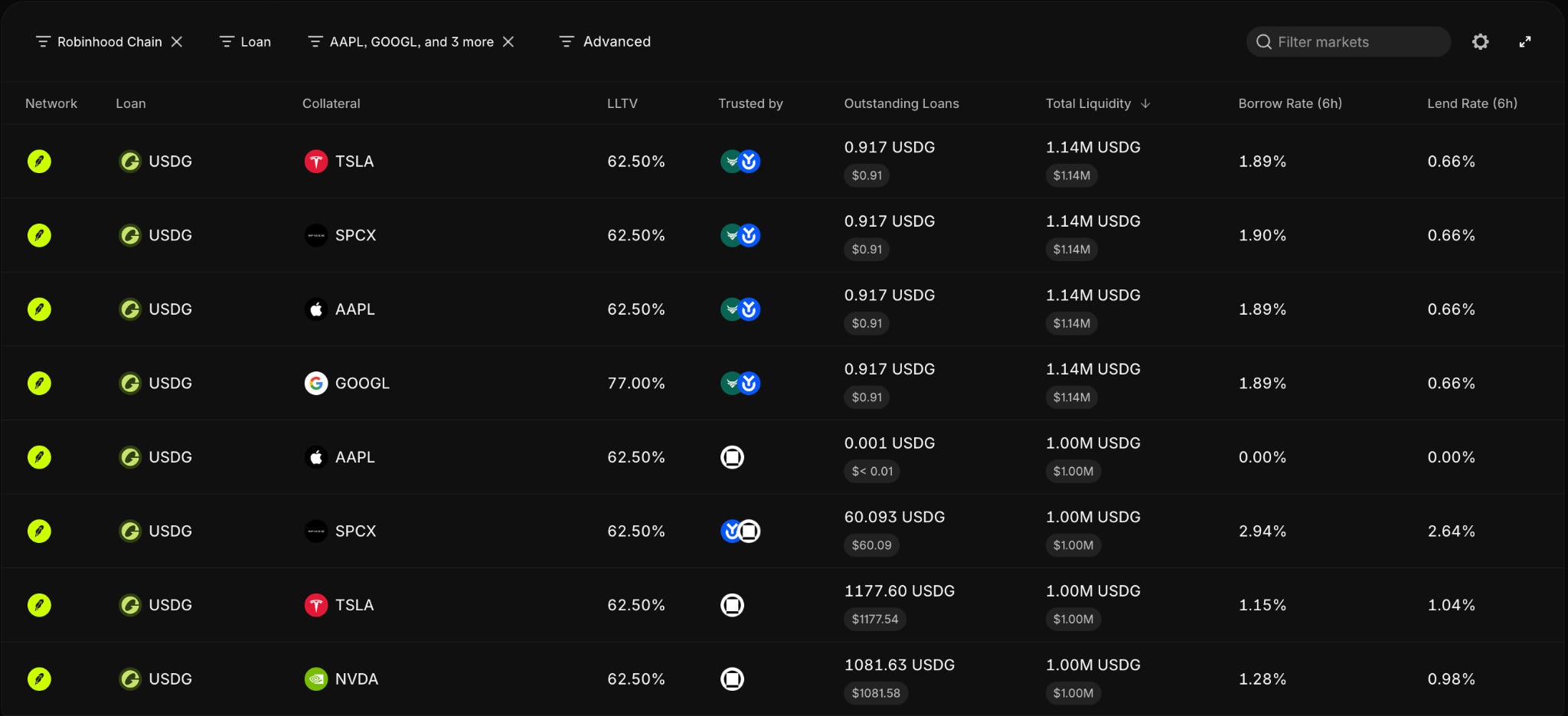
A similar opportunity exists on Morpho on Robinhood Chain, as the borrow rate is currently below 2%, making an efficient carry trade possible.
On our Radar
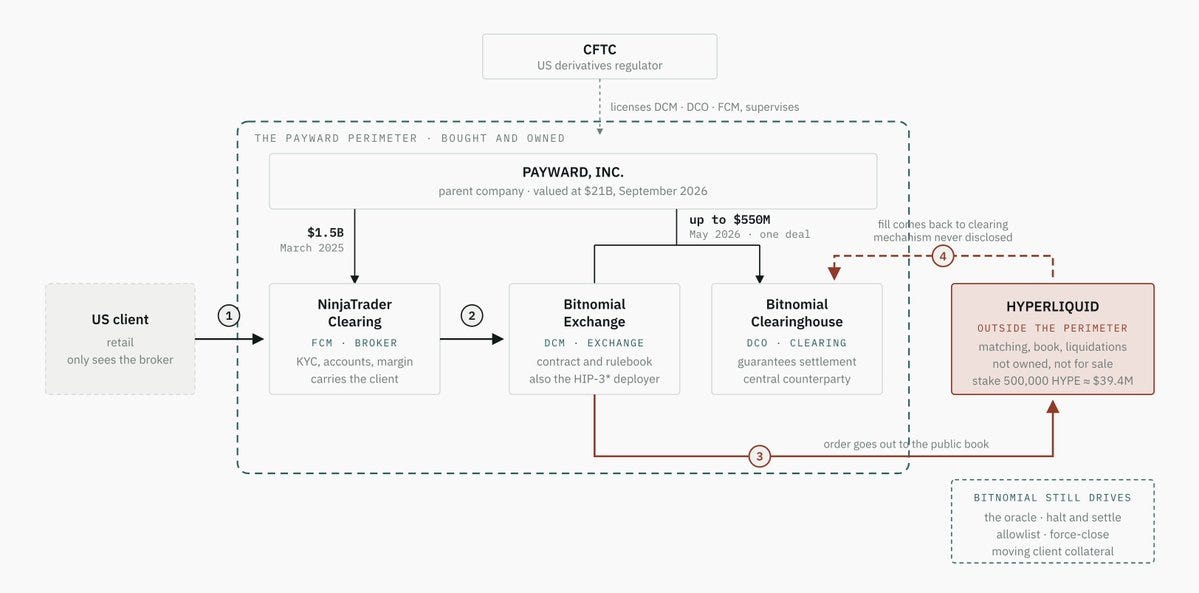
Hyperliquid will be accessible to U.S. customers through the permissioned HIP-3 protocol by Payward. This reinforces Hyperliquid as a global perp platform and will attract new flows, as the U.S. market is huge. Below is the diagram showing how different entities within this instance work together.


USDAI, which provides GPU-backed loans to help companies expand their hardware capabilities, recently executed a $1 million buyback of its governance token, $CHIP, which led to a price rise of over 17%. The project is being overlooked, trading at about a $100 million market capitalisation, and its niche is closely tied to AI growth, which we established above is quite high. In terms of loans, it currently finances about $327 million, with about $9.2 billion in active deals ready to deploy.
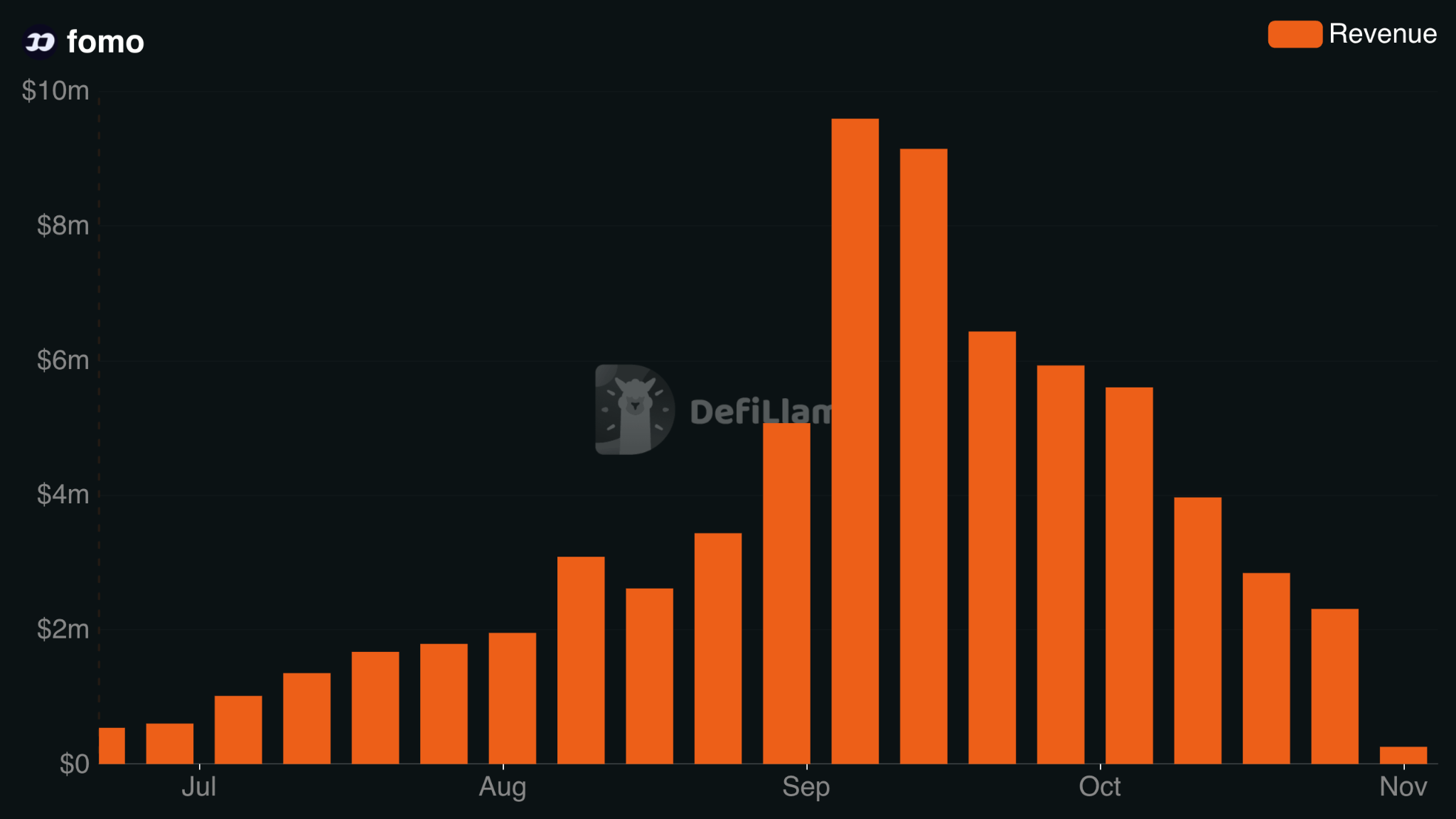
Ascend, a social trading application on BNB Chain, just went live with early access. The consumer application category offers a tremendous opportunity to generate high revenue, as we saw with Fomo, but maintaining that revenue is hard because it depends on speculative memecoin volume. Fomo also expanded into Perps through Hyperliquid builder codes, generating over $300k in revenue last week and showing consistent volume patterns, underscoring the importance of offering parallel use cases to monetise some part of the initial demand.
Toros launched on Base using Derive infrastructure to offer options on major assets, BTC, ETH, HYPE, SOL, and ZEC, and during the initial launch phase, you get 1% cashback on the premium paid, and your positions are tokenised. If you already use Derive, it may be worth exploring Toros for these assets, as you get access to the same liquidity base, earn cashback, and turn your positions into an ERC-20 token that helps you close positions before expiry.
That’s a wrap
Meet you next week!
Not a subscriber yet? Join for free:

PLUS, don’t forget to join our Telegram channel for the latest updates from Castle and all our research: Link here

Disclaimer: In our newsletter, we may discuss projects or tokens in which we hold positions. While we aim to provide informative content, our views are not financial advice. Please conduct your research and consult professionals before making investment decisions. Crypto markets are volatile, and past performance doesn’t guarantee future results. Invest responsibly, and be aware of the risks. Your capital is at risk, and we do not accept liability for any losses.