

Last week was one of the most exciting weeks because of the Citrini Research drop, and their portfolio included applications close to fundamentals (consistent revenue, buybacks, and growth).
Beyond that, the spotlight was on PaperTrade, which launched on 10th October, led to a $38 million loss for traders, and was briefly manipulated due to a design flaw.
While we cover them, we also highlight:
Ambire Wallet launch on iOS and Android.
AI Money and key players, including Pearl, Nockchain, and Bittensor.
The Post-Quantum Trade, covering some of the protocols that benefited from the recent spotlight on the topic by Justin Drake.
On our Radar: Lido Lend, Securitize Stocks, and Maple Finance.

Ambire Wallet is now on your phone
Ambire Wallet is now live on iOS and Android.
The mobile app mirrors the extension’s UI/UX and includes every extension feature. Now, from the phone, users can access the same core features:
Hot accounts
Hardware wallets: Ledger, Trezor, Keycard (QR & NFC), Keystone, imToken.
Safe multisig: Transactions are synced between mobile, extension, and SafeGlobal thanks to Safe API support.
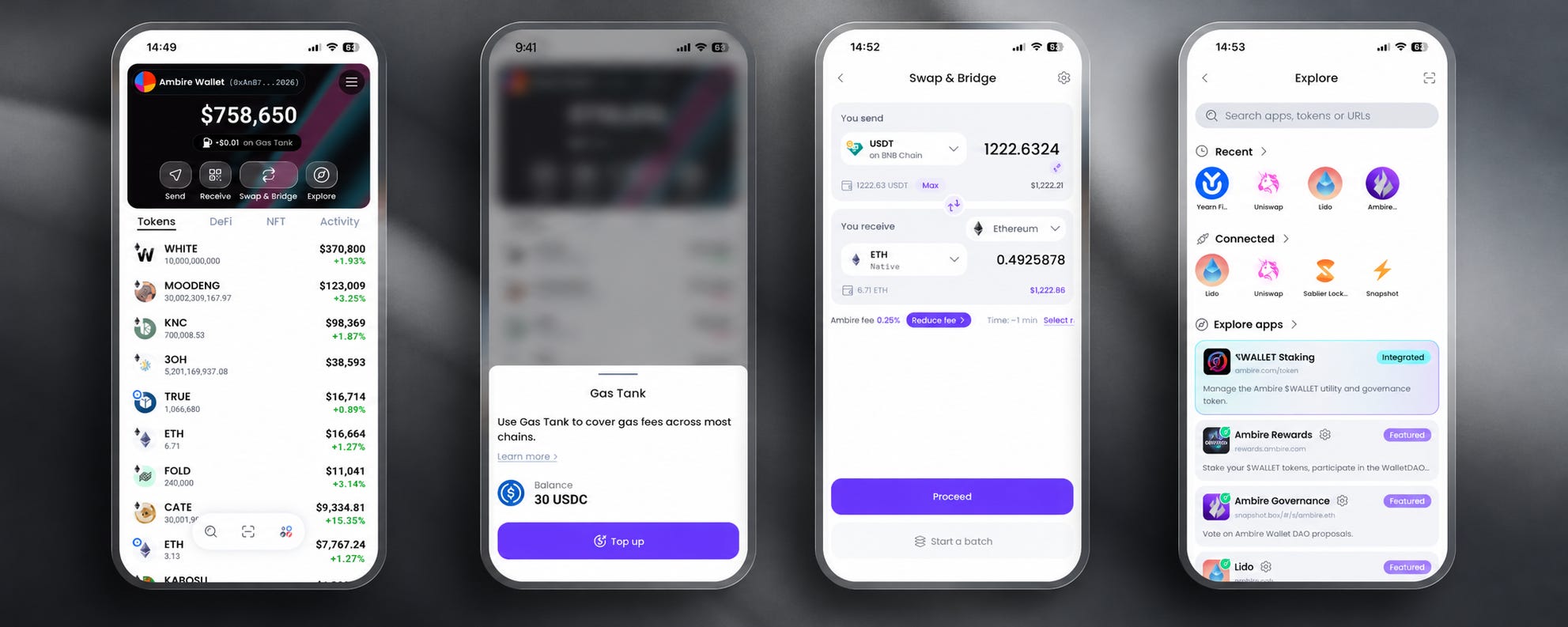
This launch also makes it easier to track your portfolio, DeFi positions, and transaction activity, now available on the main dashboard.
The Ambire wallet app is private by default, but you can change privacy preferences in settings.
One of Ambire’s most talked-about features, clear signing support (powered by EIP-7730 and Ambire’s humaniser), is also available on mobile, showing users exactly what they are signing. On top of this, features like onchain transaction simulation and security checks for significant balance decreases improve the application’s security and help reduce signing mistakes.
When accessing your phone wallets, a common problem is finding a way to interact with apps; they aren’t embedded in your wallet, but with Ambire you can find your apps within the wallet itself. Additionally, the built-in swaps cover major aggregator routes, with fees as low as 0% depending on your staked $WALLET holdings.
The app is available to download, and you can access it with our invite code: castlefamily
Citrini Research Portfolio: Tokenisation Supercycle and Fundamentals Matter
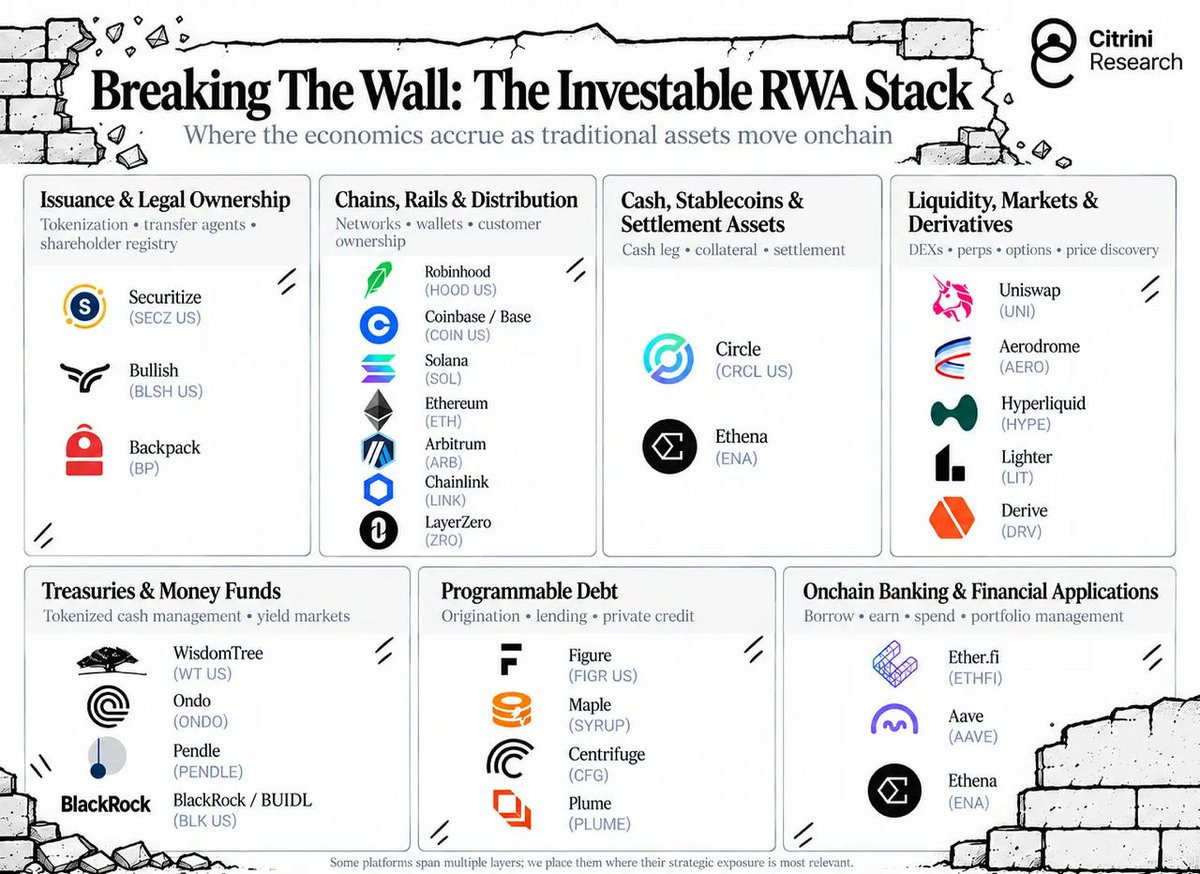
Citrini released a report last week sharing their thoughts on blockchain applications reaching escape velocity and breaking down the wall between TradFi and DeFi, driven by tokenisation.
Multiple applications are positioned to benefit from the eventual growth of RWAs, including DEXs, lending, and, most importantly, tokenisers.
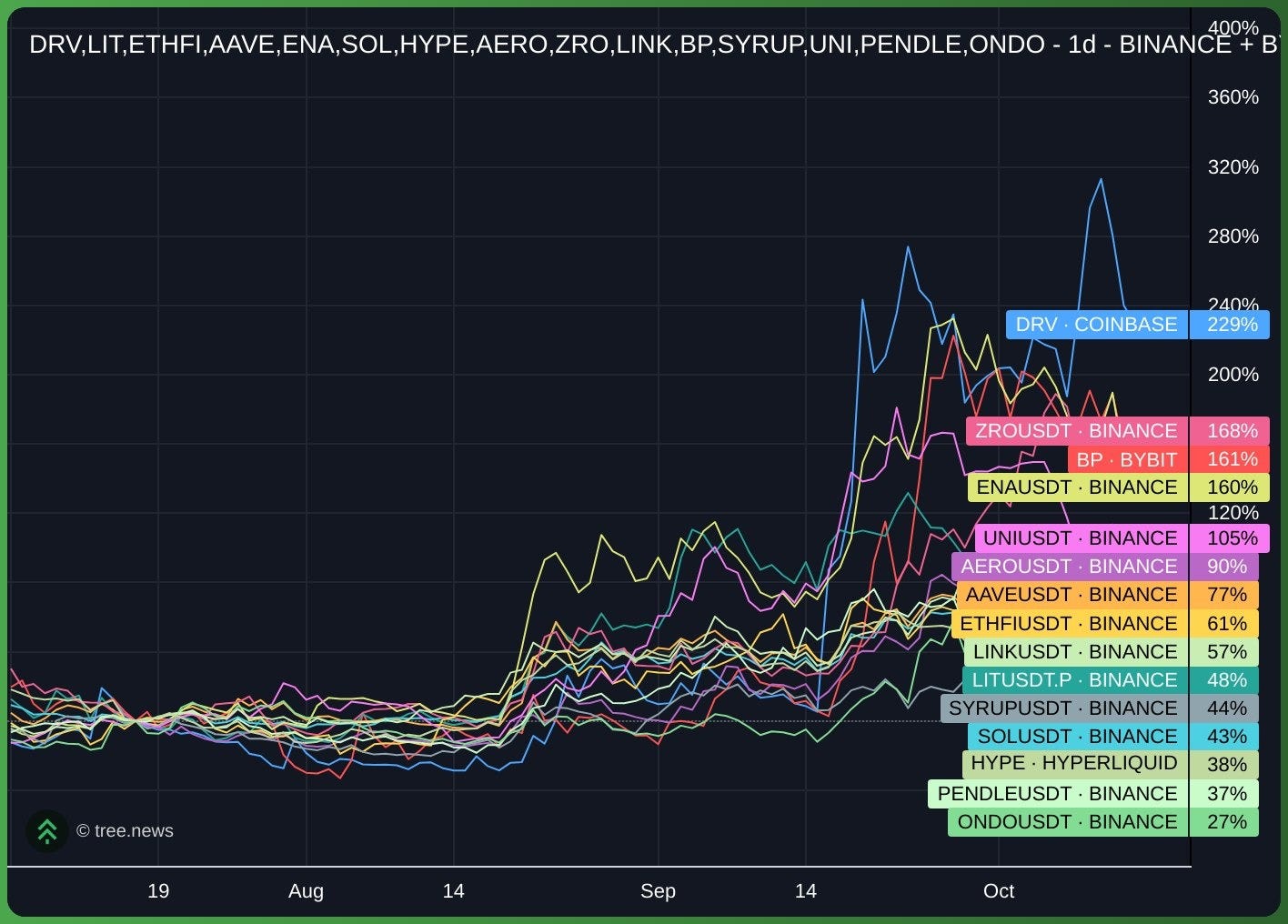
The best way to see this growth is to understand the stack: companies tokenising these assets (BP, SECZ) and the rails on which they go live (HOOD, SOL, ETH, ARB, etc.). Next are the platforms where they trade, including DEXs (UNI, AERO, HYPE, LIT, DRV), and the applications that bring these assets into the onchain economy, including neobanks and lending (ETHFI, AAVE, ENA).
Also, if you notice the tokens Citrini mentions, most are revenue-generating and enable buybacks, two of a token’s most important features. This supports the core of “revenue meta”, or treating crypto protocols as businesses: evaluating their P/S ratio, competitive positioning, and how much more market share they can tap.
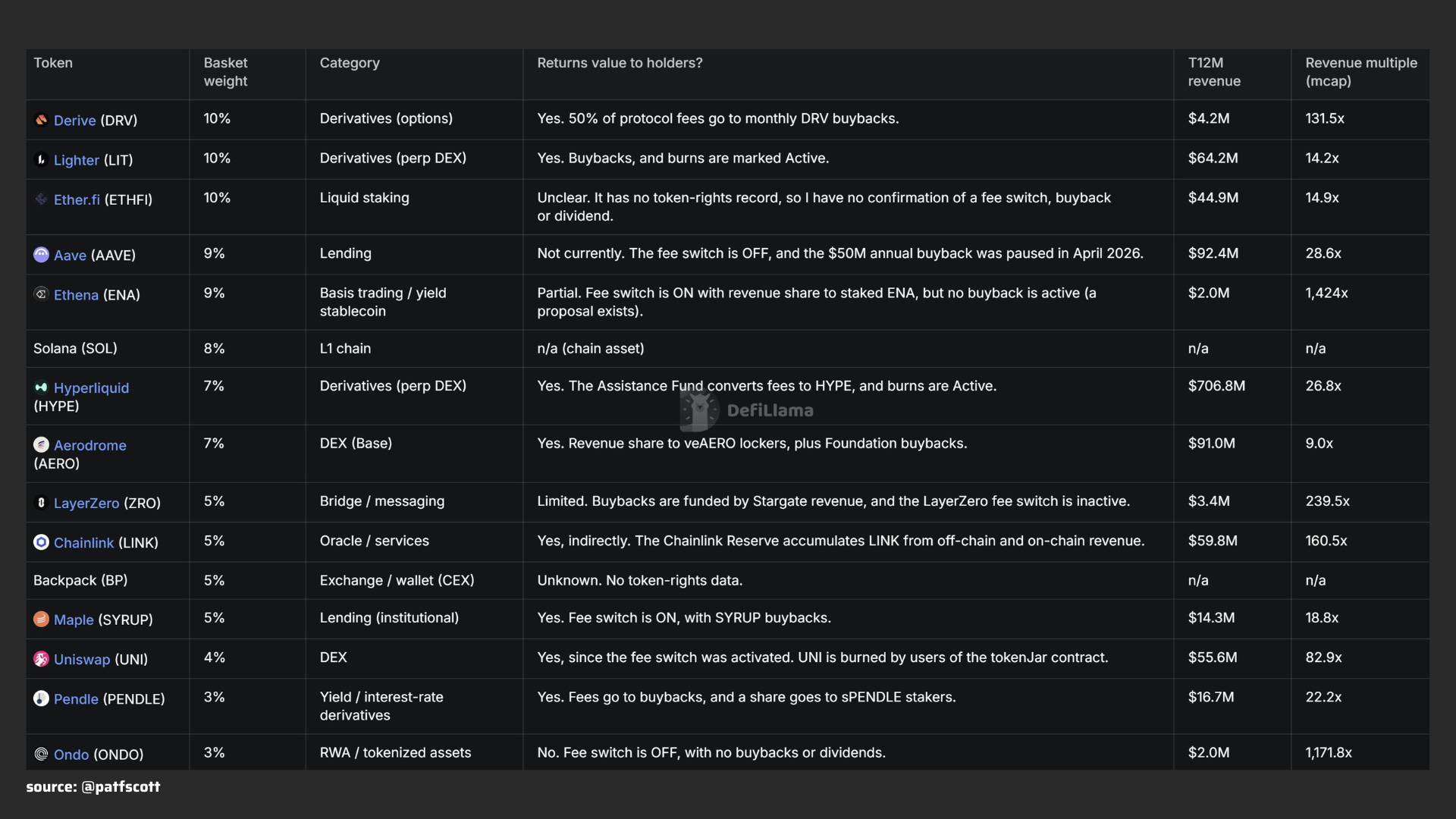
Most of these tokens performed well recently, suggesting the importance of looking at the fundamentals.
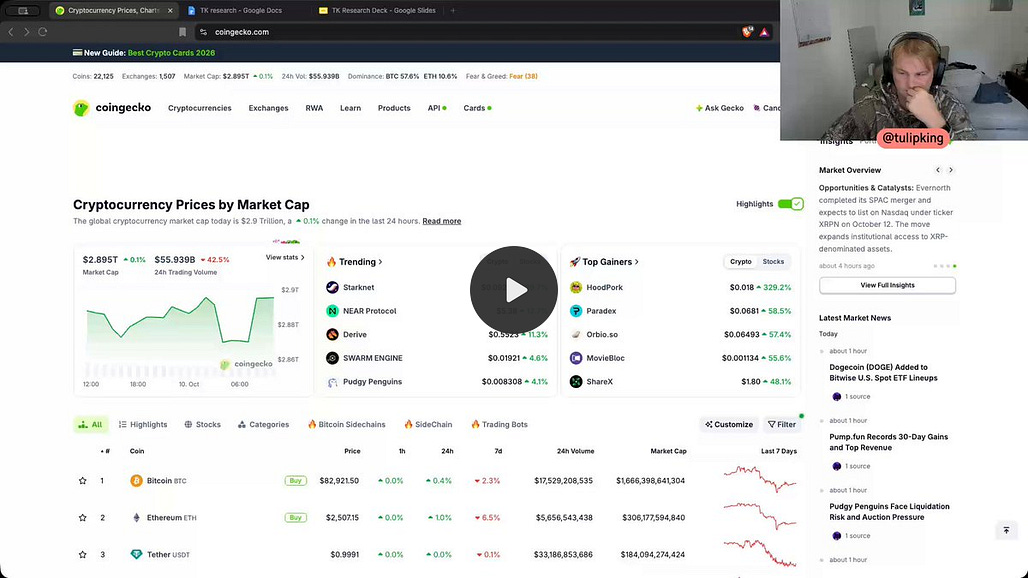
If you wanna go into the rabbit hole of the coins that might make it into lists like the ones above, we suggest taking a look at TulipKing’s latest video where he analyses over 2k coins listed on CoinGecko.

The AI Money
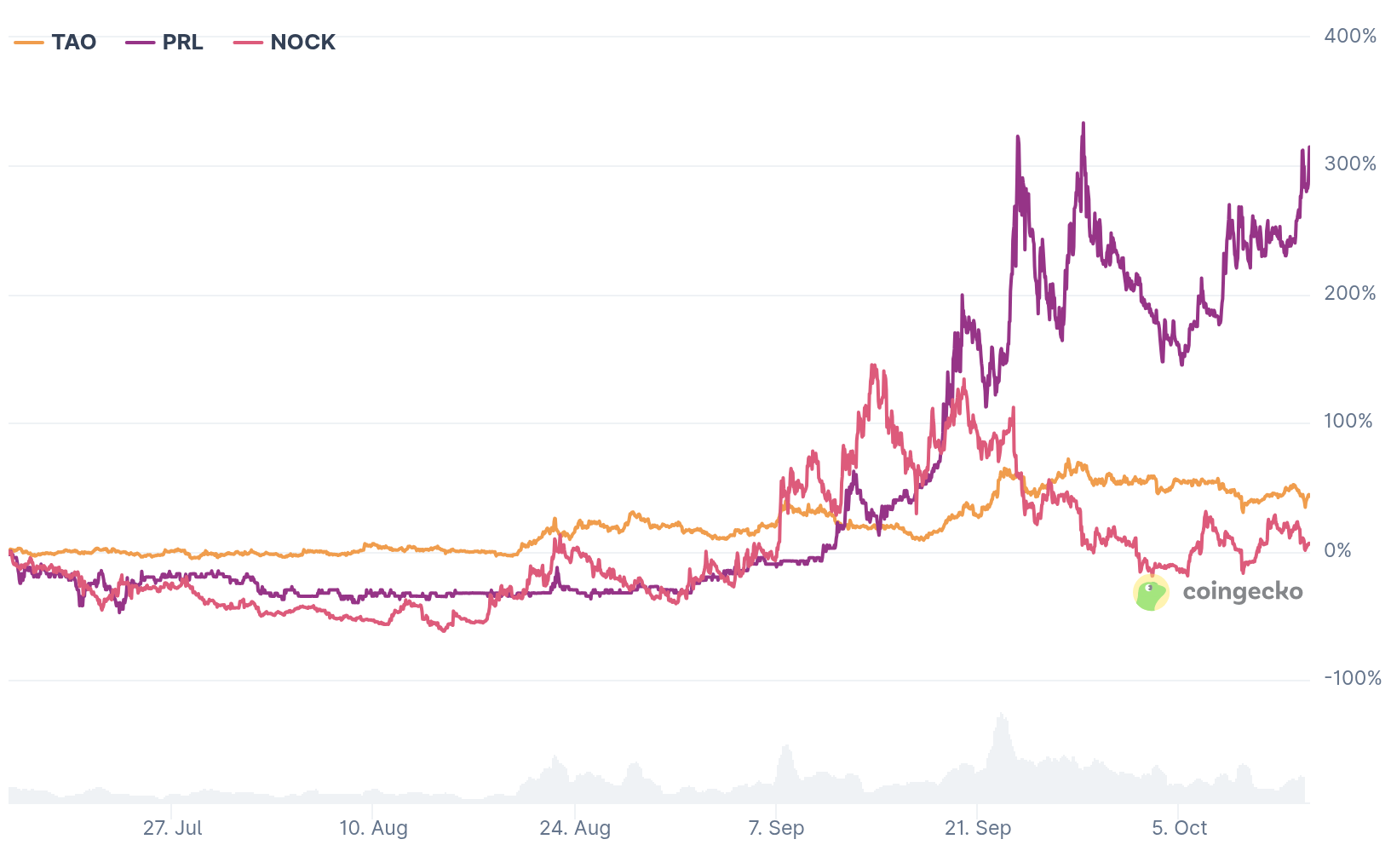
We released a report on Pearl yesterday: an AI inference-embedded L1 blockchain where the computational resources used to mine blocks also power AI through matrix multiplication, positioning $PRL as AI money. As the network grows and compute demand rises, with people paying in $PRL or burning it (coming soon), the token has a major advantage: it essentially reflects the flow of compute demand.
However, it is not the only player in the AI money space. Other protocols are also positioned in the segment, including Nockchain ($NOCK) and Bittensor ($TAO).
Nockchain, launched in May 2025, is a more direct competitor to Pearl. It didn’t start by supporting AI inference; its miners originally produced ZK proofs, but in August 2026, an upgrade added a second mining type: the matmul Pearl uses, in the same simplified number format Pearl runs today. Additionally, Nockchain’s AI compute network is initially compatible with merge-mining Pearl to bootstrap compute, an effort from Nockchain to attract PRL miners.
$NOCK currently has a market cap of $56 million, compared to $ PRL’s $566 million at the time of writing, a 10x gap between the tokens, even though both serve the same niche.
Bittensor is the largest AI-related coin with a market capitalisation of $3.2B, and the network runs 129 subnets. Each subnet is a contest where participants supply an AI service, such as running models or renting out GPUs, and are paid in newly minted TAO. Nothing is mathematically proven, and validators judge outputs and score participants, creating subjectivity and opening decisions to collusion. The top 10 subnets today account for ~40% of TAO emissions, including Chutes, TAOHash, Gradient, and others. As of today, these emissions run at about 3.5k TAO a day (~$370 million a year), with published revenue from subnets being around $19 million.
It helps to view TAO as the index and the underlying subnets as individual businesses, then judge them by performance. TAO is more of the index of the compute the network is powering, and subnets are businesses generating value from the services.
The Post-Quantum Trade
Post-quantum cryptography (PQC) is back in the spotlight after Justin Drake suggested that, in the worst case, a quantum computer capable of breaking crypto could be “months, not years” away, plus Vitalik’s push on the same matter and the “bunker mode” scare.
In practice, that hardware is still far off. IBM’s roadmap targets 200 logical qubits by 2029, while breaking the 256-bit elliptic curve cryptography (ECC) most blockchains run on needs roughly 1200-1450 logical qubits.
However, the market moved anyway. Starknet got the most exposure to the theme: its STARK proofs are already hash-based, and it targets full quantum resistance in 2027, but the L1 move that drove the recent rally is still “being considered”. Tron, which has PQ signatures live in testnet, barely moved. Near is the largest chain where users can already sign with PQC, but it is currently only “opt-in”.
Fully PQ-native chains include QRL (hash-based signatures since 2018, which is why Vitalik’s post helped it catch the bid), Quantus (QTC), Abelian (ABEL, a Zcash-style privacy coin with PQC), and Neptune Privacy (XNT), though these are mostly small and have thin liquidity.
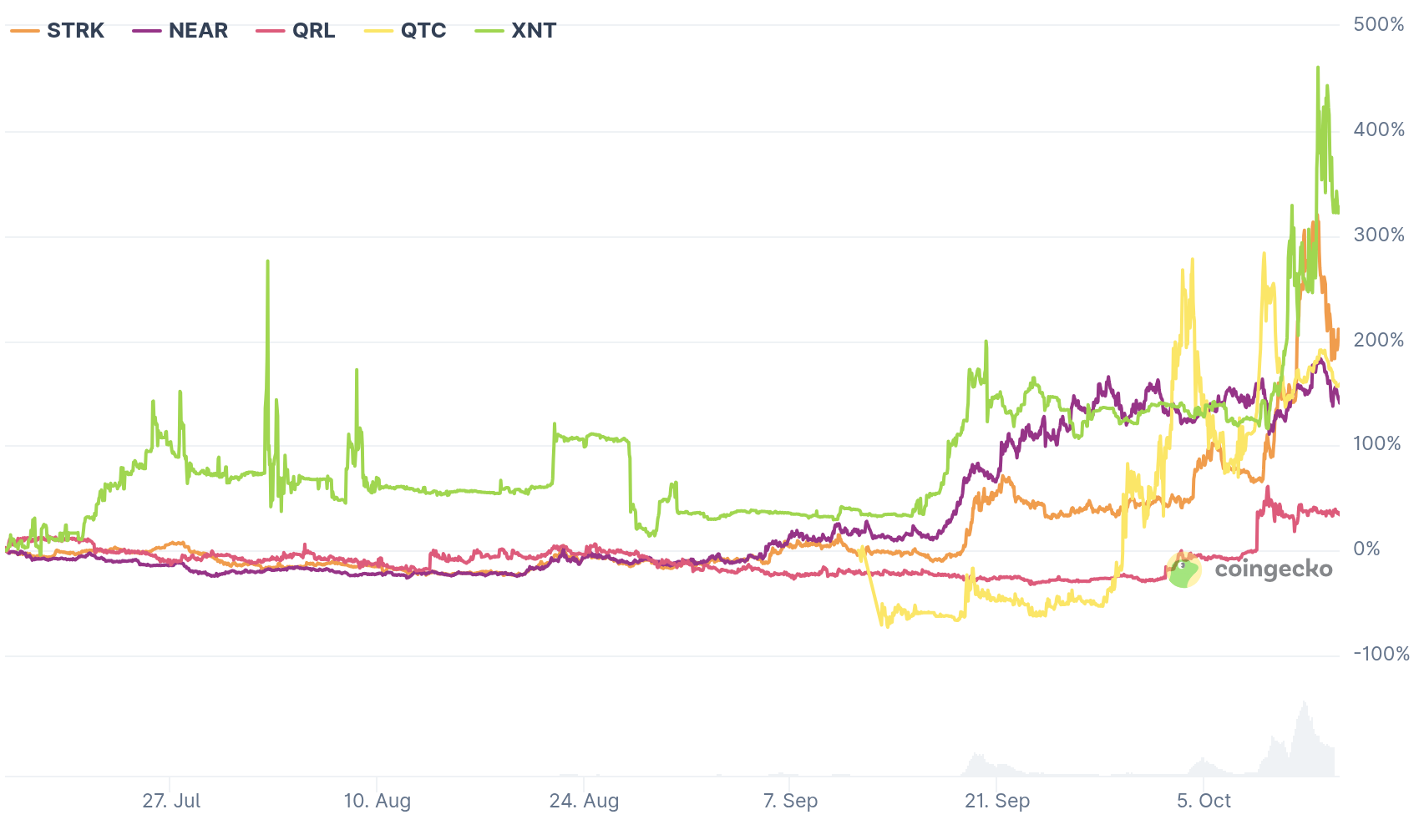
The theme also extends to equities, where quantum computing stocks fell over the same two weeks the onchain tokens rallied.
If you are more interested in this topic, we recommend reading Zero Knowledge’s in-depth research on the different players in this segment.
On the Radar

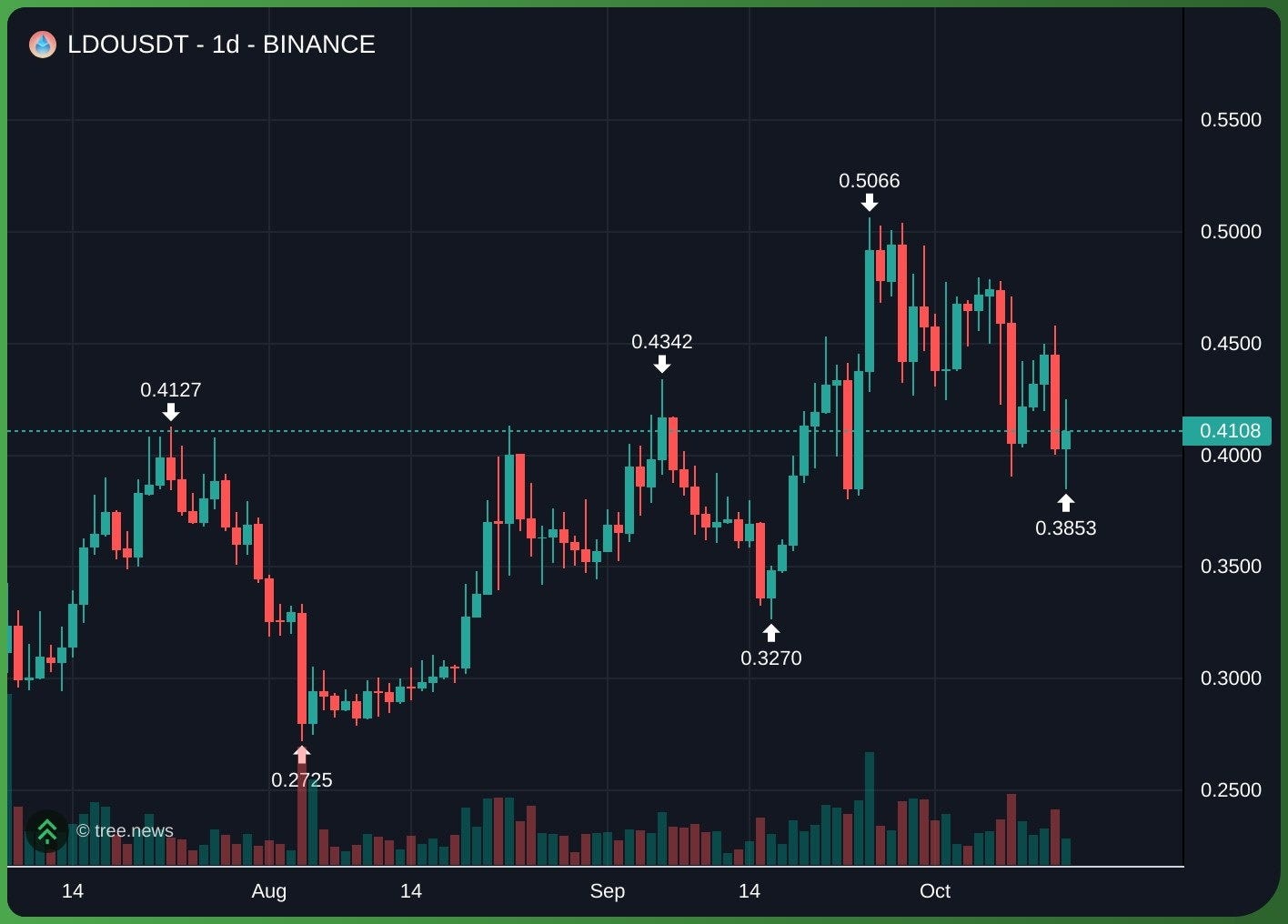
Lido announced a proposal for Lido Lend, a security-first lending platform inspired by recent DeFi incidents, introducing features like filtering hacked funds, listing blue-chip assets, and isolated markets. Lido already has strong distribution for this product, as it issues stETH, which is widely used in leveraged looping strategies that boost borrowing demand on platforms. Lido Earn could also directly tap into Lido Lend’s markets. It would be interesting to see how its distribution advantage helps the platform grow and eventually open a new revenue stream.
Securitize has launched Securitize Stocks for eligible U.S. and EU investors, and it is also launching global onchain trading of these stocks, expected to go live on the OKXICE platform too, bringing in additional liquidity and flows for the instance, developed on Uniswap v4 hooks.
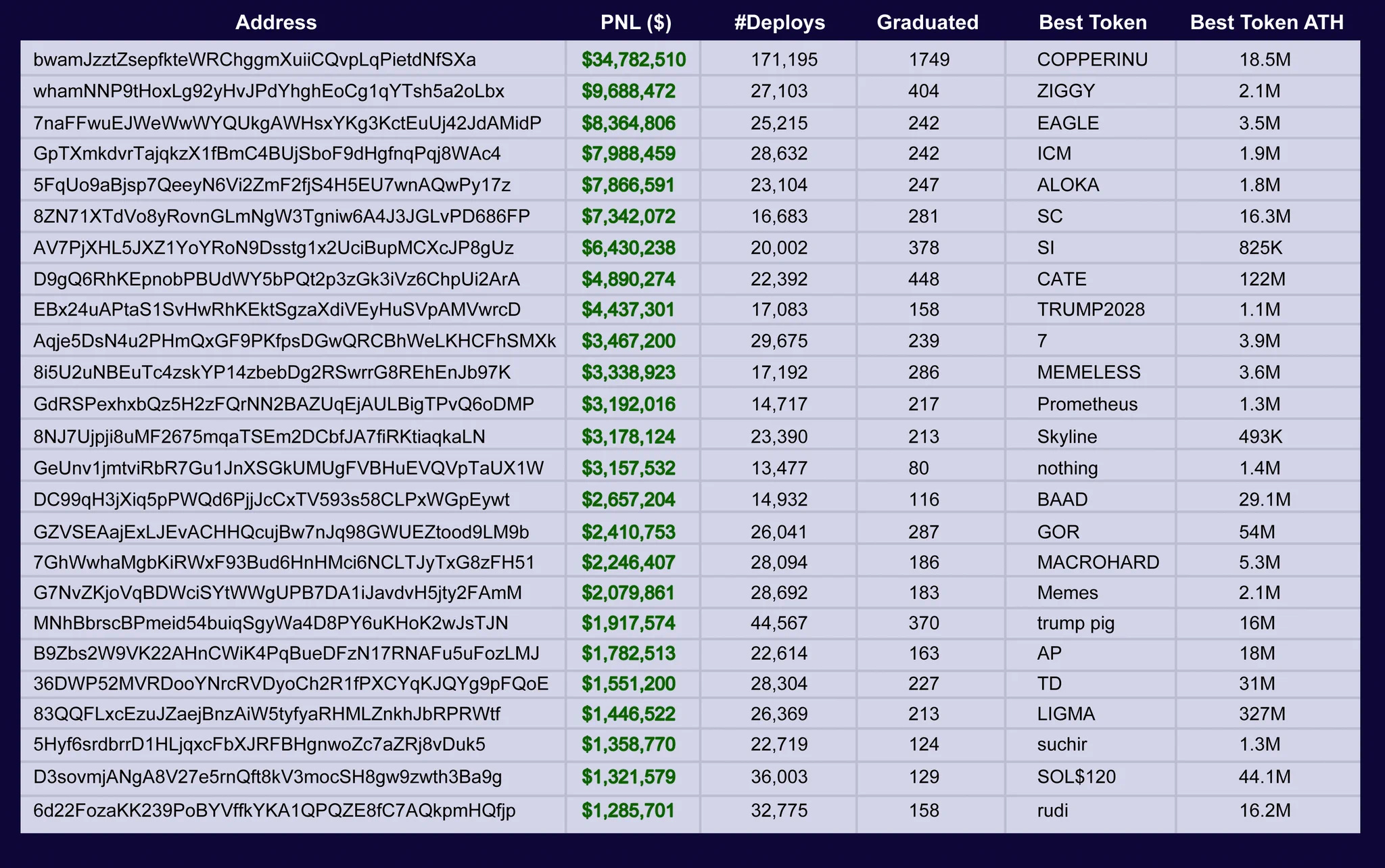
Top 25 PumpFun deployers extracted $128m from trenches, showing how unfair the trade is for a usual retail investor.
Ethos did its TGE under the ticker $WHUF, but it didn’t perform as expected, largely because they pushed liquidity to CEXs while DEXs were thin, even though most of their traders were on DEXs. Serpin explains additional reasons explaining why it went wrong.
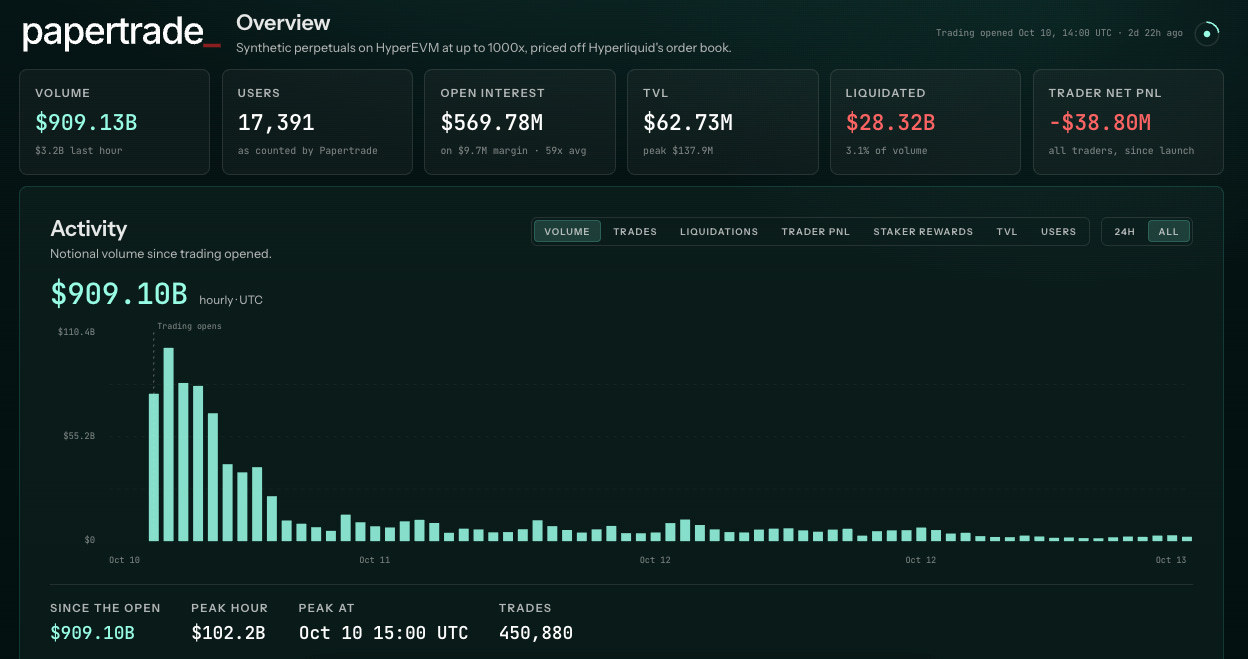
PaperTrade, launched over the weekend, has recorded over $900 billion in volume, with net trader PnL reaching $38 million, which would eventually award them $PAPER (the platform’s core mechanics). The protocol was also manipulated by a design flaw: it used Hyperliquid BBO mid-prices, which the attacker externally manipulated to carry out the attack, possible only because of the high leverage Paper offered. They resolved this issue by imposing certain limits on OI and position size.
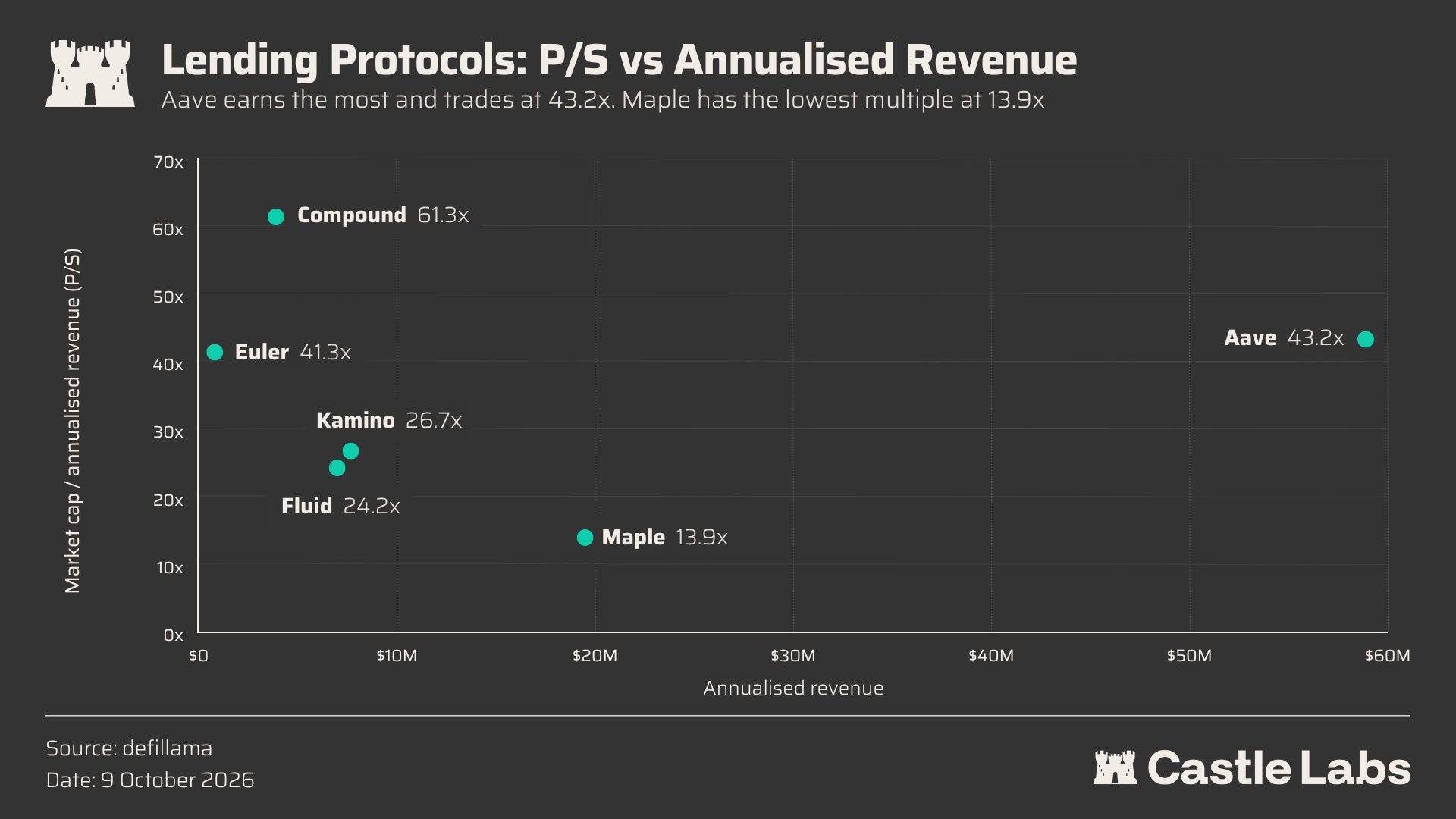
Maple Finance closed September with $1.57m in revenue and passed down over $300k in buybacks under their MIP-021 rule. Among lending protocols, it is the second-largest by revenue after Aave (annualised September revenue) and trades at the lowest P/S.
That’s a wrap!
See you next week.
Every week for the last 3 years, we have shared our research for free, directly in your email. Not a subscriber yet? Let’s fix it:

PLUS, don’t forget to join our Telegram channel for the latest updates from Castle and all our research: Link here

Disclaimer: This newsletter includes a sponsored segment produced in collaboration with Ambire. In our newsletter, we may discuss projects or tokens in which we hold positions. While we aim to provide informative content, our views are not financial advice. Please conduct your research and consult professionals before making investment decisions. Crypto markets are volatile, and past performance doesn’t guarantee future results. Invest responsibly, and be aware of the risks. Your capital is at risk, and we do not accept liability for any losses.