

This article introduces DRIP, the incentive program currently live on Arbitrum, and takes a snapshot of the ecosystem to analyse results before and after the incentives.
DRIP stands for the “DeFi Renaissance Incentive Program,” an incentive program designed by Entropy Advisors, powered by Merkl, and funded by the Arbitrum DAO.
This program is significant because it builds on previous incentive programs with a specific focus and vision: Rewarding targeted actions, not just attention.
The DRIP is a practical example of the evolution of incentive programs within Arbitrum: After spray-and-pray, the Arbitrum DAO is moving toward more tailored, specific programs.
While DRIP Season 1 is not over yet, this can be interpreted as a mid-point check on the program’s effectiveness so far, focusing on the broader ecosystem rather than the protocols and assets involved.

The DRIP Program
The DRIP program is an incentive program distributing 80m ARB across 4 seasons, each spanning ~3 months. The first season started on September 3, 2025 and is planned to end by January 20, 2026.
DRIP is an interesting example of a shift from more general incentive programs, such as the STIP, STIP.b, and LTIPP, to targeted programs that aim to stimulate specific actions.
For instance, each season will have one specific objective, which is “simple, targeted and measurable”.
These can take the form of:
Make Arbitrum One the best place to borrow USDT against wstETH
Ensure Arbitrum One has the deepest liquidity for trading USDT/ETH.
Season 1 is about lending markets and will distribute up to 24 million ARB across 5 months (20 weeks, with bi-weekly epochs).
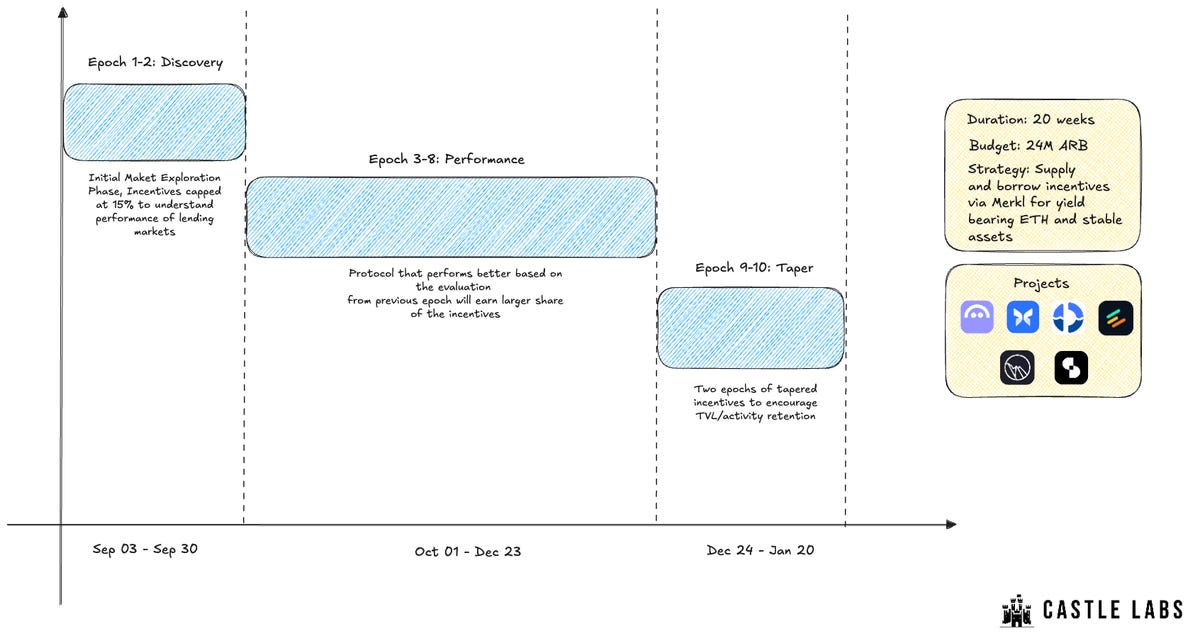
In particular, the first Season focuses on “leverage looping” on Arbitrum, which in turn, allows:
Deep liquidity on specific assets
Strengthen a strong wBTC ecosystem for Bitcoin yields
Increases RWA dominance by attracting liquidity to staking and LRTs
For this reason, incentives are distributed to users who borrow and loop against eligible assets on the available lending platforms.
Season 1 of DRIP supports six main lending protocols:
Aave
Morpho
Fluid
Euler
Dolomite
Silo
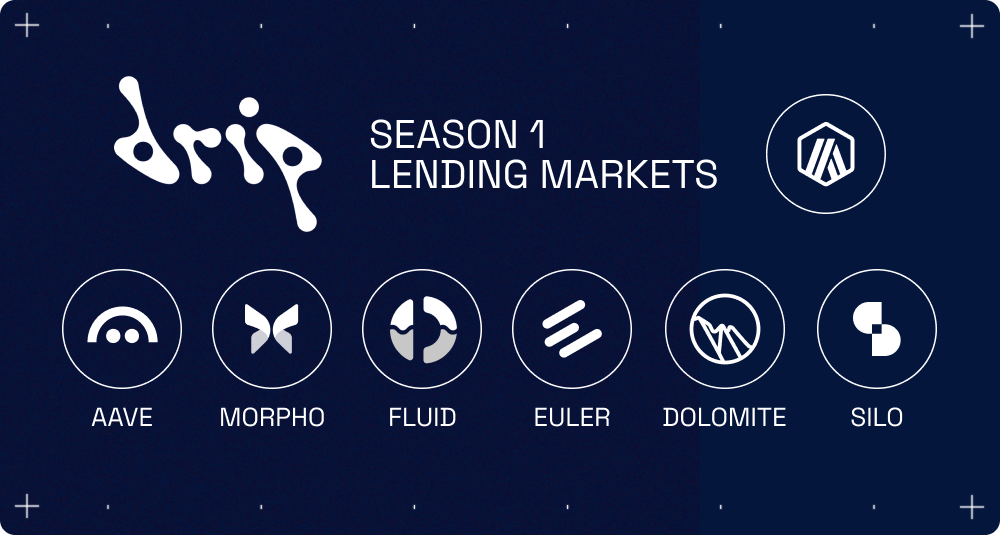
The lending markets for Season 1 have been chosen based on their size and utilisation.
Limiting the sample is a result of the program’s focus on achieving high growth and retention of key assets, pools, and quality activities to maximise its impact across the ecosystem.
This is also reflected in the list of assets, which have been strategically assigned to assets whose growth can play a significant role within Arbitrum’s DeFi ecosystem. These include USDe, USDai, thBILL, wstETH, syrupUSD, and more, as shown in the image below, along with the Pendle PT/YT for these eligible assets.
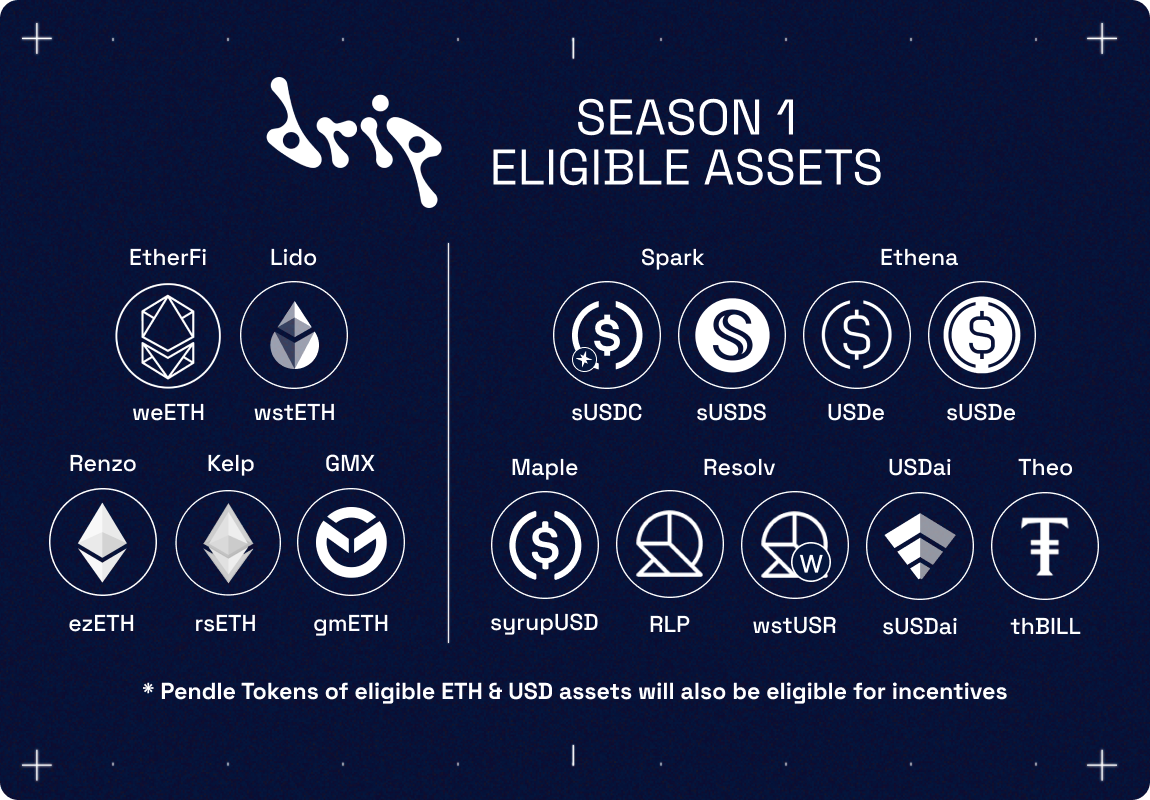
So if you deposit eligible assets and use them to loop on the available lending markets, you will earn ARB rewards.
For users less familiar with it, a practical example of looping is:
Deposit USDe on the eligible protocols
Borrow USDC
Buy more USDe using USDC
Repeat the process
Once we have introduced how DRIP works, we can dive deeper into the data to examine its impact on the ecosystem.
DRIP Impact on the Arbitrum Ecosystem
This section analyses onchain data, taking snapshots of the ecosystem before and after DRIP to assess its impact.
We start by taking into account the main objective of DRIP: to grow the activity of looping yield-bearing assets on Arbitrum, away from the Ethereum mainnet.
Secondary objectives we’ll focus on to analyse the DRIP impact include:
Grow the market share of Arbitrum lending vs other ecosystems
Others included in DRIP, which we will not focus on specifically today, are:
Increase the number of venue options for Arbitrum users to borrow/lend.
Increase the availability of differentiated yield source assets through new listings.
Increase supply caps and LTVs on newly listed yield-bearing assets.
Grow the PT/YT markets of these assets to sustain the leverage loop organically.
In just under 2 months, DRIP has driven strong TVL growth in Arbitrum’s lending sector, rising from $1.53b at the beginning of the program to $1.94b now —a 26.7% increase.
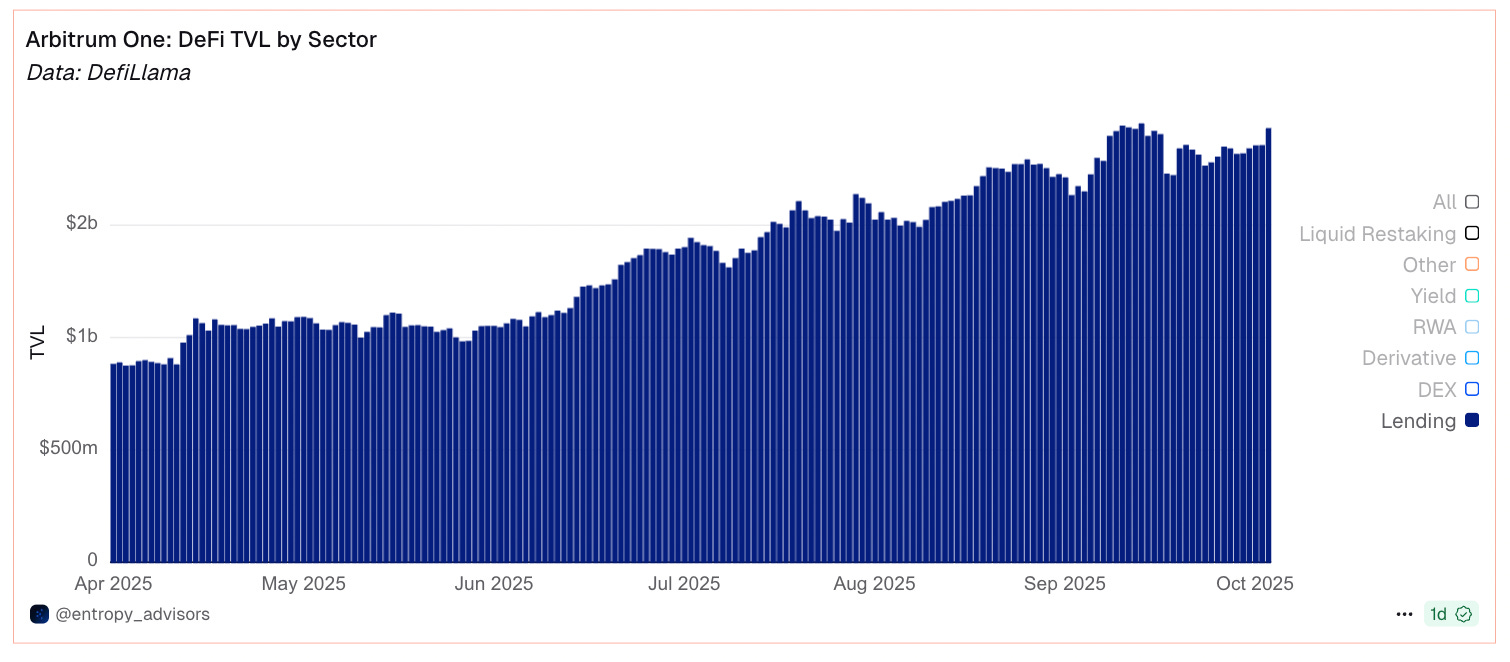
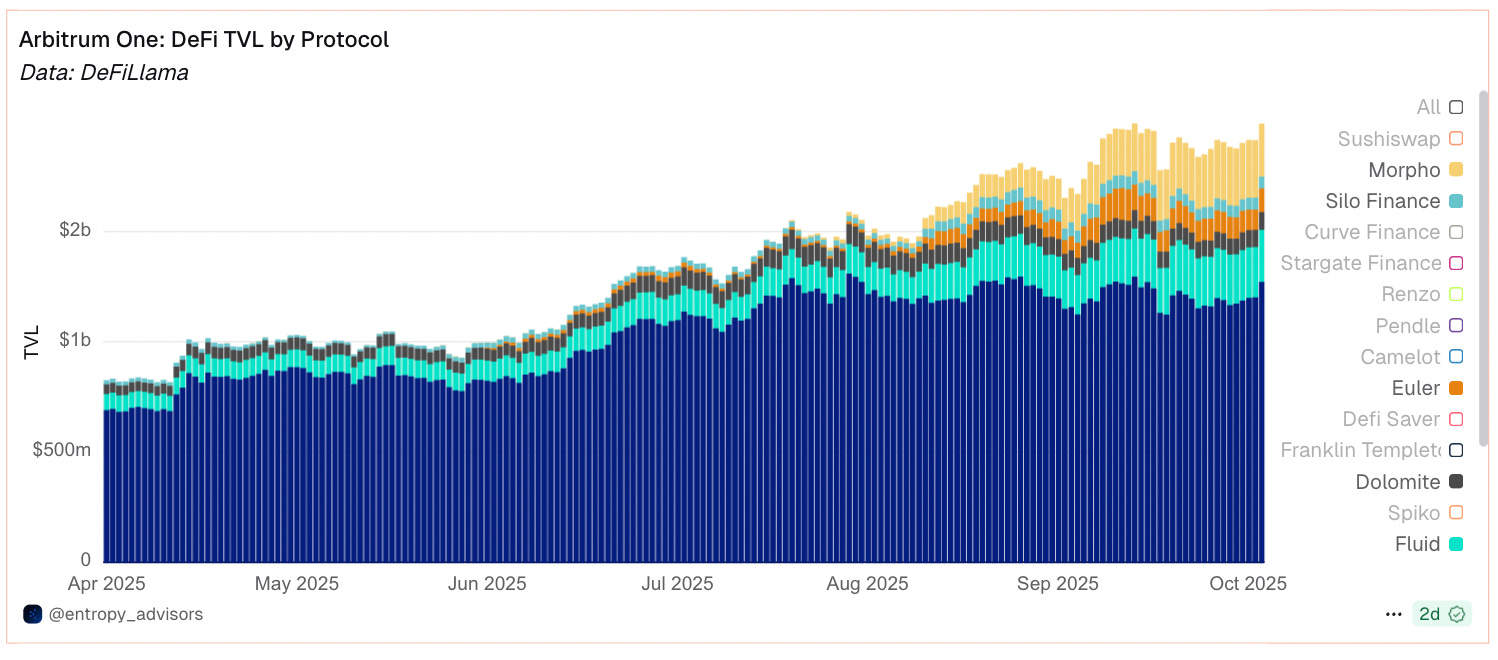
If we select only the protocols included in DRIP, the targeted impact of DRIP becomes even more evident. The aggregated TVL from selected protocols participating in Season 1 was $1.48b, and it’s now $1.99b, capturing the majority of the lending sector’s TVL increase.
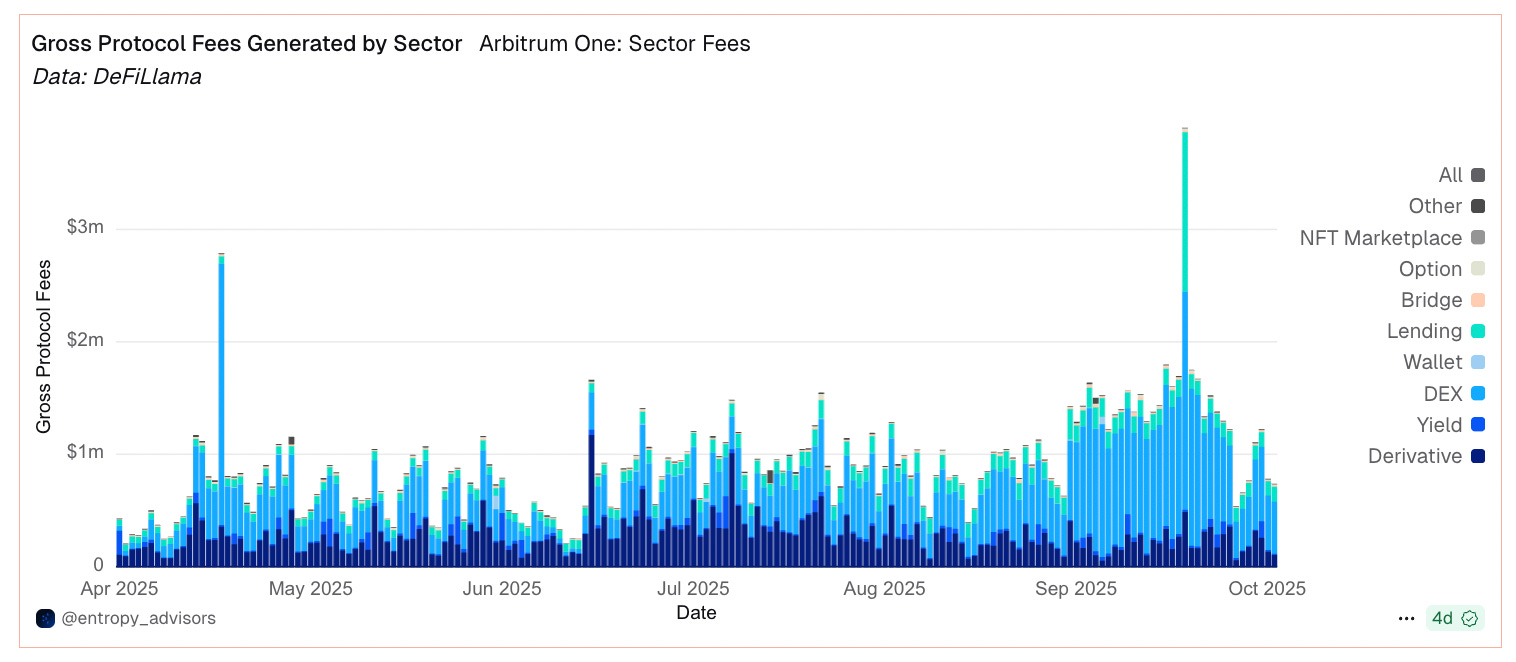
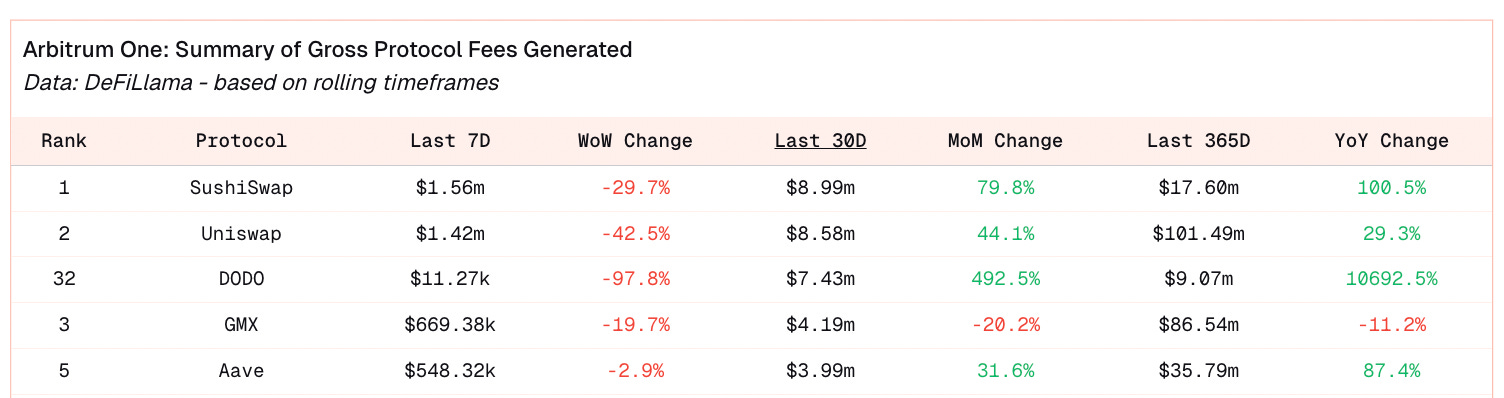
DRIP also had a positive impact on the overall gross fee generated by Arbitrum protocols. From the chart below, we can observe that the program’s start in September is associated with increased fees generated by lending and DEXs verticals. While not the primary objective of DRIP, the increase in lending activity inevitably led to higher DEX activity as users swapped assets to loop.
A similar increase can be observed in DEX Liquidity for DRIP assets.
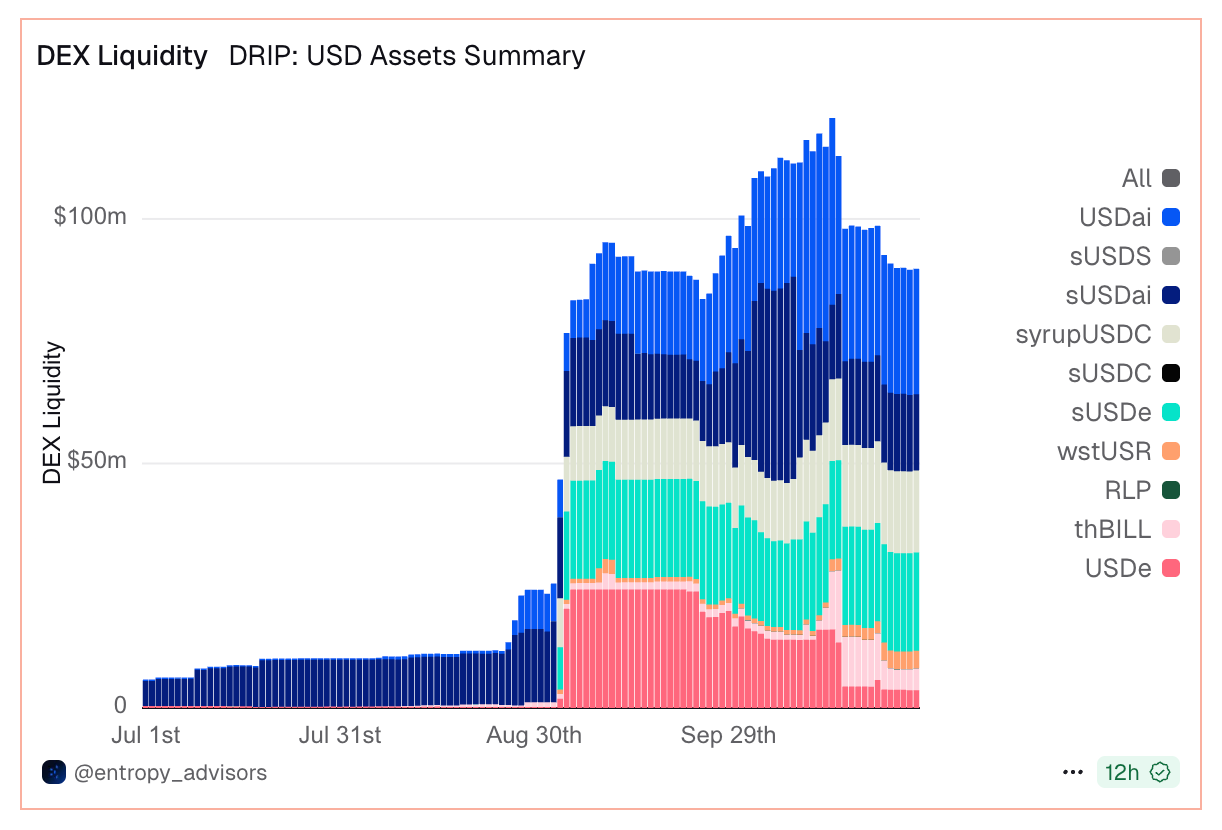
As part of this trend, Arbitrum protocols had the highest week of the year by revenue generated on the 2nd week of October, with over $2.72m in revenue generated, with DEXs leading:
DODO: $603k
GMX: $515k
Sushiswap: $438k
Aave: $224k
Ostium: $165k
If we analyse the last 30 days, the protocols that got the most fees are:
Sushiswap, almost $9m with a +79% MoM growth
Uniswap, $8.58m, +44% MoM
DODO: $7.43, +492% MoM
GMX: $4.19m, -20% MoM
Aave: $3.99m, +31% MoM
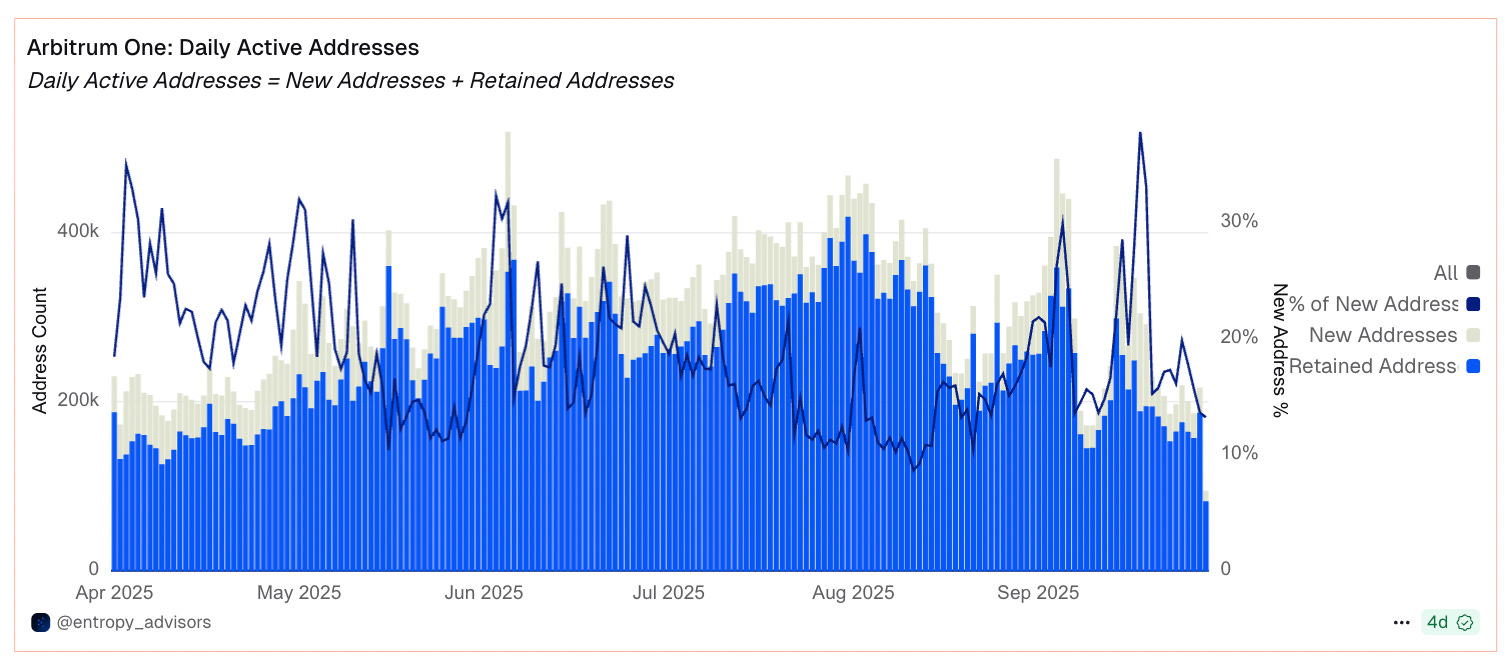
The importance of DRIP is now only for existing Arbitrum users, but also in increasing the attractiveness of the ecosystem lending markets to the broader public.
As shown in the chart below, we can observe an increase in the % of new addresses that are Active on Arbitrum, from the start of DRIP in the first week of September 2025.
This confirms the appeal of DRIP incentives, leading users to move their funds from other networks to Arbitrum. It’s also good to observe a consequent increase in retention.
This is confirmed when analysing the netflow volume. In the past 30 days (30d netflows), Arbitrum has had over $1.5b of net flows, with over $1.1b from Hyperliquid, $296m from LayerZero, and over $100m from Debridge.
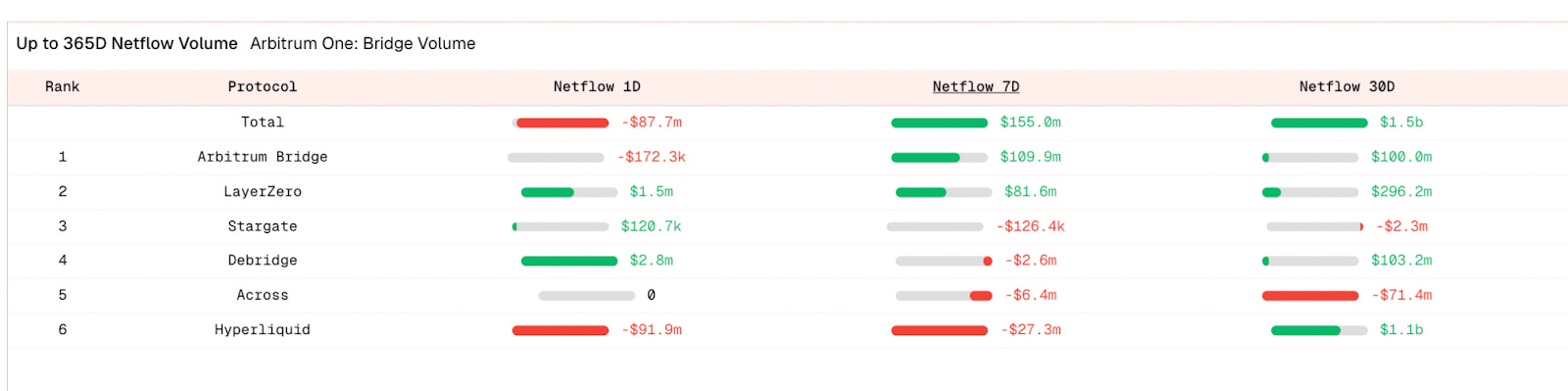
While this is speculative, it might signal the appeal of looping for Hyperliquid users who benefited from the HYPE airdrop and are now seeking less risky avenues to preserve their wealth. Within the broader landscape, such strategic positioning matters.
Ecosystems cannot be seen as isolated anymore, but an ecosystem utility pitch should take these developments into account.
While we will reserve an in-depth look at an asset and protocol level, let’s have a look at the top winners so far.
Top Winners Among Protocols
Silo
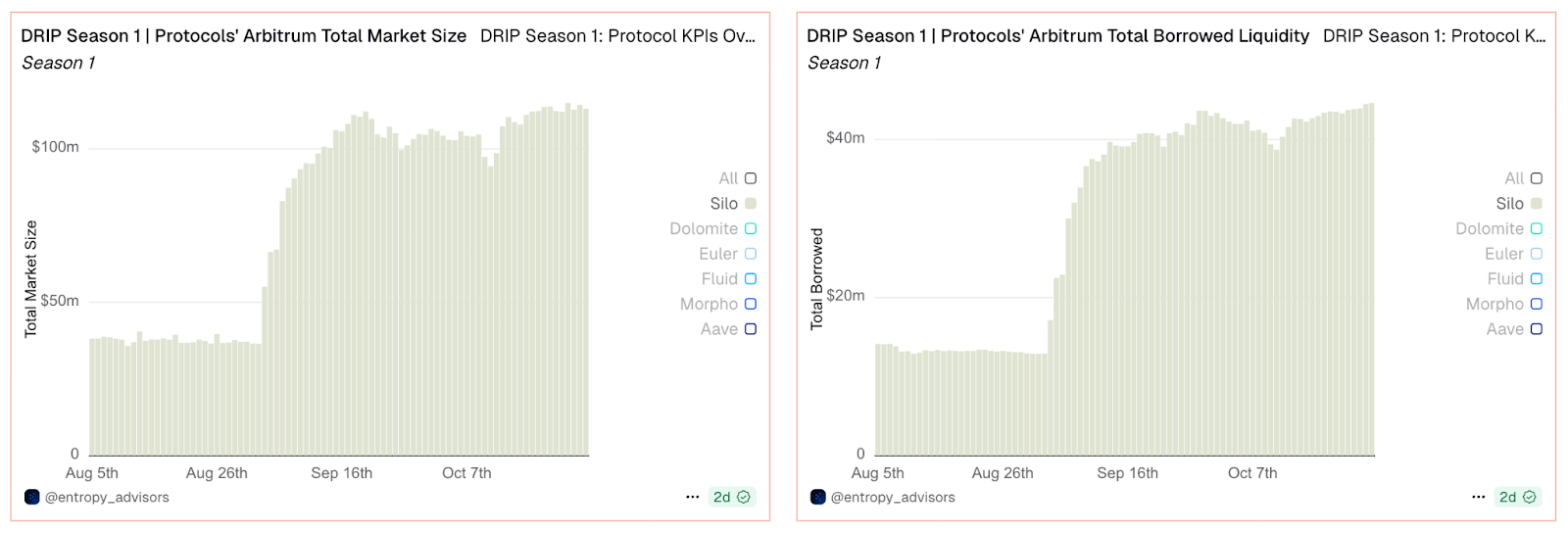
Both metrics for Silo are at an ATH, with market size above $100m and loans over $40m, representing a 2x increase in both metrics.
Euler
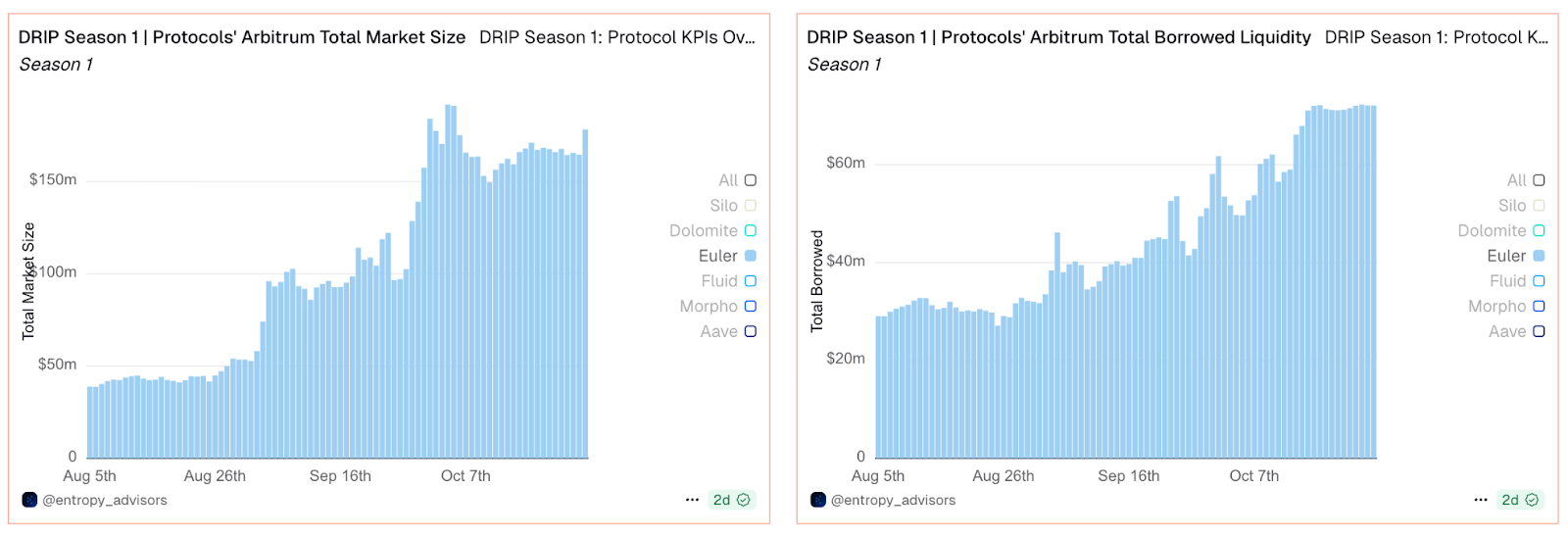
Considering that Euler has not been live on Arbitrum for long, it is one of the protocols that grew the most, experiencing an over 200% increase in market size and borrowed liquidity, now reaching over $60m in loans.
Morpho
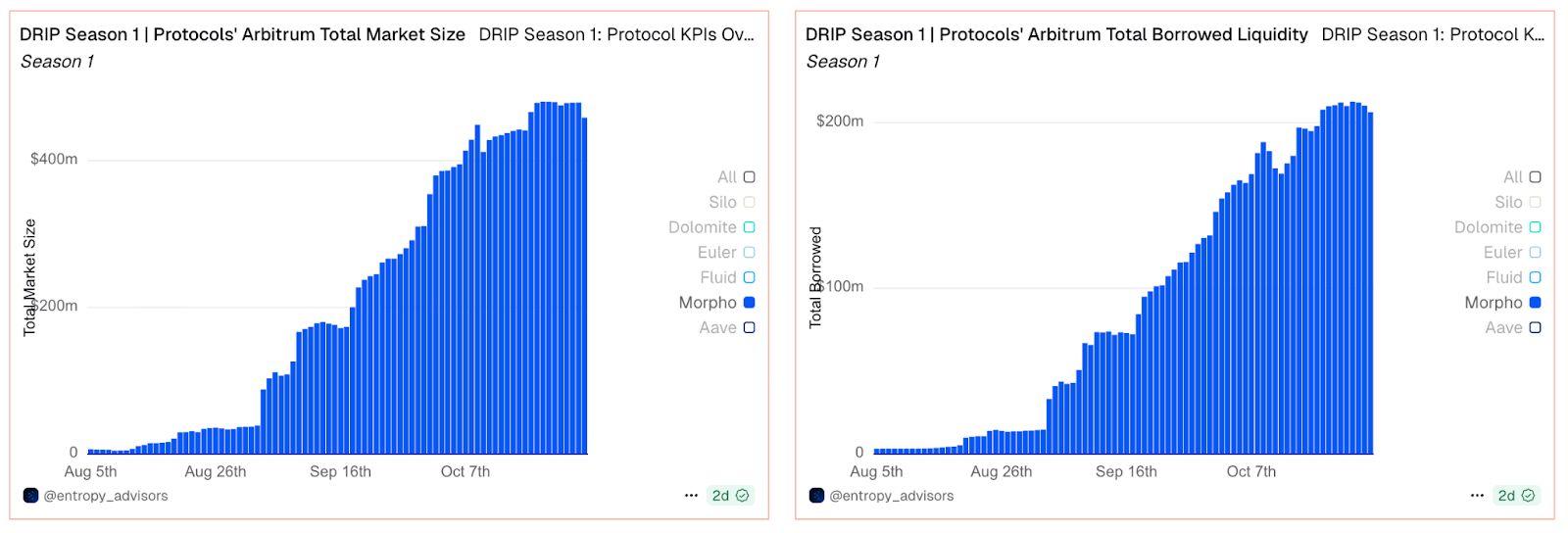
Morpho only went live on Arbitrum in August. Thanks to DRIP, Arbitrum’s market share on non-Ethereum networks grew from less than 1% to 9%. The total market size is now almost $500m, with over $200m in loans.
Fluid
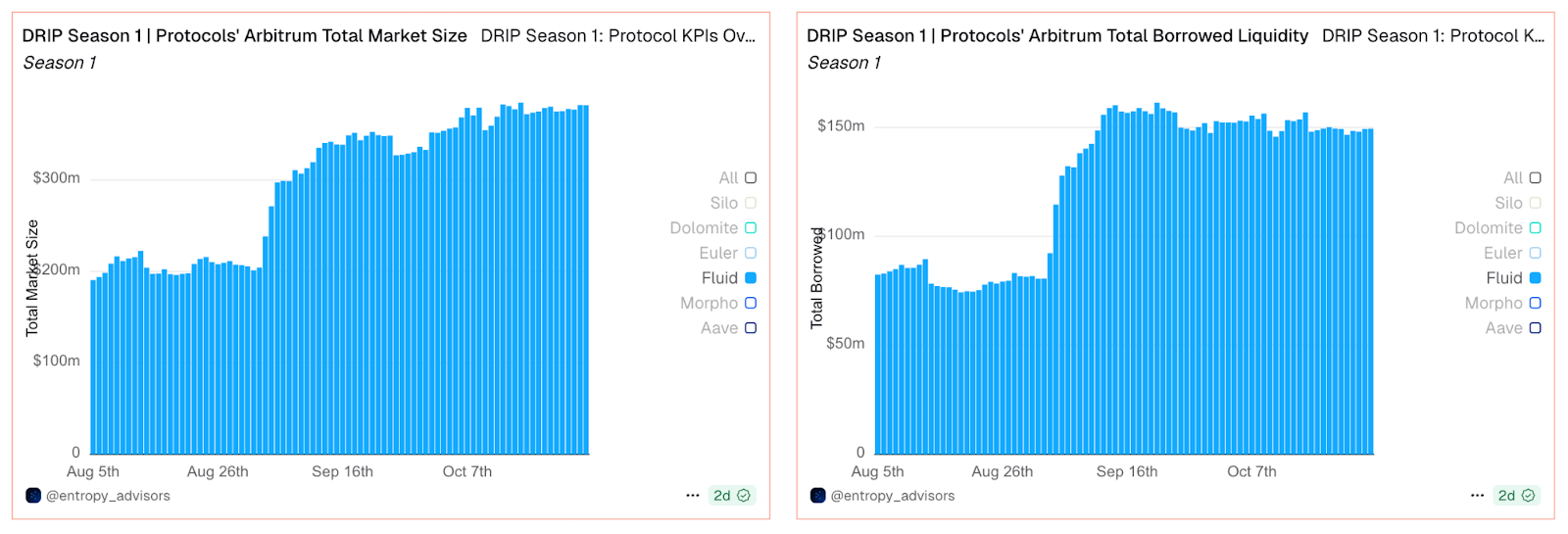
Fluid has experienced over 50% growth in its market size, from 300 to almost $400m. An even higher growth has been achieved in loans, which went from around $80m when the program started to around $150m today.
Dolomite
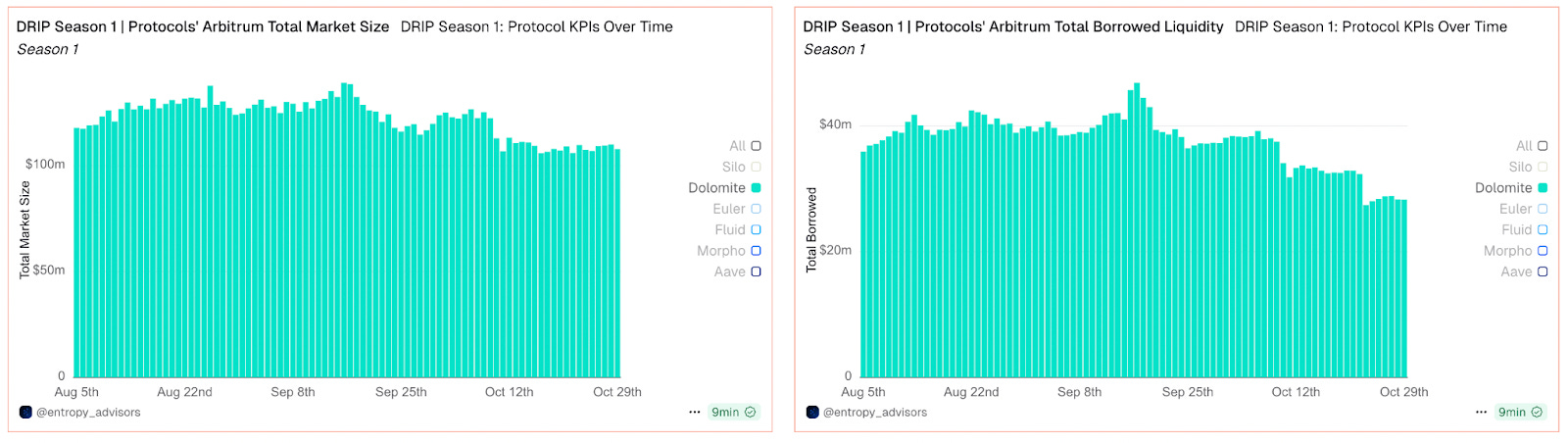
Dolomite has not seen a significant benefit from this campaign. On the other hand, Arbitrum has grown its share of Dolomite chains, again becoming its biggest venue amid the liquidity contraction on Berachain.
AAVE
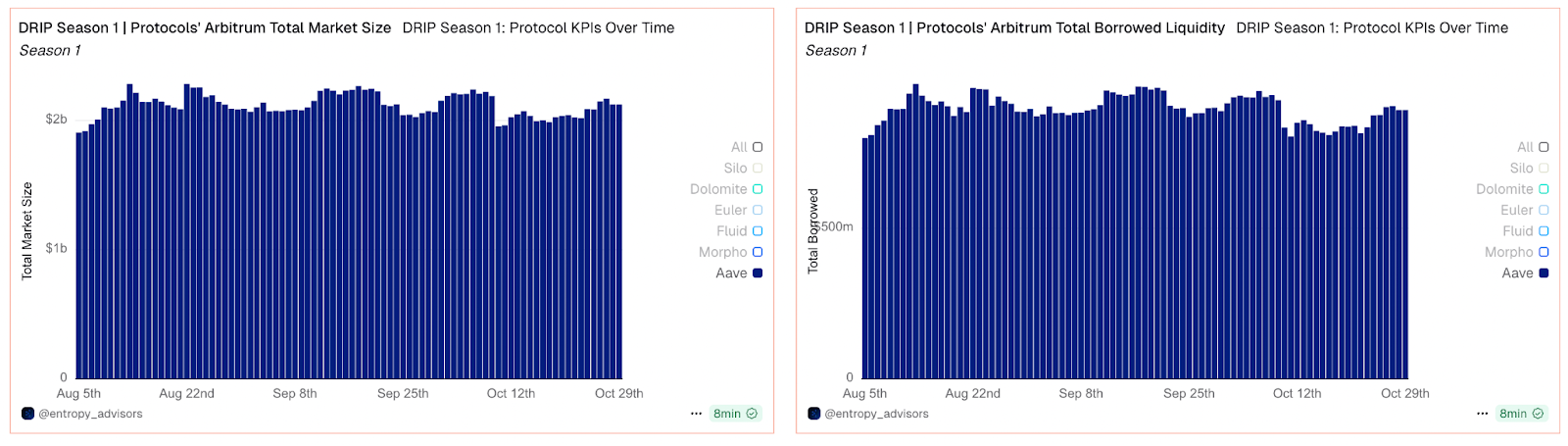
On the other hand, Aave does not register any particular increase in total market size or borrowed liquidity. This might be partially due to its larger size, which is less affected by DRIP incentives; however, Aave is not currently receiving rewards because DRIP prioritises USD-denominated markets due to ETH’s high cost of capital. Therefore, rewards on Aave have been temporarily paused and reserved for future epochs, as only eligible ETH assets are currently listed.
Top Winners Among Assets
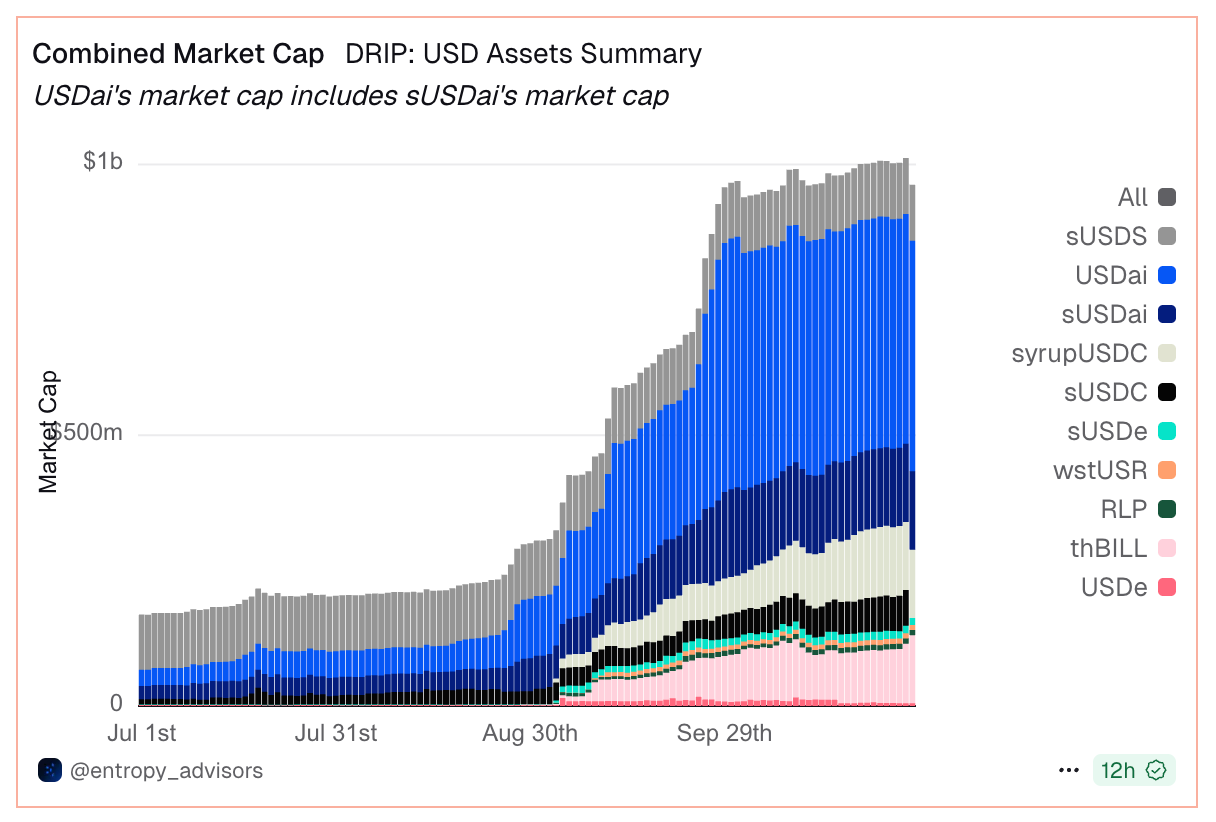
The total USD market capitalisation of DRIP-eligible assets increased from below $500m to $1b, growing by over 100% since the start of the program.
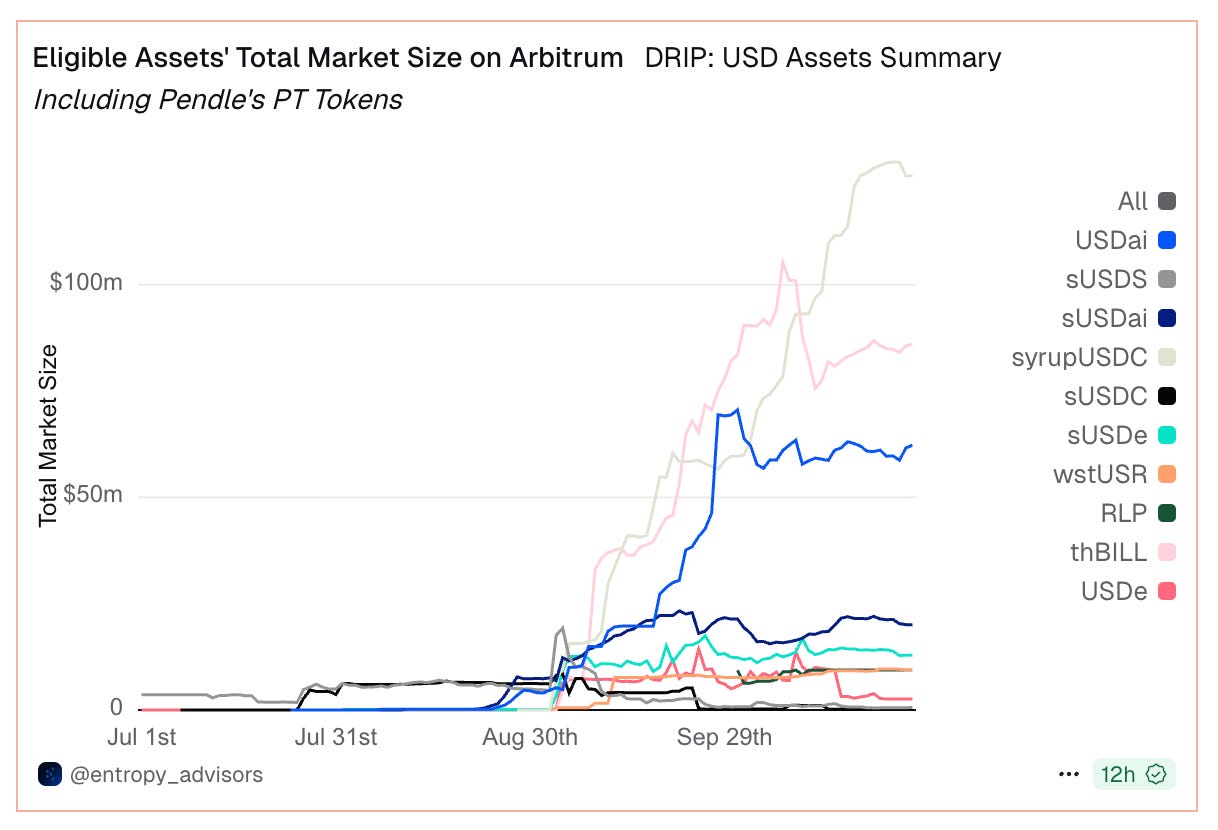
Eligible DRIP Assets Market Size: as the chart below shows (with the inclusion of Pendle’s PT tokens), the assets that have grown the most are syrupUSDC and thBILL.
Food for Thought and Conclusion
The impact of DRIP on the Arbitrum ecosystem, beyond the protocols and assets involved in Season 1, is already evident.
In particular, it has contributed to a major boost in lending and DEX activity, achieving its specific objective of increasing looping of yield-bearing assets on Arbitrum.
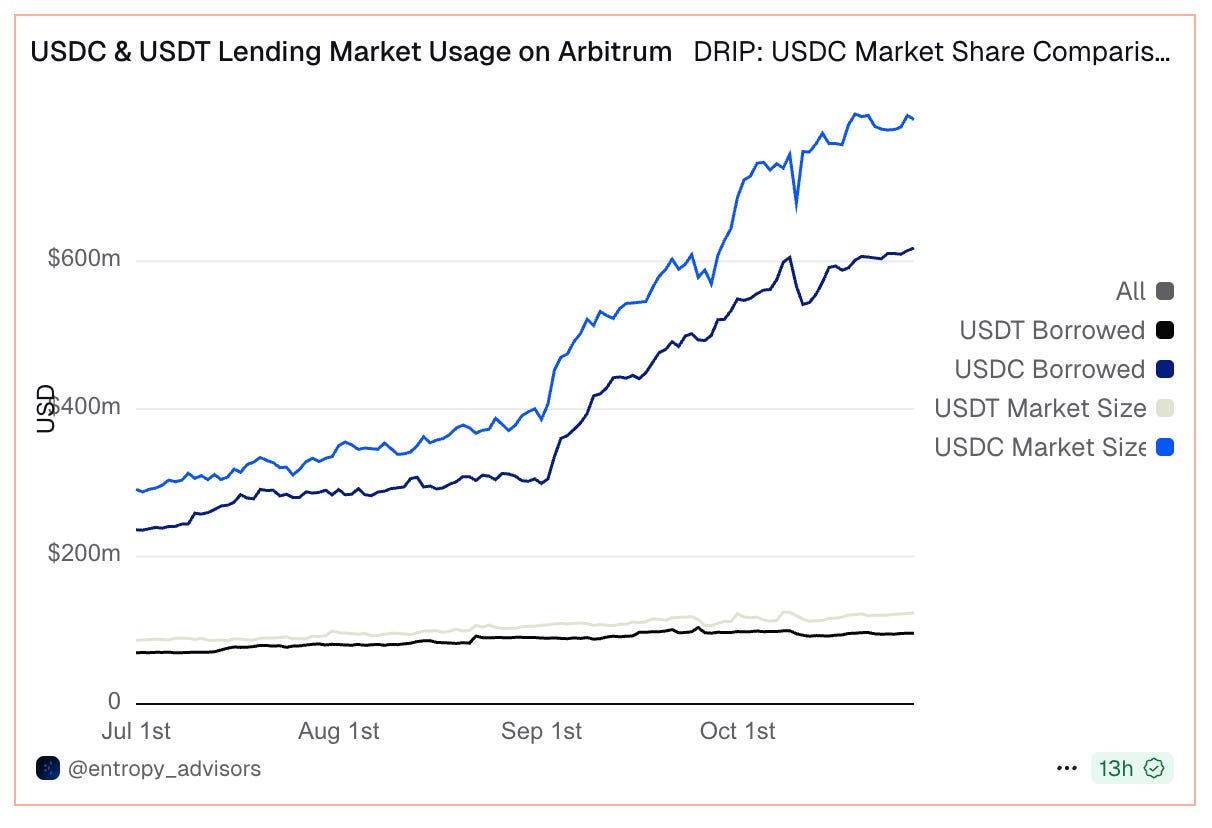
By targeting key protocols and assets, it is bringing liquidity and incentives where they are most needed, thereby increasing Arbitrum’s competitiveness in lending opportunities.
While it’s too early to evaluate the impact of DRIP on the ecosystem (and retention post-program), we believe the program is moving in the right direction. Arbitrum’s lending market share is growing compared to other ecosystems, with increased availability of yield sources and venues.
Learning from this program should be leveraged further in future incentive programs.
Some areas for improvement include broadening the scope of protocols to include smaller ones and making bootstrapping liquidity part of the program’s overall objectives. Whether this can be integrated into DRIP or made into a separate program is up for discussion. However, bootstrapping liquidity proved an effective way to leverage incentive programs.
All said and done, DRIP is not over yet and will continue for 3 more seasons after this.
We’re reserving a deeper analysis of the program’s impact at the end of each season, and we’ll also have a post-program report with a general overview of its performance and key learnings.
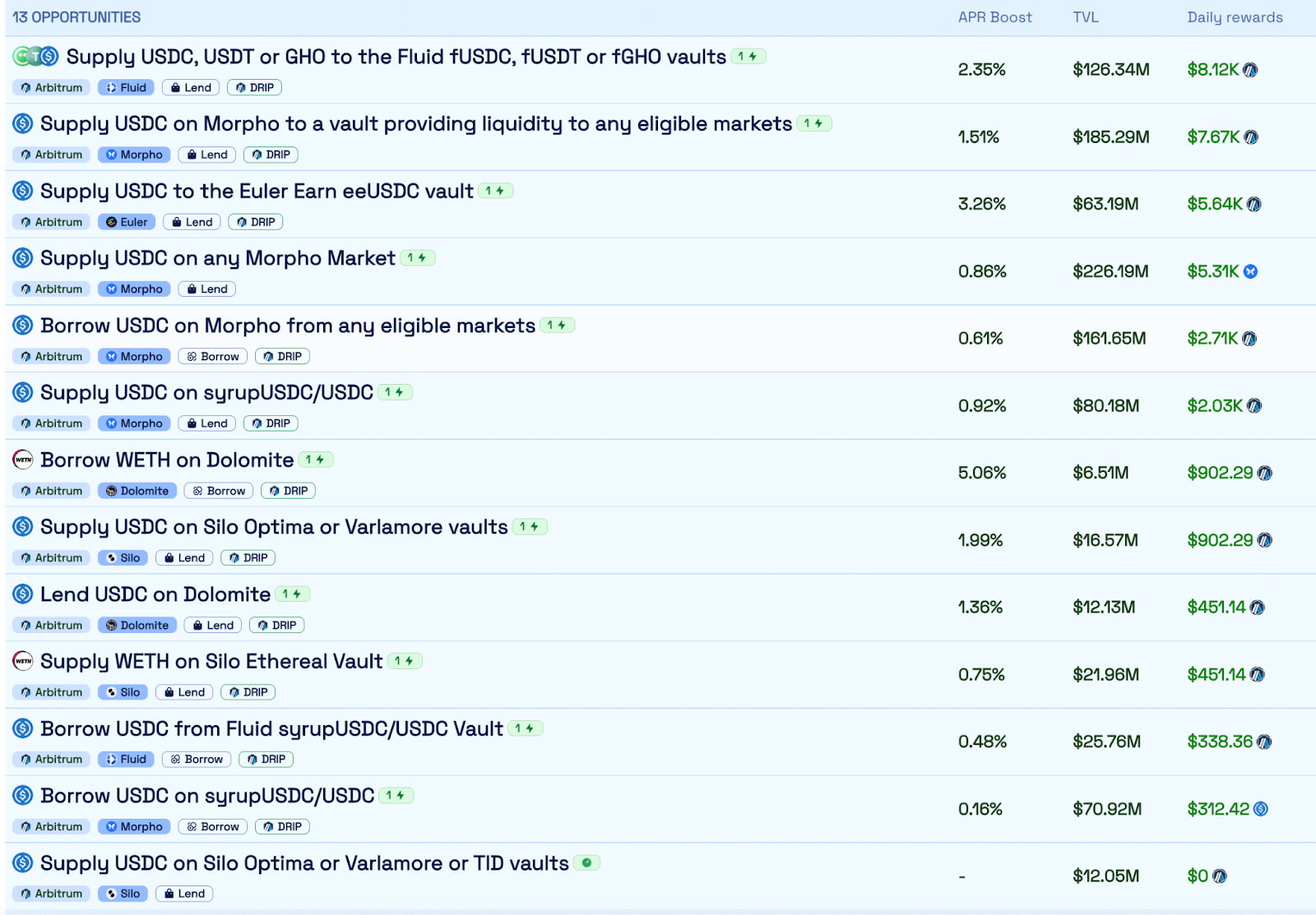
For now, make sure to check out the existing yield opportunities:
Complete list at: https://arbitrumdrip.com/opportunities