


This week has been full of launches, starting with Paragon Power Perps, which provides options like exposure through perps, and Elysium, a value-accretive L2 on Hyperliquid.
While we discuss both of them, we also cover:
Ethena Pay and Earn+ Flywheel, where we cover how Earn+ contributes to USDe supply with an interview with Lito, who handles GTM for the product.
Hyperliquid HIP-4 is reaching escape velocity with Outcome as a major deployer.
Derive is going into RWA options and Rysk Finance NVDA volatility income.
IRIS is a borrowing protocol built on top of existing lending markets to meet fixed-rate borrowing demand for its users.
And more.

Ethena Pay and Earn+ Flywheel: An Interview with Lito
Ethena Pay, Ethena’s neobank, went live in September and, at the end of October, launched Earn+, which lets Ethena Pay depositors earn up to 12% APY through leveraged USDe exposure.
So far, Earn+ has recorded $7.64 million in deposits, which led to ~$80 million in $USDe demand, a direct correlation between Ethena Pay growth and USDe, making it a great growth lever. We believe that creating more demand for USDe is a big win for $ENA because once supply reaches over $7.5 billion, buybacks begin.
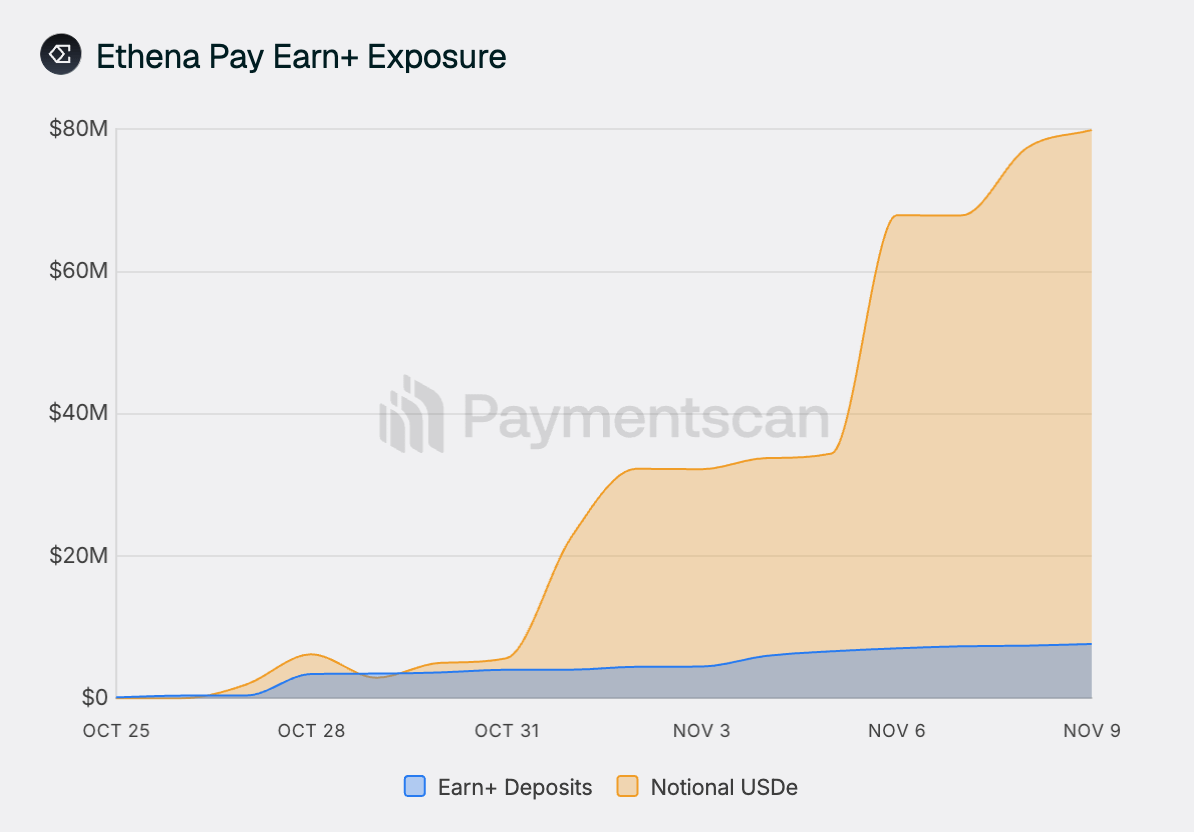
To better understand this flywheel and what helps make Ethena Pay different, we interviewed Lito, GTM at Ethena Pay.
Stablecoin neobanks and crypto cards are a pretty crowded market, so making a product stand out is difficult, to which Lito added, “It’s actually good for others to take the market first and educate people about this product segment, and also learn from others what hasn’t worked and what worked well, and then just execute better”
Additionally, Ethena Pay’s edge is its business model and trust.
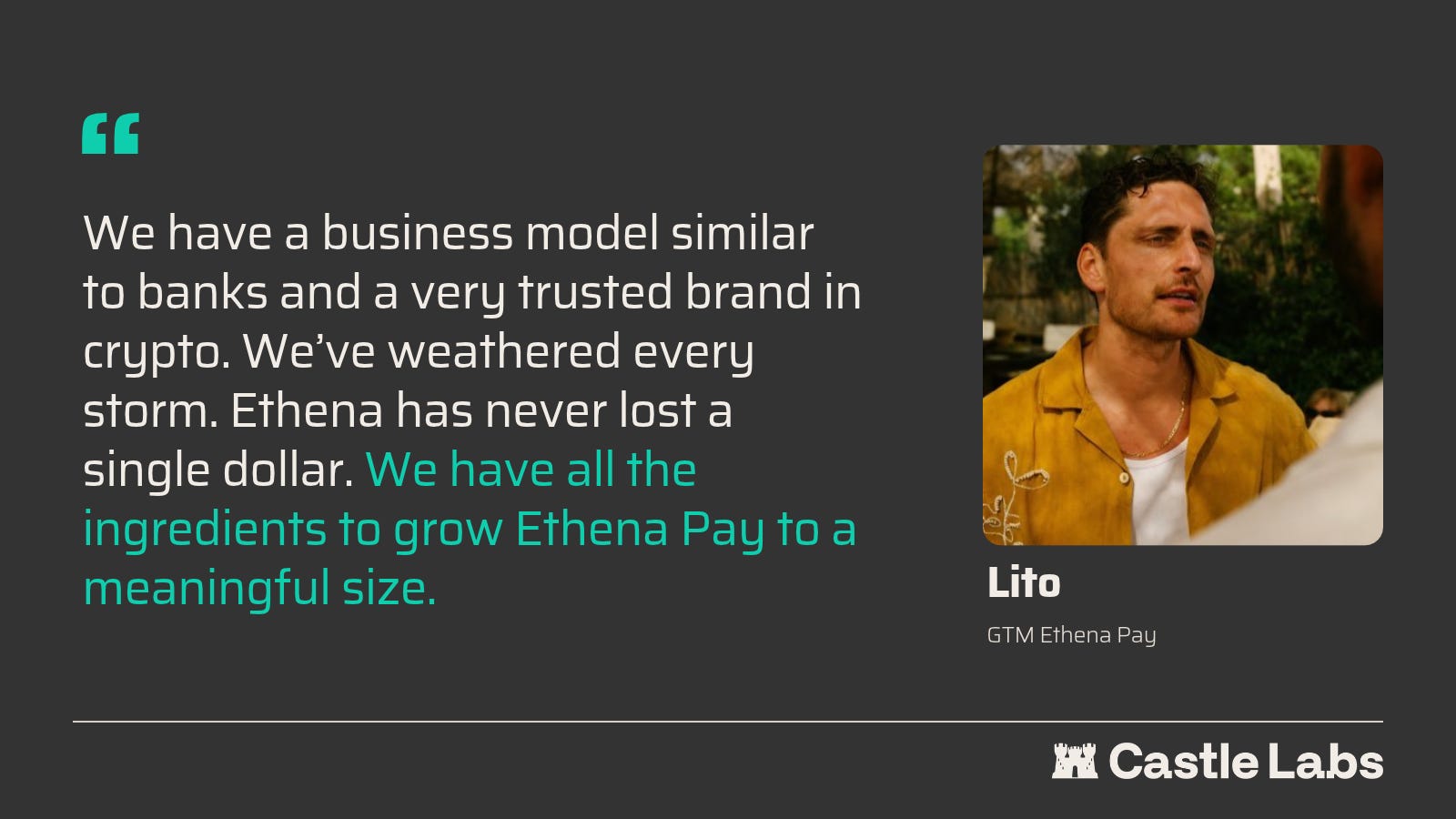
“We are able to monetise the assets that users hold in Ethena Pay, so we have a similar business model to banks, where we earn a net interest margin. We’ve weathered every storm in the crypto space. Whether it’s 10/10, the Bybit hack, whatever you name it, Ethena has never lost a single dollar. I think that reputation will give people a lot of confidence in using Ethena Pay.”
For the flywheel Earn+ creates with a DeFi product, Lito adds, “Once you own the distribution, once you own the users, you can very easily offer them improvements or new product features without having to go through an intermediary. It’s much easier to bring new products to market.”
This also explains how Ethena Pay feeds back into the wider ecosystem. Every new user holds USDe by default, so “all the growth in Ethena Pay adoption is also USDe adoption.”
Moreover, $ENA is getting a more direct role in Ethena Pay soon, as “in a couple of weeks, we will announce tier upgrades, and that will require holding and locking ENA.”
Elysium: A Value-Accretive L2 and LP opportunities on the chain
Elysium went live on mainnet yesterday, and one of its key offerings is enabling the Hyperliquid ecosystem to capture more of the general-purpose activity (DeFi apps, meme coins, onchain spot, tokenised stocks) that leaks to Robinhood, Solana, and Base.



It is built on Arbitrum Orbit Stack and is value-accretive because it programmatically redirects sequencer revenue to buybacks (50%), treasury (25%), and builders (25%), with the gas token being $HYPE and settlement on HyperEVM, the Hyperliquid L2.
Since its launch, over $50 million has been bridged onchain, with very little liquidity sitting on DEXs.
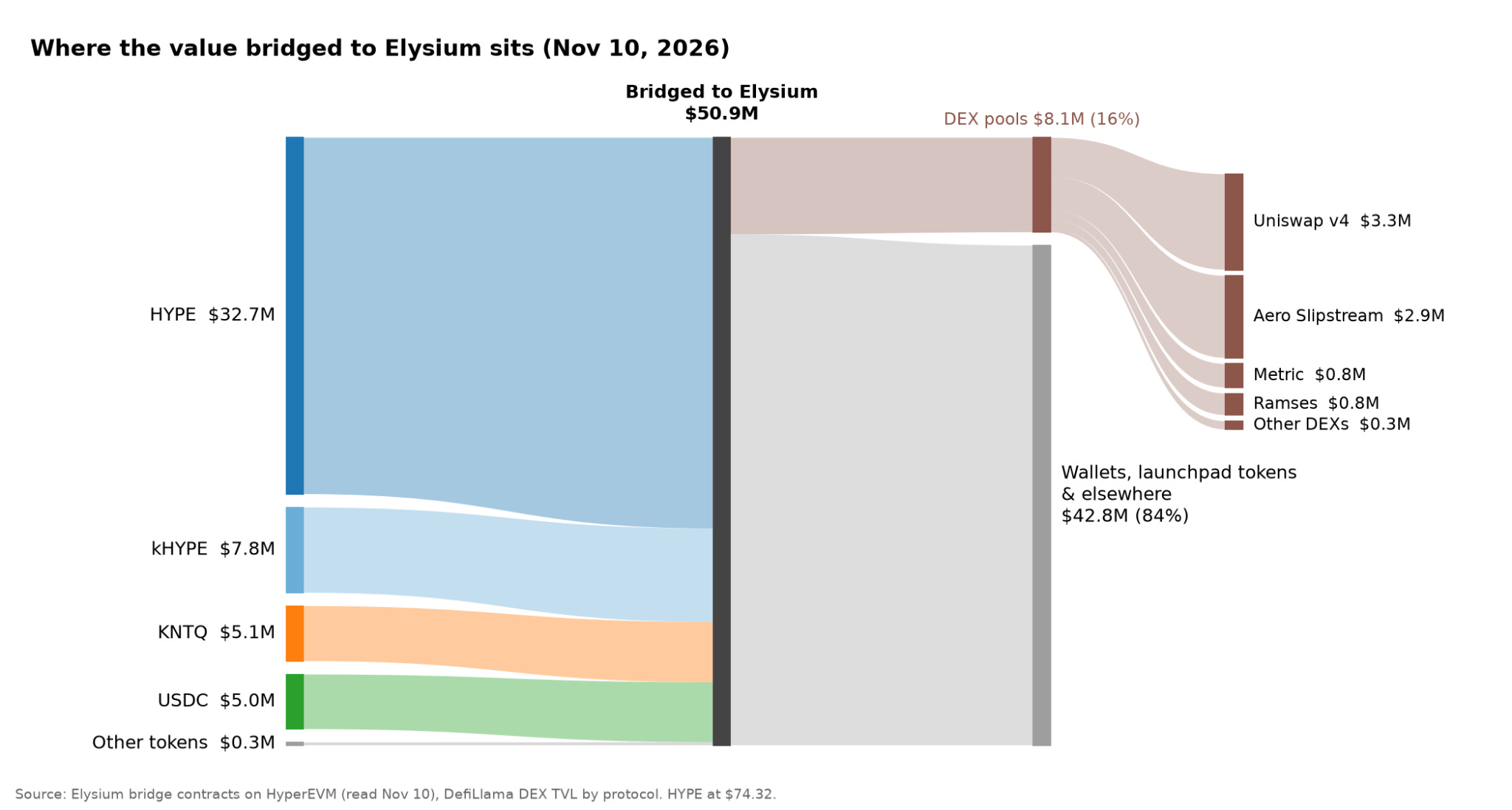
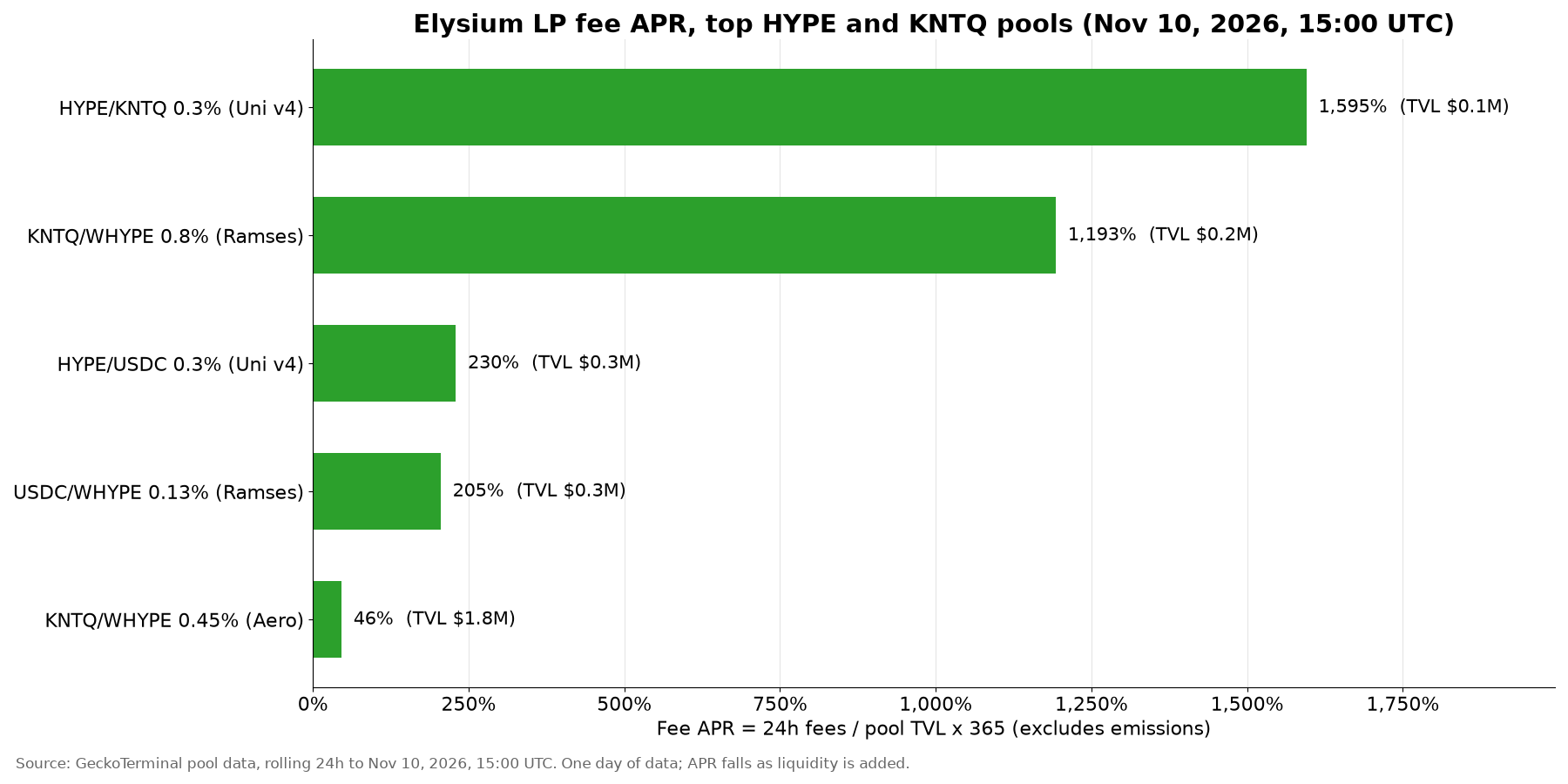
Because of this thin liquidity, there is a good opportunity to allocate as an LP in these pools, with the current APR being highly lucrative. However, given the chain's nascent stage, you can expect these APRs to decline in the near future.
Beyond the current opportunities, Elysium’s core advantage is its ability to tap into Hyperliquid orderbook data, with an upgrade scheduled in 4 weeks.
Once that happens, we should see multiple DeFi use cases take advantage of the chain’s close proximity to HyperCore, plus its hyper performance.
Power Perps: Paragon
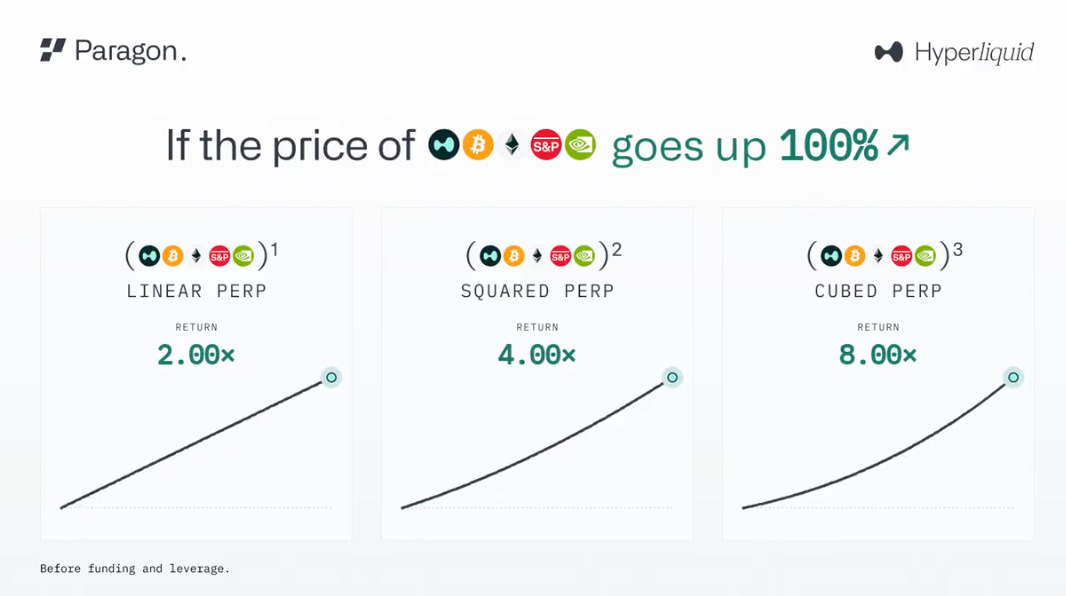
Paragon, an HIP-3 deployer, recently launched Power Perps, which provides options-like convexity into a perpetual contract with no strikes and no expiry.
So how does this work?
A Power Perp is a normal perpetual contract, but instead of tracking an asset’s price, it tracks that price raised to a power: squared, cubed, and so on.
So when the price goes up, let’s say 2x, a squared perp goes up 4x.
The downside is softer than upside: a 10% rise gives +21% while a 10% drop gives only -19%, and a 50% drop gives -75% rather than -100%.
That curved payoff is similar to an option, but with no strikes, no strikes or expiries, so all liquidity sits in one orderbook.
HIP-4 is reaching escape velocity ft. Outcome
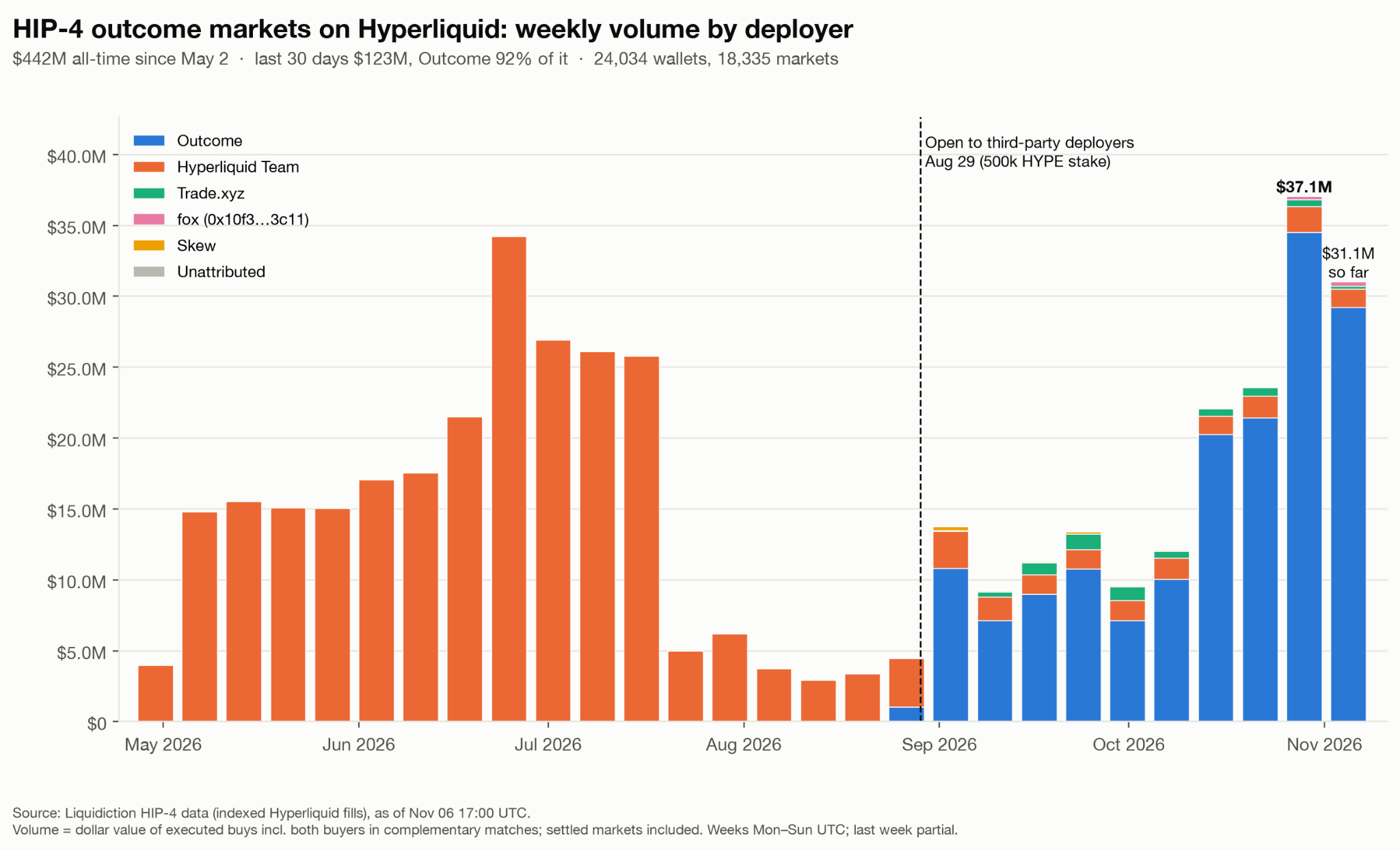
HIP-4 volumes have been recently pacing up due to deployers like Outcome, with the growth mainly coming after Hyperliquid enabled permissionless deployment at the end of August. This also reflects high concentration in these markets, a dynamic similar to HIP-3 and TradeXYZ.
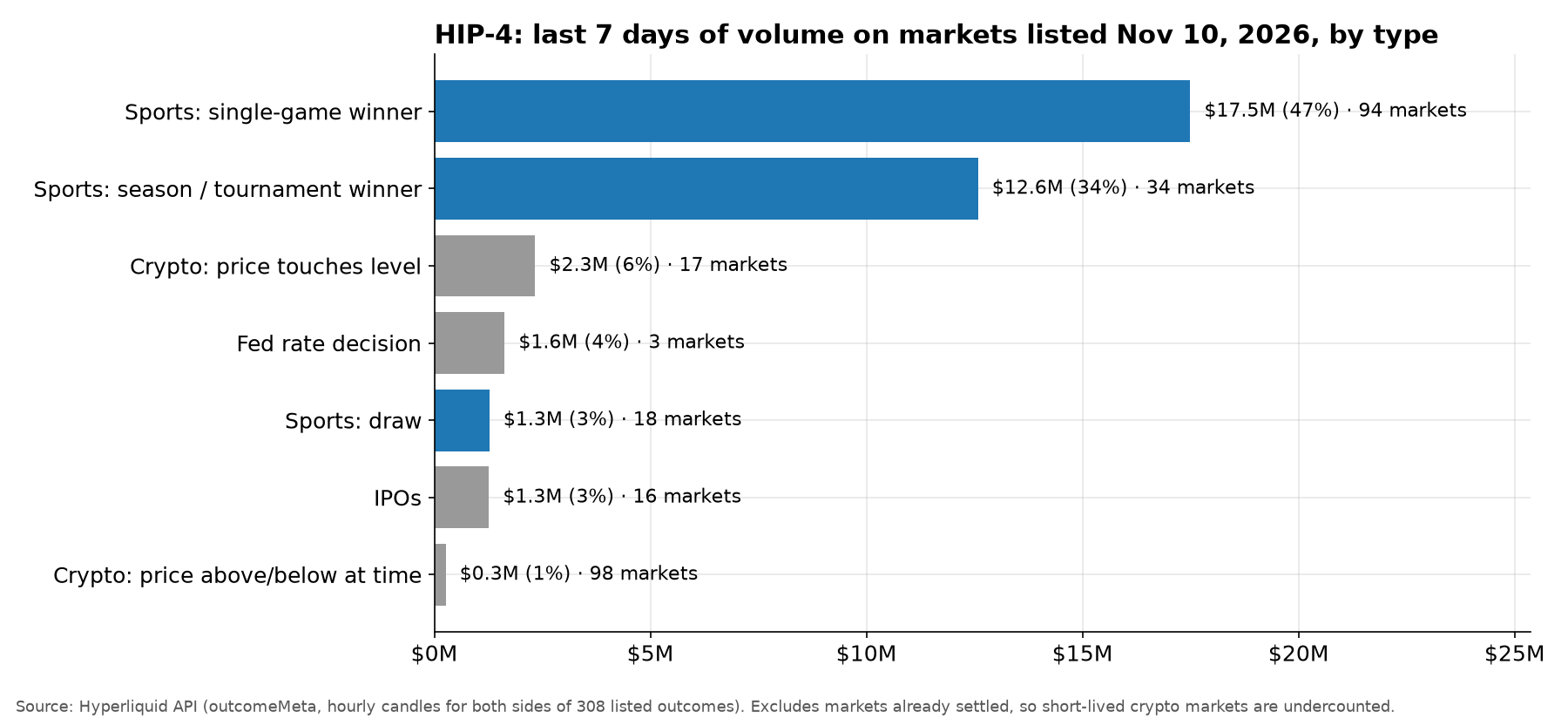
Most current volume comes from sports-related markets, followed by crypto markets, which means volume is seasonal and you can size up during these events.
Also, with a potential airdrop and current incentives from Outcome, it is a fair opportunity to explore the platform, and if there is a Hyperliquid Season 3, you can benefit from that too.
One good strategy is market making: place limit bids on both YES and NO with combined prices under $1, say 0.48 and 0.49. While your orders sit on the book, you earn Outcome’s liquidity rewards. If both fill, you hold a pair that pays $1 for $0.97. The risk, though, is getting filled on only one side, which leaves you holding a straight bet until you requote or hedge, making it easier on the markets that move slowly than on live games.
On our Radar
Derive controls 95% of the onchain options market share, and now one of the largest markets, RWAs, is going live on the platform, giving users another instrument to hedge exposure or trade the assets beyond perps.


Rysk Finance, which helps users earn upfront volatility yield, is expanding into RWAs with NVDA options strategies.


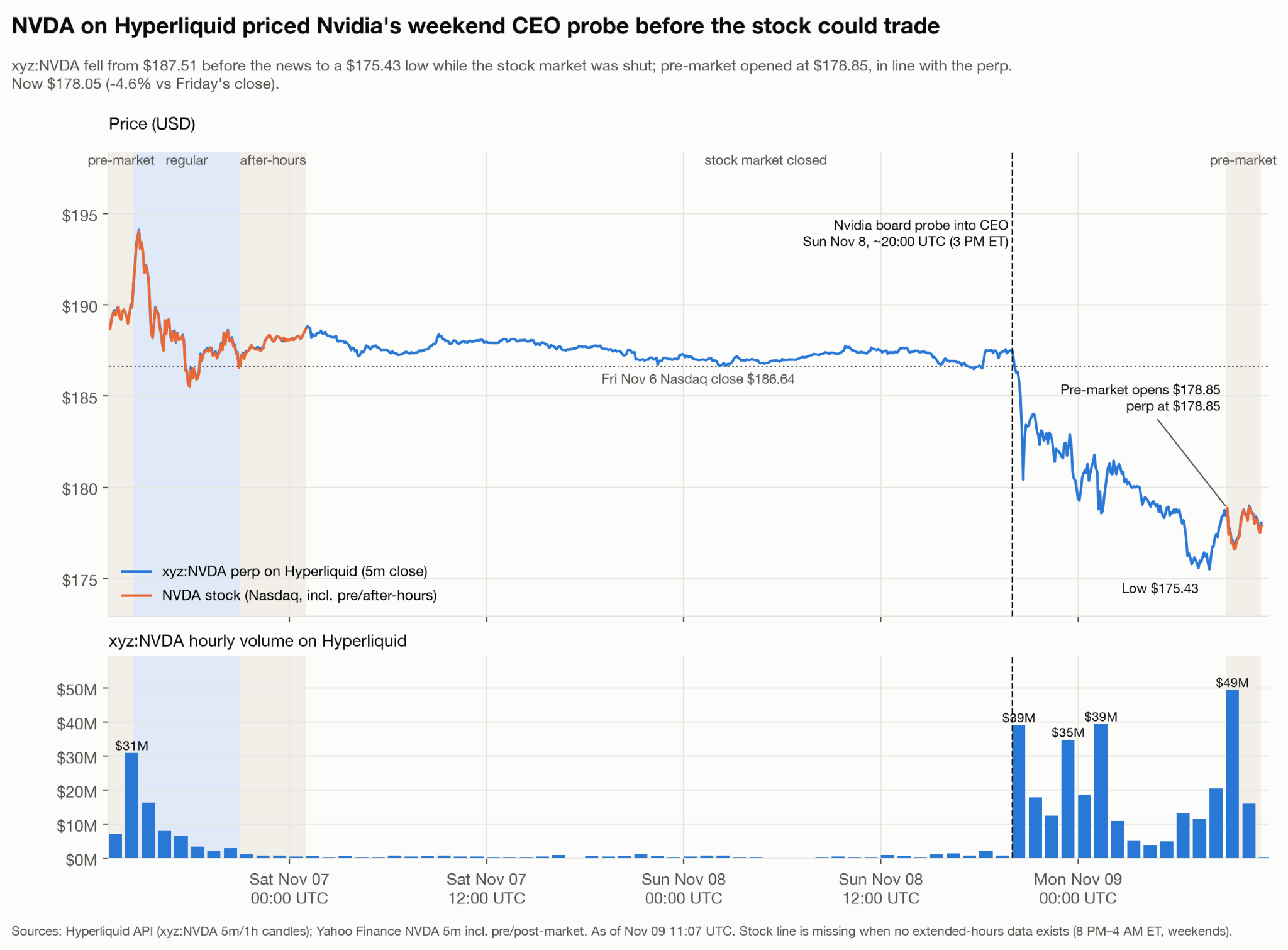
Over the weekend, when news broke that Nvidia CEO Jensen Huang had an affair with a Chinese spy, Alice Huang, one of the core venues pricing the stock was the Hyperliquid TradeXYZ market, providing price discovery even when markets were closed. These are the things 24/7 exposure enables, benefiting everyone and helping $NVDA stockholders hedge exposure or trade the news.
In August, we launched a report on Fixed Rate Lending covering multiple designs around predictable credit. Today, one of the protocols we covered then went live: IRIS, a fixed-rate borrowing protocol built on existing DeFi lending markets (Morpho, Spark, and Aave). In their model, borrowers express a fixed-rate intent. Then IRIS’s solver network sources and manages backing across integrated lending venues, optimising not only for cost but also for rate predictability.


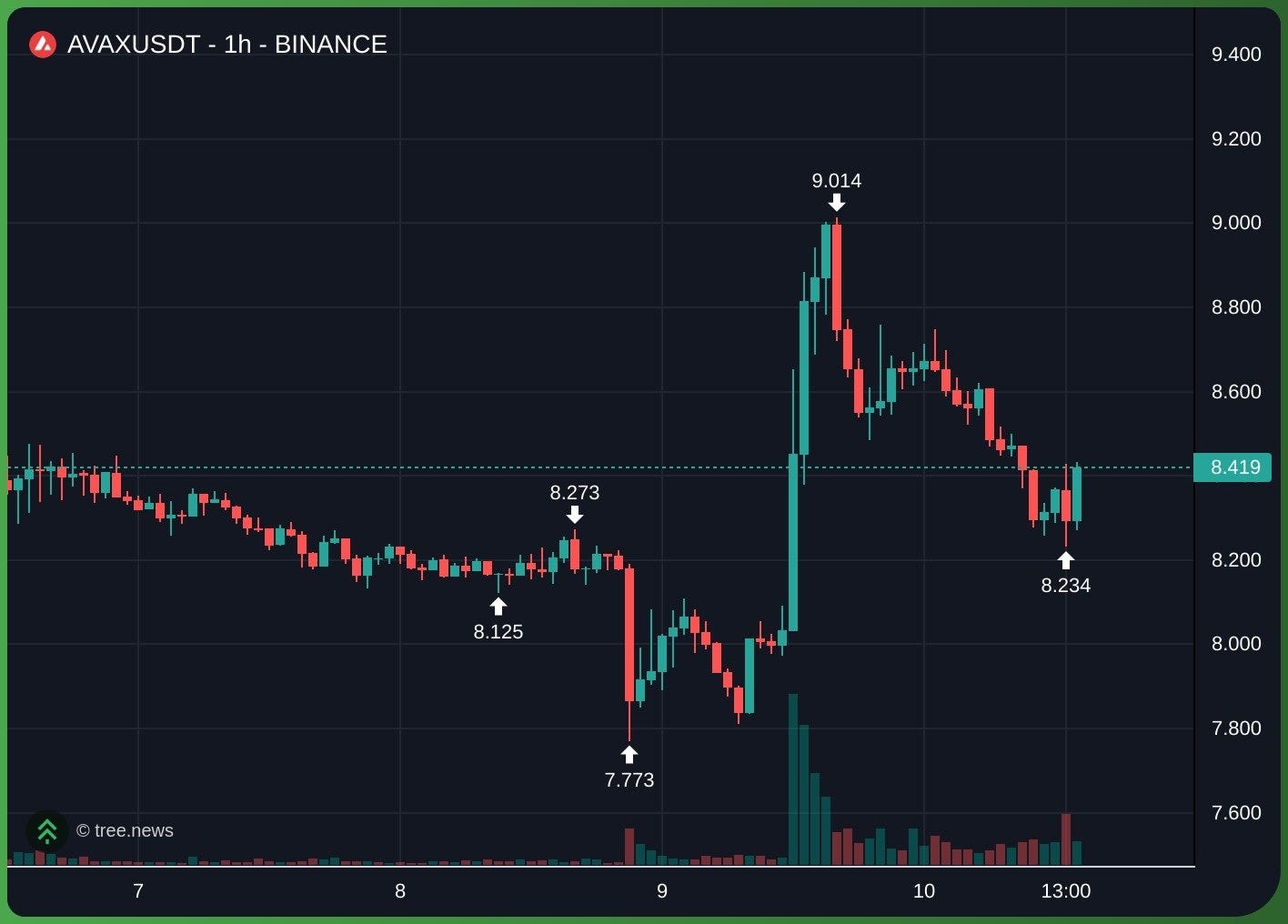
The NYSE tokenised equities securities platform will settle on Avalanche. Avalanche has been one of the quieter chains and has been slowly building out BD efforts like this. Ethena Pay also settles on Avalanche, and its Earn+ product is live on the chain through Aave V4, bringing in strong DeFi flow.
Not a subscriber yet? Join for free:

PLUS, don’t forget to join our Telegram channel for the latest updates from Castle and all our research: Link here

Disclaimer: In our newsletter, we may discuss projects or tokens in which we hold positions. While we aim to provide informative content, our views are not financial advice. Please conduct your research and consult professionals before making investment decisions. Crypto markets are volatile, and past performance doesn’t guarantee future results. Invest responsibly, and be aware of the risks. Your capital is at risk, and we do not accept liability for any losses.