


Welcome to the AI Dispatch #42!
It would be quite insensitive to run our weekly newsletter without contextualising it within the current situation.
After showing signs of reprisal, Bitcoin is back at $86k - historically a strong support, but also a critical level if broken on the downside.
This weekly dispatch touches upon the state of the AI sector and how the market is impacting it. Lastly, we will briefly discuss the following question: Is AI in a bubble? How will this impact the sector?
This is all about to be seen.

Impact on the AI Sector
As part of the project’s impact is @xMaquina.
We’ve already introduced the protocol with an individual article:

The project is now conducting its token sale on @Legiondotcc.
Today is the last day to participate in the token sale:

While the market is impacting all recent token sales, it’s worth noting that xMaquina conducted another sale some months ago at a valuation about half that of the current one.
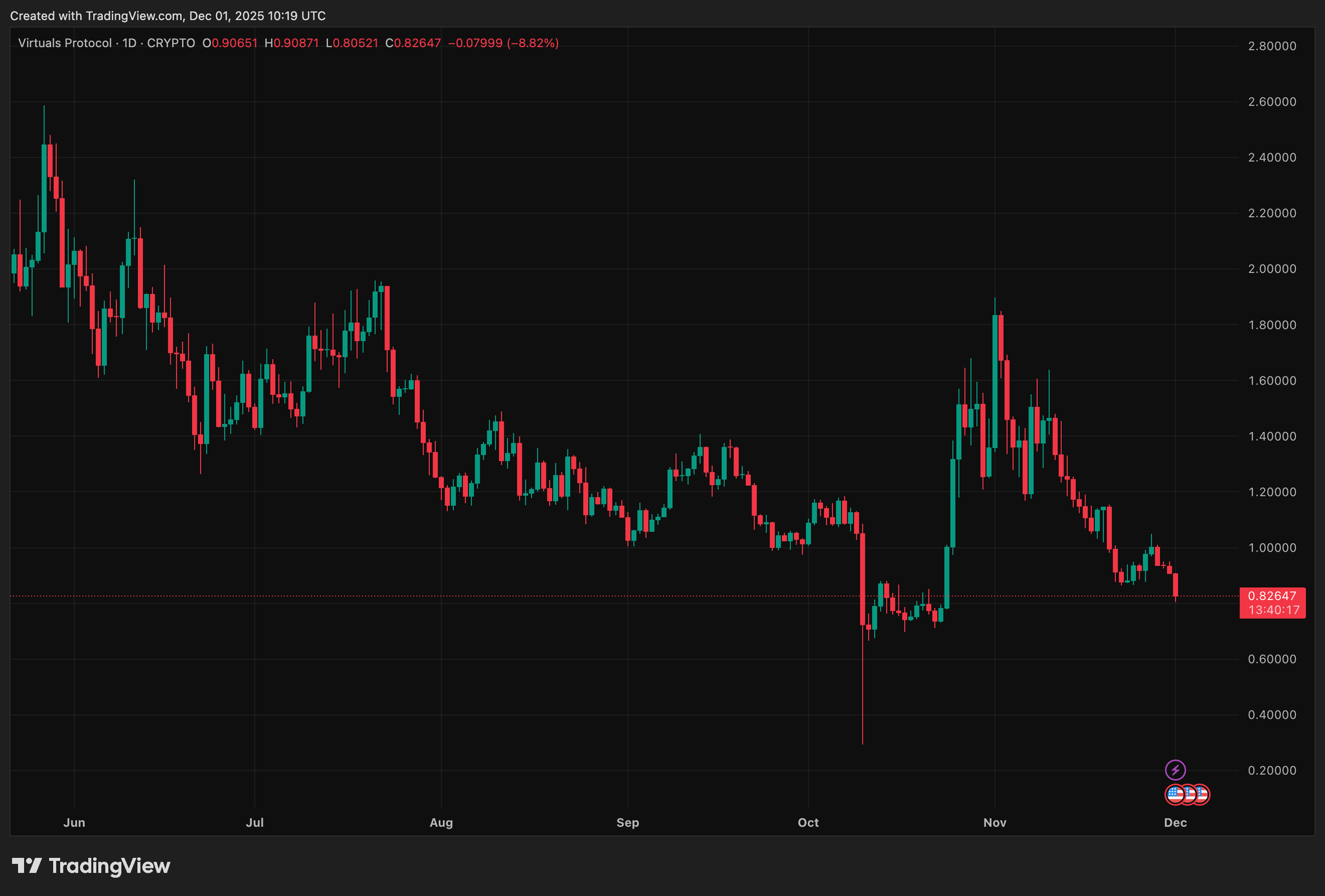
You know things are bad when looking at $VIRTUALS, one of the benchmarks for how the whole sector is going. While it has been relatively strong compared to other tokens, it finally seems to be capitulating as well, below $0.85c, making our dreams of a bounce farther away.
Anyway, if you are one of those “buy when the waters are bloody” type of investors, here are a few projects that keep building within the Virtual Ecosystem:
Weekly Highlights:

Monthly Update:

Also, an interesting article by Reppo on how to get better training data for AI models:

The thing with this market is that it’s hard to have outliers, even the almighty Z-Cash, riding the privacy wave, has given up and is now sub $400.
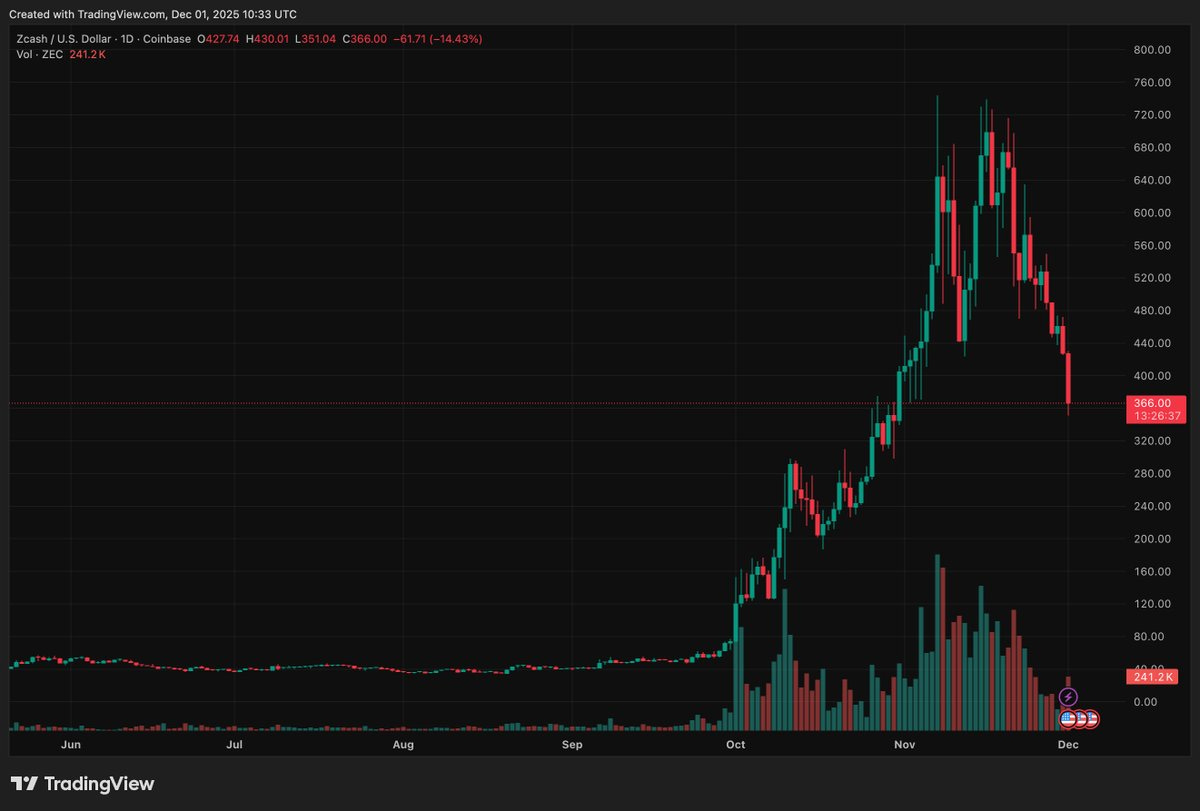
In the midst of issues with credit in Japan, Trump being ready to bomb Venezuela, and a possible impeachment scandal because of Epstein files, it’s really hard to be bullish. The general uncertainty does not appear to be placated anytime soon.
Last but not least, more and more experts are pointing out the fact that AI resembles the previous dot-com bubble.
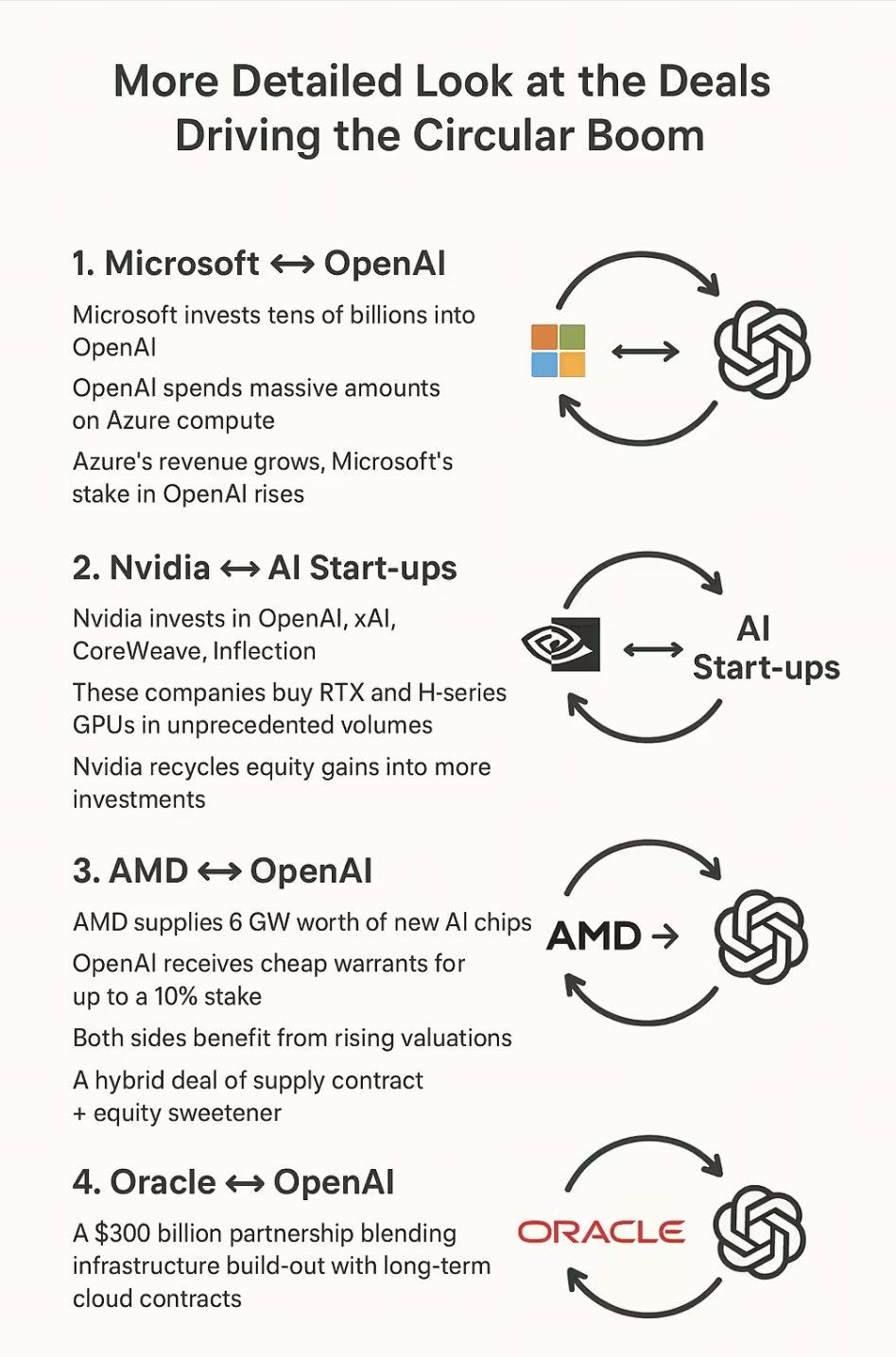
Just a couple of weeks ago, research by Columbia University showed how the AI boom is mainly stimulated by “circular deals”, the same money shifting around 4-5 different companies, such as Microsoft and Nvidia.
Here’s a graphic example of how this works:
Another famous voice in finance circles, Michael Blurry, has been vocal about his opinion that Nvidia resembles Cisco from the dot-com cycle.
The main issue of bubbles, according to @michaeljburry is not the crazy valuations of companies (at least not only). Unlike the dot-com bubble, Nvidia, Google, and other AI giants are actually making revenue. However, what we are seeing is crazy investment in infrastructure. Nvidia alone makes the majority of its revenues from data centres.
He also shared a new free article, worth having a read:

Nvidia says they are not the new Enron - well.. I wouldn’t expect them to say otherwise! Whether you think that’s FUD or not, here’s an interesting video by @coffeebreak_YT, diving deeper into this claim:
Enough with the doom posting!
Here are some small updates to brighten your day.
In case you haven’t tried it yet, Google just released Gemini 3 Pro, which includes an update of its image generation model, Nano Banana.
This update is.. quite impressive to say the least. Examples include the fact that users can generate mind maps and charts from cryptocurrency white papers with insane precision.
As its capacity improves, we expect this model to be increasingly popular for graphics. Its integration in Photoshop ensures broad distribution.
Here’s a cool video on some of the things you can now do with it:
In other news, Telegram just launched “Cocoon”, their decentralised confidential compute network. The objective of Cocoon is to solve the current “economic and confidentiality issues associated with legacy AI compute providers” such as Amazon and Microsoft. Requests from users are processed with confidentiality, with providers of GPUs earning TON rewards.

Little nerdy post on the fact that Claude Opus 4.5 can remember everything happening during Reinforcement learning (RL), which is a type of machine learning where an “agent“ learns optimal behaviour through interaction with its environment.

Here’s a deeper review of the Opus 4.5 model:

That’s it for this week! We end by sharing an interesting opportunity for anyone building AI agents, agent infra, Defi, payments, or prediction market applications. 0G is offering both dev and technical support:

See you next week if we’re still alive by then!
https://open.substack.com/pub/evolvingtheory/p/the-ai-bubble-isnt-the-dot-com-bubble-b0d?utm_source=share&utm_medium=android&r=275w0u