

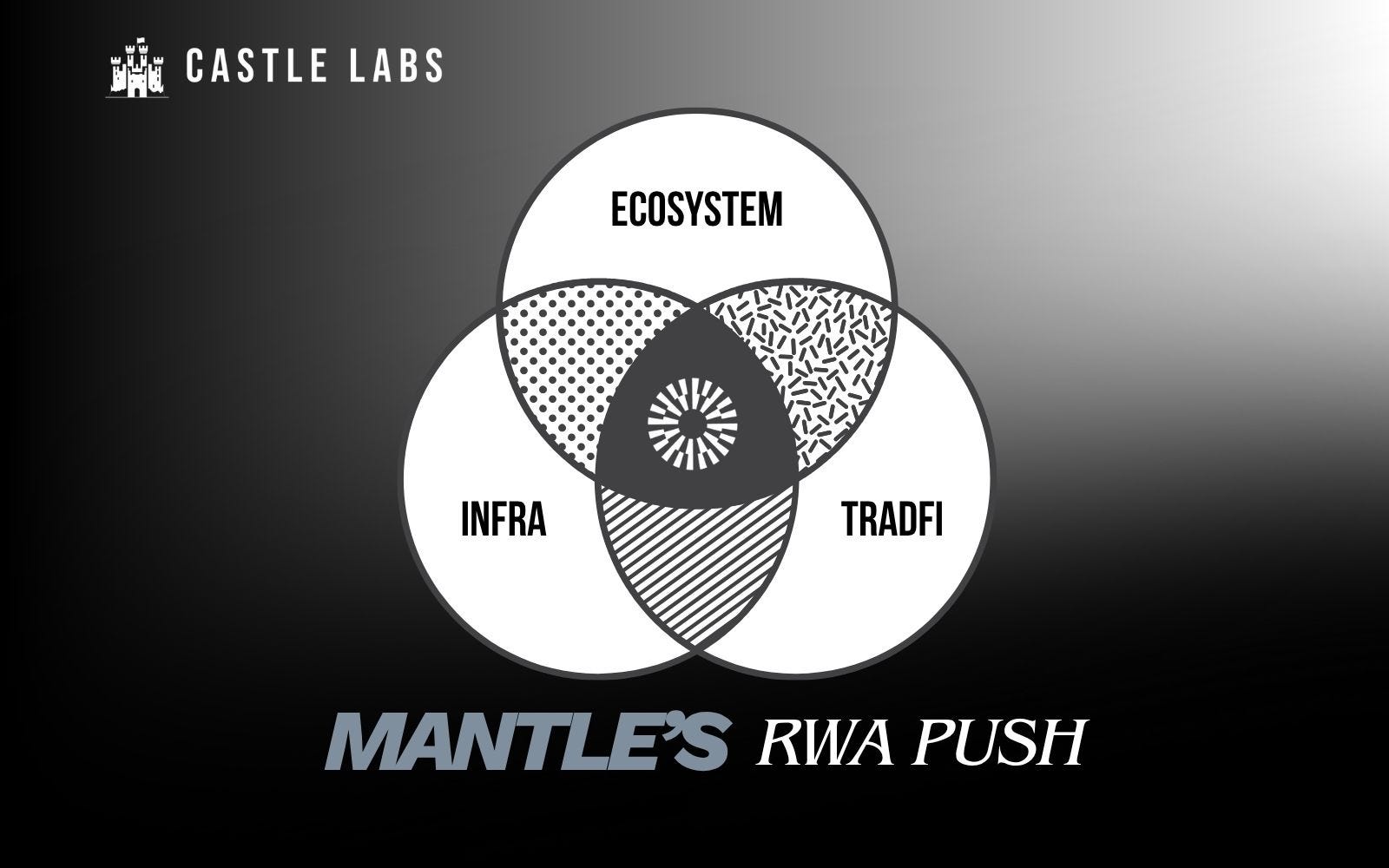
In our previous piece about @Mantle_Official, we outlined the hypothesis that, after establishing their infrastructure, they would now place a renewed focus on their ecosystem, with particular attention to accelerating its Real-World Asset (RWA) strategy.
From a generalised Layer 2 (L2), Mantle has completed its transition to a regulated ecosystem, providing access to a wide range of RWAs assets onchain, such as treasuries, private credit, real estate, and more.
As part of these efforts, they have recently announced a hackathon with over $150k in prizes.
In this short article, we first introduce the efforts Mantle has made in terms of user base and strategic focus, then we dive into the hackathon as an opportunity for builders interested in RWAs and contextualise it within the broader strategy.

Movement and Balance
Initially, Mantle’s core user base was mostly retail cryptocurrency users. With its recent pivot, Mantle has added a focus on traditional investors through the launch of an infrastructure designed to bring to life its vision to become a bridge between Traditional Finance (Tradfi) and DeFi. This includes the launch of UR, Mantle’s neobank, deeper partnerships with Bybit, and a stronger role for MNT.
With the foundation in place for end users, Mantle is now focusing on expanding its offerings to them as a top-tier RWA issuance and liquidity platform.
To accelerate this evolution, Mantle is targeting builders and asset issuers, offering them a new home with low-cost, high-performance, and strong ecosystem support.
As part of the tokenisation-as-a-service platform can also leverage the RWA sandbox to create innovative products in a safe testing environment and then deploy them to production.
This sort of positioning couldn’t come at a better time. While both traditional markets and crypto markets have suffered from uncertainty and volatility over the past few weeks, RWAs have witnessed sustained growth amid the rampant stablecoin narrative. Just this month alone, RWAs onchain have grown from $32.3b to $35.4b, an increase of 9.59%.
It’s not a secret, not a contrarian opinion, that this is one of the sectors that will expect the most growth in the next few years.
With a strong feedback loop across its infrastructure, ecosystem, and user base, Mantle can push further innovation targeted to:
Bring more RWA assets onchain
Grow its RWA TVL
Launch more innovative RWA projects across its ecosystem
To provide a practical example, compared to others, Mantle offers only two main types of RWA solutions: Institutional Alternative Funds and US Treasuries. Amplifying this offer is a key strategic priority to cater to a broader range of investor profiles.
Coupled with the launch of more RWA projects at the ecosystem level, this will be instrumental in growing its RWA TVL.
Last but not least, while not directly RWA-related, the stronger partnership with Bybit has been instrumental in increasing MNT’s utility and strengthening its central role in the ecosystem.
From closer strategic collaboration between teams, to deeper MNT integrations, fee discounts and increased utility, here is how the Mantle x Bybit partnership has evolved with a timeline:
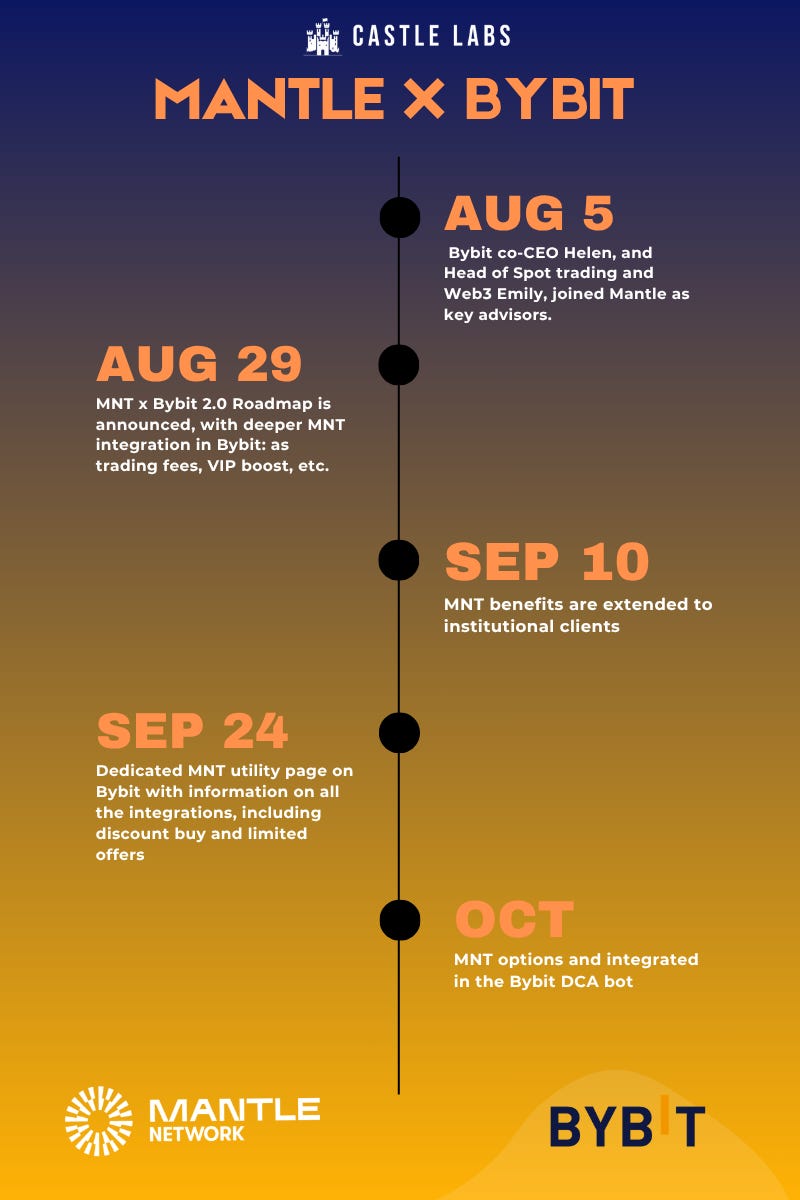
The partnership has been phased out:
Initially, there’s been deeper cross-team alignment on strategy.
Then, they have slowly rolled out increased utility for MNT.
Once MNT started having a central role within Bybit, they have continued focusing on bringing new utility for Token holders
One of the main advantages of working closely with a CEX is, without any doubt, distribution! I bet most other L2s would love to have an 80m user base to work with.
Everything you can do on Bybit with MNT:
https://www.bybit.com/en/MeetMantle
Having an active ecosystem is the last step Mantle needs. Let’s now dive into the hackathon as an innovation funnel for the ecosystem, highlighting how it is designed and what it’ll focus on.
Hacking TradFi
Mantle just launched its first Global Hackathon, running from October 15th (already live!) up to the 31st of December.
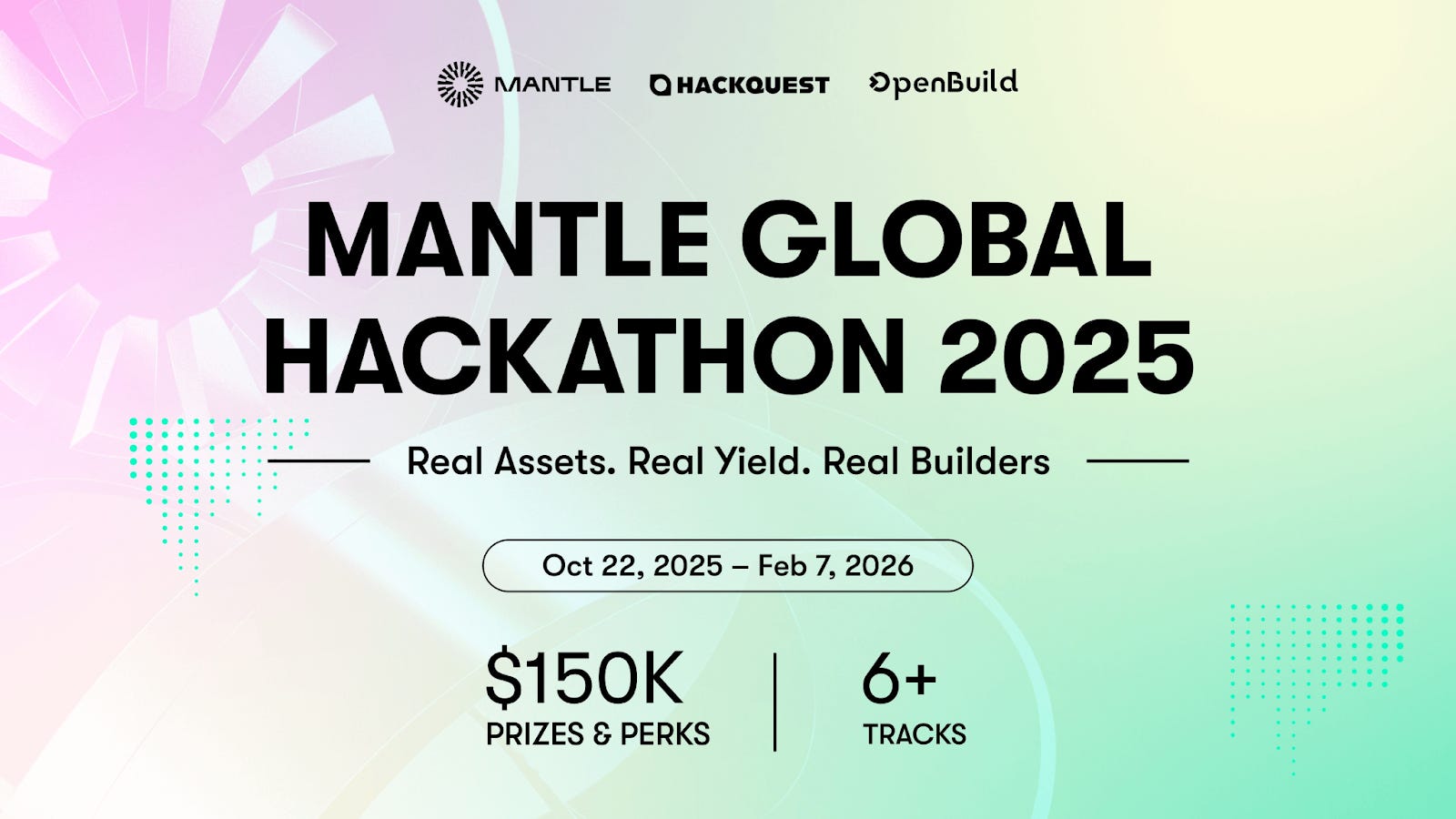
Aside from the cash prize, Mantle has carefully created a funnel to integrate builders in the ecosystem after the hackathon, as winners will also receive additional grants and incubation support.
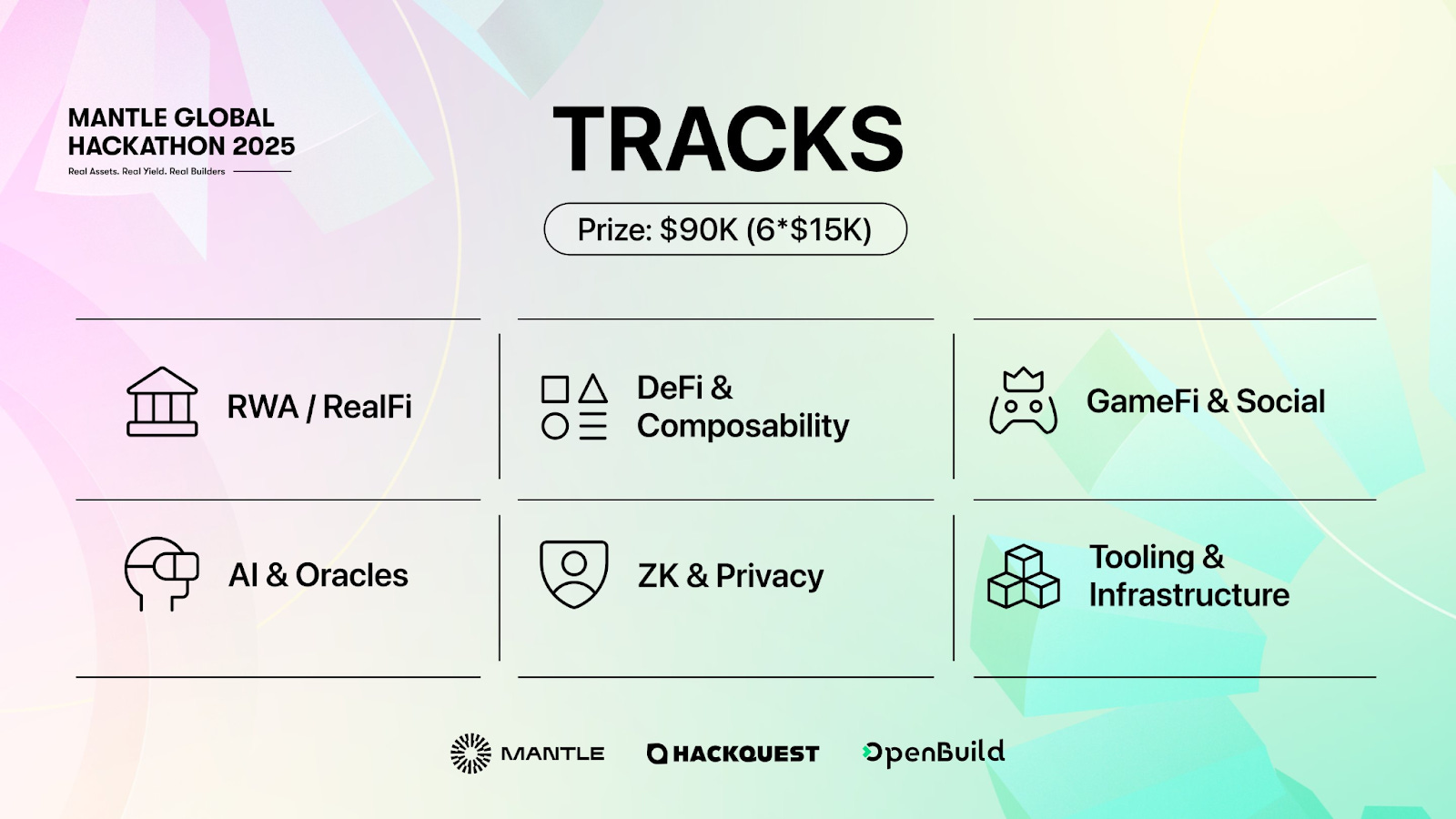
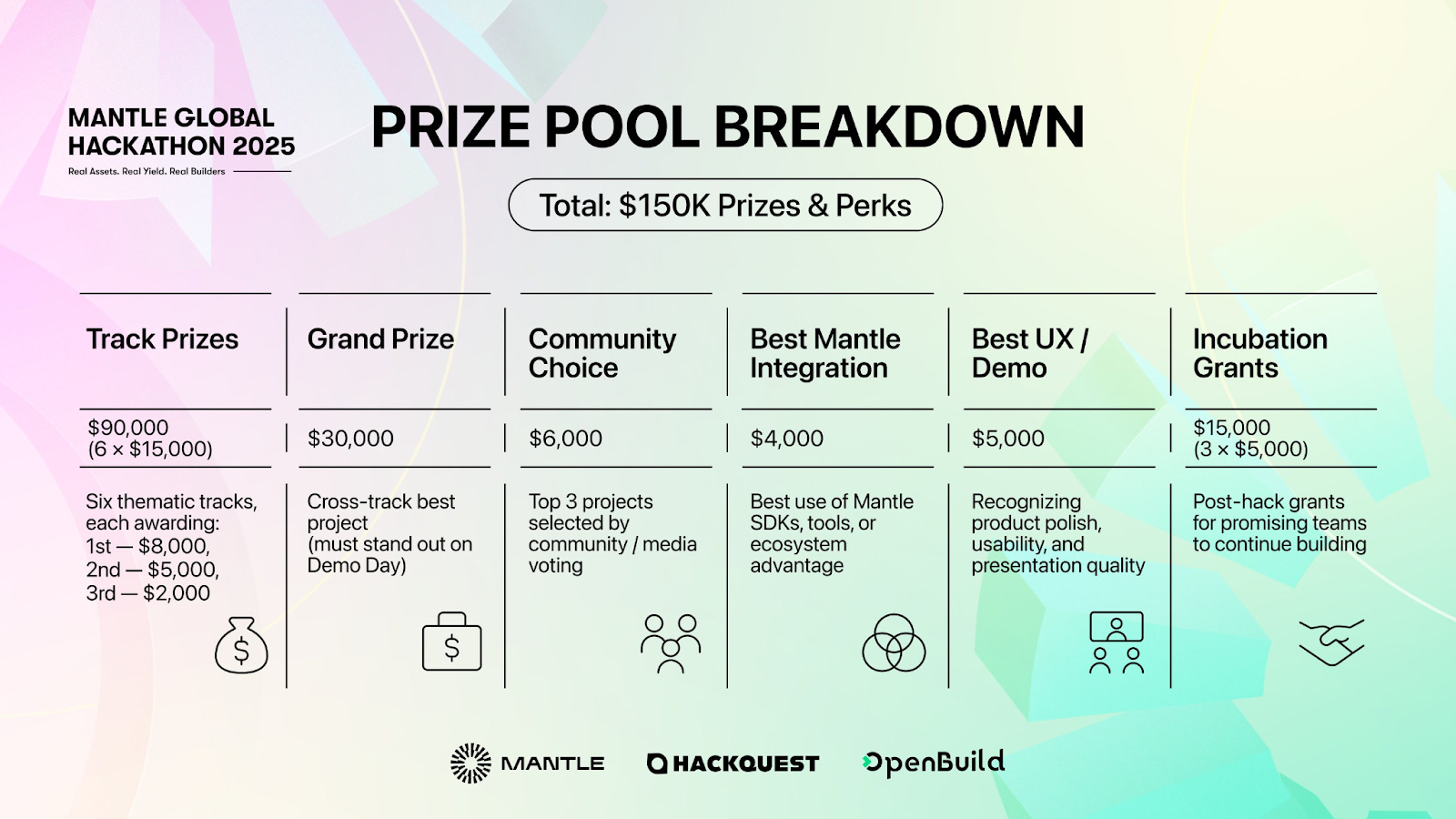
The hackathon will run across 6 tracks, with winners from each track receiving $15k:
RWA
Defi and Composability
GameFi and Social
AI and Oracles
ZK and Privacy
Tooling and infrastructure
The remaining funds will be allocated between:
$30k for the grand prize, electing the best project across all tracks,
$6k for the community choice through voting
$5k for the best UX or Demo
$4k for the best use of the Mantle SDKs and tools for integrations
Last but not least, three projects will receive post-hackathon grants of $5k each to continue their work.
But that’s not all: “top projects will gain media exposure, VC access, and fast-track launch support”.
So, what do you need to win?
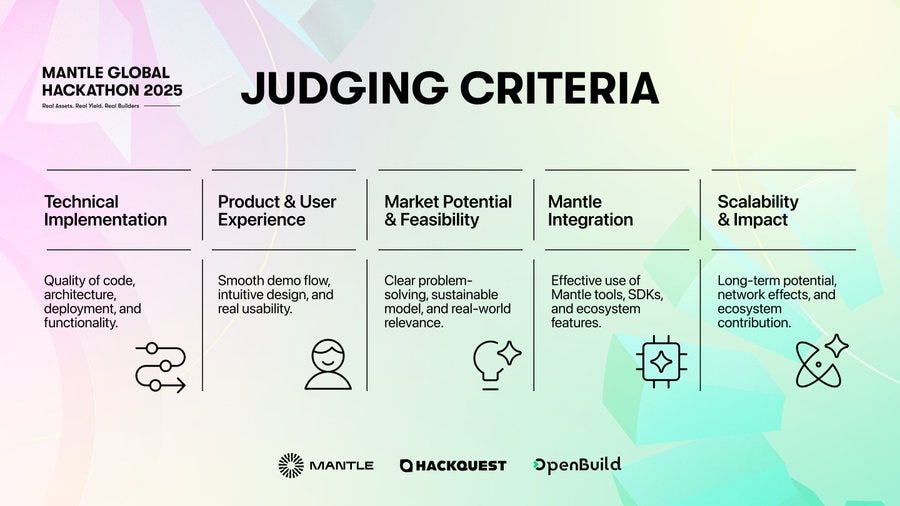
Judges will be focused on:
Technical execution: team execution of the project
Product & UX: How is the product and its UX?
Market potential: Does the product solve a real problem? How big is the market?
Mantle integration: Use of tools and future potential to deeper integrations
Scalability & impact: How big can the project and its impact scale?
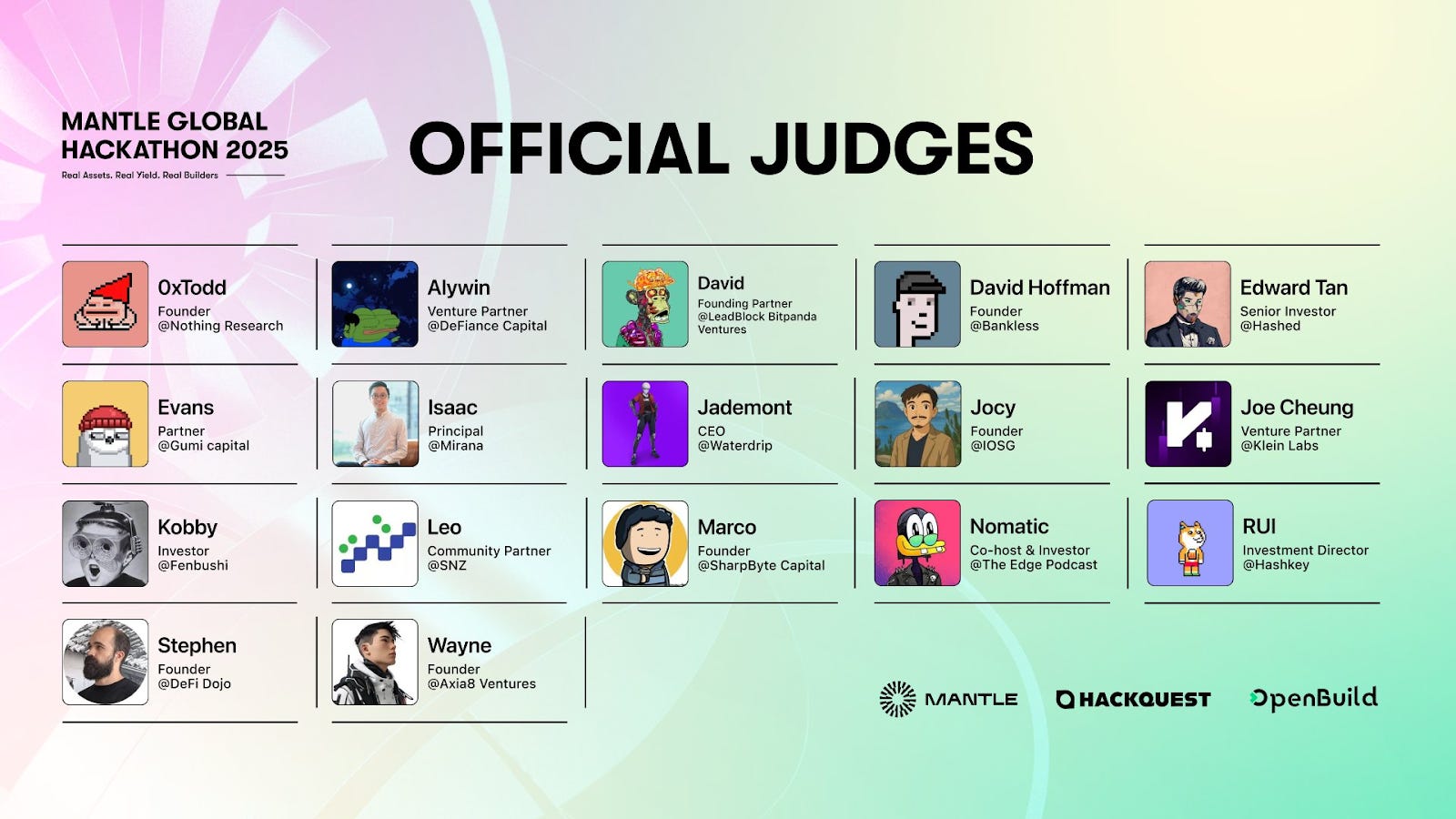
Lots of familiar faces among the judges:
For those interested in exploring participation, registration is open until the 31st of December.
After that, the timeline will look like:
Build period: Oct 22 – Jan 5
Submission period: Jan 15
Review and community voting: Jan 15 – Jan 31
Demo Day: Feb 1
Winner announcement + Incubation start: : Feb 7
As highlighted by the Mantle team, their main focus will be on ensuring sufficient applications in the RWA vertical, including projects proposing innovative solutions for “tokenisation of RWAs, yield distribution and compliance models”.
Considering their extensive pivot and infrastructure shift towards RWA, this move is perfectly aligned with their strategic priorities. RWA builders should consider Mantle up there as one of the best-positioned networks within the RWA verticals, given their recent integration of USD1 and broader trust in their stack.
When properly integrated into a broader builder funnel, hackathons are a great way to drive ecosystem growth and innovation. One of the most successful networks at this practice is Solana, which regularly sees winners emerging from its Colosseum to become big players within the ecosystem.
This is a hackathon worth watching, especially for those interested in RWA innovation.
Interested?
Sign up here:
https://www.hackquest.io/hackathons/Mantle-Global-Hackathon-2025