

Last week has been one of the biggest hits our industry has seen, with over $6 billion hacked from Binance.
However, this didn’t automatically push the market down, reflecting growing resilience to these events.
While we highlight what happened with Binance, we also cover:
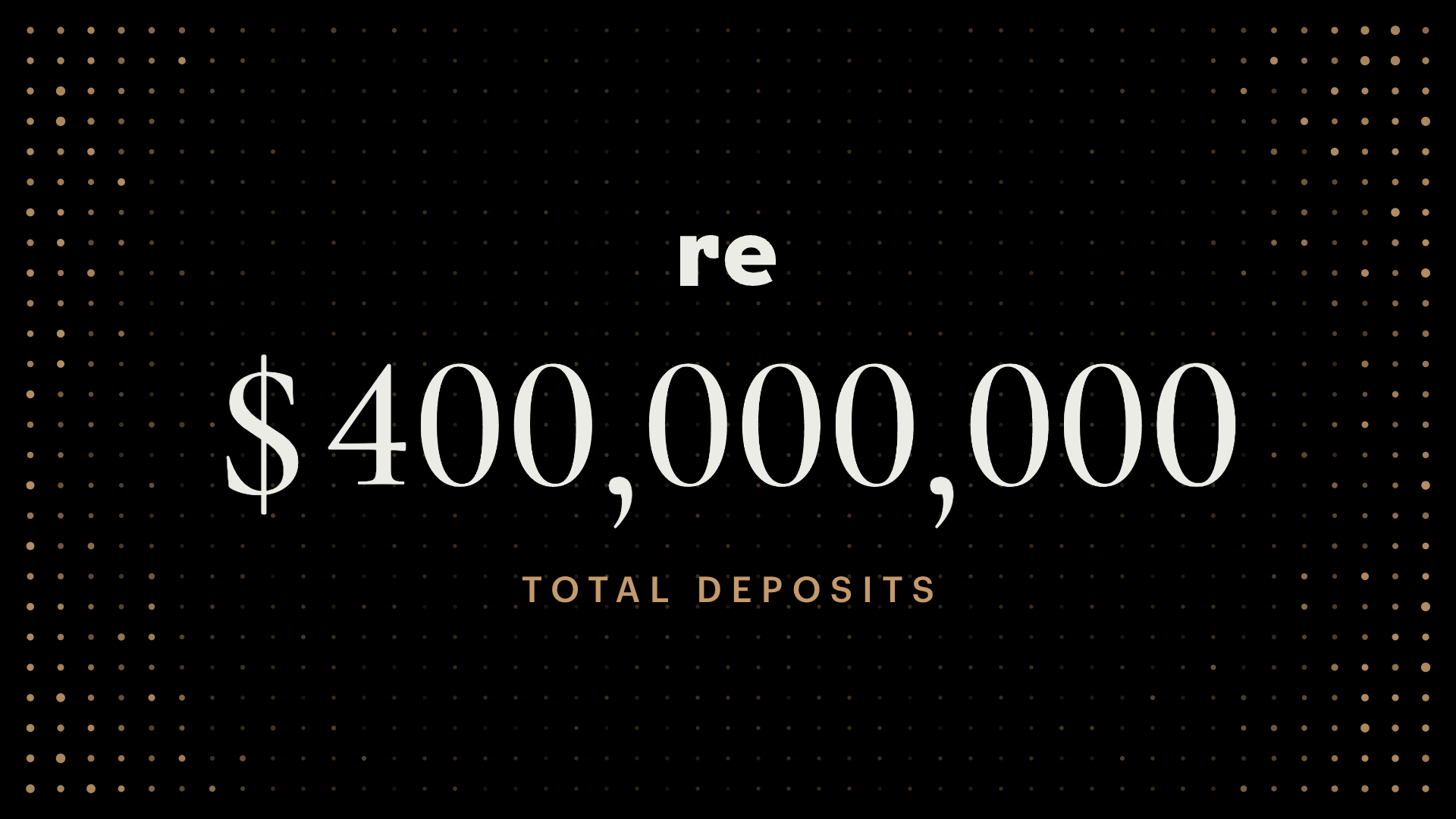
Re introduces low-correlated RWA yield through reinsurance and has now reached deposits of over $400 million with $reUSD and $reUSDe.
An interview with David Choi, CEO and Co-founder of USDai, where he highlights why it will become the settlement dollar for compute.
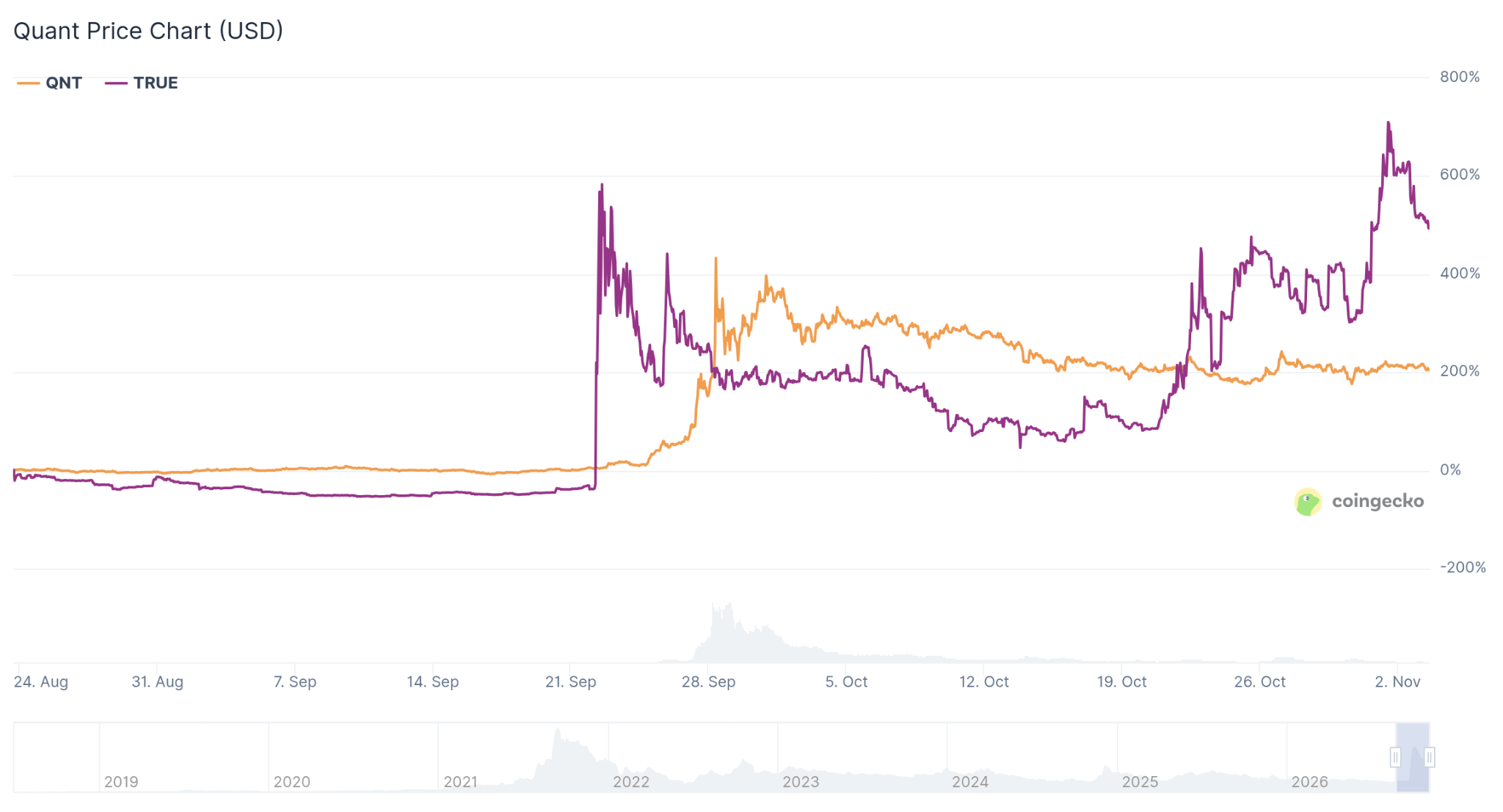
The Momentum Assets, where we cover $QNT, an infrastructure provider linking banks with blockchain, and $TRUE, now integrated into DeFiLlama.
And more.

Re Crosses $400M in Deposits
Re is an onchain reinsurance protocol that lets depositors supply their stablecoins, which are used to back regulated reinsurance contracts, a sector worth over $760 billion.
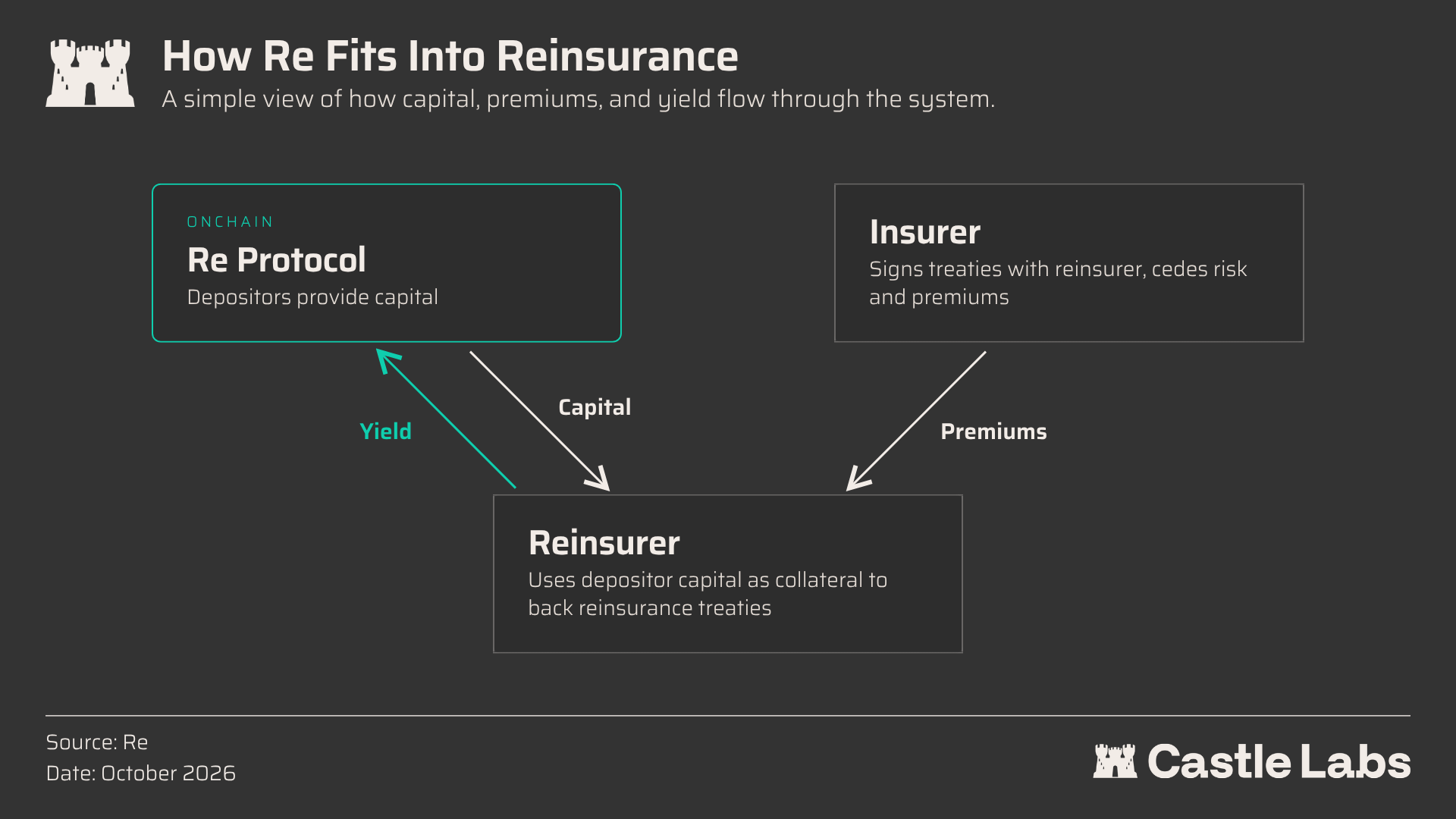
The market’s size and demand for onchain reinsurance yield, and an acute focus on DeFi composability, contributed to Re’s growth.
Re has now passed $400M in combined deposits across reUSD and reUSDe this week, which currently yield 7.14% and 12.56%, respectively. This yield beats multiple other asset classes, including T-bills, institutional lending, and basis trade, helping to attract even more flow.
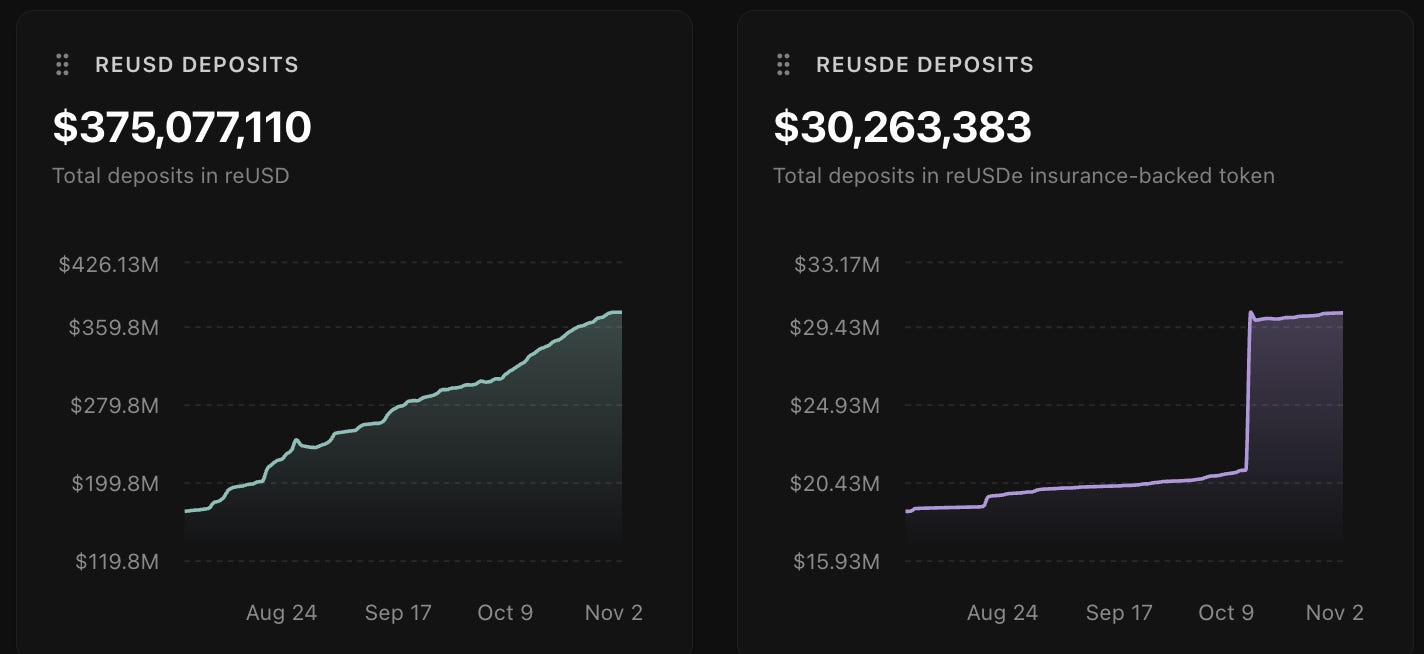
More importantly, momentum in stablecoin deposits is picking up. It took Re only 40 days to move from $300 million to $400 million, while it took 186 days to move from $200 million to $300 million, reflecting a growing appetite for onchain reinsurance yield.
The capital is being put to work:
$510.5M in bound premium written since inception
$65M deployed in October to Cover Re to support further growth into 2027
$13M+ accrued to reUSD and reUSDe holders since inception
As mentioned above, DeFi has been a great distribution layer for Re’s growth, as reUSD is now deployed across 14 networks.
Recent additions extend its composability, from reUSD looping on Jupiter Lend on Solana to PT-reUSD looping on Monad. PT-reUSD is also one of three launch markets in Pendle’s Ecosystem High Yield USDC vault on Morpho, expanding its use as collateral in DeFi lending.
DeFi composability reinforces growth: Reinsurance is a productive market that generates strong yields for depositors, outperforming multiple assets, and when the same asset is used further in DeFi, it boosts the asset’s potential and drives demand.
We believe Reinsurance is a great market to tap into, as it introduces a low-correlation source of onchain yield, driven by insurance outcomes rather than crypto markets, helping stablecoin liquidity keep earning and stay in onchain environments during periods of volatility.
To mint reUSD or reUSDe, deposit at re.xyz. Learn more about the protocol here and in our latest piece.
The Settlement Dollar for Compute: An Interview with David Choi, USDai
USDai provides GPU-backed loans to companies, denominated in $USDai, a stablecoin. The protocol recently executed a $1 million buyback of its governance token, $CHIP, and introduced programmatic buybacks from revenue.
To better understand what the team is targeting and how they see the category evolving in a few years, we interviewed David Choi, the CEO and Co-Founder of USDai.
The USDai model depends on borrowing demand, as it’s a lending protocol, and that demand is constantly evolving. The demand sits in the “compute middle market”, and “power is the binding constraint, so deployments are getting smaller: 250-megawatt sites are becoming 2- to 5-megawatt modular builds. That means more borrowers needing $5M to $100M, not a few needing billions.”
While the demand is there, what makes USDai special and separates them from traditional lenders is that they can do small deals economically.
This is exactly what onchain capital unlocks: USDai can “fund a standard loan quickly, hold it while it builds a payment history, and then sell it to the institutions that wouldn’t underwrite it from scratch”.
USDai calls this model “season-and-sell”, and they do this because crypto users “prioritise liquidity above all else, while credit funds are less duration-sensitive”. The team has completed their first season-and-sell: a $106 million GPU financing sold to Silver Point and Victory Park.
Through this model, USDai doesn’t really compete with traditional capital; instead, it “delivers finished loans”.
“Onchain is the warehouse. Banks, private credit funds and insurers are the permanent home.”
One of USDai’s major announcements is its focus on token alignment, but we asked the team why they felt this is the right moment to introduce programmatic buybacks. They added, “Now is the moment because we’ve proven the loop. We originated a loan, seasoned it and sold it. That turns the protocol from a balance sheet into a volume/origination engine.”
Additionally, “as the protocol scales, the source of purchases shifts. Today it is sUSDai’s net interest margin. As USDai outstanding grows, CHIP holders can switch on revenue from USDai itself for the stablecoin as settlement, which is the North Star of our protocol”
We ended our questions by asking what USDai looks like in its final form, and they added that it will be “the settlement dollar for compute”.
If USDai finance the next 10k neoclouds, “they all end up holding the same dollar, and they will transact in it.”
The Largest Hack of Crypto History, and DPRK is not involved?
On October 29th, Binance got hit with the largest attack in crypto history worth $6.36 billion, and it is larger than the next 7 hacks combined.
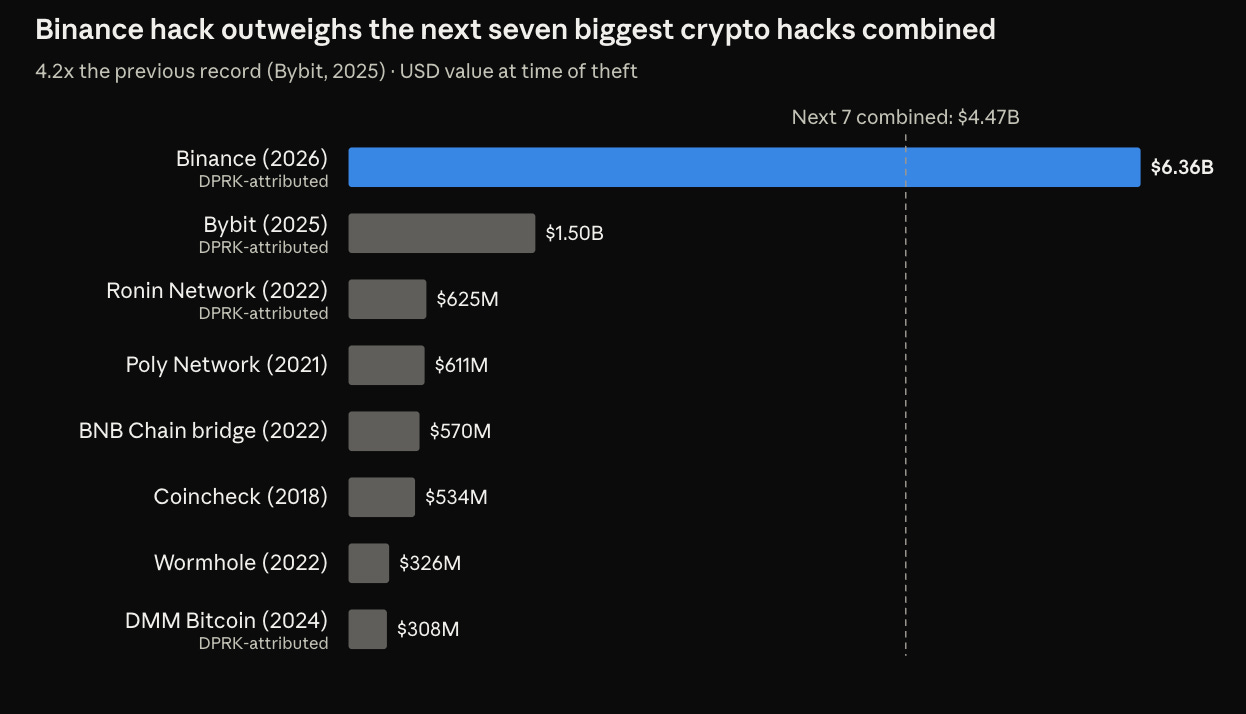
However, one positive is that Tether and Circle promptly froze a good chunk of the stolen funds (~$3 billion), and Binance can fill the rest of the hole with withdrawals beginning now.
Another interesting aspect of this hack was that a Kim family member denied performing this specific heist, which is new. North Korea has previously denied claims about the hack, but this time it came quickly and from an official member.
This doesn’t prove they didn’t do it, but it could be a quick brush-off, especially since Trump said the US is also looking into the attack.
The Momentum Assets: $QNT and $TRUE
Let’s start with $QNT.
Quant Network has recently got a lot of attention as a Universal adapter between banks and blockchains, so any bank can connect once and get data from different blockchains and bank ledgers without building each connection itself.
It got real attention when Clearing House mentioned in September that they are using Quant Network infrastructure.
QNT isn’t really competing with other cryptocurrencies, since it’s an infrastructure provider that helps banks interact with blockchains, so with more tokenised assets, you can expect more adoption of Quant Network.
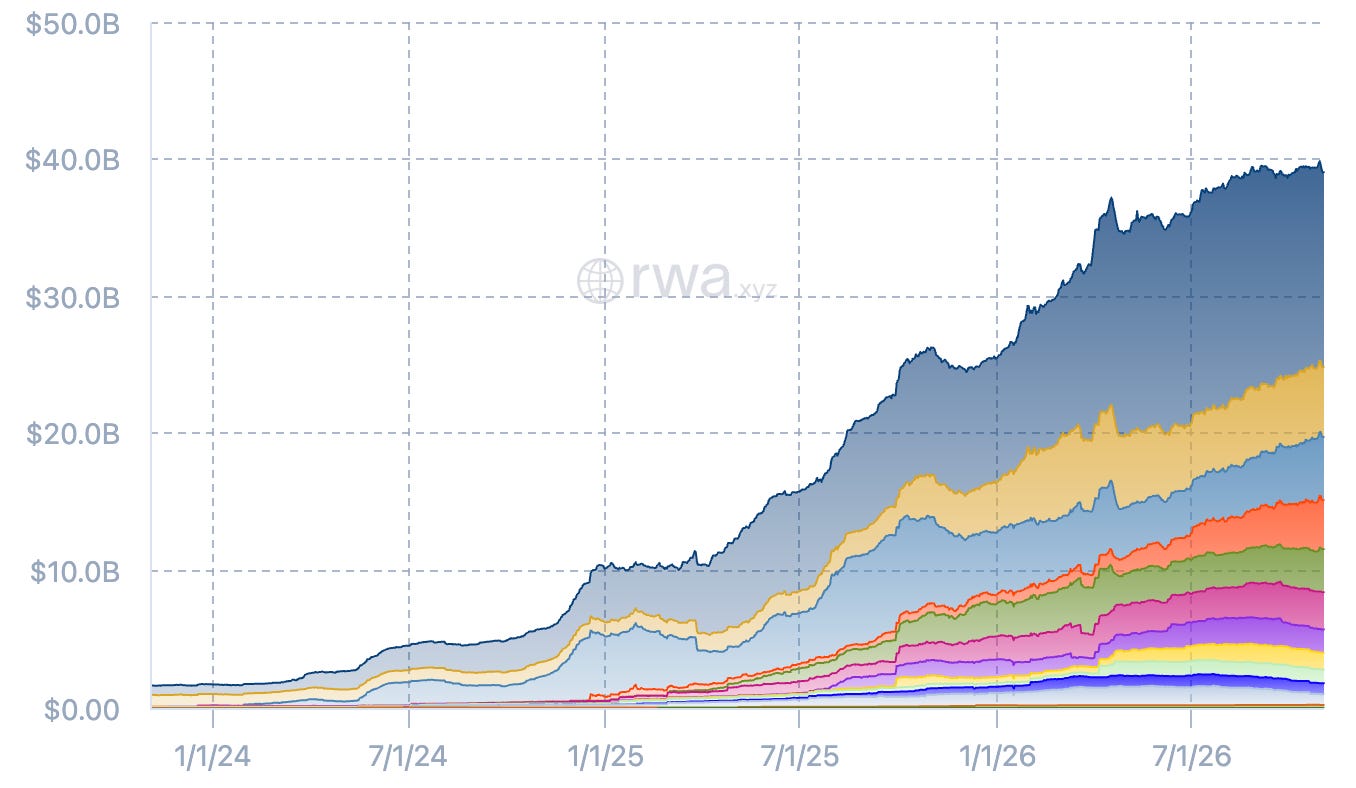
Clearing House Network’s existing rails move over $2 trillion a day, and even a small slice of that could eventually flow through tokenised deposits coordinated by Quant; the scale is hard to ignore.
However, it currently trades at a $2.8 billion market cap, and with this new demand, the only question is how that links to the QNT token.
Next up is $TRUE.
The market it is capturing is Prediction markets (PMs), one of the fastest-growing categories, primarily represented by Polymarket and Kalshi, which account for most of the volume.
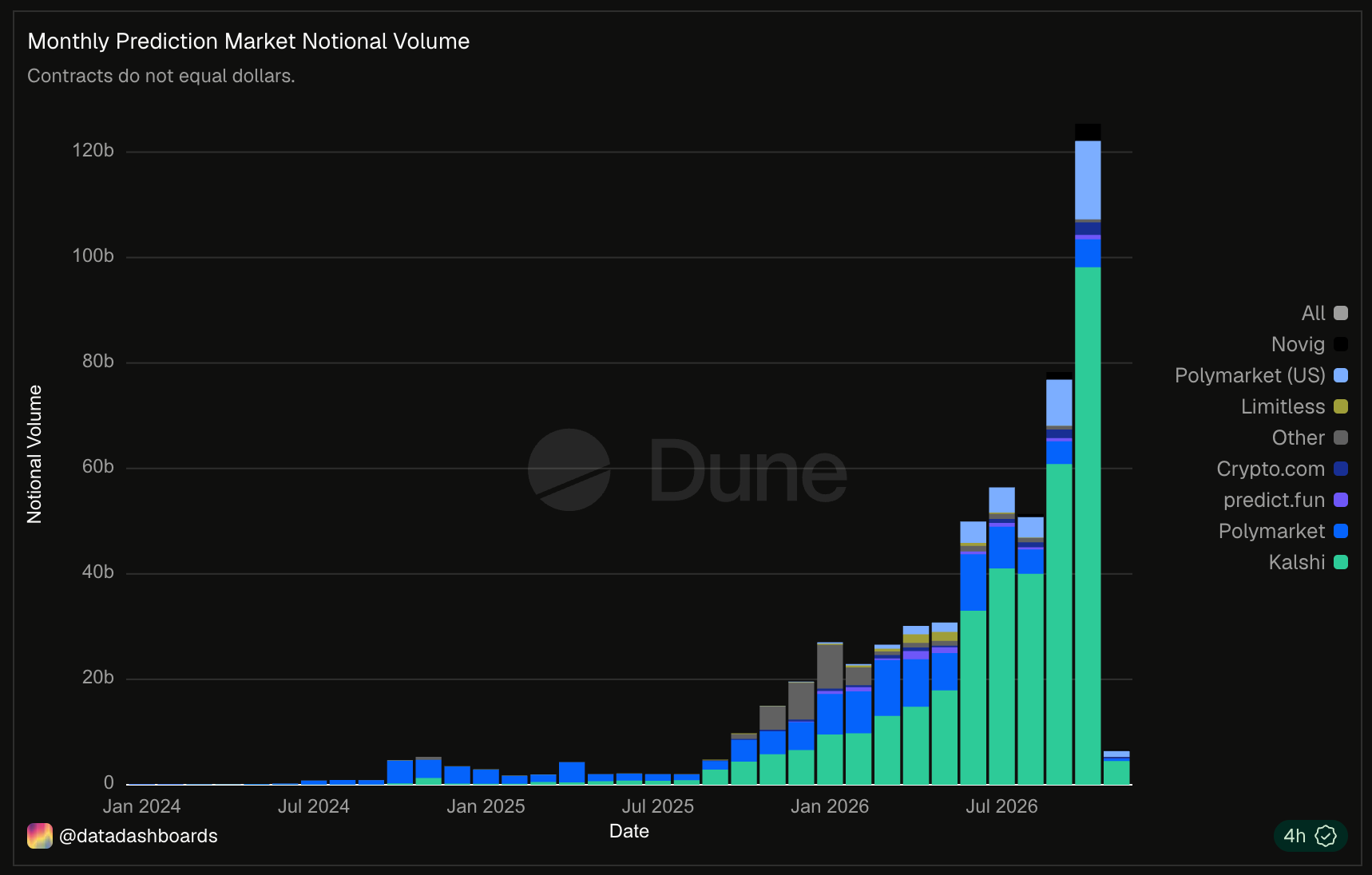
After the DeFiLlama (DL) partnership, Trueo embedded PMs into the DL frontend, curated by DL based on its data, giving Trueo access to its distribution. This partnership began a few weeks ago.
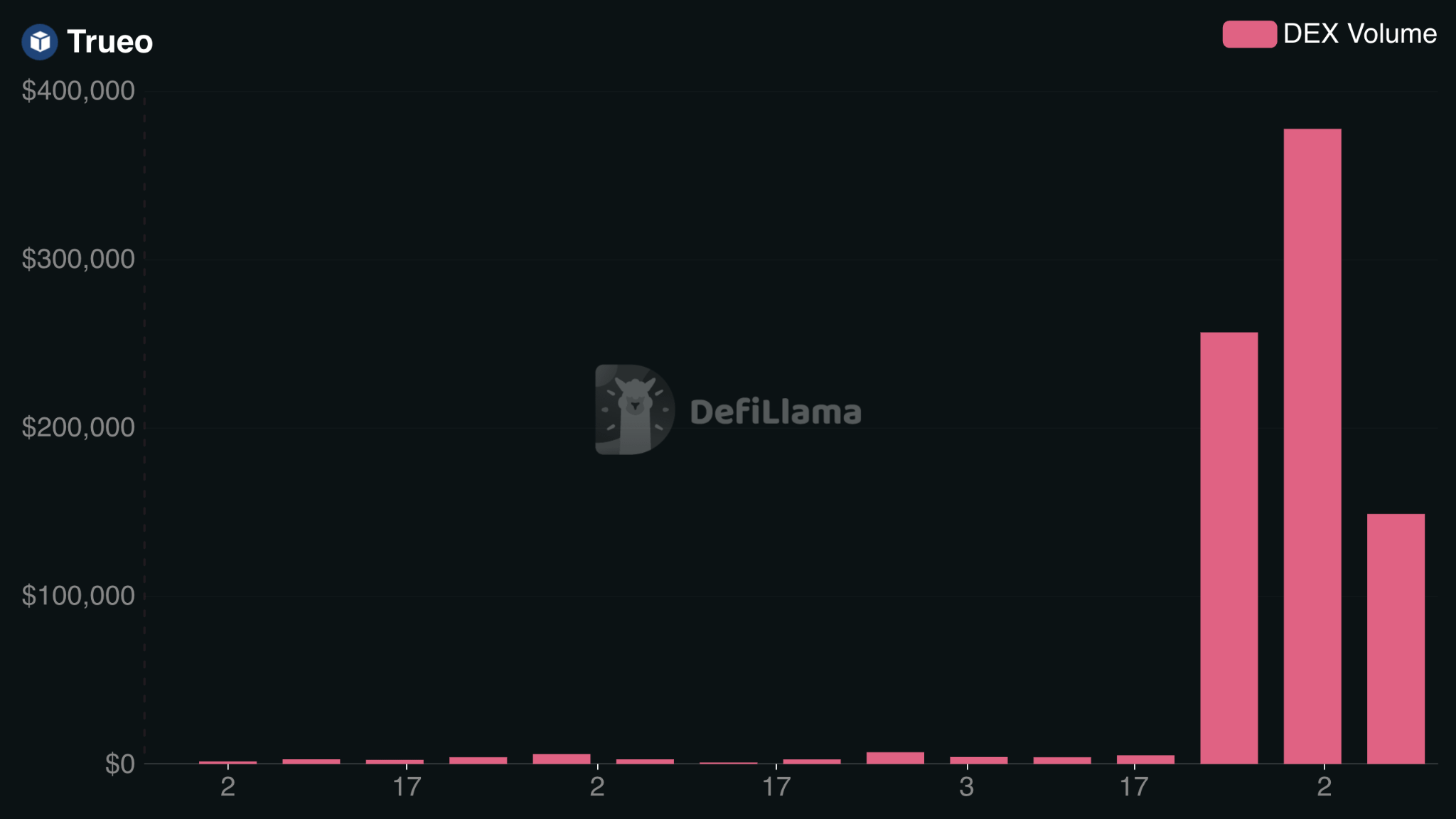
Both of these tokens have performed well recently and have truly captured the momentum.
Quant has already built the infrastructure powering institutions, while Trueo is targeting a huge sector and competing with the Polymarket and Kalshi duopoly, which is hard to break, making its path more difficult. However, the growth levers it has been using, like the DL partnership, are genuinely impressive.
On the Radar
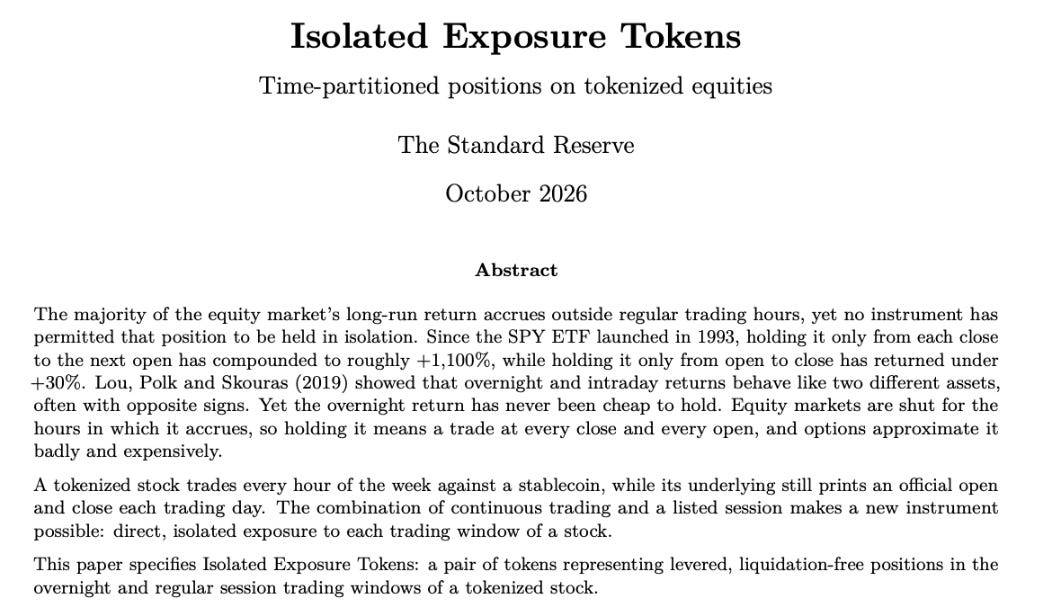
Beans introduced Isolated Exposure Tokens (IETs), a design inspired by Pendle’s YT and PT split. It separates tokenised equities into separate OVERNIGHT (close-to-open) and SESSION (open-to-close) tokens via deposit and redeem mechanics, enabling programmable exposure along time windows. You can trade exposure to both tokens separately, enabling multiple strategies.
Our team is attending multiple conferences this month, so if you are going to any of them, we would love to catch up over coffee.


We are releasing a podcast with Karn Saroya tomorrow where we discuss everything about Re, how it grew, and what the team is targeting in the near future. Releasing 3 pm UTC.
 Castle Labs 🏰@castle_labsRe is bringing an interesting alternative to RWA yield, one that is less correlated to markets and instead is based on real reinsurance activity. We sat down with @karnsaroya to discuss reinsurance as an alternative to current RWA yield and @re's role. 📆 Wed 04 Nov 3 pm UTC
 11:32 AM · Oct 28, 2026 · 1.4K Views4 Replies · 3 Reposts · 12 Likes
That’s a wrap!
See you next week.
Not a subscriber yet? Join for free:

PLUS, don’t forget to join our Telegram channel for the latest updates from Castle and all our research: Link here

Disclaimer: In our newsletter, we may discuss projects or tokens in which we hold positions. While we aim to provide informative content, our views are not financial advice. Please conduct your research and consult professionals before making investment decisions. Crypto markets are volatile, and past performance doesn’t guarantee future results. Invest responsibly, and be aware of the risks. Your capital is at risk, and we do not accept liability for any losses.