

Welcome to another edition of The Castle Chronicle.
While the market is moving sideways, product launches haven’t slowed down, with xStocks launching on Hyperliquid and Uniswap stepping into the launchpad wars.
Apart from this, the topic which is getting the most attention is the newest EIP, which aims to taper ETH issuance to control asset inflation.
In this week’s Chronicle:
Spot Equities on Hyperliquid and the interview with Matt from xStocks, where we ask him certain questions around their recent Hyperliquid deployment.
ETH Issuance Reduction (EIP-8363) and Ethereum Updated Roadmap.
ai16z and the current state of $ELIZA, highlighting their recent lawsuits.
Launchpad wars on Robinhood chain with Uniswap being the newest contender
On our Radar: Stacks native BTC yield, Pear Orchard, Pumpfun Hyperliquid domain, and Clarity Act.

Spot Equities on Hyperliquid: An Interview with xStocks
xStocks just announced the launch of a first cohort of spot equities on Hyperliquid.
We had the opportunity to sit down with Matt from xStocks and ask him a few questions about this development.
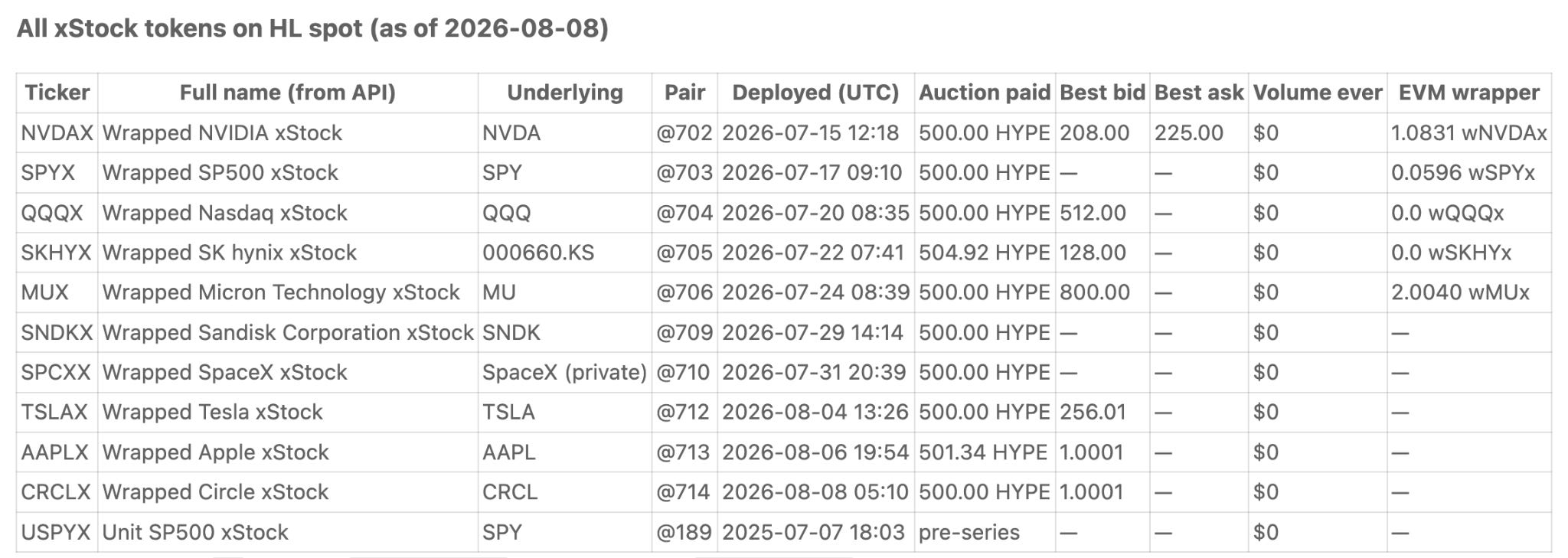
Our POV is that spot stocks are particularly interesting within Hyperliquid’s concept of housing all finance and having a unique margin account for all of the services offered by the platform.
Using stocks as collateral is a big liquidity unlock which directly improves the capital efficiency of these assets onchain.
For xStocks, this is a massive distribution boost, as Hyperliquid continues to solidify its stance as the main venue to trade tokenised assets, with massive volume and open interest in RWAs. Tradexyz is by far the most successful implementation of HIP-3, with over 4 billion in open interest itself.
How will xStocks compete or complement this offer?
We asked Matt a series of questions around their Hyperliquid deployment, starting with an understanding of the hurdles they faced around this deployment. He added that, “there is no rebasing on Hypercore, which is basically the mechanism that allows all the xStocks to remain anchored to the TradFi price when corporate actions happen, so we had to choose a less elegant solution, but that can work regardless.”
Moreover, we can expect the xStocks deployments to expand pretty soon as the team have “premier partners that will help us shape new use cases like options, carry trade, lending, etc. for xStocks.”
We also asked what sorts of risks traders usually underestimate while trading spot equities; he suggested that “perps are much riskier than the tokenised spot assets. But even after considering it, anyone running two-legged strategies should be aware of manipulations and suboptimal pricing (that happens regardless of the issuer/instrument) during weekends.”
ETH Issuance Reduction: EIP-8363 and Updated Ethereum Roadmap
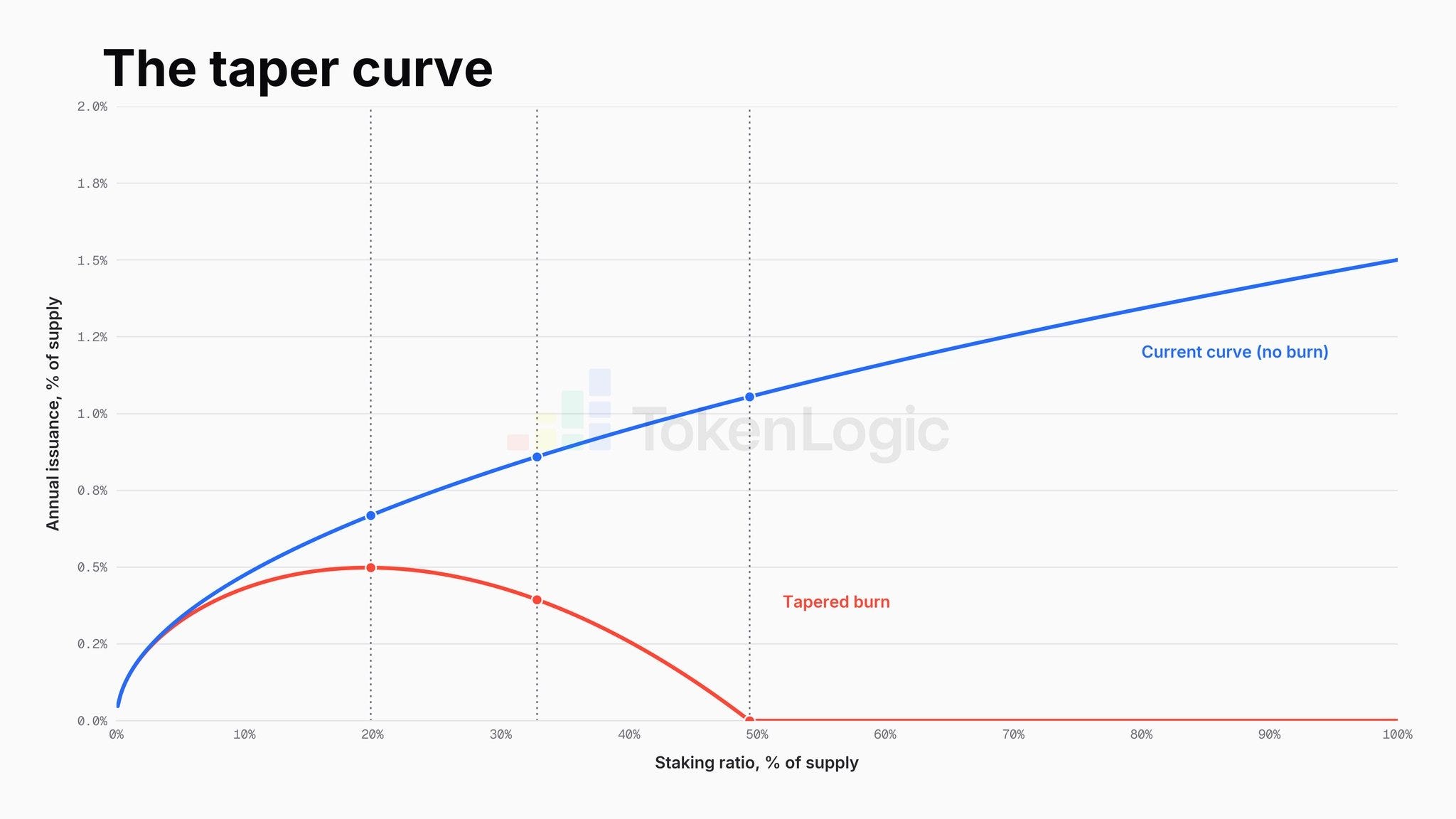
Last week, a few Ethereum Researchers published EIP-8363, which tapers the ETH issuance to control asset inflation.
There has been a lot of debate around this proposal, and it has drawn strong pushback from parts of the Ethereum community, especially staking, LSTs, and DeFi stakeholders. We aim to highlight both sides of the story, explaining how this proposal touches on a real issue but might not be the most relevant one.
Ethereum Staking has grown over time and currently sits at 33.5% of the supply, with the nominal yield at ~2.3%, and it has steadily dropped over time because of staking dilution. At this rate, this yield dilutes over time until it reaches the floor of 1.5%.
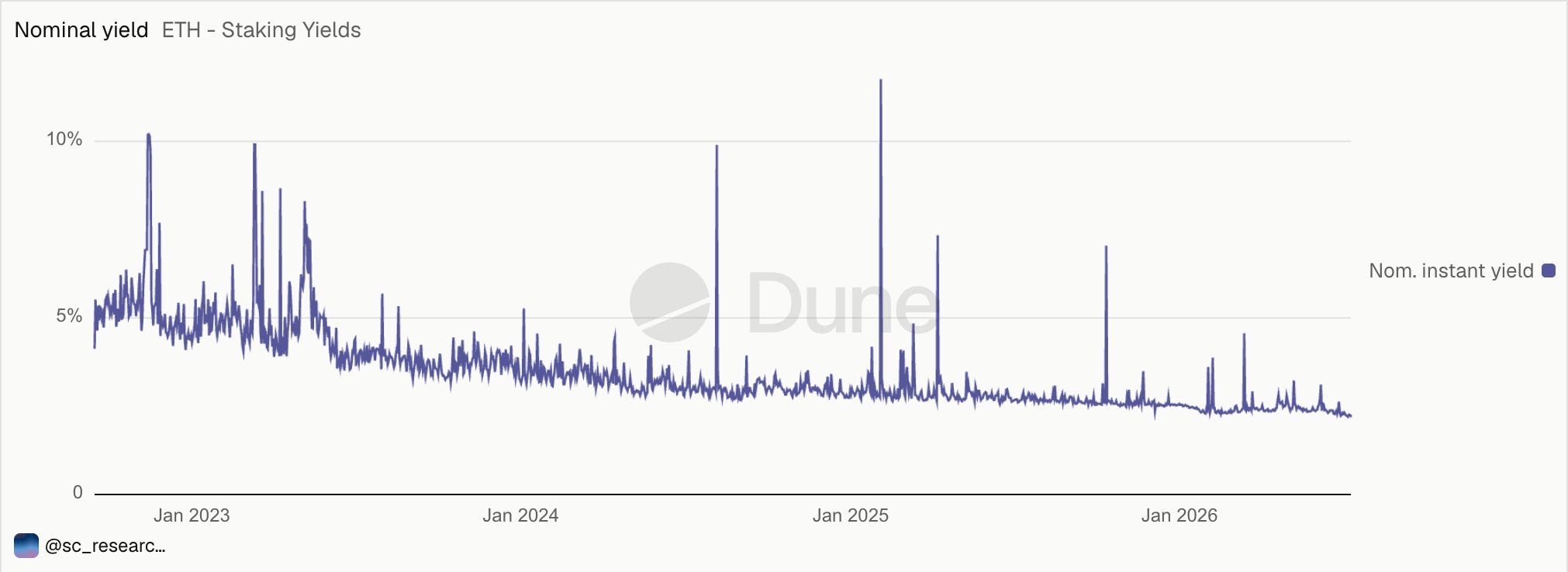
So this is a real issue because the yield has a backstop at 1.5% and continues inflating the supply and providing the incentive around staking, diluting the pool. This is what this EIP suggest as a problem and provides a solution to taper the issuance to 0% after 50% of the supply is staked, removing the protocol issuance incentive to add more stake beyond that point.
While the proposal touches on a genuine economic problem of the network and ETH as an asset, it doesn’t focus much on the ripple effect this proposal brings in across the network. ETH staking yield is essential; reducing it would pressure LST/LRT collateral loops, lending markets and protocols whose demand depends on staking carry. Once the yield drops, this activity also shatters, affecting all the top revenue-generating protocols on the chain.
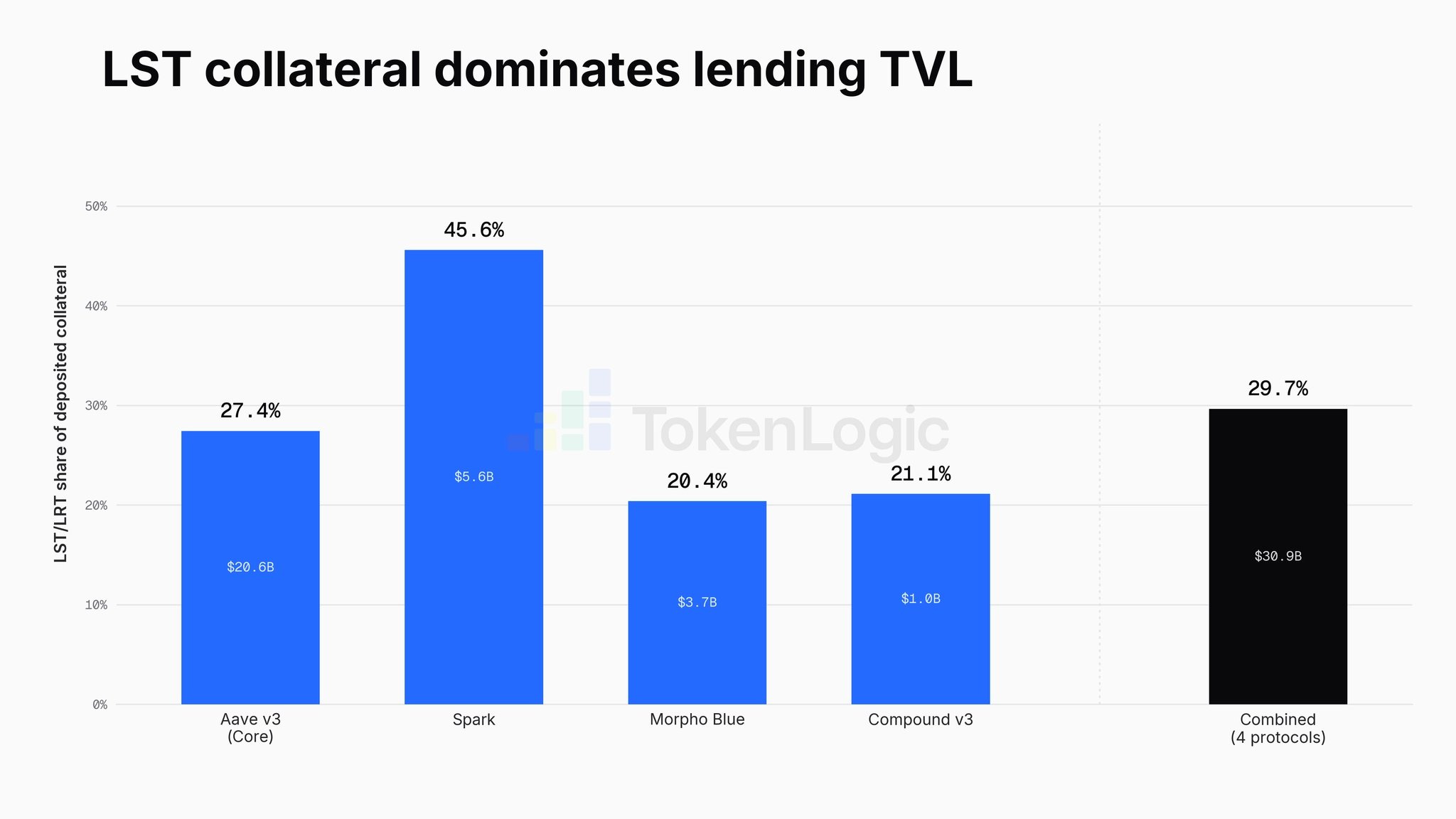
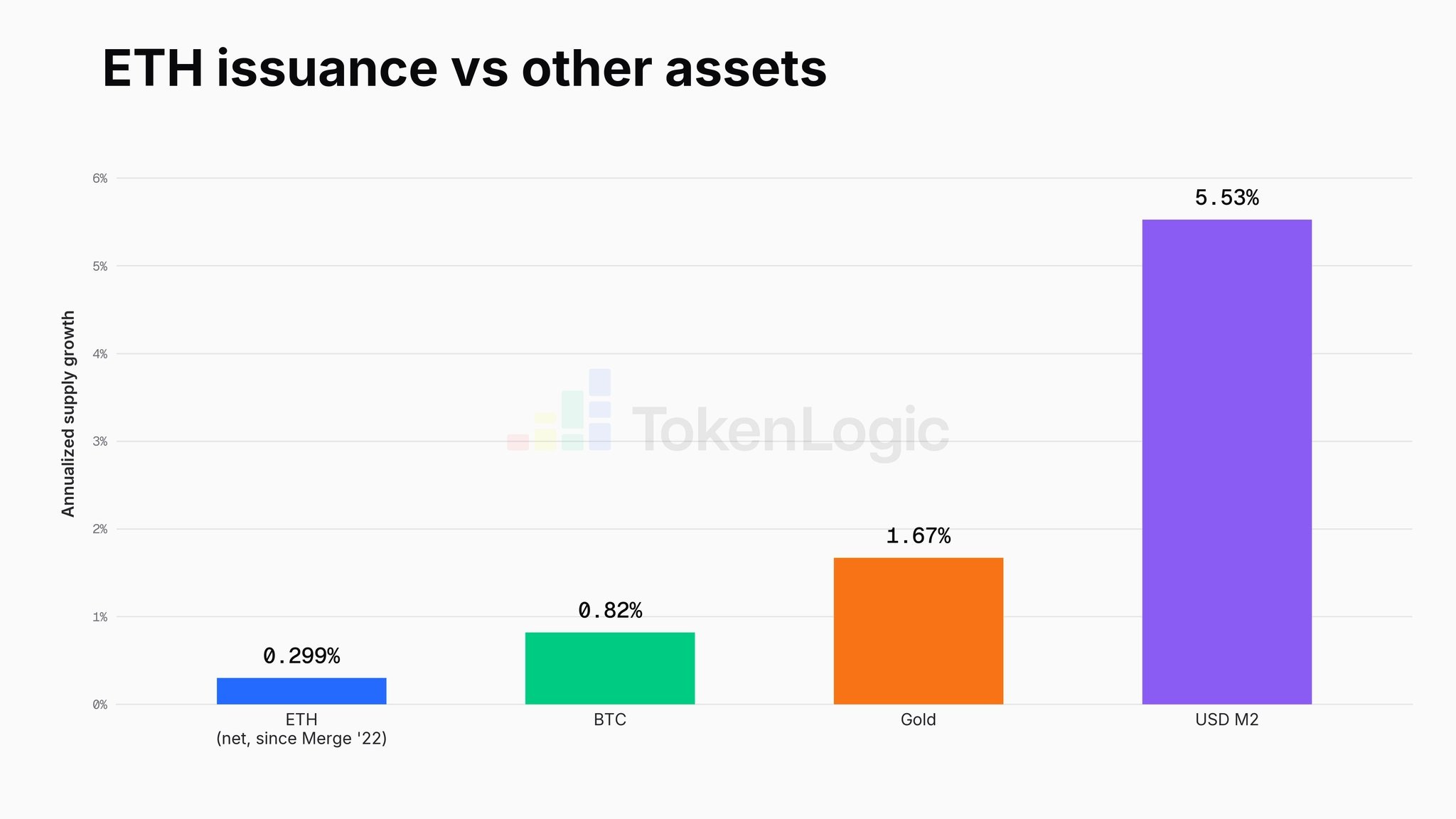
Moreover, Ethereum issuance is pretty low when compared to other assets, reflecting that ETH issuance might not be the biggest problem to solve at the moment.
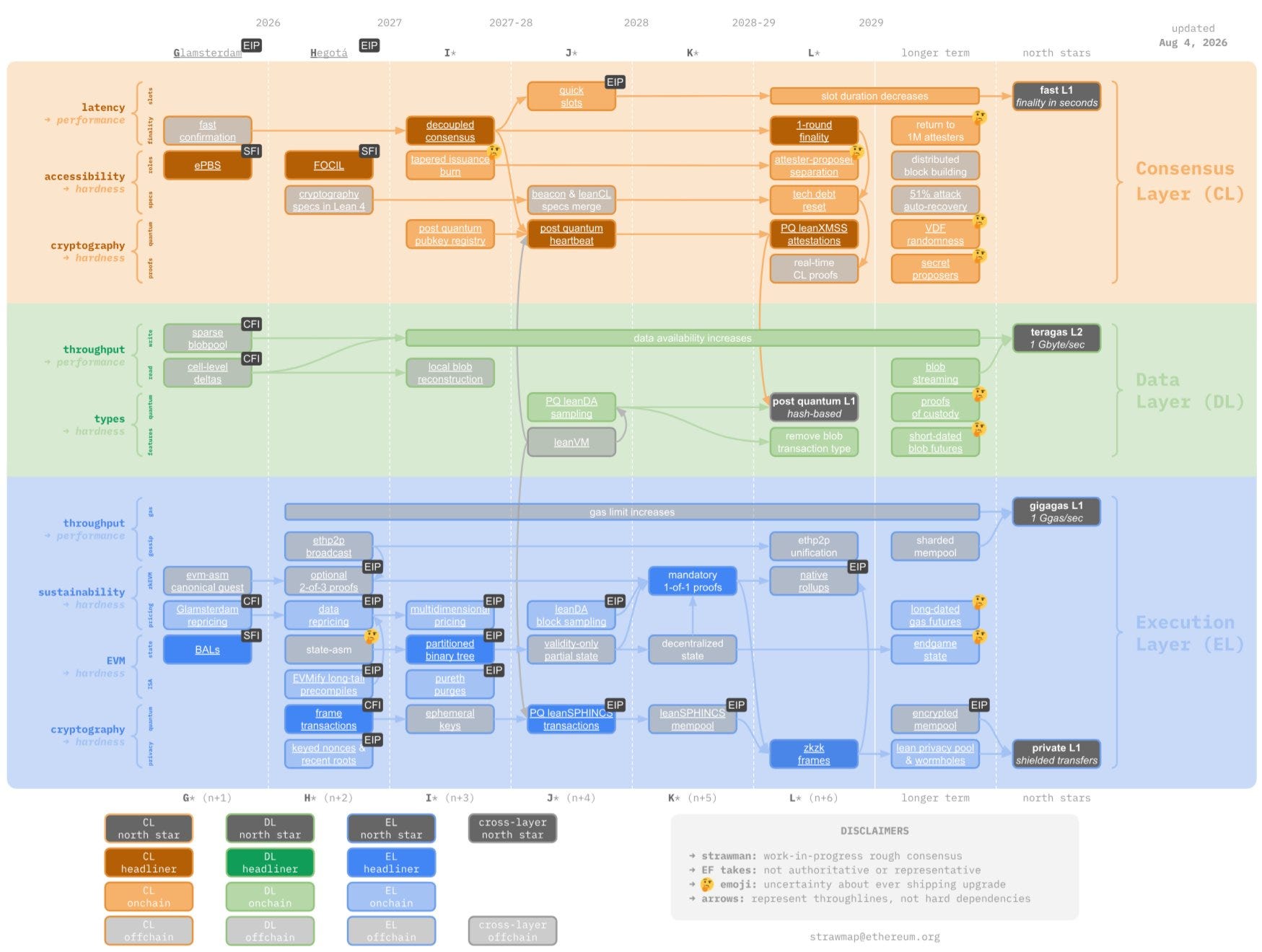
Additionally, Vitalik Buterin reiterated the Ethereum Roadmap, highlighting that Ethereum’s core focus is on making the network more private, post-quantum, and lean. Private Ethereum would include building better tooling to hide user activity and balances through privacy pools and hiding a user’s transaction history. For lean Ethereum, the network aims to reduce the execution overhead through the adoption of RISC-V.
ai16z and the current state of $ELIZA
A post by Shaw, the founder of Eliza, officially announced the end of the project.
What was once a project worth billions of dollars is now officially dead.
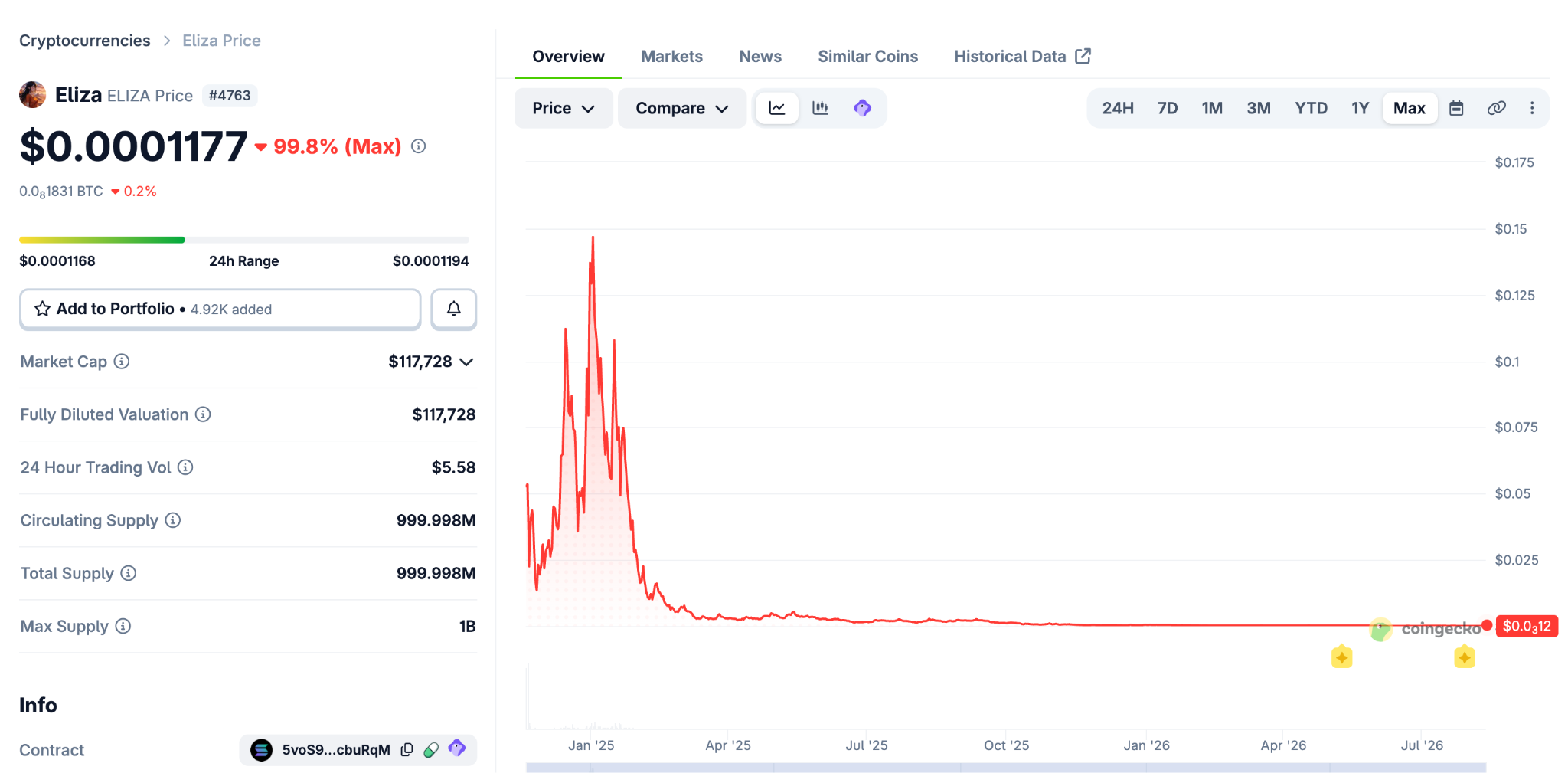
There is a lot to unpack in Shaw’s post.
We encourage everyone to actually read the post itself aside from this commentary:

For once, it shows how difficult building within AI is.
But not only that, the alignment between a project’s success and how its token performs has been a big vector of discord in the community.
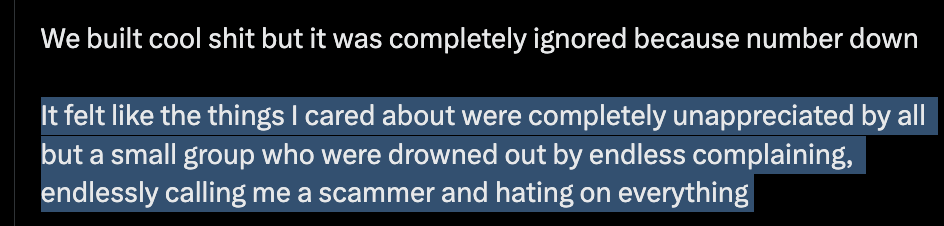
Second, it highlights the issues encountered when dealing with class action lawsuits, which can be argued either protect holders or try to scavenge what’s left of dying projects.

Those who were there during the AI rally over a year ago know that Shaw always had a somewhat complicated relationship with Eliza holders, reflected in his post too.
All in all, after a year and a half from the AI boom, we are left with the remains of projects that were poised to revolutionise the intersection between crypto and AI.
Stories of Eliza serve as a reminder to those who believe it’s easy to build in crypto, and everyone looking at launching a token as the holy grail of making it.
Is any of the projects left going to be rising from the ashes?
Both agentic vaults and broader platforms are failing left and right.
Can Virtual, as the biggest one left, carry the sector on his shoulders?
Or are we going to see a better and stronger intersection with crypto as AI models become more powerful?
Food for thought.
On our Radar
Launchpad Wars
The launchpad wars on the Robinhood chain (RH) continue heating up.
We go back to looking at the situation after Uniswap has launched pool trade, their own launchpad.
There appears to be a steady range of tokens being created on the RH chain.
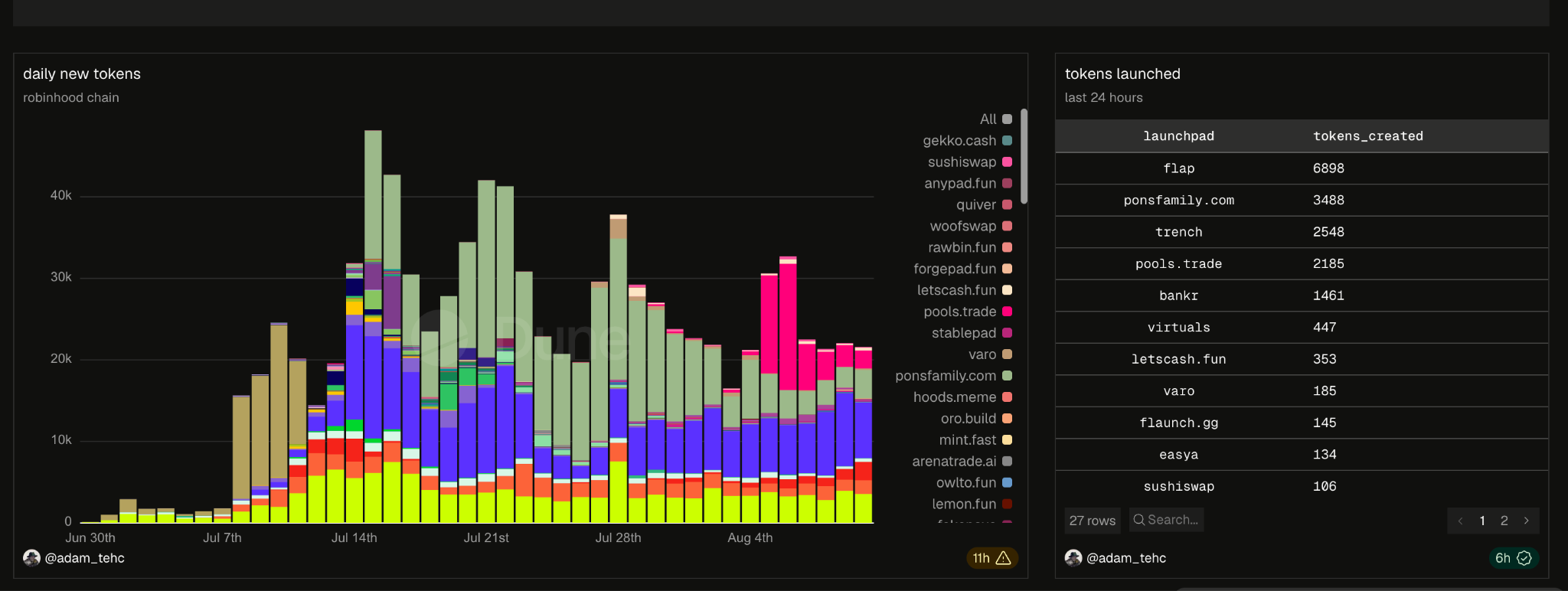
Uniswap deployment picked up steam during the first week, with an all-time high in token volume after a few days (5-7th of August).
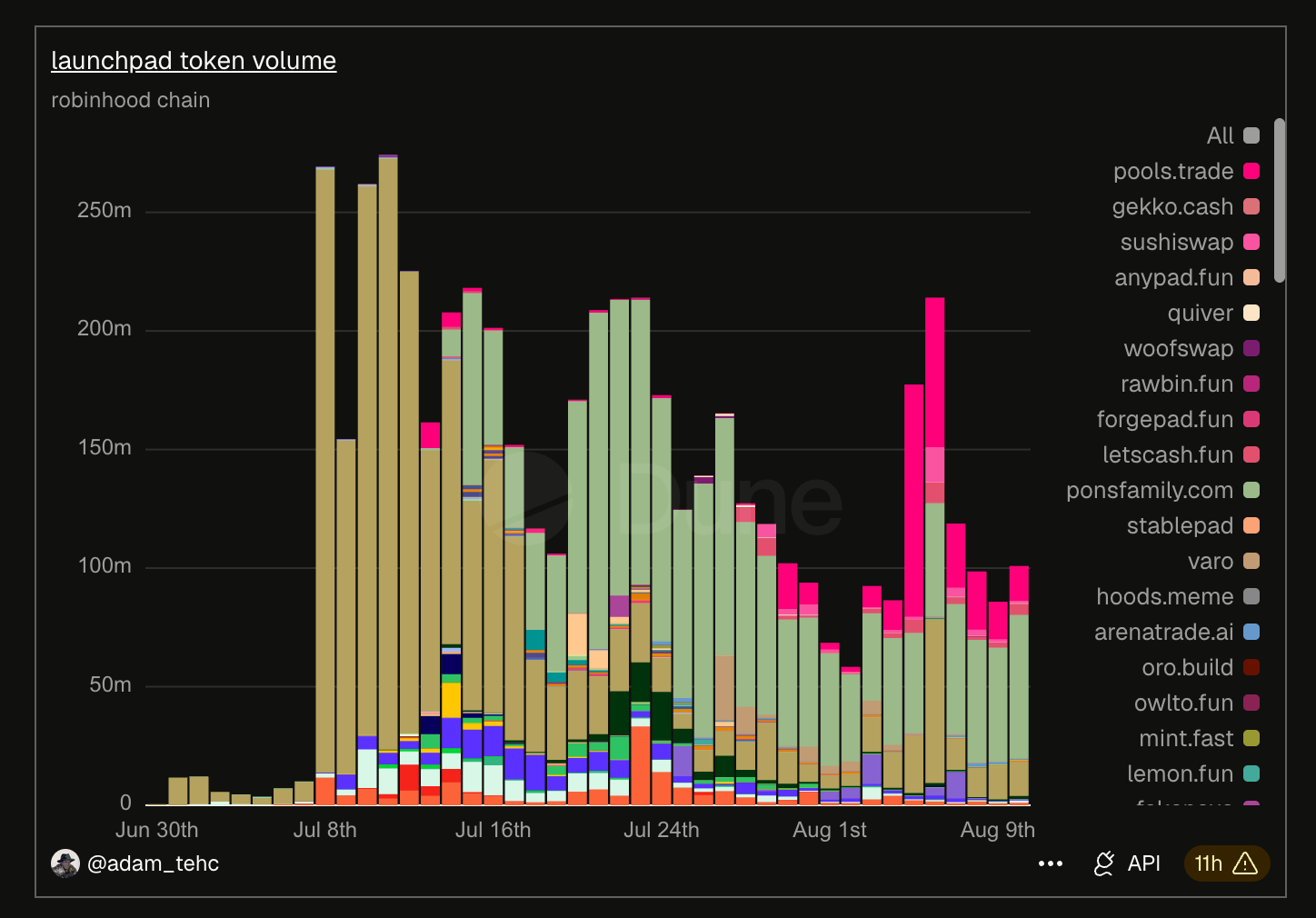
However, the initial wave is already taming down. Currently, Pons still retains the majority of token volume onchain, with about 60% of market share.
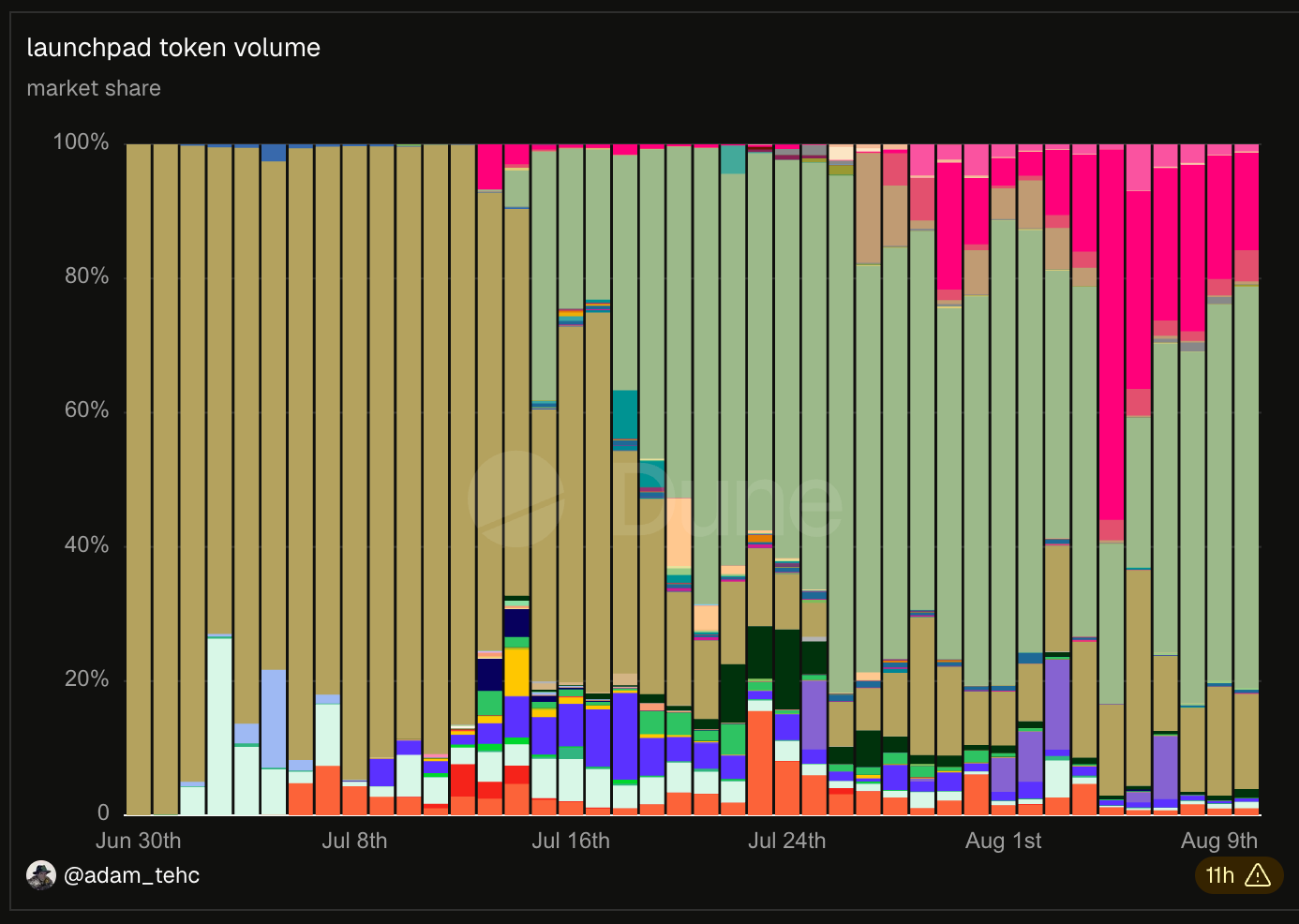
Generally, RH chain continues doing well. The partial decline in token volume for this week might also be justified by the euphoric week that NFTs had on the chain.
Led by Stockbrokers and Chainmances, is RH chain bringing NFTs back to life?
Stay tuned for a deep dive into them.
Consumer Apps Volumes
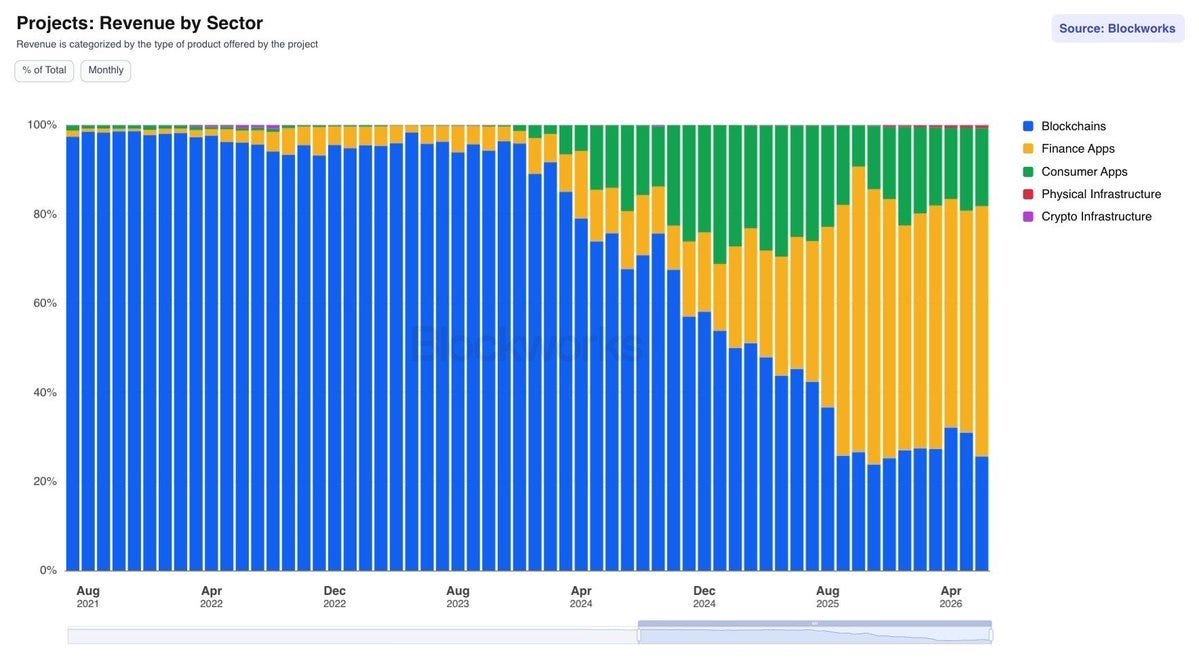
From FWA to now Fomo, it’s consumer app season.
This is reflected in the increasing % of revenues generated by consumer apps, up only.
ADHD Roundup
This week we published a deep dive into making Bitcoin yield more trustless, particularly interesting for both retail bitcoiners and institutional investors looking for yield on the orange coin. Full report here.
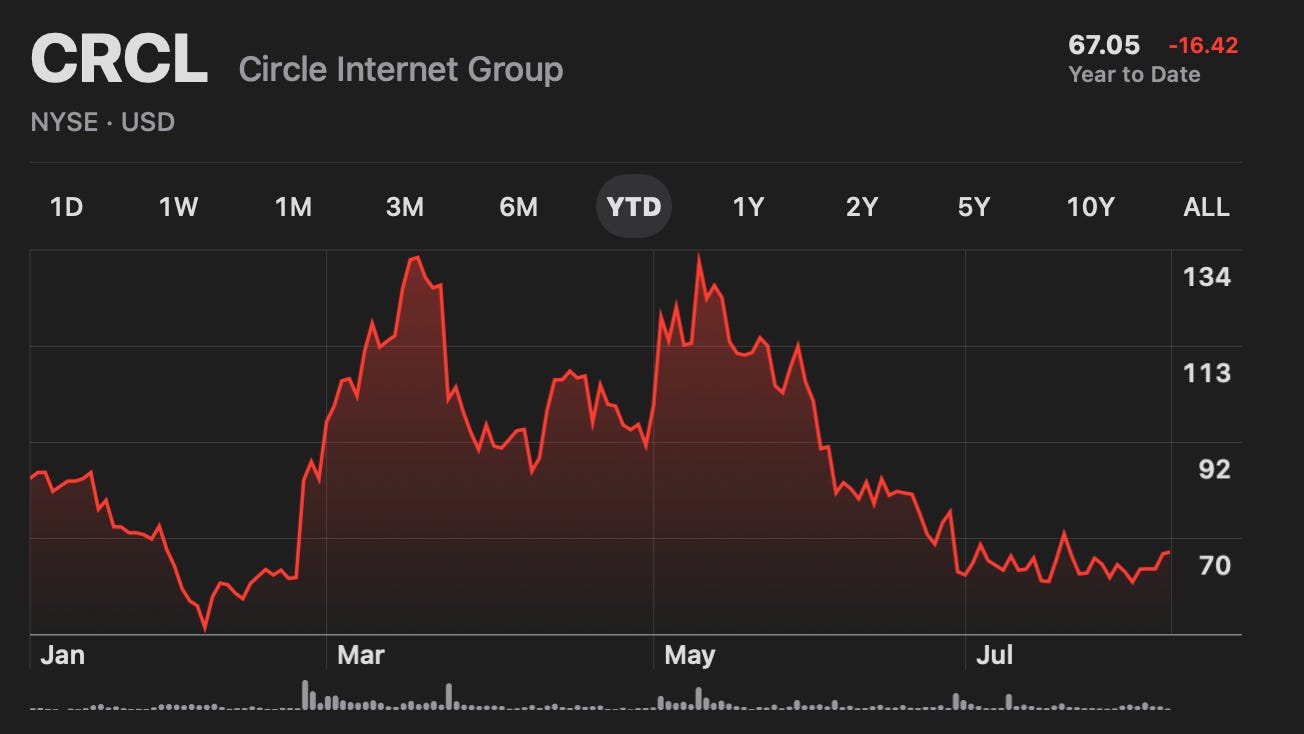
Circle Q2 revenue exceeded $700 million, and every metric is growing, including transaction volume and USDC in circulation, while the stock $CRCL is down ~20% YTD.
The ENS saga, which we talked about a few weeks ago, continues with a new vote.
There is no clarity around the Clarity Act, which is stalling and requires more time. This week we had some drama and some interesting behind-the-scenes discussions. Thread attached:


Solana account archives are here: welcome historical data!
Pear Protocol just launched Orchard, a native agentic chat users can leverage directly on the website UI. Additionally, with Orchard, users get access to real-time narrative baskets, trade auto-rebalancing, and a full Pear MCP server. To celebrate, they just launched a competition for the next 24 hours.

While agentic trading is generally frowned upon, we believe Pear trading is particularly interesting as a metric and benchmark-based approach which could actually benefit from agentic support.
Every week for the last 3 years, we have shared our research for free, directly in your email. Not a subscriber yet? Let’s fix it:

PLUS, don’t forget to join our Telegram channel for the latest updates from Castle and all our research: Link here

In our newsletter, we may discuss projects or tokens in which we hold positions. While we aim to provide informative content, our views are not financial advice. Please conduct your research and consult professionals before making investment decisions. Crypto markets are volatile, and past performance doesn’t guarantee future results. Invest responsibly, and be aware of the risks. Your capital is at risk, and we do not accept liability for any losses.