

Over the last couple of years, since the launch of Bitcoin ETFs, BTC has become an increasingly institutionalised and legitimised asse.
However, far less development has occurred to put this capital to work effectively: over $1.4 trillion in BTC is currently sitting idle.
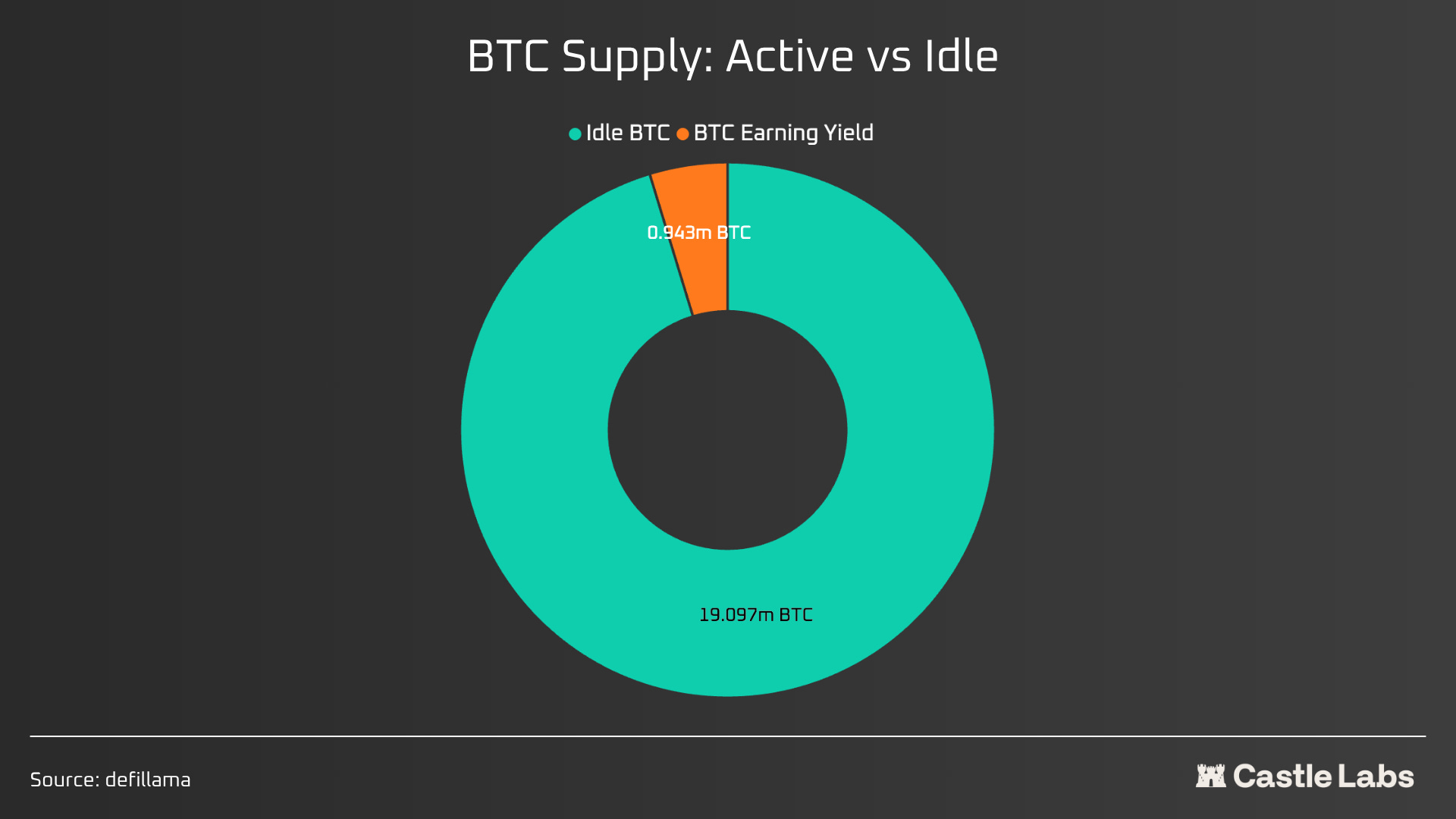
Currently, Bitcoin has a capital problem: most capital earns no yield, and the available options for earning yield on BTC force trade-offs in custody, require wrapping, or require bridging BTC off the mainnet, which might not satisfy all users.
Recently, Stacks released its Bitcoin Staking Whitepaper, which introduces $STX as a capacity asset paired with native Bitcoin, forming a tighter link between the two.
Stacks introduces a Bitcoin Staking option that lets BTC holders earn native Bitcoin yield while their coins remain on the Bitcoin Layer 1 (L1), without giving up custody or bridging assets.
This consensus-level alignment of interests can trickle down through the ecosystem and serve as a blueprint for other Bitcoin protocols seeking better alignment with native Bitcoin.

The Issue at Hand
Stacks is one of the earliest and leading Bitcoin protocols, with strong alignment with the L1.
Stacks blocks are anchored to Bitcoin blocks, inheriting security from the Bitcoin L1.
Its distinctive element is the Proof of Transfer (PoX) consensus. Under this model, miners compete among themselves to secure the network by bidding BTC. This bidding happens during each block interval to qualify for STX block rewards and transaction fees.
The original PoX model was limited by Bitcoin’s 10-minute block production. This limitation was resolved with the Nakamoto upgrade, which allowed a single Bitcoin block to include multiple Stacks blocks.
This model can be interpreted as a proof of work, but instead of electricity, miners bid BTC.
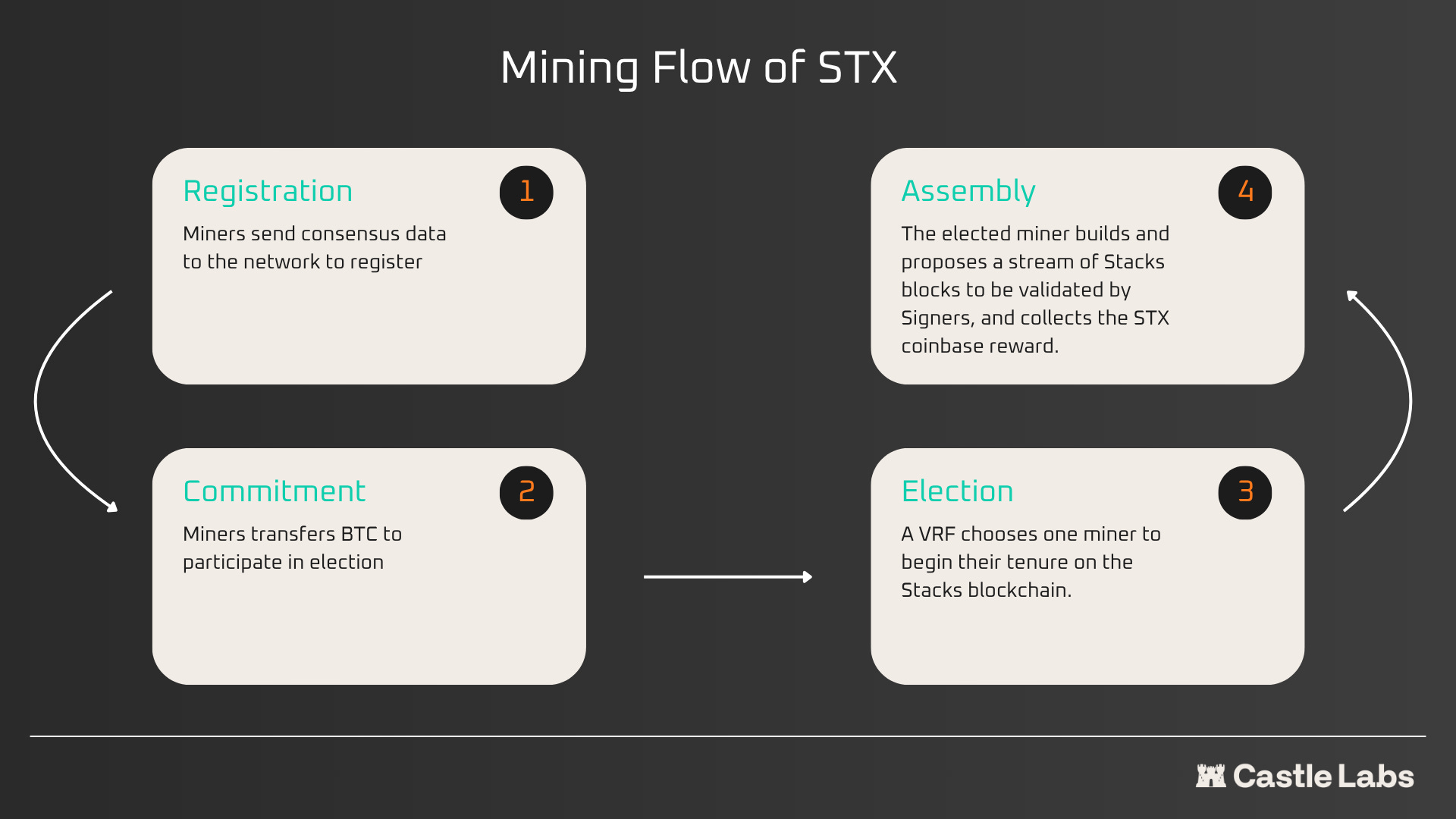
The BTC bid gets distributed among all of the STX “Stackers”. This aligns Stacks more closely with Bitcoin than with other protocols that leverage native tokens or block rewards other than BTC.
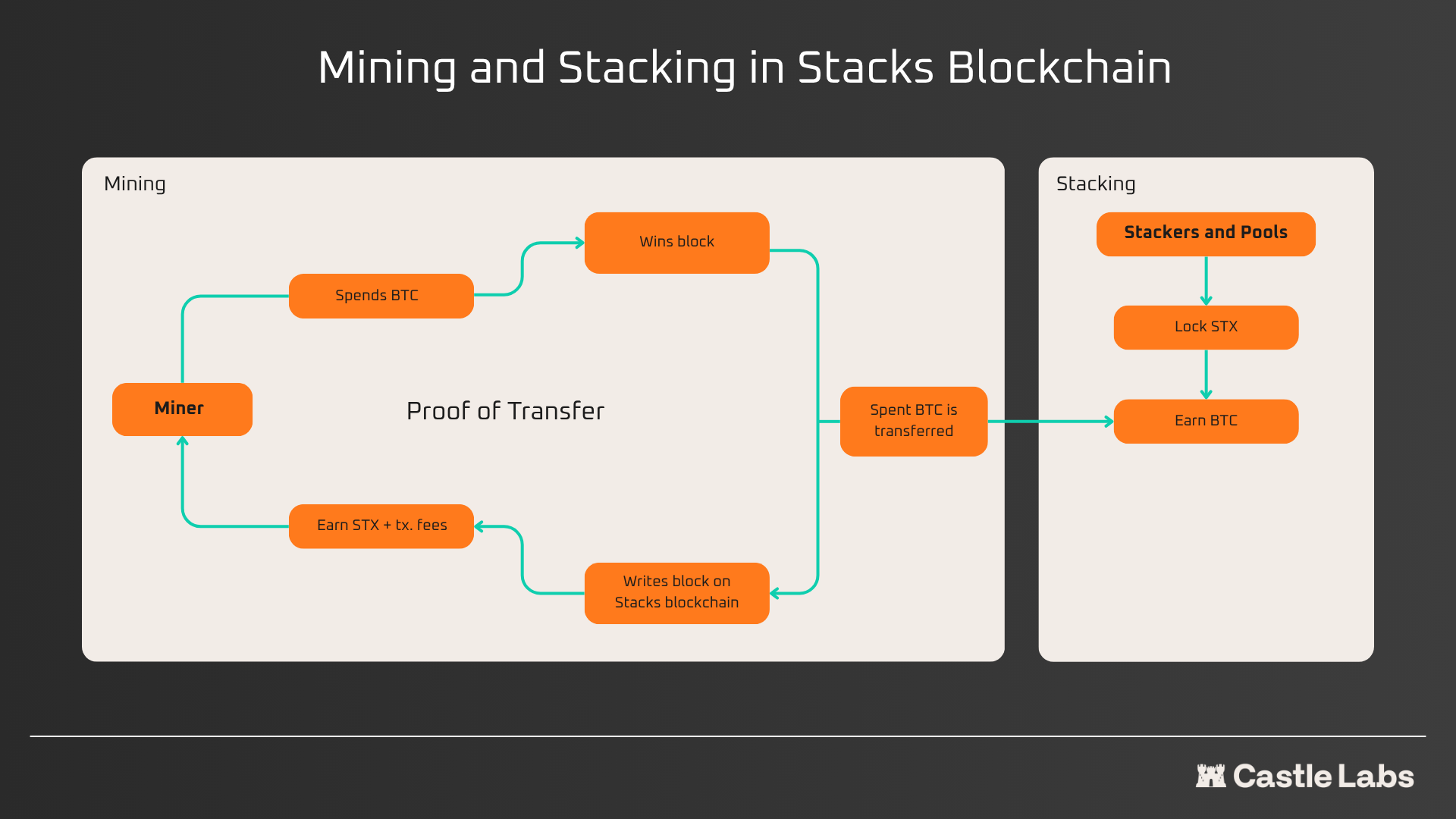
PoX also indirectly strengthens consensus: it incentivises stackers to lock STX and contribute to block validation, either as signers or by delegating responsibility to third-party operators.
Now, the latest whitepaper release brings about a refresh to PoX.
Staking Native Bitcoin
In May 2026, Stacks released its Bitcoin Staking Whitepaper along with a proposed update to its PoX model.
We have mentioned in the abstract the current lack of opportunities regarding native BTC yield, without compromising custody or decentralisation.
Stacks PoX has been extended to address exactly this issue: in its previous form, it did not provide yield on locked BTC, only on STX. Now, BTC holders can earn native BTC yield while their coins remain on the Bitcoin Layer 1 (L1).
This is possible by the introduction of “protocol bonds”, which allow users to lock BTC on the Bitcoin L1 and STX on the Stacks network to receive a target yield at the bonding period (6 months), paid in BTC on the L1.
Rewards for the protocol bonds are still generated from the BTC paid by Stacks miners competing for block rewards and transaction fees.
Stacks incentivises users to pair BTC and STX through a waterfall structure where yields are paid every cycle ~2 weeks (2,100 BTC blocks) in this order:
Paired BTC-STX positions are prioritised as a “senior tranche”
Users who only stack STX get the remaining yield as a “junior tranche”
For the first managed phase, the senior tranche receives a fixed 3% APY. STX-only stakers are paid next, and a reserve fund is maintained to buffer cycles where miner revenue falls short. The bootstrap period is set up as such to likely result in more BTC flowing into the reserve buffer at the start.
As BTC yield is market-driven, in the event of an unforeseen yield contraction, the junior tranche (STX-only stakers) bears the initial yield reduction.
The STX-to-BTC ratio for the first tranche has been set to 5% of the BTC position’s value.
Bitcoin Staking will roll out in two phases:
A bootstrap phase (PoX-5) managed by the Stacks Endowment and open to vetted partners, allowing the protocol to establish a track record of BTC yield distribution under controlled conditions. The PoX-5 Stacks Improvement Proposal is already live on the Stacks Governance Forum, proposing an increase in emissions to bootstrap the updated PoX in the short term.
A fully permissionless phase (PoX-6), where bonding capacity is allocated algorithmically through an open auction rather than curated access.
Once bonded, user funds are locked for 6 months, but they may exit early by forfeiting their yield. In which case, BTC unlocks at the next Bitcoin block (~10 min). This is only valid for BTC, while STX still stays locked for the 6-month bonding period.
The interesting aspect of this PoX update is that it further aligns Bitcoin and Stacks, making L1 BTC ownership a prerequisite for the senior tranche. In addition, Bitcoin Staking rewards are determined by STX network activity, as miners set their bids based on the fees they expect to receive.
All of this without:
Introducing any slashing risk of losing committed funds
Relying on third-party custodians, as BTC is locked on L1 through an OPCODE
Relying on secondary tokens as yield, leading to misalignment of interests, instead, it uses native BTC
BTC holders earn rewards directly in BTC without giving up custody of their
assets. The auction is the sole mechanism by which BTC yield capacity is distributed.
Initially, Stacks is targeting a 3% APY. However, at the end of each bonding period, this will be recalibrated based on miners’ bids, the status of reserve funds, and data on previous bonding performance.
To conclude this section, it’s important to mention how the reflexivity between BTC and STX goes both ways: it can be favourable, but it can also turn negative in adverse conditions.
The network has to generate economic activity that translates into increased STX value and higher miner bids, leading to BTC yield.
Similar to BTC, STX emissions decrease over time, so miners’ incentives will increasingly depend on economic activity on the Stacks network.
The Future is Bright (Orange)
Stacks has already demonstrated the power of its PoX model by distributing over 4200+ BTC to ecosystem participants since its launch in 2021.
The latest update reinforces this with a stronger alignment with Bitcoin and a yield distributed in native BTC. It cannot be overstated how important it is for any L2s building on Bitcoin to align with it as much as possible to reduce friction among users interacting with both. Bitcoin holders and users come from either the early days of crypto or the recent institutional wave of adoption that has solidified BTC’s standing in traditional finance. In both cases, for very different reasons, they are not keen on putting them to work if that means giving up custody of their assets and expanding their risk surface. They might just let them idle.
A wise farmer used to say, “I know my chickens”. Building for BTC holders (including institutions) requires alignment with Bitcoin’s original ethos and the cypherpunk era. That is, with self-custody, no wrappers, no bridging or third parties.
There is, in fact, a growing number of BTC holders who might have the appetite, but lack the opportunities due to an unwillingness to compromise on the aspects mentioned above.
This is not only an ideological stance but a practical requirement that should be taken into account by those building products on Bitcoin L2s.
Stacks has chosen to do so with a BTC-powered consensus model, which now expands to distribute yield determined in BTC to users locking BTC on the L1.
The source of yield on Stacks is transparent: competition among miners for STX rewards. More onchain activity leads to more transaction fees, which in turn increase miners’ BTC bids to win Stacks blocks.
Treasury companies are showing interest in this alignment, with UTXO Management, the asset management arm of Nakamoto Inc., among the inaugural participants in Bitcoin Staking.
We welcome and expect further developments in this area, as one of the characterising trends of the short-term future: the previous couple of years have shifted BTC supply from a retail to an institutional base.
The next big unlock is how to make this capital work.
written by @francescoweb3 ✍️
Every week for the last 3 years, we have shared our research for free, directly in your email. Not a subscriber yet? Let’s fix it:

If you are more of a Telegram person, you can read all of our research without the noise on our TG channel:
Disclaimer: This article was produced in collaboration with Stacks. Castle Labs applies the same standard to sponsored content as in our independent research. We strive to be accurate, unbiased, and educational. Commissioned partnerships provide resourcing and distribution, not editorial control.