


Welcome to Edition 136 of The Castle Chronicle!
Matt here, I would like to thank you all for reading my articles in this newsletter and for following my curation of the Chronicle. I loved hearing your thoughts and seeing that you enjoyed it. This is the last issue of the Chronicle that I’ll be curating: my new role at BackedFi will be much more demanding, so the best decision, in order to let you fully enjoy it, is to hand it over to my skilled fren SchizoXBT. The Chronicle is evolving, and I’m sure you’ll be in good hands, so enjoy my last curation and welcome Schizo from the next issue. Cheers!
Here’s what we have for you today:
🔍 Market Watch - BTC has still some fuel left in its tank
💸 Why Buybacks are Essential for Protocols like Resolv
🍐 The Founder Corner - Building Pear Protocol
💙🧡 ARB Corner - Projects Spotlight
🏰 Castle Reads - All of Castle’s research you might have missed
📖 Recommended Reads - The best reads from the best researchers on CT

🔍 Market Watch
Gm frens! BTC continues to bleed out on the lower timeframes, but that has not stopped some coins from showing impressive gains! Let’s check out the charts.
Price Action
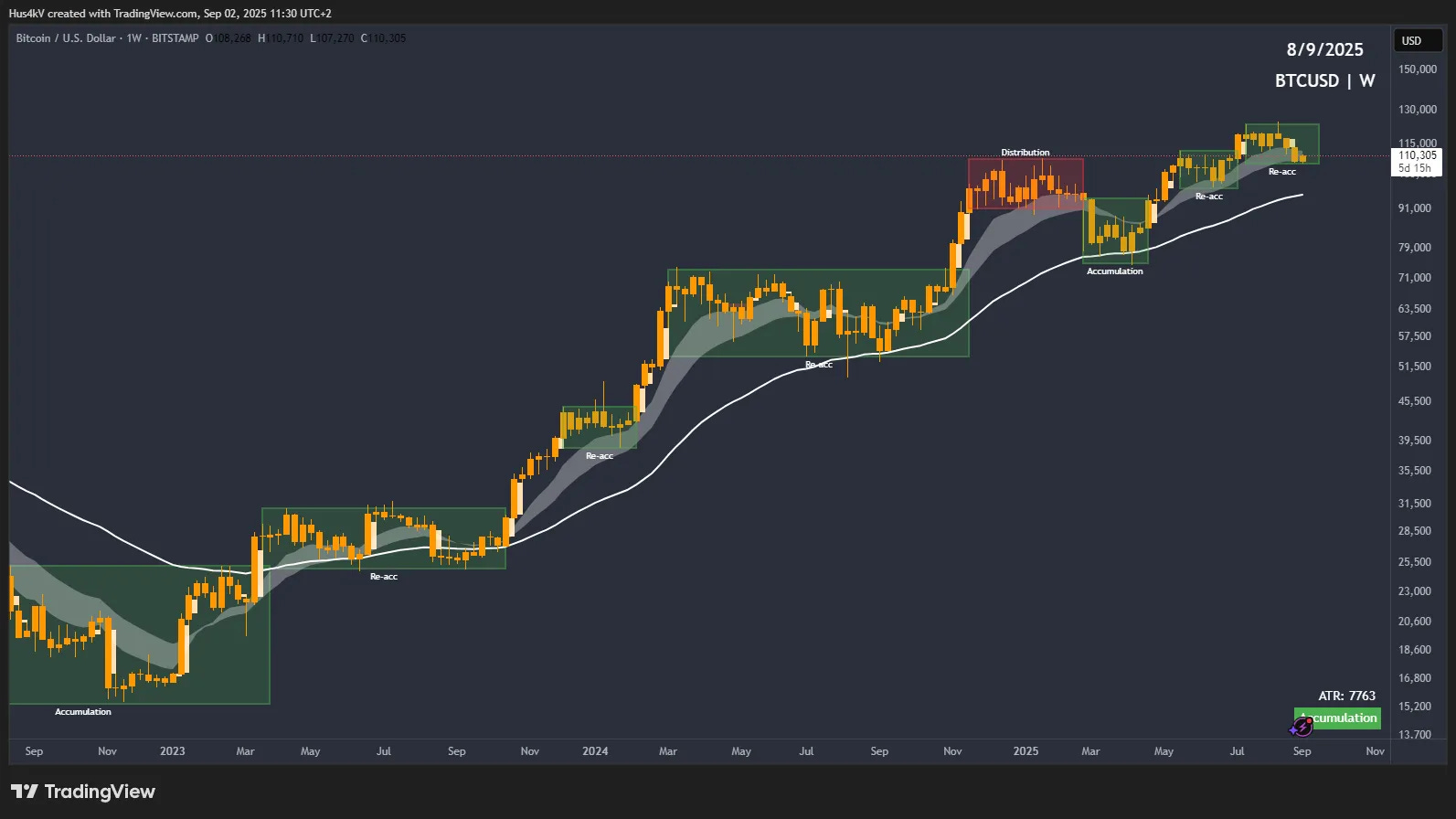
While the lower timeframes may be showing weakness, the weekly chart has not changed much. We are still in a strong momentum cycle, moving above the rising 10/20/50 EMAs. We might lose the 10/20 EMA soon if the current sell-off continues, but even then, the outlook remains bullish.
As a trader, this means sitting on the sidelines and waiting for more directional confirmation.
Top Performers
Even though BTC is not performing particularly well right now, some coins have seen really nice gains. Most of these coins are currently in a decent context to continue moving higher.

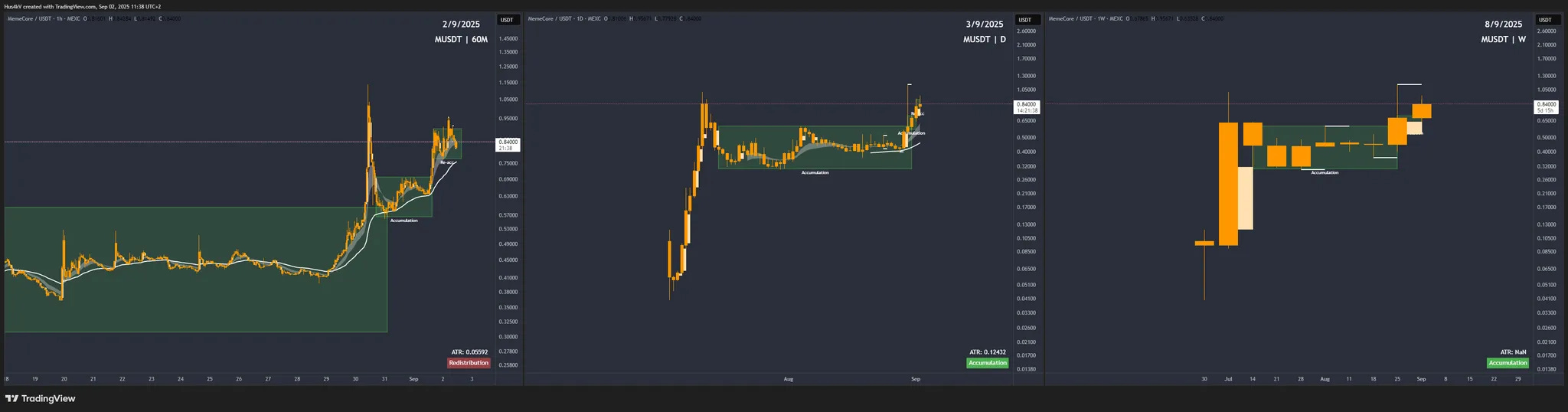
Let’s take a quick look at this week’s winner, M. M is a fairly new coin, so the weekly chart looks a bit compressed. However, the daily chart tells a very clear story. After the initial move up, the price went sideways for a long time and has just recently shown that demand is stepping in again. This is exactly the type of story we want to see. It makes sense to now step down to a lower timeframe and try to follow this move higher.
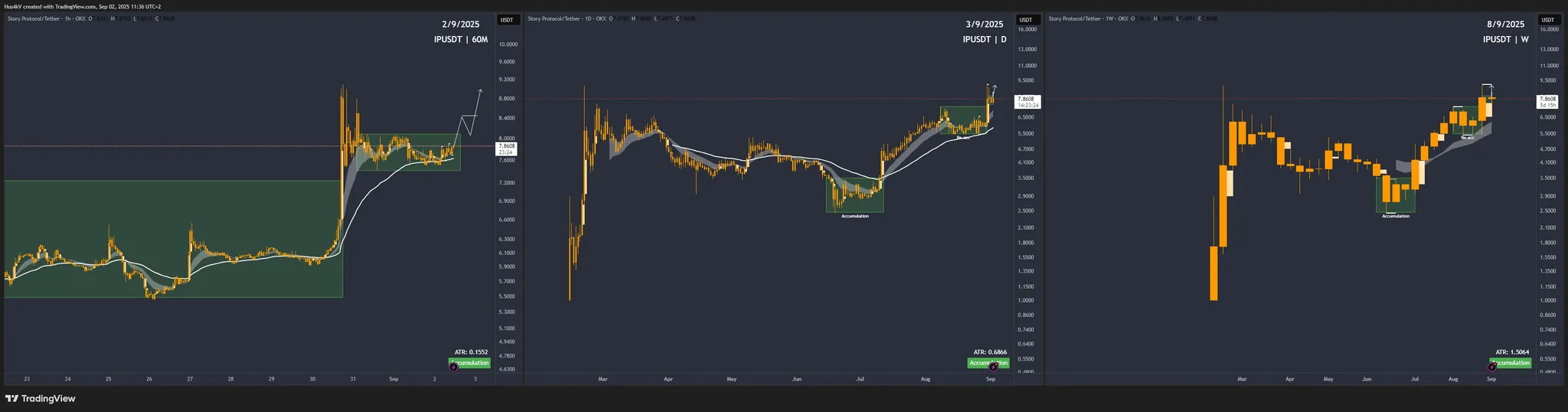
Another good-looking chart is IP. On the weekly chart, we can see a type of price action very similar to M’s daily chart: an initial move up, some sideways movement, and demand re-ignition. Definitely a good coin to have on our watchlist!
While it might look like there is a huge green wave, the reality is that only the TOP10 biggest weekly gainers have shown more than a 10% increase. So by no means would I call this an alt-season just yet. It is definitely a good idea to keep these coins in mind, as we always want to be aware of what is most demanded in the market.
Narrative Performance
While the TOP5 has shown significant gains, the overall market is relatively flat. The biggest narrative gains in ICM, CEX, and Oracles did not exceed 10%, while DeSci has lost a little over 10% this week.
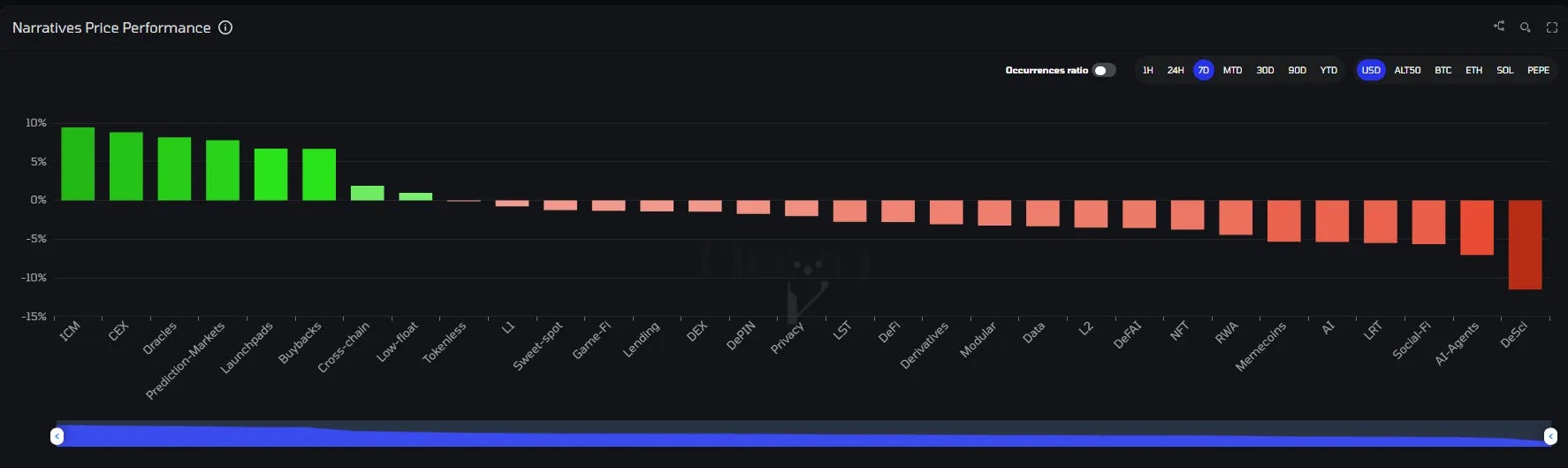
Alt-season is definitely not here yet. In order for alts to start outperforming BTC, we need to see BTC lose its dominance. In previous alt-seasons, capital started flowing from BTC to alt-coins, and we saw significant gains during periods of BTC bleeding out. So far, that has not been the case, and I wonder if we’ll ever see it again.
From what I’ve seen this cycle, BTC and alt-coins resemble the behavior of stock indexes and individual stocks, where the best time to look for individual stocks is during periods when the indexes are rising. Good old relative outperformance, just as Wyckoff used to teach.
Perhaps that should also be our expectation going forward as the crypto market matures. I’m very interested to see how it all plays out. Whatever happens, I’ll be here for it, and I hope you will be too!
Risk responsibly, and I’ll see y’all next time!
Courtesy of 0x_Vlad - trend-based trader and MentFX student
Not following what I’m talking about? Check out my quick cheatsheet to understand how I approach a chart.
💸 Why Buybacks are Essential for Protocols like Resolv
What is Resolv
Resolv is the protocol that mints USR, an overcollateralised yield-bearing stablecoin that earns interest from delta-neutral strategies, and RLP, a liquid token that earns leveraged yield to carry the risk intrinsic to these strategies.
The yield USR and RLP users benefit from comes from liquid staking yield accrued by ETH LSTs and funding rates earned while shorting ETH on centralized exchanges.
Resolv now has its own governance token, RESOLV, which can be staked to earn rewards. The airdrop of the token was not received with much enthusiasm from users, and many positions were unwound quickly, causing the TVL to drop by over 50% from the ATH in a couple of months.

Then, Resolv’s team started announcing new partnerships, strategies, and integrations, as well as the fee-switch and token buybacks, causing both price and TVL to bounce from the recent lows.
Resolv’s Buyback Program
Last week, Resolv Foundation launched a buyback program of its token RESOLV using the protocol’s revenue on a weekly basis.

But where do these revenues come from? The protocol earns 10% of the interest paid to the collateral pool, as well as incentives received from external players like EtherFi, thanks to the fee switch they enabled in July.

At the moment, the project has generated over $22M in interest for its depositors, and since the fee switch, the protocol has accrued $226,000 in fees, 75% of which has been allocated to buyback RESOLV.
Benefits of this Program
Buybacks are not just effective on the token’s price because they reduce the circulating supply, but also for what they represent for the community: the protocol is sacrificing part of the revenue that could be earned by the team to instead support the project’s token.
These bought-back tokens will then be allocated to future initiatives to boost the ecosystem, effectively re-entering the protocol’s economy.
Long-term support of the protocol for its token through buybacks is a solid way to increase trust among community members and shape future plans for the token, effectively retaining more supply over time.

Final Thoughts
Redirecting a small portion of the yield toward staking and buybacks is a necessary step to support a token that has yet to find its purpose, so stakeholders currently cannot have a say in the protocol’s future.
While the move makes sense, I have some doubts about how these buybacks are carried out. Weekly buybacks are not always aligned with market conditions such as liquidity, volume, and spreads, so they may end up feeding pending orders on the way up and provide limited support to the price when needed.
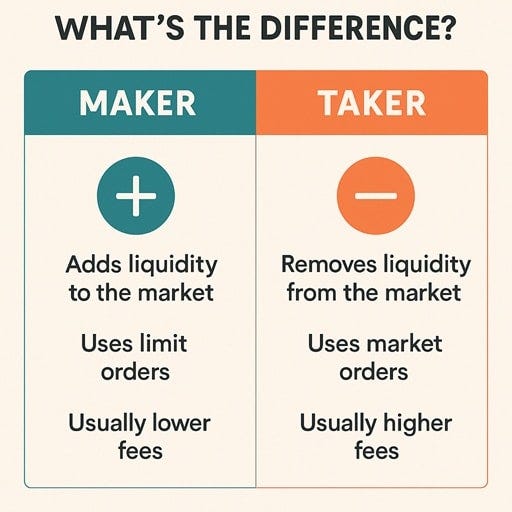
On the other hand, there are ways to improve this, such as planning a strategy using maker (limit) orders that can support the price when necessary, for example during cyclical downturns, prolonged dips, or low liquidity conditions that push the price down. This type of strategy is already used by Fluid and Raydium.
Speaking of Raydium, its founder inspired this article with a piece I am linking here.
See you on CT fellas, thanks for reading.
milady
Courtesy of Matt
🍐 Building Pear Protocol: My Journey from Frustration to Manifesting a Decentralised Pair Trading Protocol
The Genesis of Pear: Addressing a Trading Pain Point
The inspiration behind Pear stemmed from a common frustration I experienced in the crypto trading world: the cumbersome process of manual pair trading on platforms like dYdX and Binance.
I found myself juggling multiple tabs:
One for opening individual long and short legs
Another for charting spreads on TradingView
Yet another spreadsheet to track net funding
This fragmented approach not only made managing individual positions a nightmare but also obscured my true path to profit, as a 10% movement in a pair ratio could be achieved through various, unclear means. My personal drive was amplified by observing friends incur losses from leveraged perpetuals trading, a stark contrast to the profitability of pair trading in traditional finance when risk is effectively managed through cross-margining.
This led me to a "dog-fooding" philosophy: building a platform that I would use myself.
The true validation for the idea arrived with significant personal success. A simple long ETH/short ETC pair trade, executed with only 3x leverage but on a decent size, yielded a remarkable +50% return. The key? It was a set-it-and-forget-it trade, requiring minimal attention over several weeks.
This stress-free yet highly profitable experience underscored the potential of democratising this trading strategy.
Having personally experienced the gut-wrenching feeling of being liquidated on outright long or short positions and witnessing the inefficiencies of scaling long/short crypto trading, myself, with nearly a decade of experience in investment banking, recognised how only hedge funds had efficient access to such strategies via prime brokerage accounts.
My vision for Pear was clear: to democratize access to efficient long-short trading.
The Founding Team: Forging a Path Through Collaboration and Challenge
The core of Pear's founding team emerged from Developer DAO. My initial partnership faced a challenge when one co-founder wasn't contributing adequately. This led to a somewhat painful internal transition, where my current CTO, initially a senior engineer, was elevated to a leadership role, and I restructured the team. This decisive move ultimately proved to be the best decision for all stakeholders.
The early days of the project were a roller coaster of real highs and lows. The lows were characterised by months of fundraising, often ending in rejection, and the inherent difficulties of starting a venture in a bear market, leading to existential questions about the market's recovery. Conversely, the highs were exhilarating: shipping the Minimum Viable Product (MVP), receiving our first user feedback, and witnessing the initial organic coverage of our protocol.
The unique blend of backgrounds within the founding team contributes significantly to Pear's distinctiveness. My experience in traditional finance, coupled with an unexpected, yet impactful, stint as a qualified teacher (of mathematics to 11-18-year-olds for two years), positions Pear at the intersection of building practical financial products and a desire to educate and empower users. This gruelling contrast but life-affirming experience of combining education and platform is a defining characteristic of Pear.
V1, Learnings & Product Market Fit: The Path to Iteration
Pear's first iteration integrated with GMX, a decentralised exchange. This alignment allowed for innovative features like composable positions, where trades could be minted as NFTs (ERC-721), enabling transferability to other wallets, potential borrowing against the position, or even OTC sales. However, this approach, while it might be a bit too clever, ultimately missed the mark.
Users primarily sought a seamless experience of being able to Long and Short in 1 click, with seamless charting and efficient PnL tracking. That’s it.
User feedback on V1 confirmed the platform's clunkiness. Surprisingly, some users even expressed a desire to perform outright long or short trades directly from Pear, despite it adding an extra layer of fees. Their rationale was the convenience of managing both pair trades and outright positions within a single platform. This unexpected insight led me to integrate this feature into Pear's Intent-based engine.
Observing other protocols provided valuable lessons. Vertex, in particular, was admired for its excellent user experience (UX) and consistent updates, fostering a sense of being part of an evolving ecosystem. However, Vertex was perceived as too slow to adapt to where the puck was going, specifically the user demand for leveraged trading of new listings. This observation influenced my decision to double down on an intent-based system offering over 400 assets and instant new listings.
My team's approach to iteration after the initial launch was methodical. We conducted a lengthy closed beta process spanning almost six months. While there was a temptation to go live faster, the extended beta provided ample time for iteration and testing.
The wisdom being, nobody remembers if you launched in May 2023 or November 2023.
Where We're Going: The Future of Pear
Pear has recently integrated with Hyperliquid's orderbook (Hypercore) via Builder Codes. The next significant milestone is the full deployment of the platform on HyperEVM. This strategic move will unlock the ability to offer vaults and other structured products centred around pair trading.
Moving to HyperEVM is a crucial step in solving past limitations. It will enable close collaboration with native instruments like USDhl and kHYPE, and facilitate the creation of multi-contract calls directly within the Hyperliquid ecosystem.
Currently, Pear caters to a diverse user base comprising both "retail" and "pro-tail" (professional retail) users. This focus is expected to remain consistent. Retail traders are often driven by narratives, seeking to trade pairs like BONK/PUMP or TRUMP/MELANIA, while pro-tail users demand more sophisticated analytics such as correlation, volatility, and beta.
Advice to Builders: Navigating the Crypto Landscape
One significant misconception about building in crypto is the idea that it's an easy path. In reality, you probably work more hours than in a traditional job.
Reflecting on my journey, if I could go back to the beginning, I would have bet on Hyperliquid earlier. Initial scepticism about Hyperliquid's thin liquidity and price wicks, coupled with listening too much to disgruntled users who had been liquidated on a wick there, delayed this crucial realisation. This was all prior to the “generational wealth” effect from the $HYPE airdrop, and it is now clear that Hyperliquid is becoming the winner.
For founders currently working on their V1, my advice is clear: don't rush to launch while you are still collecting user feedback. Furthermore, a critical evaluation of whether a token is truly necessary is advised, as managing community expectations around a token can be incredibly time-consuming.
When it's good, you're the hero, when it's down, you're the villain.
Ultimately, all you can do is be your best.
Courtesy of huf
💙🧡 ARB Corner: Projects Spotlight
For this week’s edition of our bi-weekly ARB corner, we share some interesting (and perhaps overlooked) projects that have either recently launched or are still shipping.
Without further ado, let’s dive into them.
1. Alloc8

What is Alloc8?
Alloc8 is an agentic protocol that allows users to set policies for their liquidity position, enabling it to be automatically managed.

How does it work?
Alloc8 is constantly scanning the market for opportunities, scoring them against your defined benchmarks. For suitable opportunities, the agents are able to executed automatically and 24/7, with no need to manage your positions.
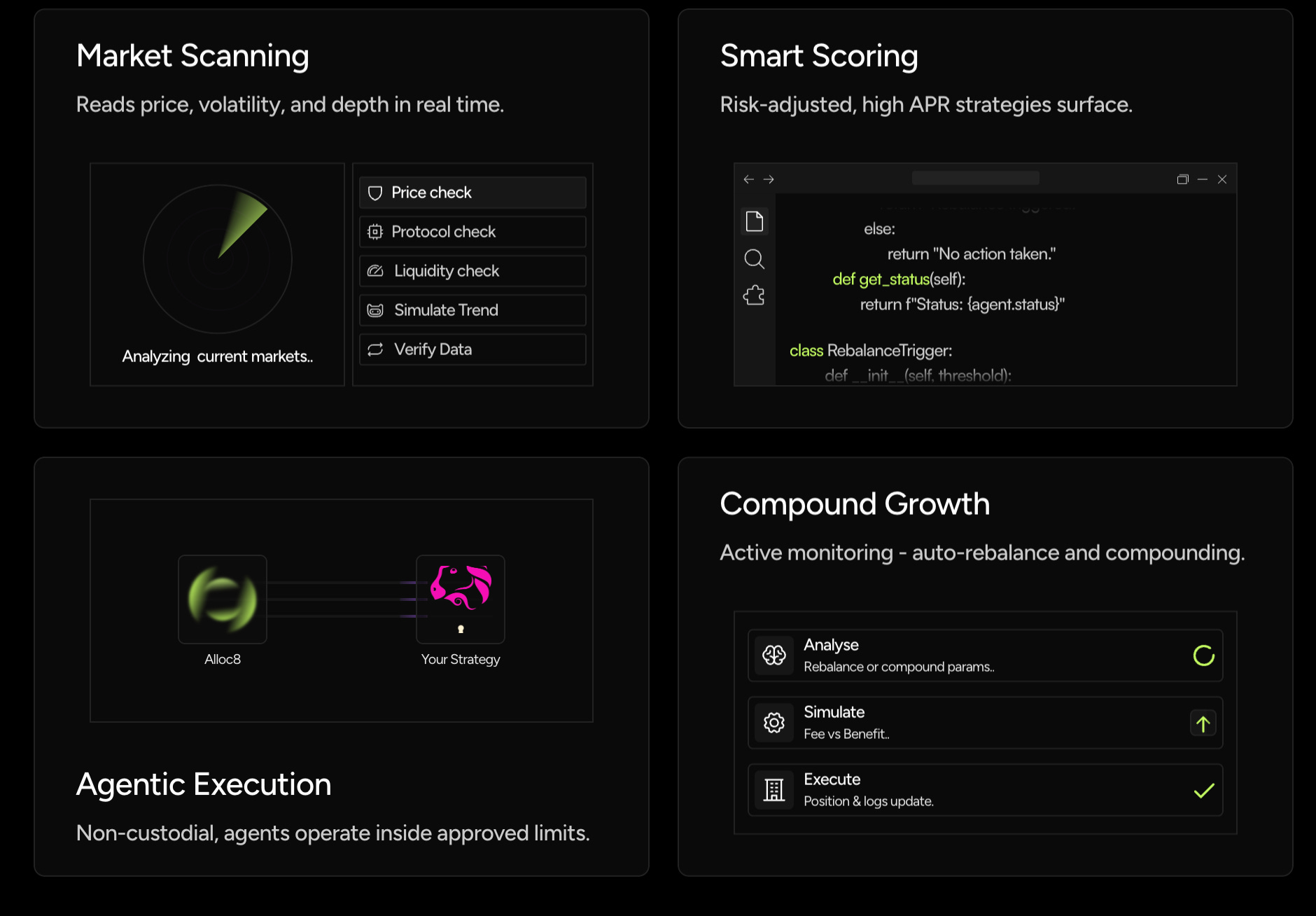
These strategies are suitable for different types of users, according to their needs:

AI agents can be an incredible unlock for the already deep liquidity existing on Arbitrum.
2. DeriW
Another interesting project we’re keeping an eye on is DeriW, powered by @CoinWOfficial.
DeriW is an L3 specifically designed for trading and a CEX-like experience, with up to 80k transactions per second.
To get mindshare in this crowded sector, DeriW is differentiating with:
Zero Gas Fees
Fast Execution
Zero Slippage
Transparent Pricing
Up to 100x Leverage
They also recently announced their point program for traders, called Supernova+.
3. Footium
Football season is back. Fueled by the rise of footballdotfun, football fans have had some fun lately. Footium has been live on Arbitrum for a long time.
Footium is a strategy game onchain, very similar to the old Football Managers, where users can be a football trainer and create and manage their own club.
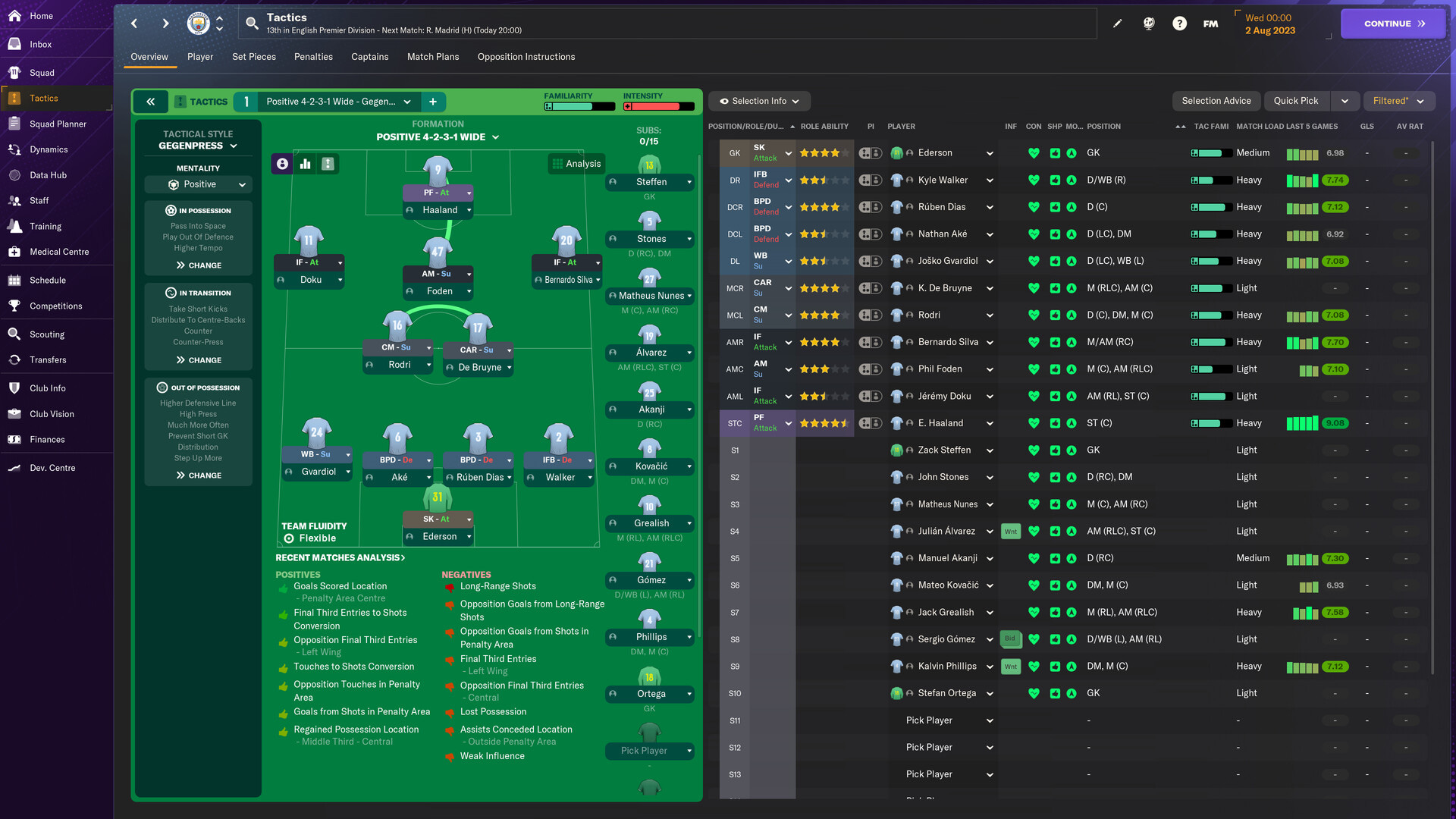
To get started, users have to buy their club and players.
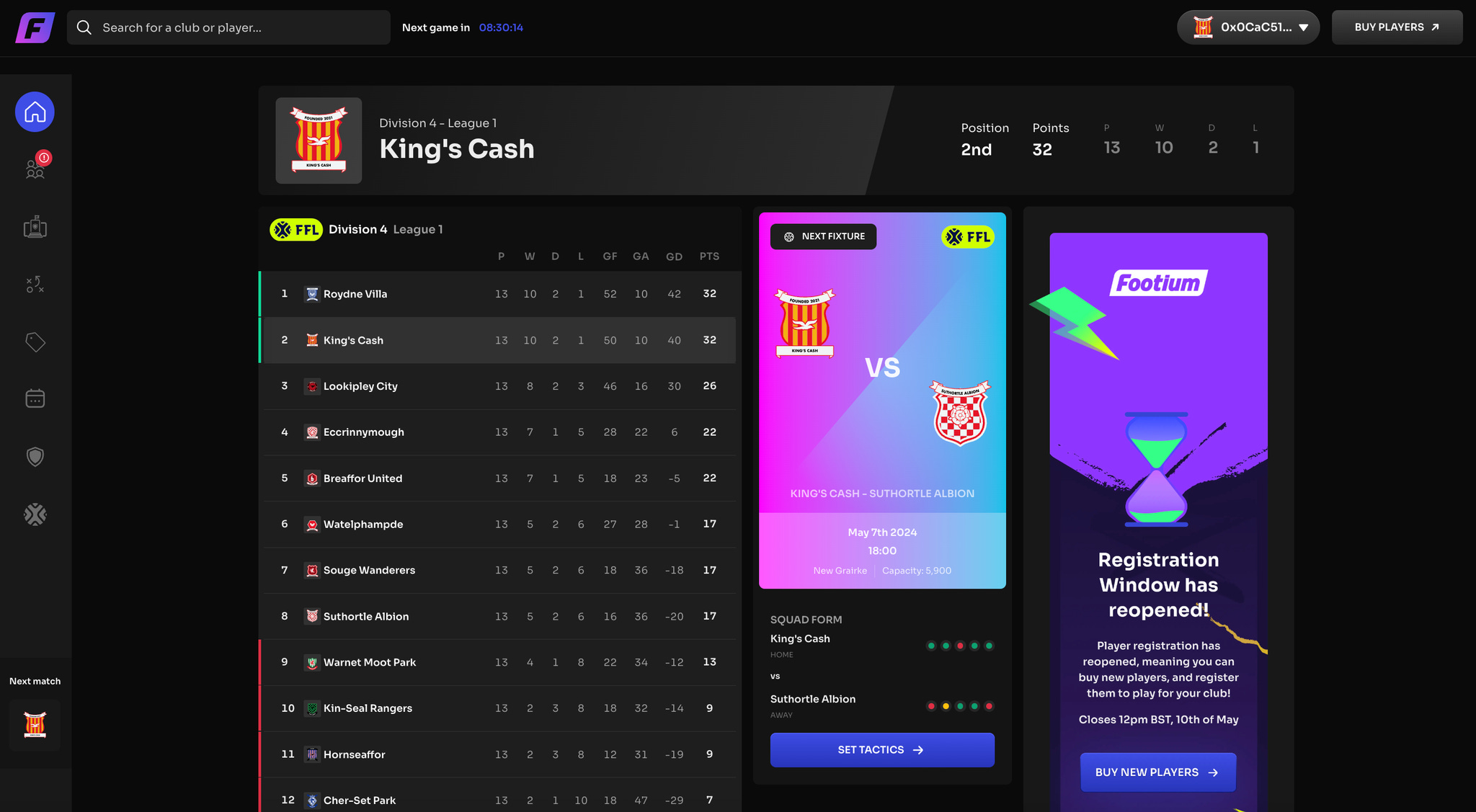
Recently, they launched their Season 11 with the main objective of incentivising new players. In fact, users will be able to join the game with a temporary club throughout Season 11! Be sure to join if you'd like to give it a try.
This is just one example of the lively gaming ecosystem on Arbitrum. Looking for consistent updates?
Make sure to follow these weekly updates:

Variational
Recently Arbitrum published a case study regarding Variational.
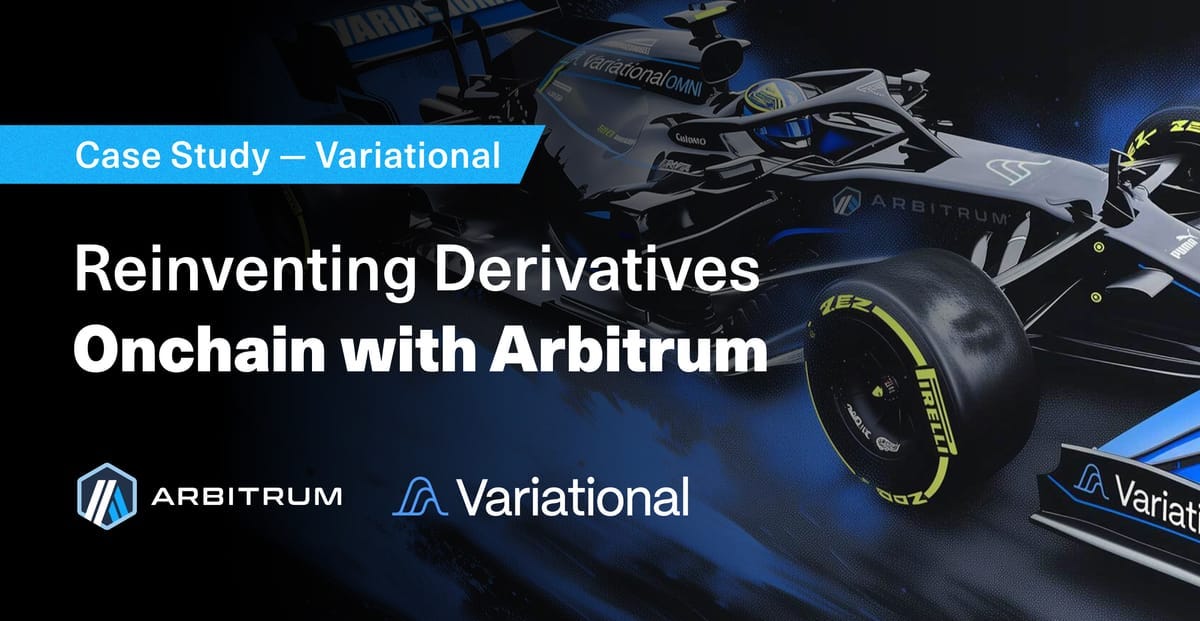
Variational is an infrastructure protocol for the creation, settlement and clearing of customised derivatives. It does so through the well known request-for-quote (RFQ) model, where users ask for a price and get quotes from market makers willing to execute their trades.
Some types of derivatives that could be built on the platform include perpetuals, options, and more.
Variational divides across retail-focused and institutional-focused products.
Omni, for retail order flow

Pro, for institutional OTC derivatives, enabling competition among market makers for a single quote

Last but not least, we highlight continous growth within the Arbitrum RWA ecosystem, which recently welcomed new players.
ULTRA: providing access to tokenized US Treasury Funds

In about a month, it already ranks 7th among RWA providers:

@Theo_Network: launching thBILL, a money market product with “onchain trading and lending liquidity”.
Looks like Tradfi is here, and it’s unstoppable. This is good news for Arbitrum, which is incredibly well positioned as one of the most fitting networks to build on.
As part of this, last week we’ve seen how the US Commerce Department has started publishing US Macroeconomic data onchain, a massive unlock for deeper integrations.
This also included a hash of quarterly GDP data release on Arbitrum One!

🏰 Castle Reads
We published an in-depth research piece together with the guys from @stablewatchhq on the latest developments in the stablecoin sector:

@chilla_ct on how MegaETH could make its launch successful through an airdrop:

Thoughts on the new RWA lending product by Aave: Horizon. By @mattdotfi:

📖 Recommended Reads
An interesting view of buybacks and a guide to make them more efficient, by @0xINFRA:

A speculative but fascinating piece on tokenised startups by @miyahedge:

Prediction markets are the hottest narrative right now, and here’s how to ride the wave. By @PixOnChain:

That’s it for today’s issue, we hope you enjoyed it.
You can check out our X for new research reports and weekly gigabrain content.
See you in the next issue,
The Castle Team

In our newsletter, we may discuss projects or tokens in which we hold positions. While we aim to provide informative content, our views are not financial advice. Please conduct your research and consult professionals before making investment decisions. Crypto markets are volatile, and past performance doesn't guarantee future results. Invest responsibly, and be aware of the risks. Your capital is at risk, and we do not accept liability for any losses.