

Welcome to Edition 131 of The Castle Chronicle!
Do you hear it? It’s not the sound of sea waves; it’s Castle Labs bringing you your well-deserved weekly Chronicle.
Here’s what we have for you today:
🔍 Market Watch - Spotting winners during a sideways week
🧬 The Founder Corner is back - Defi Devin from Gammaswap
💧 A deep dive into Fluid DEX Lite
🏰 Castle Reads - All of Castle’s research you might have missed
📖 Recommended Reads - The best reads from the best researchers on CT

🔍 Market Watch
Gm frens. It’s been a sideways week for BTC, but a LOT of altcoins have been popping left and right. Triple-digit % pumps are back on the menu!
Price Action
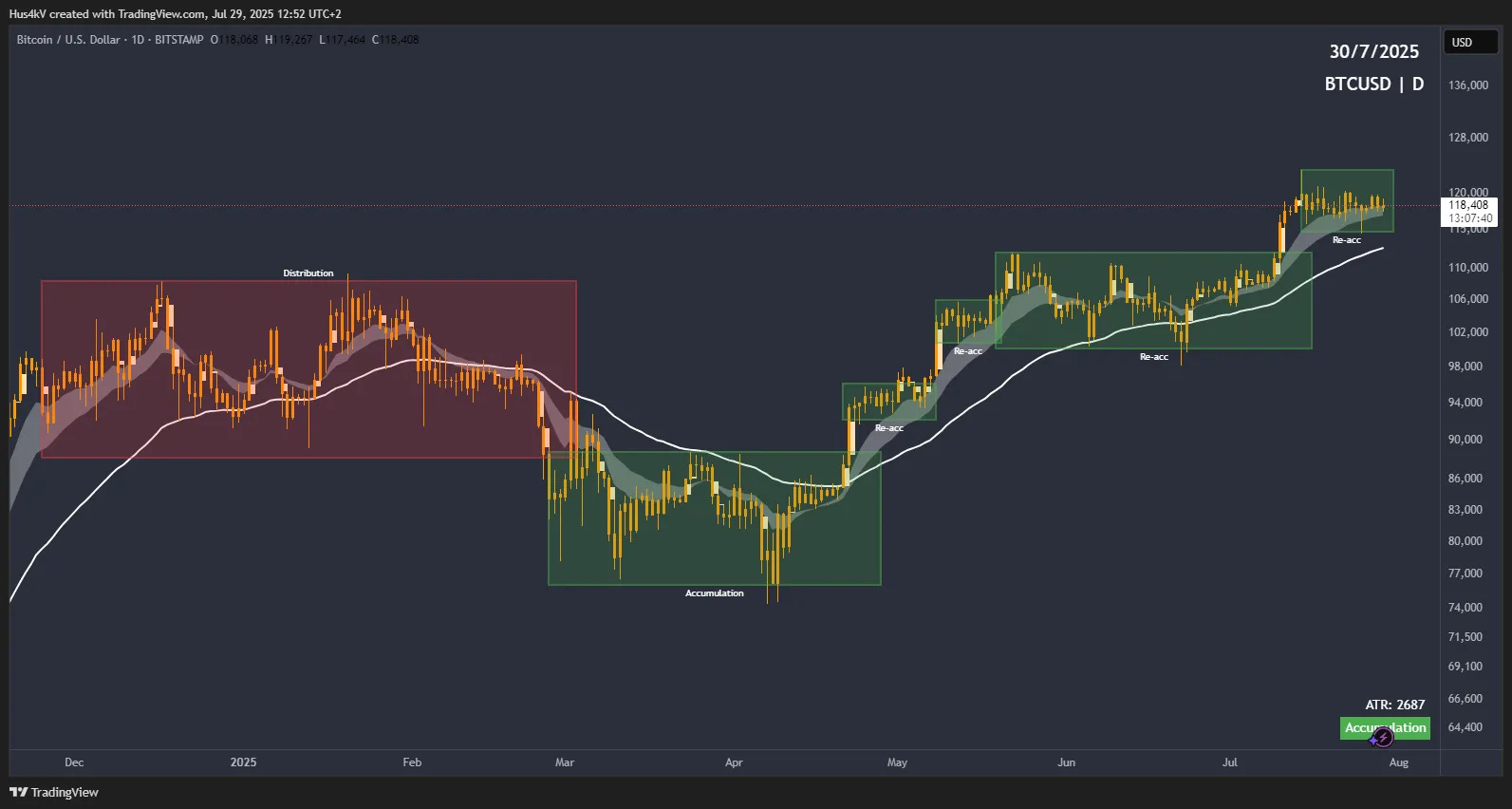
Taking a look at the daily chart, BTC has been going sideways again for a while. I expect this consolidation to once again become a re-accumulation and for price to reach new ATHs.
Top Performers
I’m happy to see some L1s and DeFi in the mix again. The TOP 5 has been a bit more diverse lately, compared to the old 4/5 being memecoins, and I believe that’s a good thing.
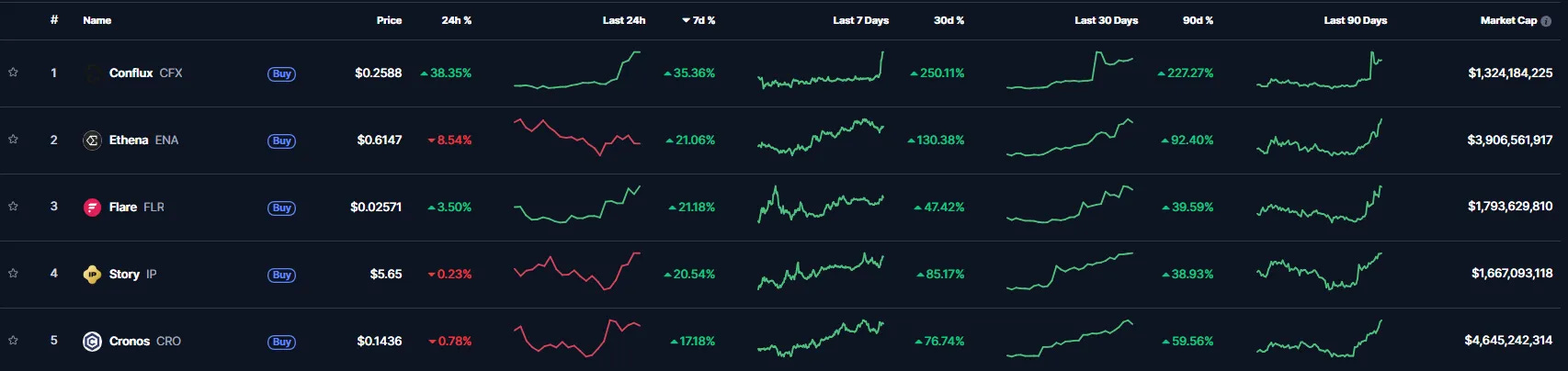
The biggest winner this week is without a doubt $CFX. Unfortunately, when I take a look at the weekly chart, it’s a similar story to many other cryptos - it’s not a trending market yet. That’s why most of these pumps are fairly unpredictable, at least from a strictly TA-based perspective.
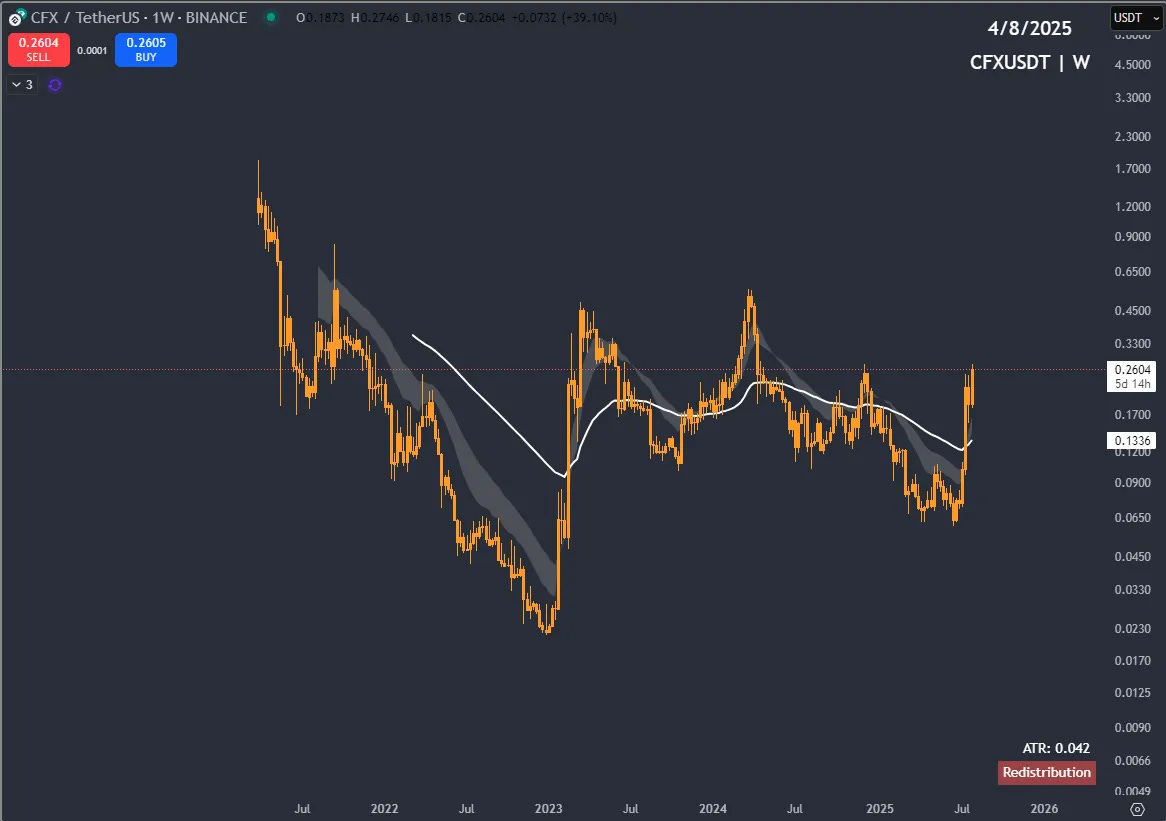
That being said, as a trader, I’ll be more than happy to follow some of these coins later down the line when they are in a more mature trend. This is all a bit too early for me. Plus, other cryptos are already in a trending environment, so I don’t see any point following this.
Narrative Performance
This week has had both winners and losers, with the biggest gainers being NFT, ICM, and Social-Fi, all adding close to +30%. AI Agents, on the other hand, have suffered the biggest losses, being down close to -20%.
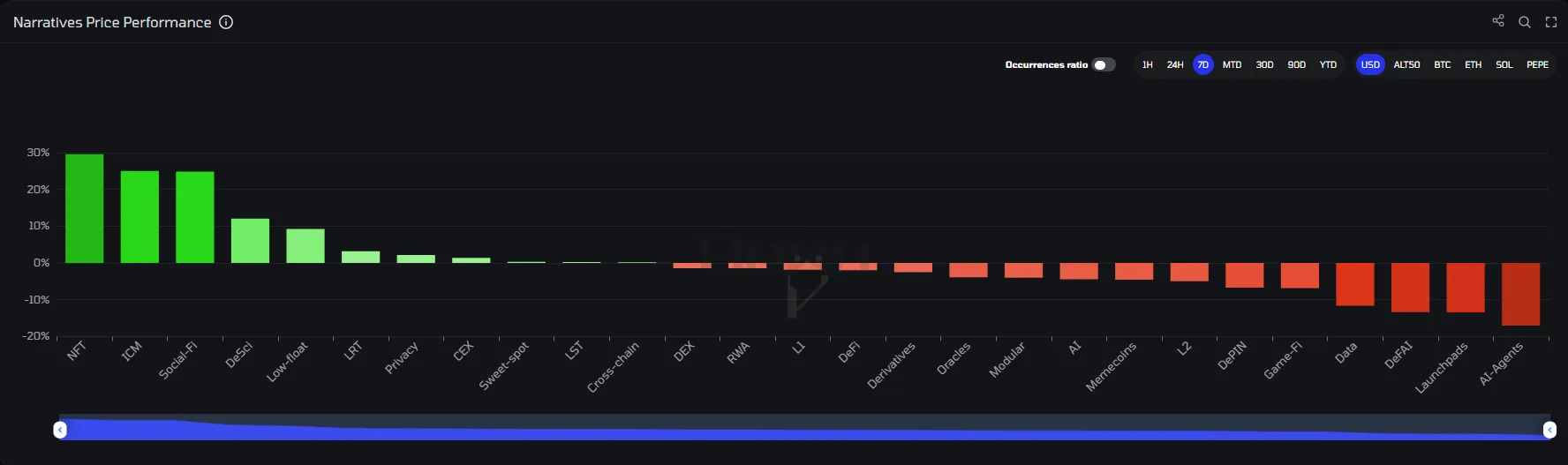
It’s fair to say that this market is currently full of opportunities, but there is a LOT to filter. Making the right decision when there are so many options (also known as the paradox of choice) can often be quite difficult. We should therefore focus on quality > quantity to hopefully tip the scales in our favor. But hey, that’s the game we play.
Risk responsibly, and I’ll see y’all next time!
Courtesy of 0x_Vlad - trend-based trader and MentFX student
Not following what I’m talking about? Check out my quick cheatsheet to understand how I approach a chart.
🧬 Founder Corner: The Importance of Iteration
Why I'm Writing This
My name is Devin, and I am one of the co-founders of GammaSwap, a DeFi protocol that allows you to hedge IL and trade perpetual options.
DeFi is one of the few areas of crypto with true PMF, yet building is incredibly difficult.
Here are the challenges builders can face:
Finding PMF when building something innovative is difficult.
The iteration cycle is more challenging and time-consuming than Web2 due to security concerns.
Balancing decentralization and speed.
I hope that by sharing my story, it can inspire other builders and give the broader crypto community a better understanding of the process.
GammaSwap Origins
The founders met at the Activate x Wormhole hackathon in 2022.
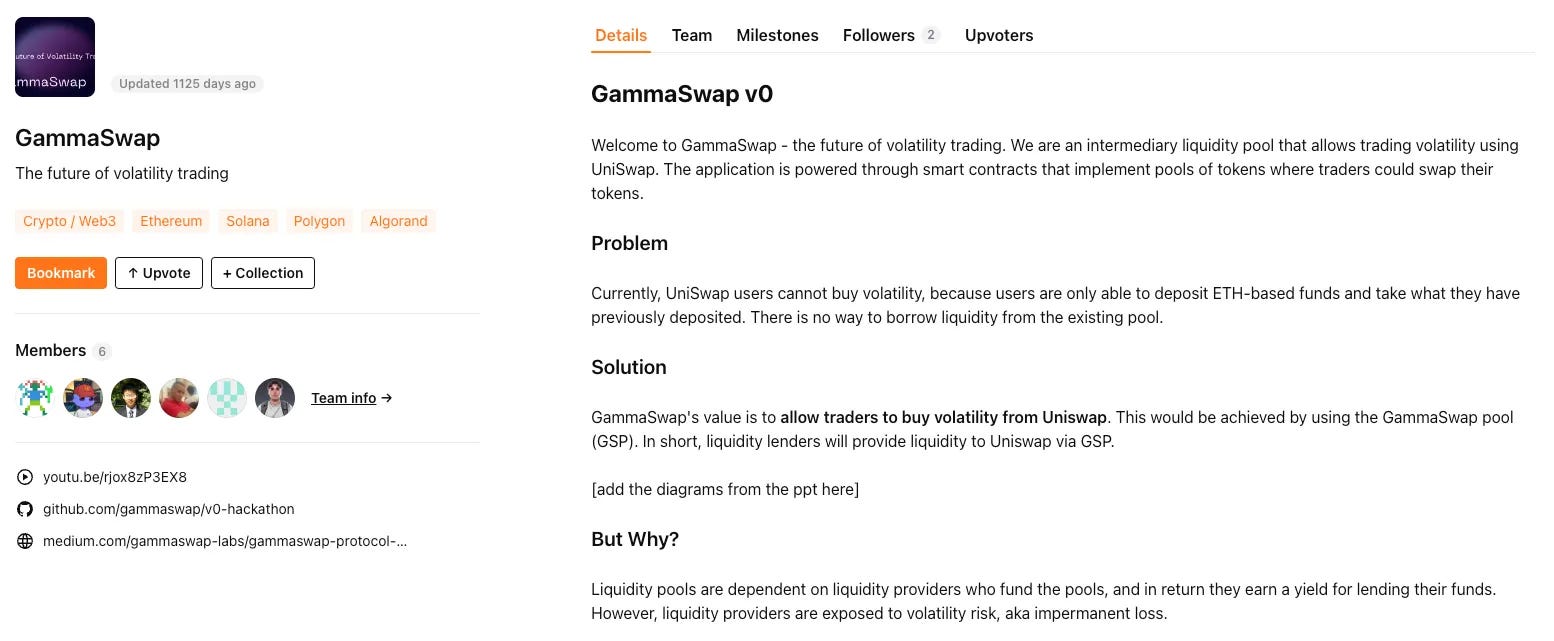
@0x_danr is the inventor and first founder. He had an illustrious career on Wall Street as a Software Developer at Goldman, Equity Trader at Oppenheimer, and Algorithmic Trading Developer at UBS. He left in 2016 to trade his own strategies.
When DeFi summer came in 2020, he witnessed the birth of Automated Market Makers (AMMs) and thought they were the most interesting invention in finance, as they supported permissionless markets and provided infinite liquidity regardless of price.
As the incentives began to dry up, he realized many Liquidity Providers were unprofitable and wanted to short the LP exposure. There was no protocol to do so, so he began writing the first smart contracts for GammaSwap at the end of 2021. He then entered a hackathon in mid-2022, where I (@0xDeFiDevin) had the chance to meet him.
When I joined the hackathon, it was as a judge on behalf of Figment, a non-custodial PoS infrastructure company catering to institutional clients. I thought GammaSwap was interesting because I had provided liquidity across various AMMs. Although I was quoted extremely high APYs, I was often unprofitable. There was no way to hedge my risk either.
I reached out to @0x_danr and expressed my interest in investing in the protocol. I was very impressed with the team and the approach, so when he mentioned needing help with BD & marketing, I decided to join full-time.
@iamrobmart, the third co-founder, joined @0x_danr in presenting the first version of GammaSwap and has since led the development of the front-end application. He was previously a software engineer at Meta.
Learnings from V1
We developed the first version of the protocol starting in 2022 and released the current version of V1 beginning of 2024.
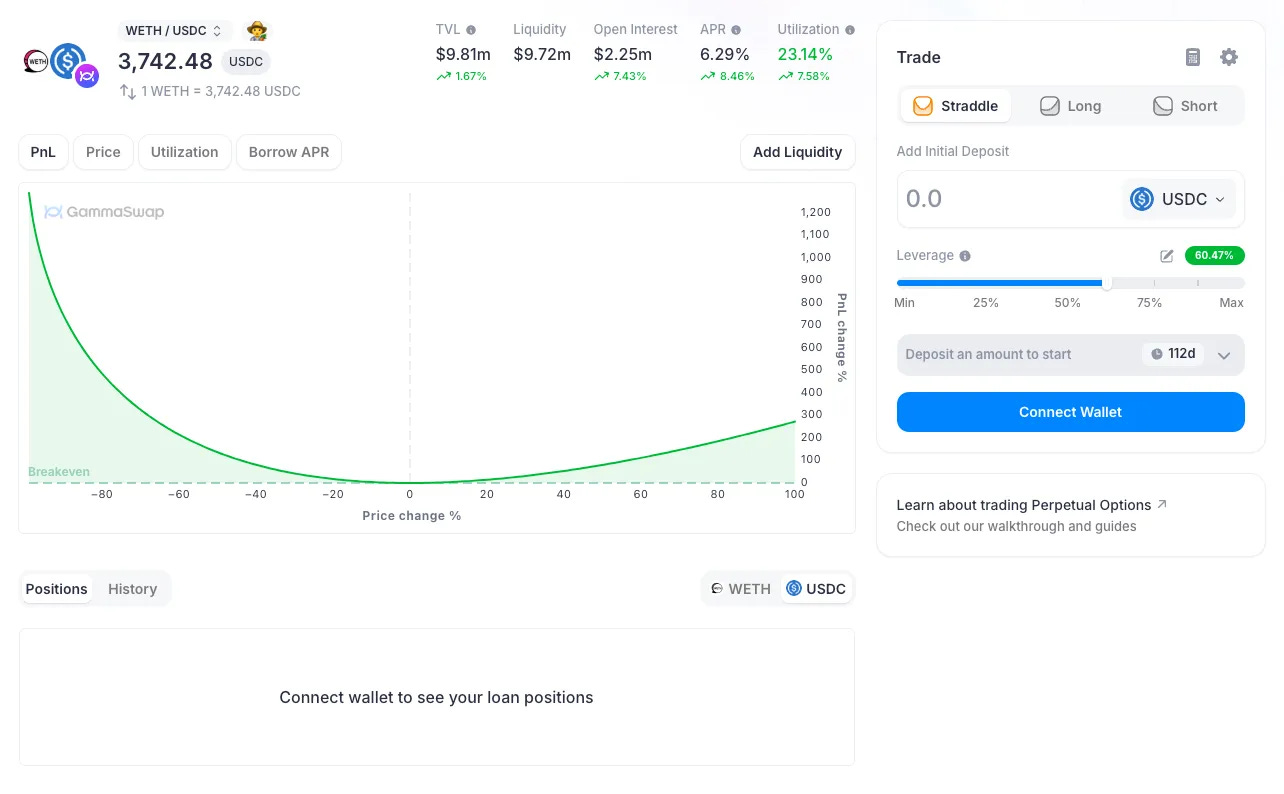
We invested a year and a half into developing the final version of the V1 smart contracts. Developing safe and production-ready code for a novel protocol takes significantly longer than most people think, even longer than we initially expected. If you are a builder, anticipate this and ensure you have adequate runway.
Another key point to note is that most DeFi protocols do not succeed in their V1. Look at the protocols that built something innovative from scratch: Uniswap, Pendle, Aave. None of them took off in their V1. Uniswap had some traction, but it truly gained momentum with V2 when they enabled a pair to be denominated in any ERC-20 token, not just ETH. Pendle had relatively little PMF in V1, but in V2, they simplified the pool structure and added concentrated liquidity, setting themselves up for explosive growth. Aave started as ETH Lend, a peer-to-peer platform that struggled, but saw substantial growth in Aave V1 (their V2), which introduced a pool-to-peer model.
Similarly, in our V1, we created a way for traders to borrow liquidity from the AMM in the form of perpetual options from CPMMs. This can be used to hedge IL in any AMM using concentrated liquidity or a full range. However, the math involved is complex. Another advantage is that it is oracle-free, enabling speculation with leverage on any asset as soon as a token is created. Here is the feedback we have received from users:
More leverage to speculate would be valuable.
Variable borrow rates make hedging riskier.
Hedging is complex and difficult for the average retail user.
Building forward
Here is how we are solving this by building iteratively. The first product we are launching, which is an extension of our V1, is our new yield token product. Think of it like Ethena but for concentrated liquidity AMMs.
For example, it will provide liquidity in the ±30% range on the ETH/USDC pool in Uniswap V3. This exposure is similar to selling a covered call. It will then open a long position in the GammaSwap ETH/USDC pool to neutralize the IL exposure and create delta-neutral exposure in ETH terms. The gETH token will earn market-leading yields compounded into the position. The token is also composable and can be used in other DeFi protocols to earn additional yield.
It solves some critical aspects of what users wanted: hedging is complex (it calculates the hedge positions for users and automates rebalancing), and the issue with variable borrow rates (it shares fees with the pools it uses to hedge, so the yield will never be negative).
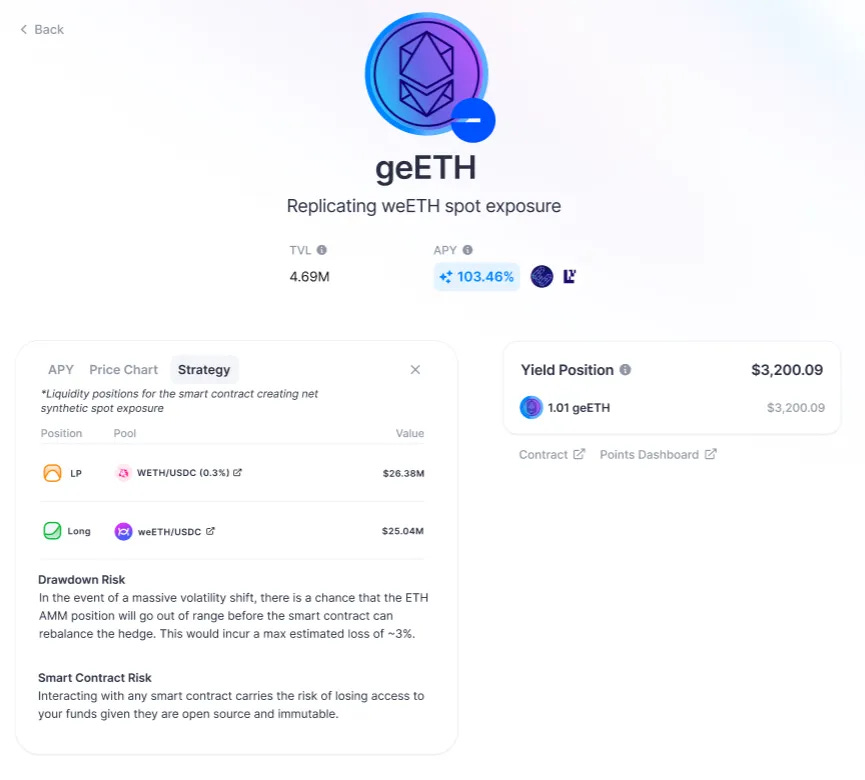
We were inspired by the growth of Ethena and realized that a similar product could solve many of the issues our users have complained about. It will also expand the cohort of users who can use GammaSwap, from advanced power users to a broader audience. Depositing into GammaSwap will be as easy as depositing into an ETF.
In the future, to provide more users to speculators and make these strategies more capital efficient, we will use concentrated liquidity in our V2 version, but in a novel way.
Advice to Founders
A few key tips based on my experience so far:
Most builders have over-inflated expectations about what they can achieve in a year, but underappreciate what they can do in 3-5 years.
It's challenging to get it right in V1. Listen to your users, observe the types of products that are doing well, and understand why. If applicable, leverage these findings.
Crypto tends to reward innovation substantially more than slight improvements on already existing primitives. Don't give up.
Courtesy of @0xDeFiDevin from @GammaSwapLabs
💧 An Inefficiency for You is an Opportunity for Fluid
The Problem
Ethereum’s DeFi is far from efficient: sandwich attacks are still widely exploited by MEV bots to extract value from swaps. An example from a recent swap on Ekubo, one of the most used DEXes on Ethereum, shows a sandwich attack where a user lost almost $200 while swapping $7.74k from USDT to USDC, while the exploiter made around $9k in profit.
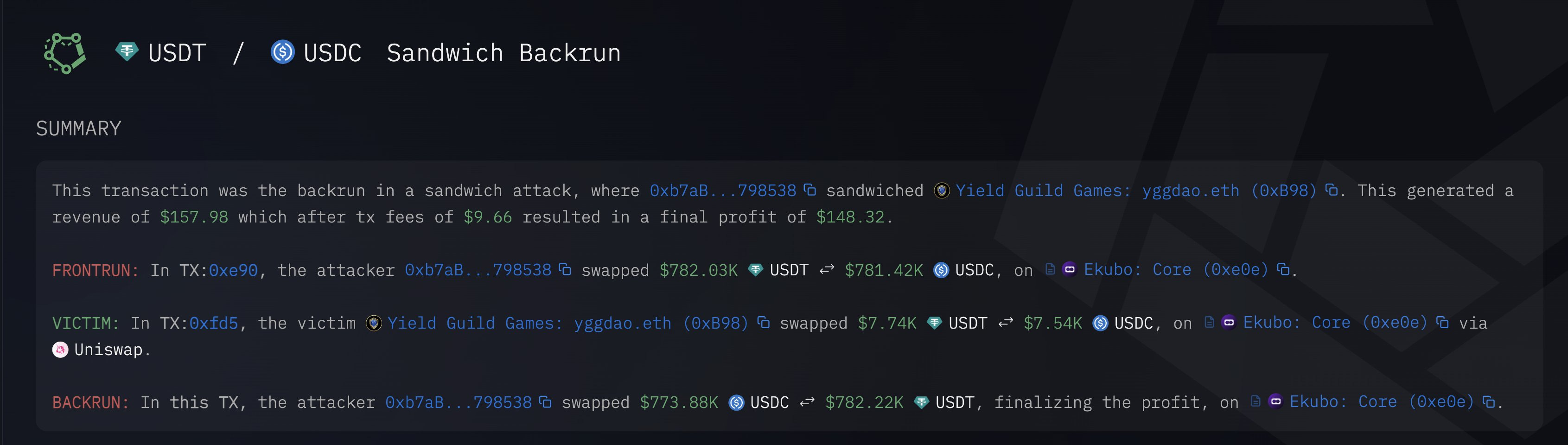
A sandwich attack occurs when a swap of a relevant amount with a comfortably wide slippage is posted to the mempool to be validated on the blockchain. MEV bots/operators detect the transaction, bribe the block producer to have their own transaction, usually of a higher amount, posted before the original one in order to move the price to the user's disadvantage. The attacker then swaps those tokens back to pocket the difference from the on-chain arbitrage.
These transactions contribute to the part of volumes on DEXs referred to as "toxic flows,” and they’re veeeery important for them as source of fees.

Here’s where Fluid steps in
While many DEXs do not actively discourage this because higher volumes lead to more fees, Fluid decided to design a solution that should significantly improve this situation while capturing more volumes for itself.

Fluid DEX Lite is an extension of Fluid DEX, which aims to:
Be the most gas-efficient swap solution on Ethereum, using 10,000 gas for swap logic (compared to 24,000 for the current best-in-class), while also replicating Fluid DEX v1 logic and the Singleton architecture (more gas-efficient routing and support for multiple pools).
Increase volumes through Fluid by $200M per day.
Initially operate only for the USDT-USDC pool, with new pools to be added upon governance approval.
The idea is to be more gas and process-efficient to capture more volumes that Fluid’s efficiency usually doesn’t pick up, while also reducing the upside MEV bots can extract.
Benefits for Fluid
Through this move, Fluid aims to drive more volume through its DEX and capture additional market share from DEXs like Uniswap, Ekubo, etc.
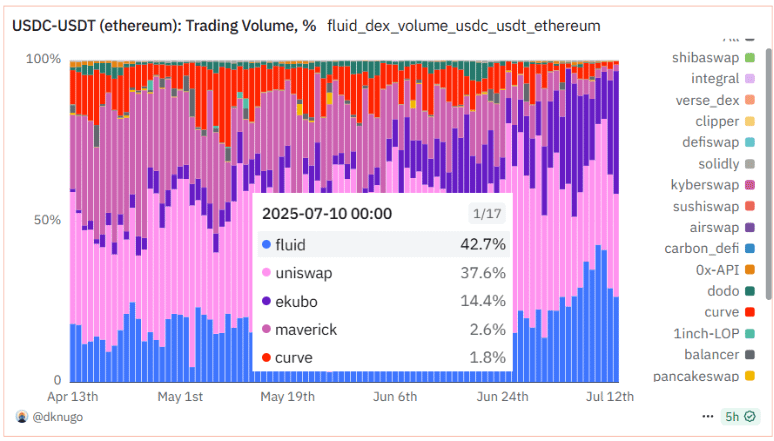
The $5M capital used to bootstrap this pool will initially come from Fluid’s Liquidity Layer, which aggregates all the liquidity deposited on the protocol by LPs.
This will bring several benefits to both them and the protocol:
As mentioned, this USDC-USDT pool will be bootstrapped via a credit line, generating fees for the protocol rather than using treasury funds for incentives.
Borrowing fees will go to the Fluid Lending Market, increasing fee generation for Fluid.
Additional swap fees will flow directly to the DAO treasury.
The estimated APR is up to 10%.
Any protocol losses will be covered by the treasury, acting as a safety net for LPs.
The Future
The future looks brighter and brighter for Fluid, which is on the verge of rolling out its V2 with multiple optimizations for swaps and liquidity providers. Its Lite version will be crucial in driving more revenue to the protocol and filling an important gap in the market, completing a puzzle the team has been working on for almost two years since the protocol’s rebranding and pivot to an all-in-one super app.
We’ve already seen how powerful Fluid has been, consistently capturing more and more market share from Uniswap in major pools.
Will Fluid DEX Lite and V2 be the new kingmaker features?
Courtesy of Matt
🏰 Castle Reads
How Onchain Credit Tokenisation will Unlock Trillions, by @kkpeckk:

Last week we covered MetaDAOs:

How to get Incentives Right, a message to protocols from @francescoweb3:

📖 Recommended Reads
Market thoughts and powerful insights from @arndxt_xo:

Stablecoins are in the spotlight once again. Great deep dive into this ecosystem by @krystrey0x and @blockmatesdotcom:

Fundamentals, premiums and retail behaviour in markets explained by @TraderNoah:

That’s it for today’s issue, we hope you enjoyed it.
You can check out our X for new research reports and weekly gigabrain content.
See you in the next issue,
The Castle Team

In our newsletter, we may discuss projects or tokens in which we hold positions. While we aim to provide informative content, our views are not financial advice. Please conduct your research and consult professionals before making investment decisions. Crypto markets are volatile, and past performance doesn't guarantee future results. Invest responsibly, and be aware of the risks. Your capital is at risk, and we do not accept liability for any losses.