


Welcome to Edition 144 of The Castle Chronicle!
Hello, dear readers, we hope you’re all living your best life and enjoying the crypto markets. Even if you’re not, you should be locking in on some research regardless…like the ones we have here in this 144th edition!
Gm all, Here’s what we have for you today:
🔍 Market Watch - We’ve got some runners! VIRTUAL, ZEC, and H leading the charge
🤖 Almanak: Season 3
💸 Ethena Whitelabel: Stablecoin-as-a-Service
⚽️ Founder Corner - Building Games in Public
📖 Recommended Reads - Top reads from the best researchers on CT

🔍 Market Watch
Gm frens! The market continues to chop, BUT initial signs of demand are showing up! Has the Black Swan event been fully absorbed by now? Or are we in for more red? Let’s check out the charts!
Price Action
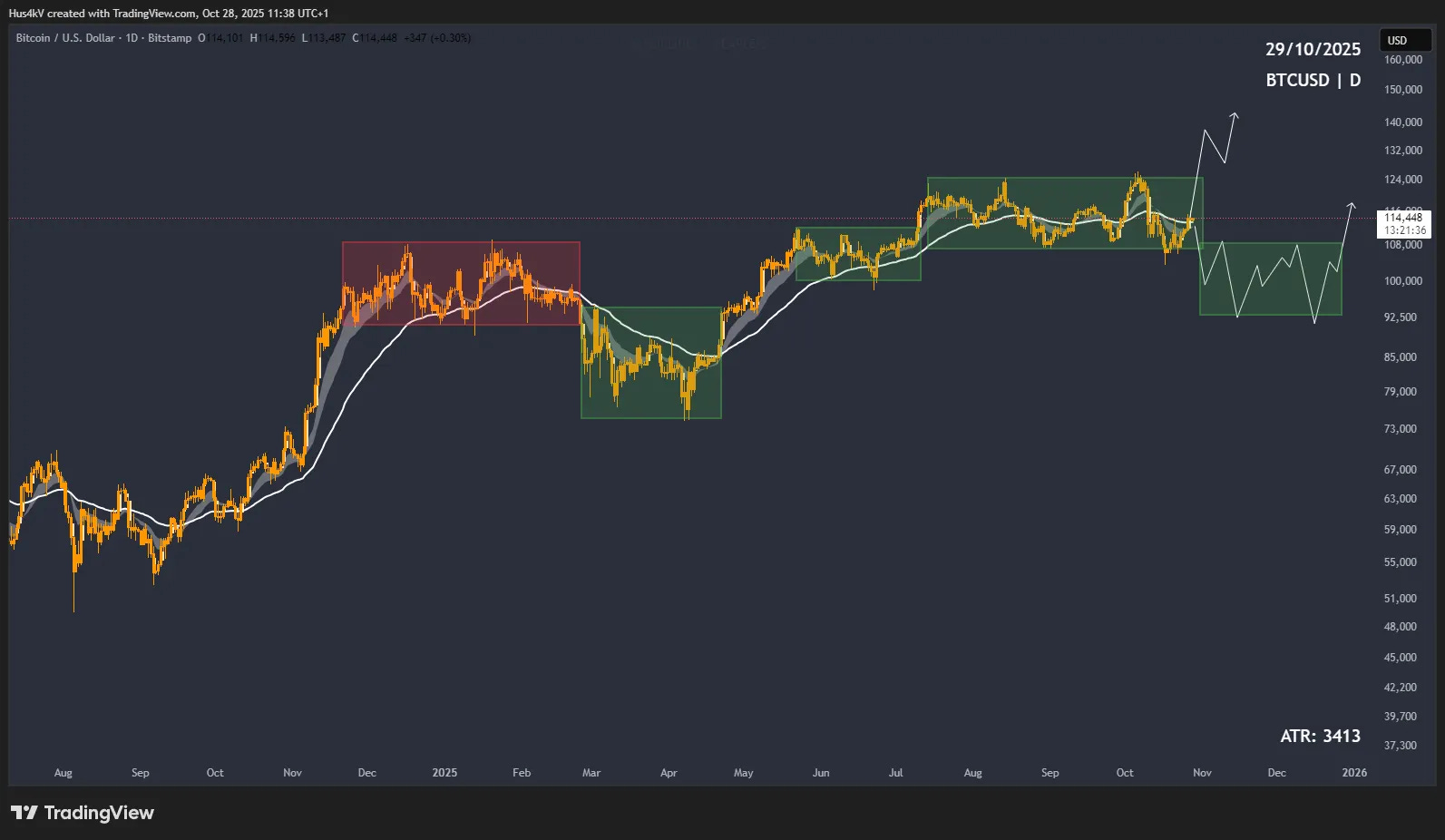
BTC continues going sideways liquidating both extremes of its range. At this point there’s no way of telling whether this is an accumulation or a distribution. Given the HTF bullish trend our expectation is, of course, re-accumulation, and continuation. How that’s gonna happen though? No idea. My expectation is for BTC to either start its bullish run right away, or (imho more likely) a break down into accumulation and then a run towards new highs. We’re just waiting for directional cues at this point.
Top Performers
We got an interesting TOP 5 on our hands this week. I’m really only interested in coins that have a good HTF chart, so I’m mainly looking at the 90d charts on the right here. H and ZEC stand out the most to me, VIRTUAL might be interesting too. Let’s take a look at them!

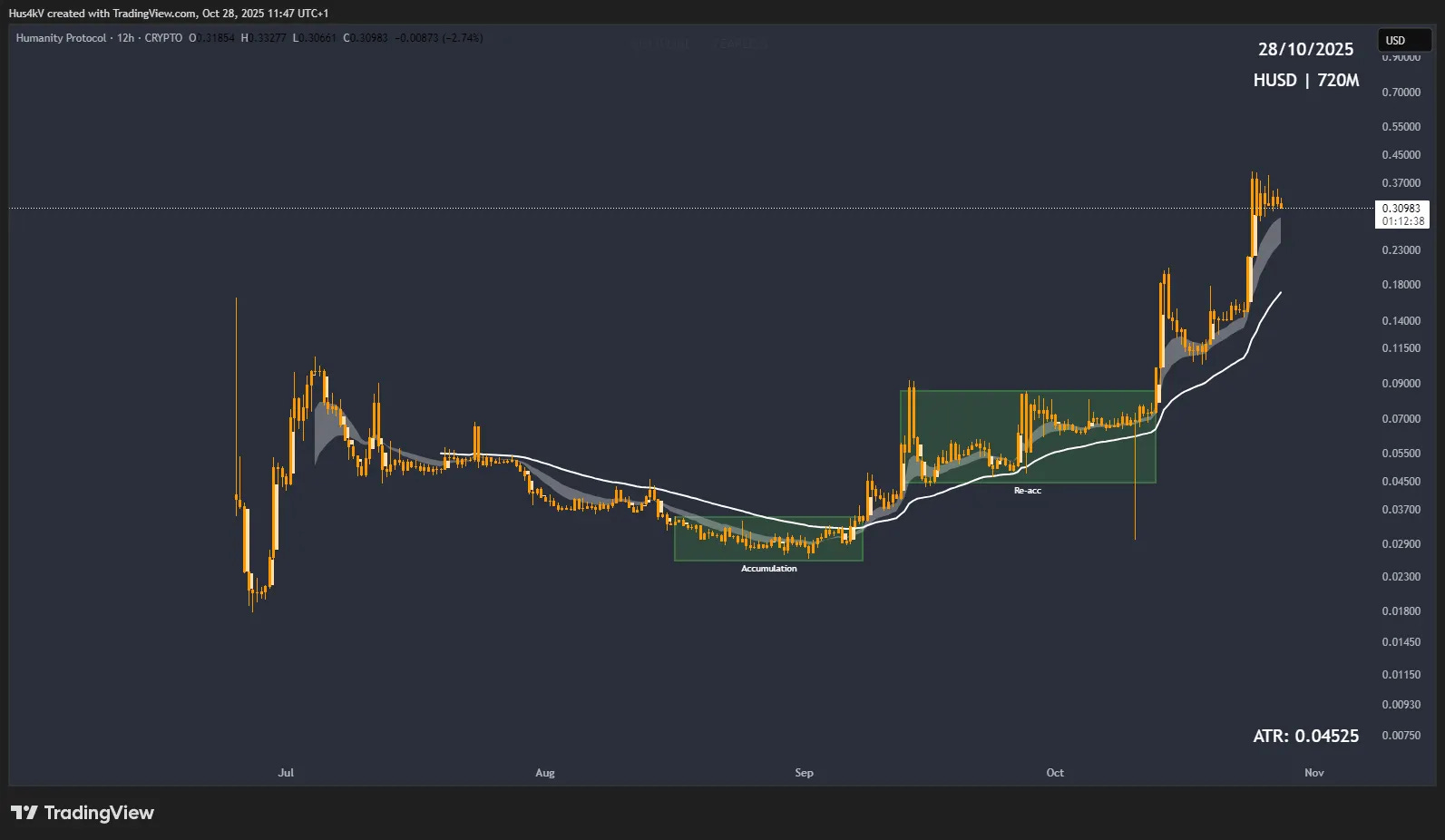
H looks juicy! This is what a strong trend looks like. The bullish impulses are strong and the pullbacks are shallow - exactly what we want to see. I’m all for following this market on the LTFs (low timeframes). And in case you’re wondering why I didn’t cover this earlier (as it was totally valid) - I only look at the TOP100 coins, And H just made it there this week.
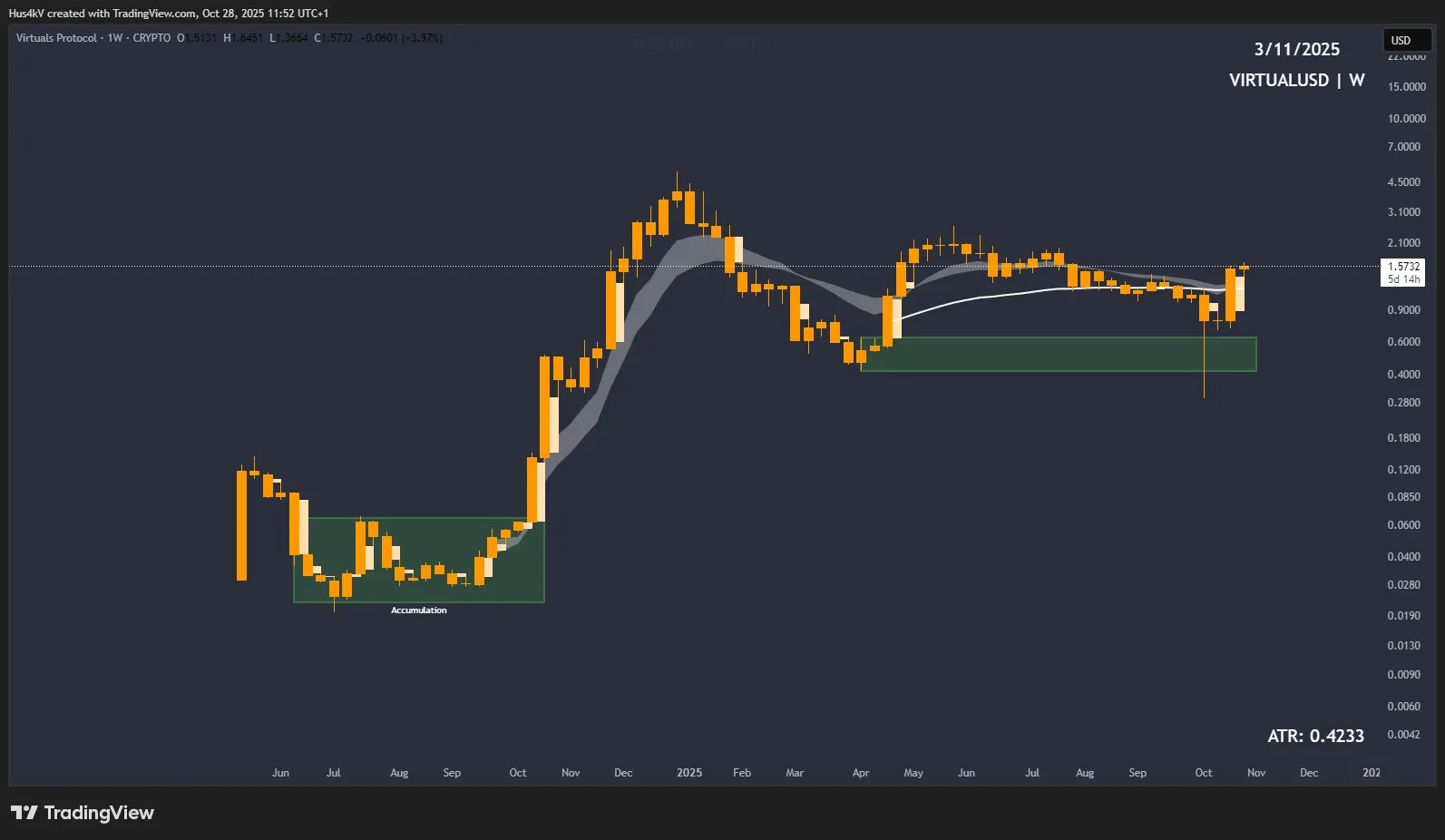
VIRTUAL looks decent too. After a long bleeding-out period it came all the way back to the demand zone that started the new bullish run and bounced HARD! This is enough confirmation for me to want to have this on my watchlist.
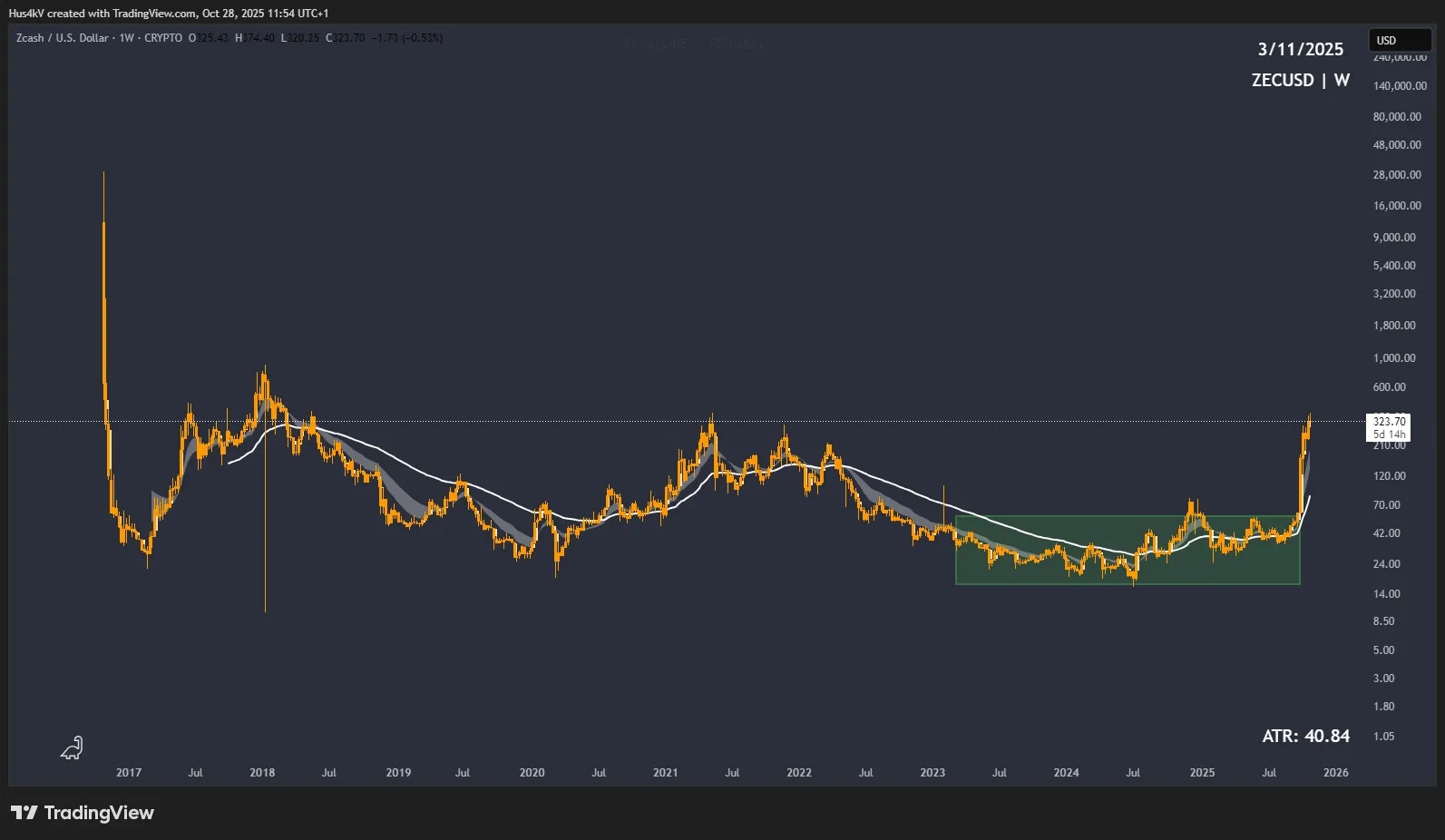
And lastly my personal favorite - ZEC. This coin is showing tremendous strength. It’s been on my watchlist for weeks now, and it’s still valid to follow on LTFs (low timeframes) now. Even after it breaks down on the lower timeframes I will be patiently waiting for new bullish setups.
Narrative Performance
The market seems to be recovering a bit from the recent Black Swan event. After a couple red weeks in a row we can see some demand stepping in again. Most narratives are still flat, but ICM, AI-Agents and DeFAI are doing very well. This is very valuable information as it hints at leading sectors that are most in demand, which can aid us in curating our watchlists.
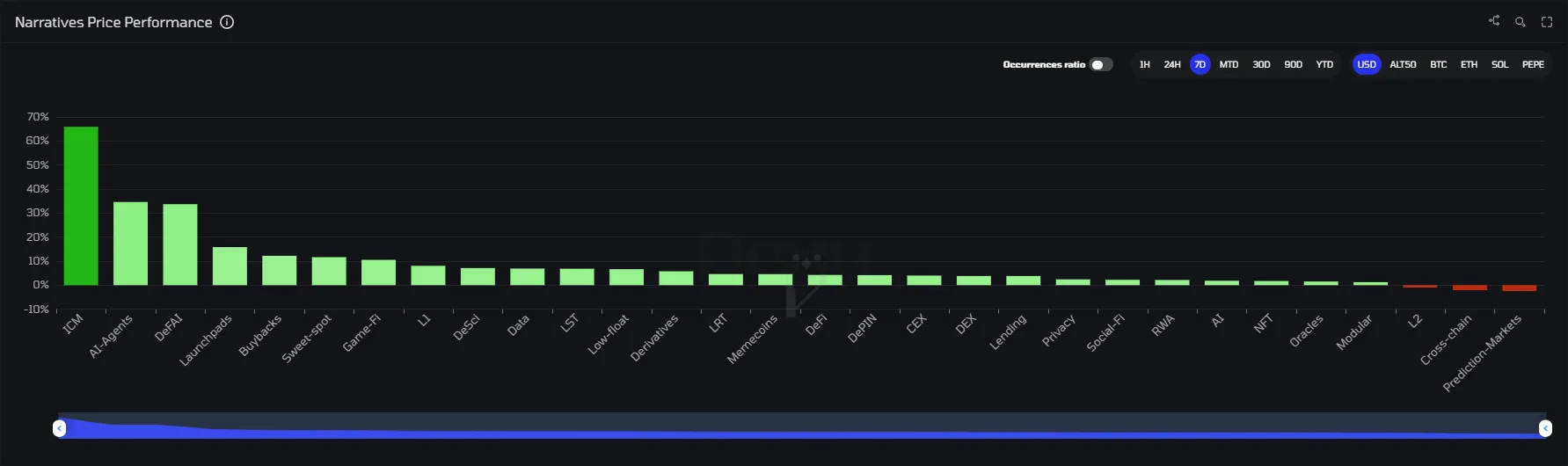
As long as BTC remains in a HTF (high timeframe) bullish context, I think it’s fair to seek opportunities in leading sectors. My eyes are mostly on Privacy and AI right now, but I don’t mind following individual outliers either.
Risk responsibly, and I’ll see y’all next time!
Courtesy of 0x_Vlad - trend-based trader and MentFX student
Not following what I’m talking about? Check out my quick cheatsheet to understand how I approach a chart.
Almanak: Season 3 Points
We follow up in our Almanak series with another opportunity for our readers!
Almanak’s point season continues steadily. Last week marked the end of Season 2.
With Season 3 just started, we highlight what changed, and how to maximise your points as new information just got shared!

Season 3 will last until December 11th, and distribute the same amount of points as season 2 (333,333 daily).
The ways to get points remain the same.
If you are new to the point campaign, here’s a recap:
Deposit funds in the vaults
Hold YT-alUSD
Provide liquidity on the alUSD Pendle market pool
Deposit in the Curve pool
Create and deploy strategies in the Almanak kitchen
Hold funds on Almanak wallet
Share your referral code
However, not all of these actions are the same. In fact, some give users a multiplier effect.
Here is what changes from Season 2:
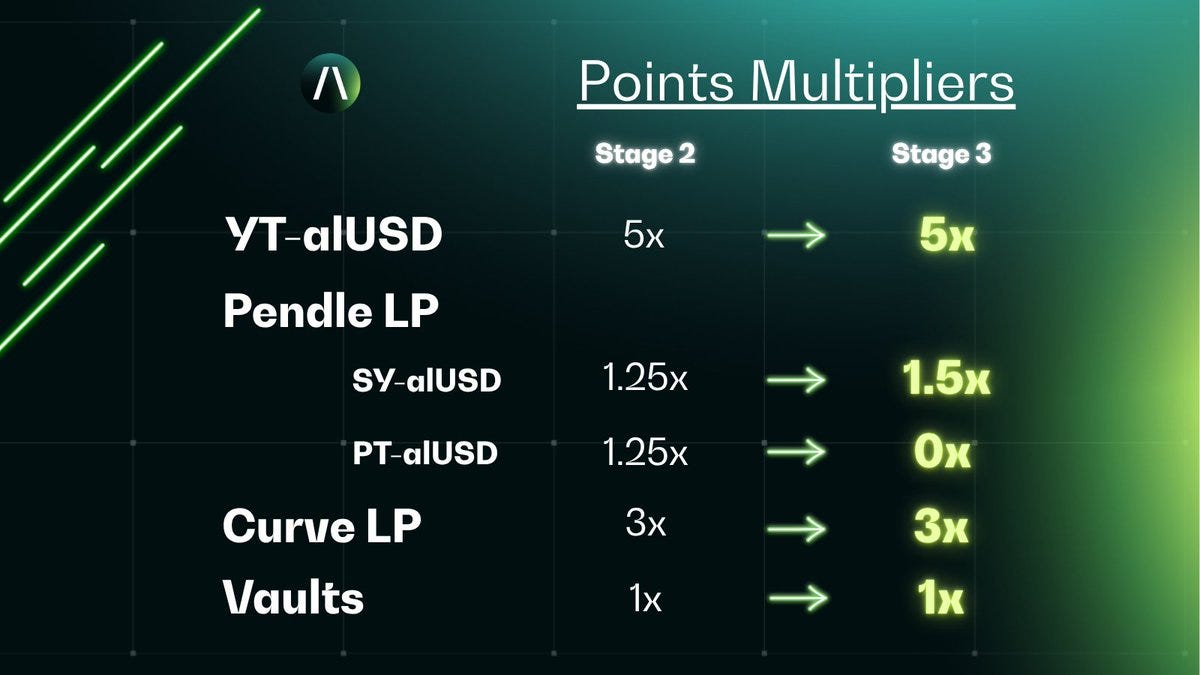
Pendle LP SY-alUSD now benefits from a higher multiplier, from 1.25x to 1.5x. On the other hand, PT-alUSD now has no more multiplier. The rest remains the same.
There’s a great post by Pelad on the significance of this for point distribution.
The alUSD pool on Pendle matured on October 23, 2025. This means the majority of the TVL that was previously earning points is now unlocked. Assuming average retention, this means that only a smaller % of the previous TVL will be committed again, so Season 3 points should be distributed among fewer users—“meaning active positions will earn a significantly larger share of points”.
In simple terms, there should be slightly less competition during the Season, making it even more appealing to users who have missed out so far.
Also, Pendle confirms its fundamental role for pre-TGE projects’ point campaigns.
With Almanak’s TGE expected before the end of the year, Season 3 might be your last chance to get some exposure to the upcoming token.
If you are not much of a point farmer, you can still get exposure by depositing funds in the vaults. However, there is no direct multiplier for this action; the APY benefits from a boost from points generated (about 8.13% on a 13% total APY).

As Almanak transitions from pre-TGE to a native token, it will be interesting to see how this will impact its TVL.
We expect vaults to continue benefiting from higher APYs. While this currently comes from points, further initiatives, such as the envisioned “Agentic Wars”, will also introduce an active bribe component, which will increase vault yield.
While this will likely take a while to become a sustainable replacement, Almanak has shown the attractiveness of its proposal by steadily growing its TVL and vault usage.
TGE is right around the corner, and Almanak has been one of the most interesting projects within the DeFAI space.
We’re excited to see what becomes possible once the Kitchen access is open to the broader public and the native token is live to power the network.
Next week, we’ll share more about the strategies you can build in the Kitchen, with a practical example using $PENDLE!
Subscribe if you don’t want to miss it.
💸 Ethena Whitelabel: Stablecoin-as-a-Service
Everyone knows that stablecoins are among the top narratives in crypto. So much so that TradFi has begun embracing stablecoins, and even the United States has started down this path.
Chairman Hill of the House Financial Services Committee even said this in relation to stablecoins: “A properly regulated stablecoin market can strengthen the U.S. dollar’s dominance, modernize our payments infrastructure, and promote financial access without government overreach.”
When combined with the GENIUS Act’s legislative framework, stablecoins have the best regulatory environment possible for a crypto asset.
If you look at DeFiLlama, you’ll see that stablecoins are in a bull market all of their own, breaking over the previous cycle’s ATH and growing by over $100B since the start of the year.
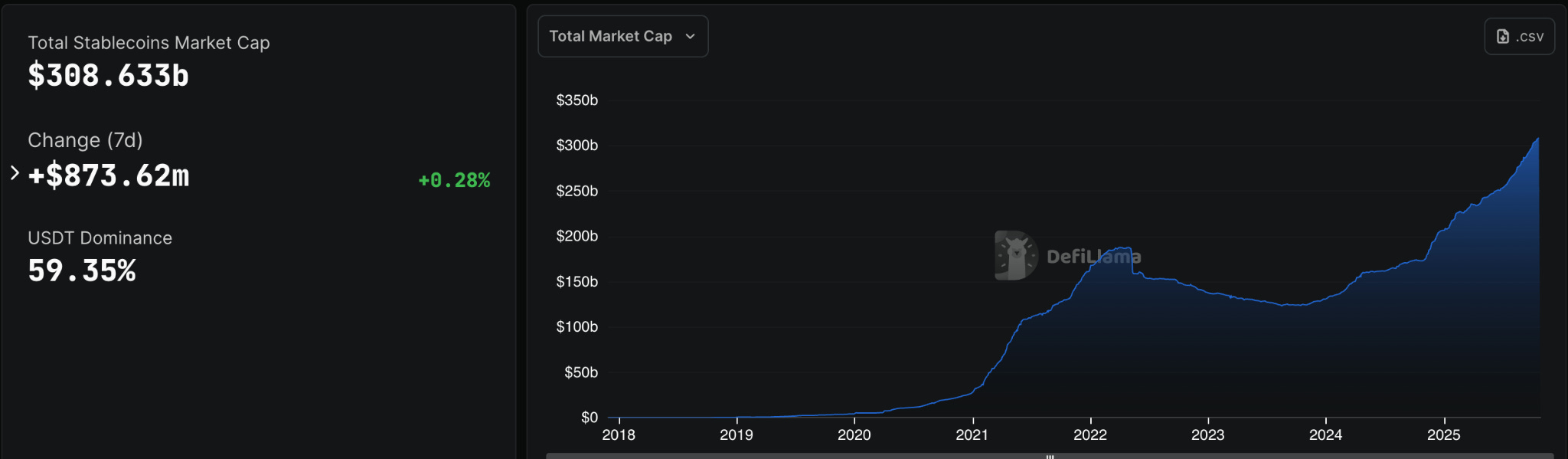
The two main stablecoins, USDC and USDT, have been widely used across the ecosystem for years. Only recently has their dominance been challenged by stables like Ethena’s USDe and Sky’s USDS.
We’re seeing more analysts calling for an end to the duopoly and to USDC/USDT dominance.
Why now?
The role of stablecoins is changing. From purely shielding users from volatility, they can now provide risk-adjusted yields, dramatically boosting their value proposition.
This is evident in the multitude of new stablecoin protocols launching, each with different use cases and yield options.
We expect pretty much anyone to soon launch their own stablecoins. To facilitate this, Ethena just launched their Whitelabel solution or their Stablecoin-as-a-Service offering.
Ethena is going to power stablecoins for partners like MegaETH, Jupiter, and Sui. This is a big deal, as it shows that chains and protocols are starting to realise how much money they’re leaving on the table by giving stablecoin yields to third parties and providers.
Billions of dollars in USDC/USDT sit idle onchain, earning revenue for their creators (Circle and Tether, respectively), none of which goes back to the chains they’re on. This is a large sum of money that chains are failing to acquire because they lack their own stablecoins.
That’s where Ethena steps in with their Whitelabel solution, which allows developers of any chain, protocol, wallet, etc, to build a stablecoin with Ethena.
The partners retain a percentage of the yield from the backing assets, which they can use at their discretion.
For example, MegaETH will use revenue from its stablecoin to be routed programmatically to cover its sequencer costs. This means that network fees can be lower, as this is partially covered by stablecoin yields, becoming a win-win for the chain.
So instead of paying out that revenue to issuers, the chains/applications can capture that and use it however they want. This is a big unlock and gives options back to the chains.
What’s in it for Ethena?
They get two things:
Increased TVL for USDe and USDtb
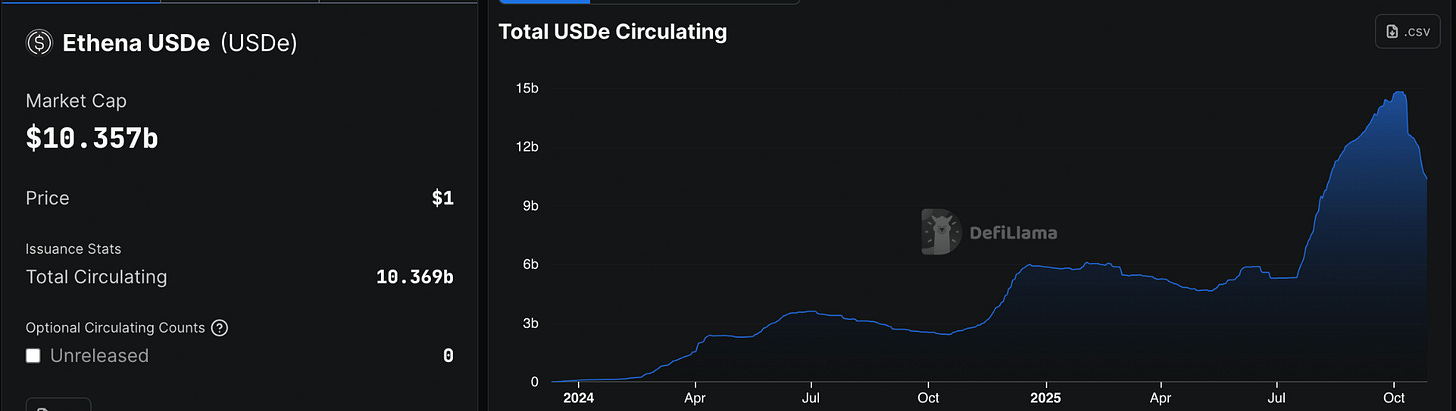
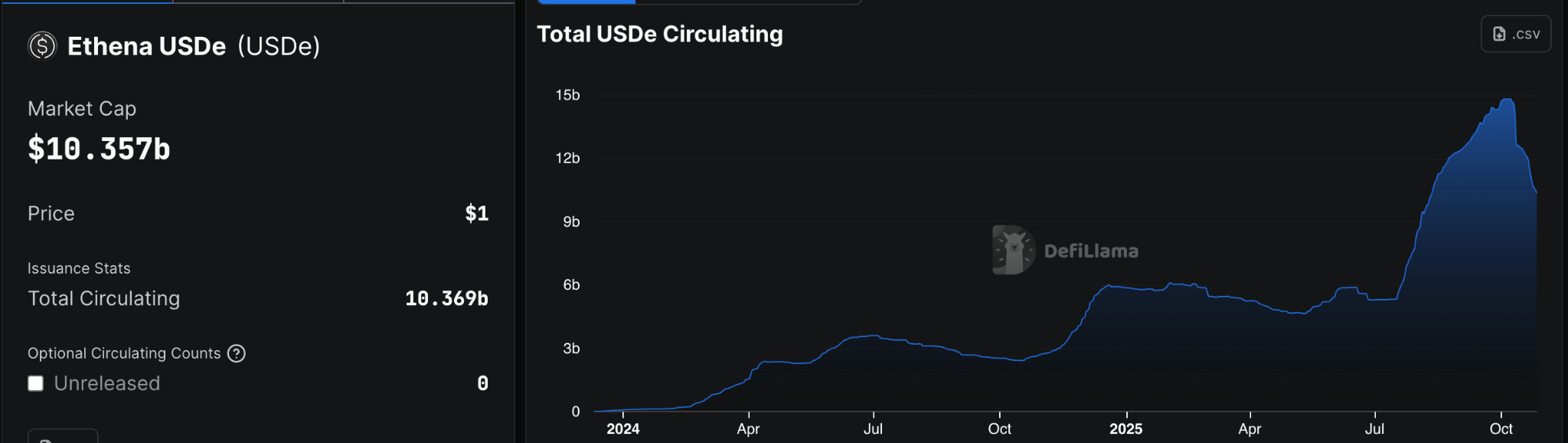
(USDe growth has nearly doubled this year, even without any Whitelabel stablecoins being live yet)
Upside captured from the growth of partnered ecosystems
Potential for revenue from this to be routed to sENA holders
This could be a major growth driver for ENA if it continues to attract chains and large protocols as partners. There will be many teams watching how it works out for Sui, MegaETH, and Jupiter and deciding whether this is the route they want to take.
If Ethena can gather enough teams to use their Whitelabel service (they almost got Hyperliquid too, if you remember), then they can continue to grow USDe and challenge the Big Two.
Market share is everything when it comes to stablecoins, and everyone is shooting for a chance to take some away from USDC/USDT.
As of now, Ethena has the best chance to do this, and the Whitelabel service only adds to its winning formula.
Schizo out!
⚽️ Founder Corner: Building Games in Public - The Good, The Bad and The Ugly

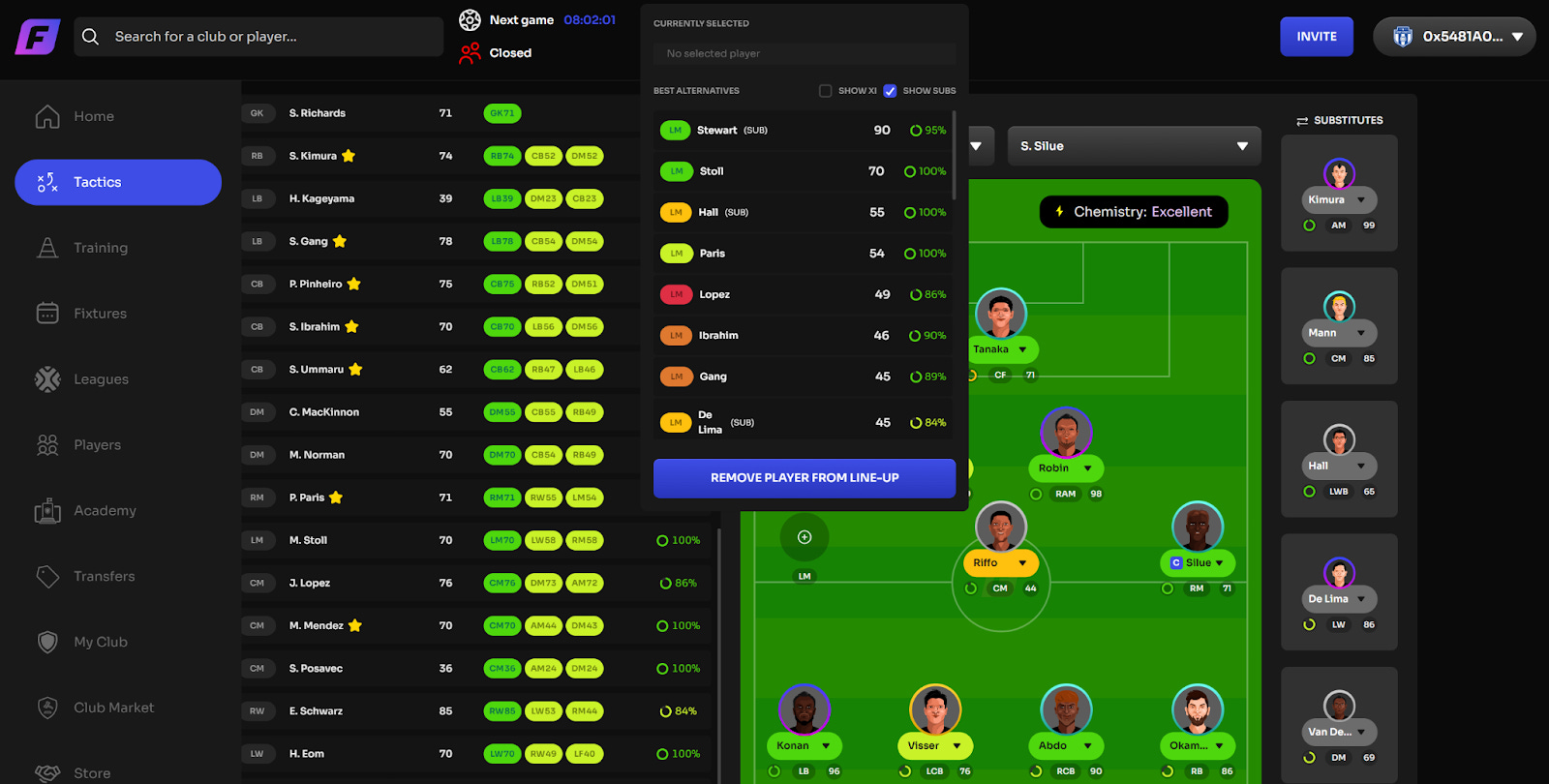
I am George, co-founder of Footium, a multiplayer football management game where users own and run a football club in a digital world of Football.
Footium Soft Launched in October 2024 and will be Hard Launching later this year.
Why I am Writing This
For the last 4 years, we’ve been building and running Footium in public.
When I say in public, I mean in public. 12 community playtests before launch, thousands of feedback form responses, countless discord messages of praise and criticism, and now coming up to a year of a live-service game with monthly seasons and releases.
During this journey, we’ve experienced the highs and lows of game development, team building and community building.
One thing that has become clear is that Community-facing development is one of the most effective yet brutal ways to build a game. It shapes both the product and the team, whilst also creating emotional swings on an almost daily basis.
This article reflects on how building in public has impacted Footium and myself on that journey - the good, the bad and everything in between
The Good
The good is fairly obvious - feedback loops collapse.
Instead of building for years with little community input, you have constant feedback on the state of the game, a team of keen-eyed bug finders, and instant validation or rejection of new features. Knowing whether a feature is a success or failure rapidly allows you to iterate much faster, creating an incredibly fun and sticky game quicker than normal processes (and with much more confidence).
Running playtests every few months during the initial build, and then monthly seasons with new features for the past year, has created an environment in which we can receive feedback, design improvements or new features, and ship them to production in a couple of weeks. We then get swathes of feedback on that without even asking from the community.
I firmly believe it is a key reason we’ve been able to create a game with top percentile retention across comparable genres. No matter the product, if you can iterate and receive feedback rapidly enough and are willing to make honest adjustments based on that feedback, you will eventually find PMF if it is there to be found.
When it works, it is electric - seeing congratulatory messages in the Footium Discord, receiving DMs with praise from OG and new players, and seeing great scores on the end-of-season feedback forms is incredibly motivating. Moments like those remind you why you chose to build in public in the first place, which is sometimes needed.
The Bad
On the opposite side of that is exposure. You are putting everything on the table, and you will rightly get told if it is shit. We’ve had features launch before that we proceeded to rip out of the next season based on user feedback. We’ve also had to hotfix the live game rapidly because users didn’t understand or didn’t like the new feature several times.
Running a live-service game with monthly releases is very challenging when building in public. You release a new season, receive feedback immediately, likely have some bugs to fix and iterations to make on the newly released feature, all while trying to finish the feature for the new release, which needs to be ready in two weeks.
This creates a massive mental load and makes it incredibly important to ruthlessly prioritise against what needs an immediate hotfix, what can wait until next season, and what simply isn’t a priority right now and should be put on the backburner.
It’s hard to deprioritise something if multiple people are asking for it on an almost daily basis and saying it is an “easy fix”, whilst simultaneously wanting big new features delivered rapidly.
You’ll also get some sections of the userbase hyper-fixated on a single bug, issue or missing feature, and will constantly add pressure to focus on that, when it might be quite trivial compared to other focuses and desires from much larger sections of the community. Nevertheless, that pressure remains.
Building in public can create an information overload, which is hard to work through, and is certainly something we struggled with at the start.
The Ugly
Then there’s the ugly side of building in public. Sometimes, aggravated community members can get so far as being abusive to team members, both in public channels and in DMs. This is something we absolutely condemn and have had to ban users for, but the toll it can have on the team is real.
Being told you aren’t fit to build the game, that you are actively building against the community, that you are about to rug the game because you haven’t prioritised implementing their niche feedback, is not fun for anyone. It is especially not fun after a month of long hours pushing to get a major game improvement out that large portions of the community have been asking for.
Receiving messages like that on a Sunday, while out with friends or family, can really take a toll on you, especially after a shattering week spent trying to push the game forward. Countless times, I have been told off by my partner for “getting lost” on my phone whilst out and about, losing myself in a community discord argument or clarifying concerned discussions that have spiralled out of control.
Ultimately, you won’t be able to please everyone while building in public. There are limits on how much and how fast you can build based on resources and the level of quality you don’t want to drop below. We have dozens of features and great ideas from our users that we plan to build out, but it does take time.
This constant pressure to build faster can lead to a temptation to make fiscally irresponsible decisions in pursuit of that goal, and to reduce negative sentiment, but has led to the demise of many games in this space (over three-quarters of crypto games are now discontinued, according to https://x.com/DroegeDaniel/status/1974590676026212591).

Final Reflections
Ultimately, despite the bad and the ugly, I still believe building in public is absolutely the most effective way to build a great game. The good and positive feedback far outweighs the bad and the ugly. For every “ugly” message, there are dozens of positive ones.
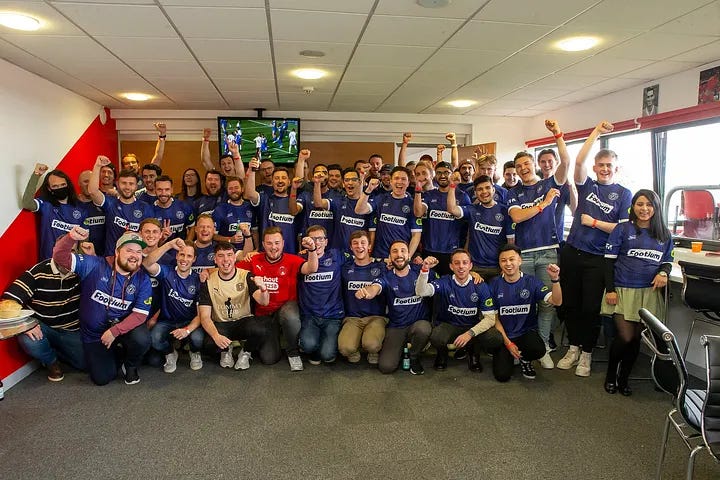
Getting that “great job team, this new feature is awesome” in the community server can really set the tone for your day. Receiving a heartfelt appreciation message in the end of the season feedback form, knowing that someone has taken time out of their day to write it, is extremely motivating. Witnessing someone buying a new Footium player for their brother’s birthday, or getting a physical kit made for their Footium Club and sharing it with the community does inspire you to keep pushing to make the product as great as you know it can be.
Whilst it is not for the faint of heart, and learning how to effectively prioritise this information is essential, I wouldn’t have done it any other way.

📖 Recommended Reads
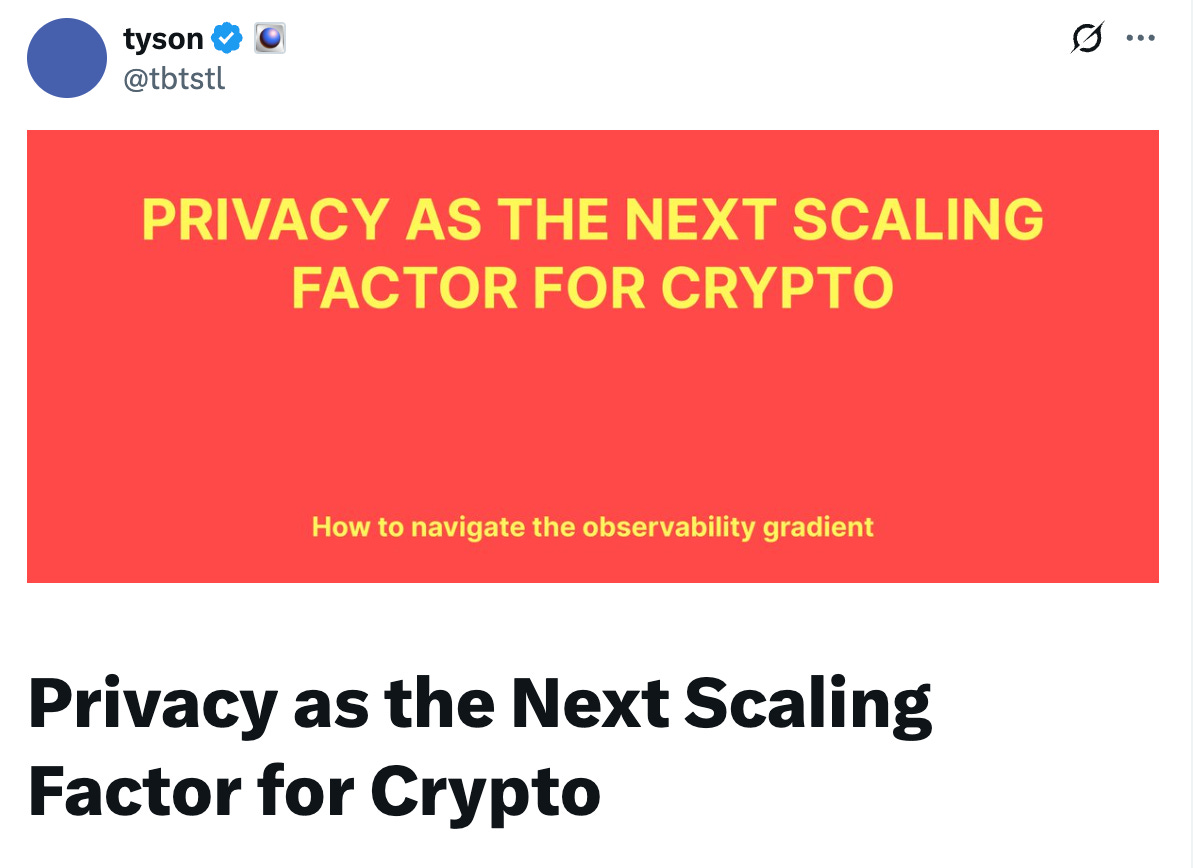
A well done piece by Tyson from Zora, discussing how privacy is the next scaling factor for crypto

A great look at the intersection of AI x crypto by binji


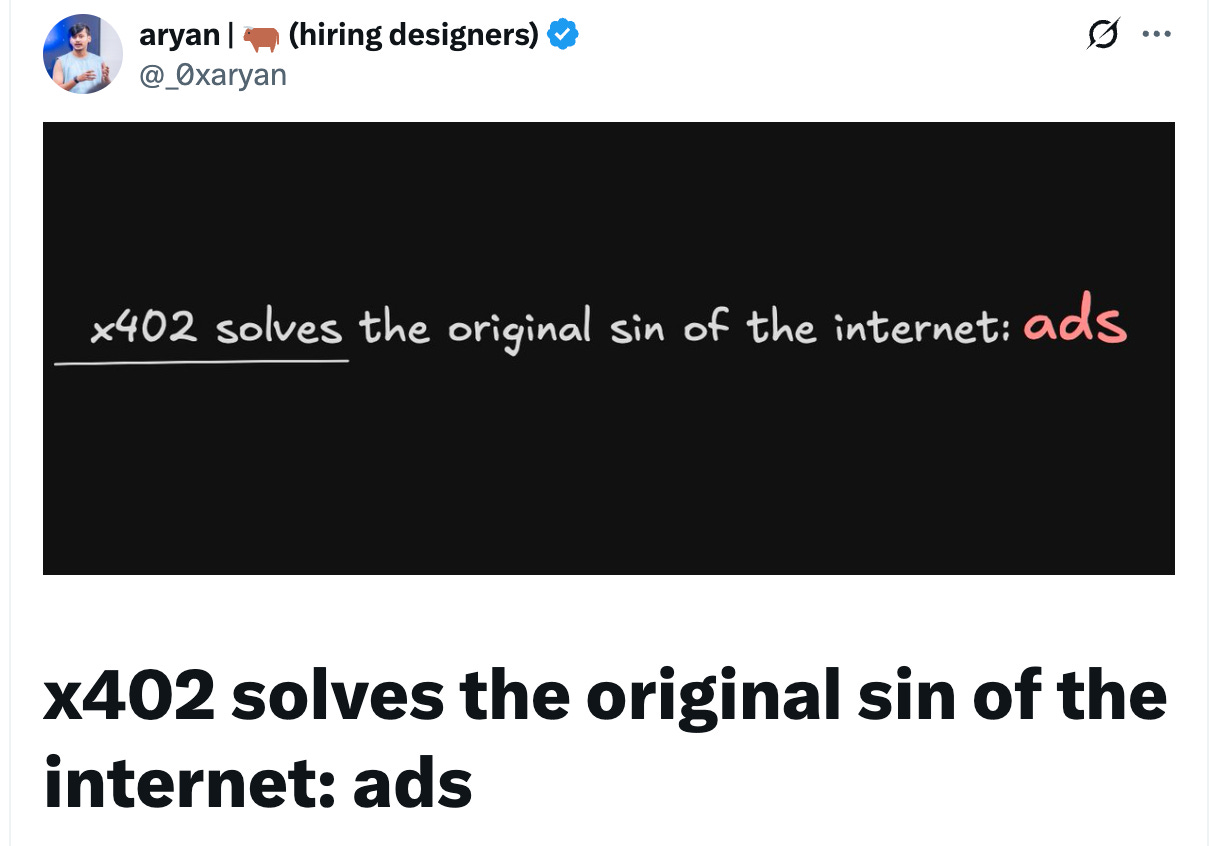
Aryan does a great job here of giving a unique take on x402

That’s it for today’s issue, we hope you enjoyed it.
You can check out our X for new research reports and weekly gigabrain content.
See you in the next issue,
The Castle Team

In our newsletter, we may discuss projects or tokens in which we hold positions. While we aim to provide informative content, our views are not financial advice. Please conduct your research and consult professionals before making investment decisions. Crypto markets are volatile, and past performance doesn't guarantee future results. Invest responsibly, and be aware of the risks. Your capital is at risk, and we do not accept liability for any losses.