

Welcome to another week of Castle Chronicle.
The past few days have been full of interesting launches and announcements, whether it is Standard Reserve, Pear AP Vaults, or Derive v3. In this week’s newsletter, we cover these and more:
The CEX distribution: ~$300b worth of assets deposited in CEXs; onchain products can tap into a much larger user base, and products like Spark and Veda are moving in that direction.
Theorem brings NAV data from RWA.xyz into their secondary markets.
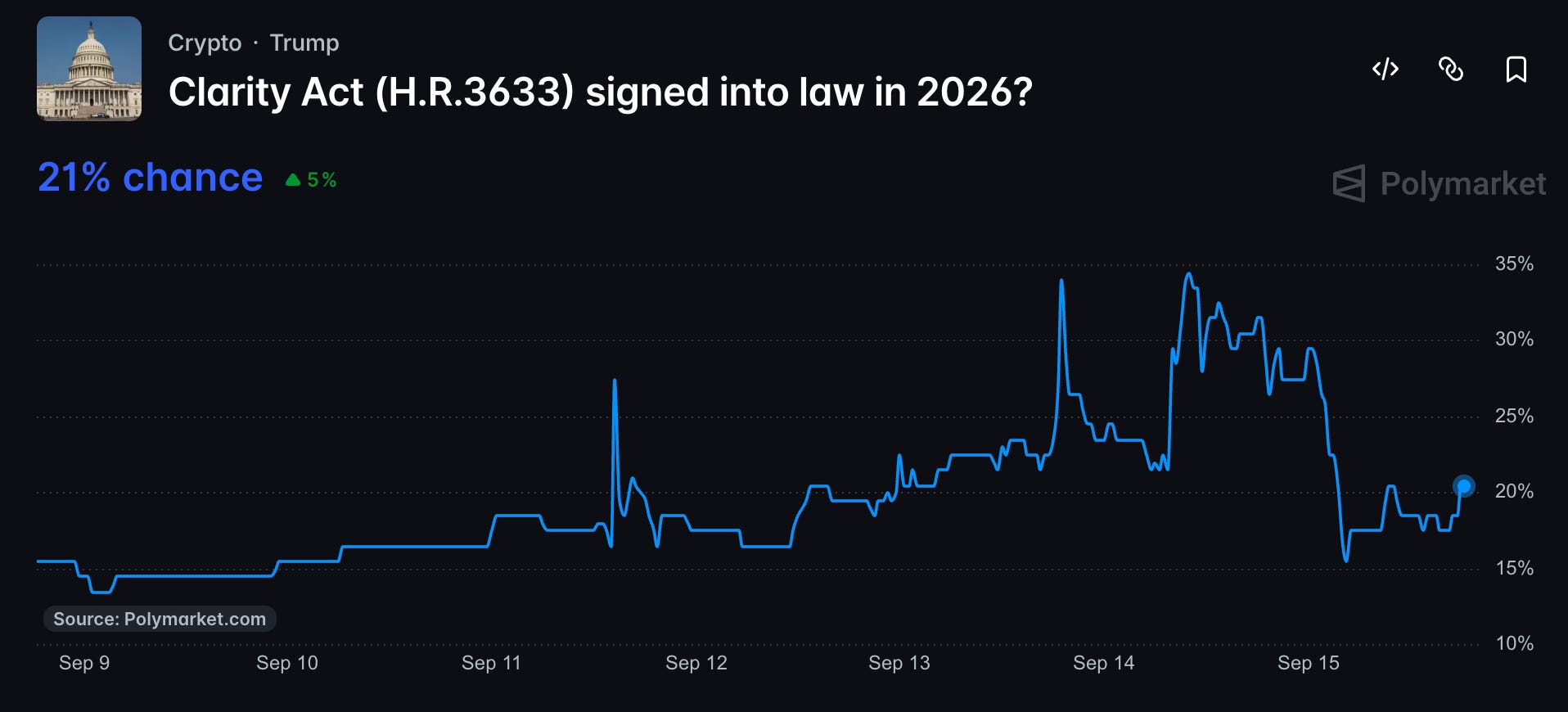
Cloture vote on the Clarity Act today; odds of Clarity making it into law are at 20%.
Arc mainnet is launching tomorrow, and everybody is selling shovels.
Balancer is shutting down; snapshot vote starting on September 25th.

The CEX Distribution
DeFi yield products are scaling, and because they offer lucrative returns on deposits, they also have a huge TAM. But they can only scale so much by being available only to onchain users. One good distribution path is integrating CEXs. They have net assets deposited worth ~$300 billion, a much larger liquidity base to serve, and these users already understand crypto products.
One recent integration is Spark Savings with OKX. Their users can simply subscribe to Spark Savings through OKX’s onchain earn program and are set to earn the yield. To better understand this integration, we interviewed Sam MacPherson, CEO of Spark.
This integration positions Spark products as more of an allocation layer for digital assets. Sam adds: “The broader vision is for Spark to become the allocation layer for digital finance. Exchanges, wallets, fintechs and stablecoin issuers can own the customer experience, while Spark provides the allocation, liquidity and risk infrastructure underneath”
Such integrations also create an abstraction layer for the product and reduce the complexity of accessing them, and the “opportunity is to combine the transparency of onchain finance with the accessibility people expect from mainstream financial products.”
While the whole experience is abstracted, depositors should keep in mind that these products carry risk “associated with smart contracts, counterparties and credit, liquidity, stablecoins, and the underlying markets and venues where capital is deployed.” Spark’s own architecture is designed to contain these risks, as capital is “allocated across governance-approved venues and assets, with exposure limits and rate limits constraining concentration and how quickly capital can move.”
Another offering tapping into CEX distribution is the Veda Earn Program on Kraken, which has recently expanded to tokenised stocks. Veda Earn works similarly to Spark savings, deploying assets to multiple venues while keeping the experience close to the CEX depositors already use.
Kraken users can deposit tokenised stocks like SPYx, QQQx, and NVDAx from xStocks and earn yield, powered by Kamino vaults curated by Sentora.
Yesterday, we published an article on the same topic: how we’ve improved access to TradFi assets by bringing them onchain, but they still lack composability. RWAs are already at $39 billion in tokenised value but still lack composability; while YTD tokenised value has increased, active DeFi TVL relative to these assets has decreased from 12.5% to 10.9%.
To make these assets capital efficient, CEX integrations that already own distribution become pivotal. We expect such integrations to increase, along with more collaborations between infrastructure providers, curators, DeFi protocols, and CEXs.
Standard Reserve
The Standard Reserve project and genesis NFT mint went live on September 14.
The protocol aims to act like a central bank, managing expansionary or contractionary policy based on net ETH flows.
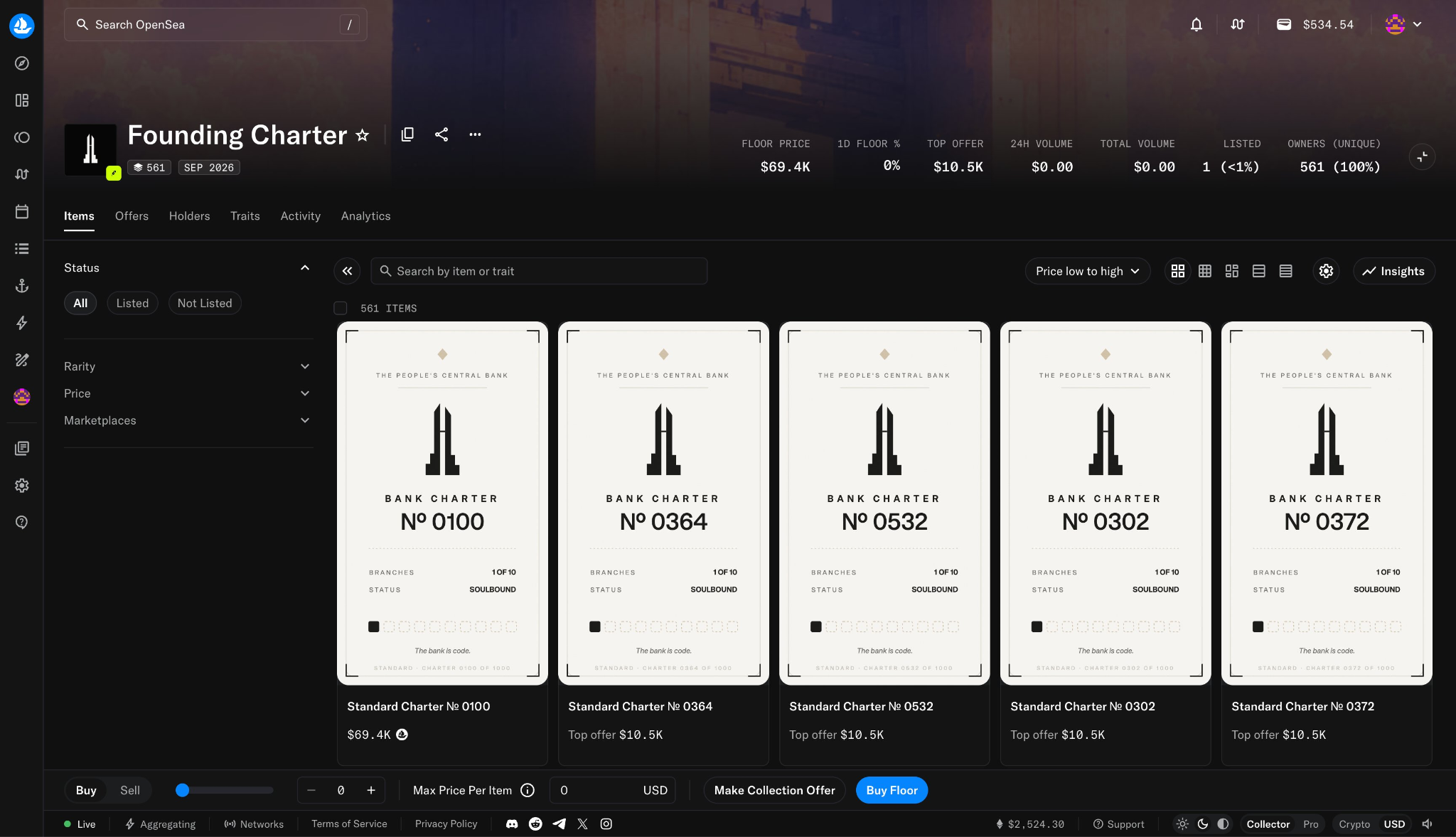
1000 OG charter NFTs were sold, which gives users the power to receive daily standard emissions (a proportional share of protocol issuance, 0.0909%).
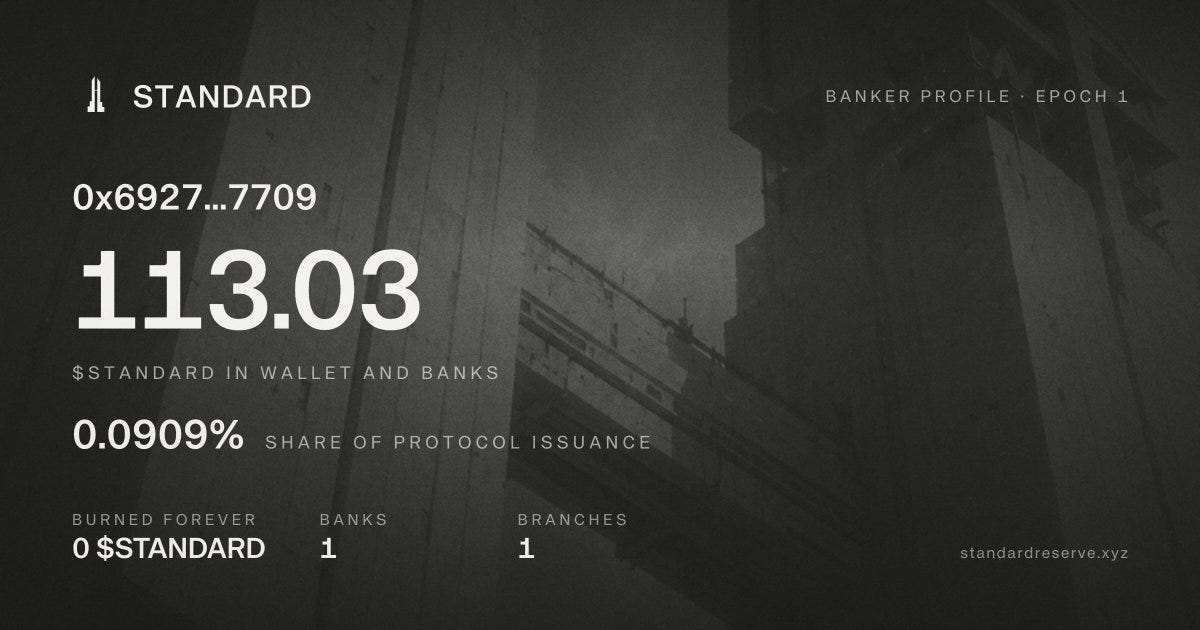
At the current market cap of $35 million, these produce around $240 a day of STANDARD, or 1680$/week, 6720$/month, 80640$/year.
To claim these profits, users must close their branch, which incentivises them to accumulate them first.
Minters paid 0.15 ETH to the team. To avoid token sniping, the team also added a 90% tax that decays linearly after 1 hour. Through this, they raised over 1600 ETH (over $4 million).
In particular, we believe it’s interesting to monitor how new branches and charters will evolve, as well as how the standard token will perform.
Last but not least, considering the strong focus on net ETH flows, will the protocol manage to create significant demand?
Aside from this, we are particularly interested in seeing monetary policy in action through either expansionary or contractionary policies.
While purchasing the NFT involves an additional level of risk, getting an entry in the token after the snipe tax was removed was probably a good play too, with fewer restrictions.
Theorem brings RWA.xyz NAV data into secondary markets
Tokenisation has made it easier to issue real-world assets onchain. Trading them is still the harder problem.
A tokenised treasury fund, private credit product or equity is not the same as a normal crypto token. These assets may need to:
Be transferable between approved investors only.
Trade around an issuer-published NAV rather than a purely market-discovered price.
Pause around distributions, corporate actions or stale reference data.
A general-purpose DEX assumes open access, continuous trading and price discovery from the last trade, which doesn’t fit tokenised assets.
That is the gap Theorem is trying to fill by building programmable secondary-market infrastructure for tokenised assets.
It lets issuers, networks and tokenisation platforms launch their own secondary markets while keeping control over eligibility, pricing references, market hours and operating rules. The venue can run under the partner’s own brand, while Theorem provides the underlying contracts and market infrastructure.
Its latest integration with RWA.xyz adds an important data layer to that model as it will act as Theorem’s primary data provider for NAV-based assets, bringing standardised real-world asset data into Theorem’s market logic. That means RWA.xyz data can support NAV-managed liquidity, show premiums or discounts to NAV at the point of trade, and trigger safeguards when reference data becomes stale.
This matters because NAV is often the most important price anchor for tokenised financial products. A fund share may have a periodically published net asset value that reflects the underlying portfolio. A secondary-market trade can still clear above or below that value, but investors need to know whether they are trading at a premium or discount.
RWA.xyz is already one of the better-known data platforms in the tokenisation market. It defines NAV per share or token alongside price, supply, asset value, yield, and other metrics.
Theorem aims to make that data operational.
The wider Theorem product is built around the same idea. A venue owner can list an asset, restrict trading and liquidity provision to issuer-approved investors, manage liquidity around a reference NAV, display pricing as a premium or discount, and open, pause or halt the market according to the asset’s calendar.
Eligibility can connect to systems such as OnchainID, Chainlink ACE, ERC-3643 registries or third-party KYC providers. Underneath, Theorem is built on Algebra Integral’s AMM infrastructure.
The bigger point is that tokenisation doesn’t end at issuance. Subscription and redemption rails give investors access to an asset, but they don’t create a functioning secondary market on their own.
As RWAs become increasingly useful as collateral, portfolio assets, and composable financial instruments, they need markets that understand the constraints of the assets being traded.
Theorem’s RWA.xyz integration is a step in that direction. Check out the demo markets at: https://app.theorem.markets/markets
Pear Protocol & the Agent Pear Vault
This is a big step up for the protocol, moving from a pair-trading/AI play to a more infrastructure-focused approach with the launch of the first Agent Pear vaults.
Beyond using Agent Pear for their own analysis, users can now deposit funds in the vault and let the agent do all the work.
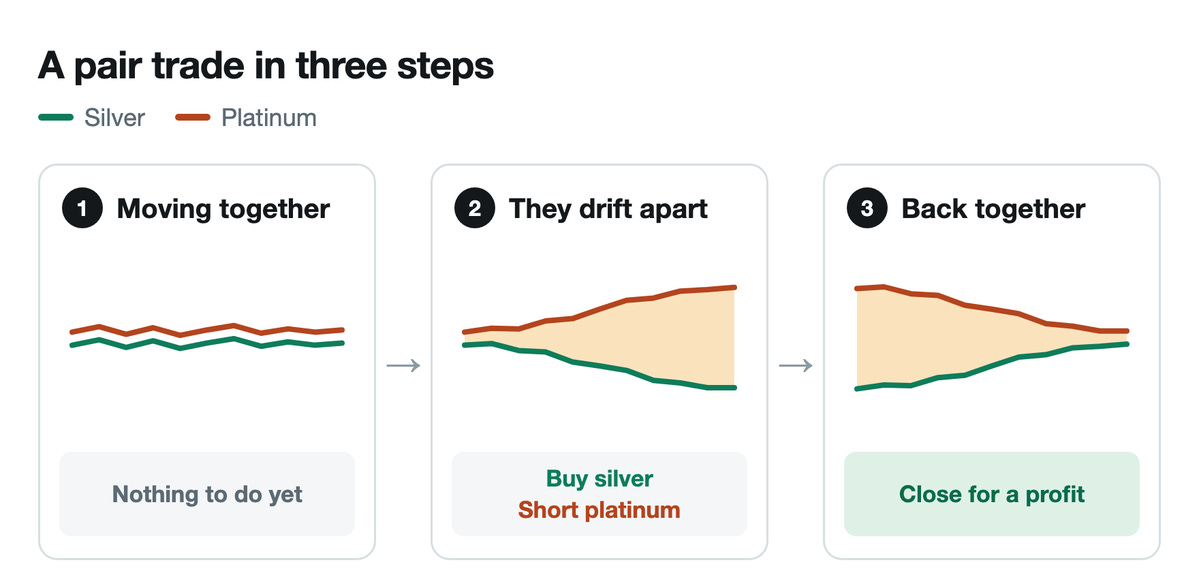
The initial vault is capped at $1 million, with plans to expand after initial testing.
Finding these trades manually is incredibly intense; acting on them is even more so.
This means regularly monitoring setups and divergences between token pairs, as they constantly change.
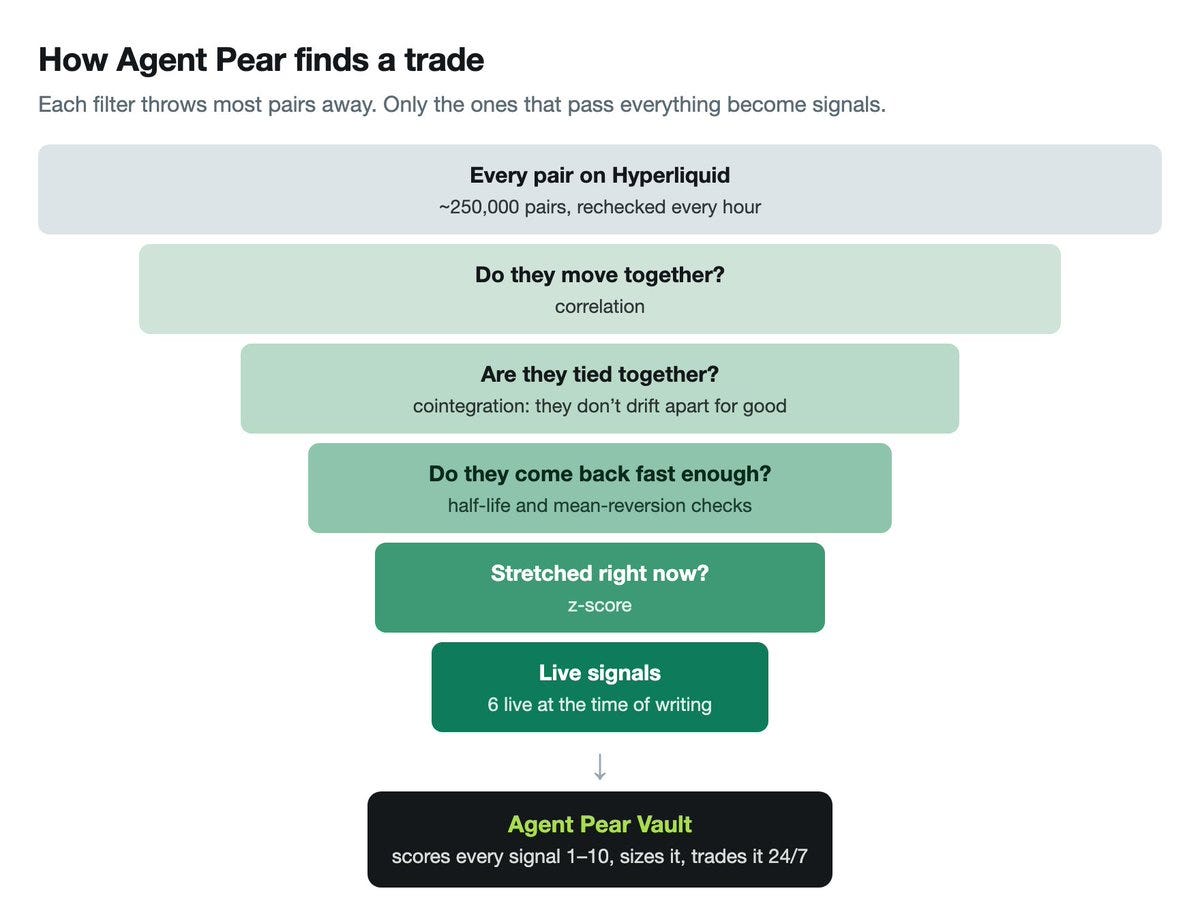
Previously, users could leverage Agent Pear to do this job for them and run pair analysis every hour:
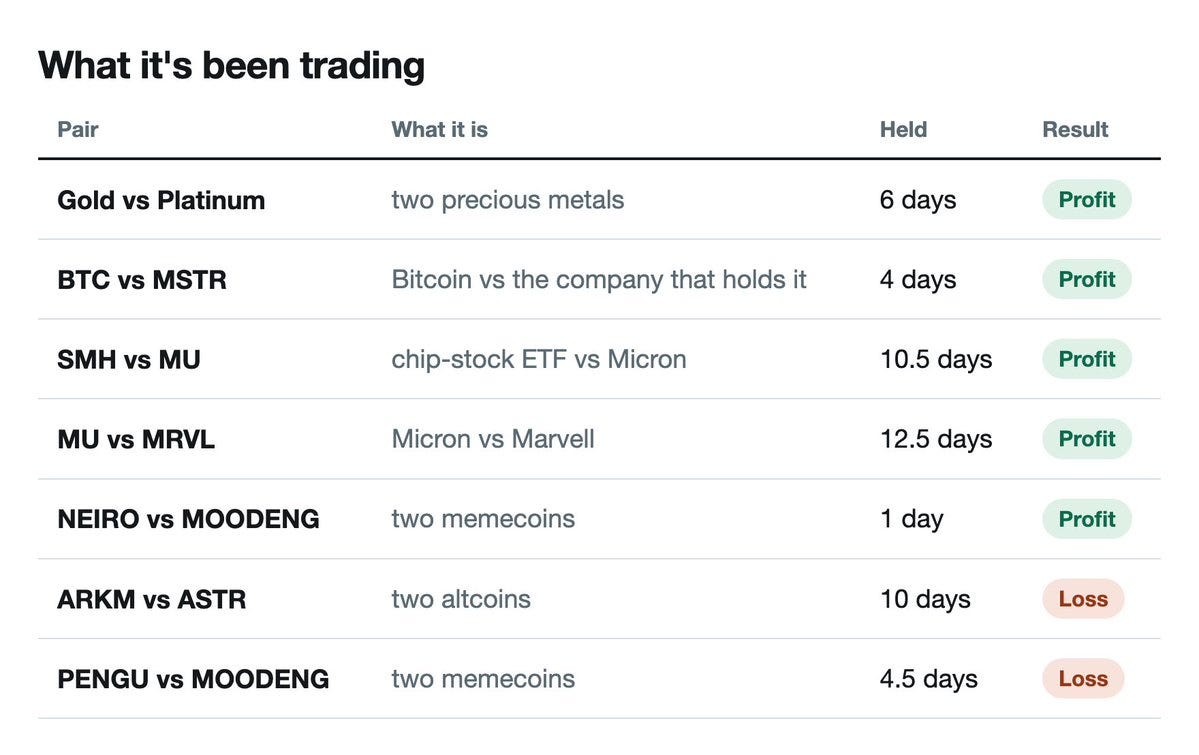
So what kind of pairs has the vault been trading?
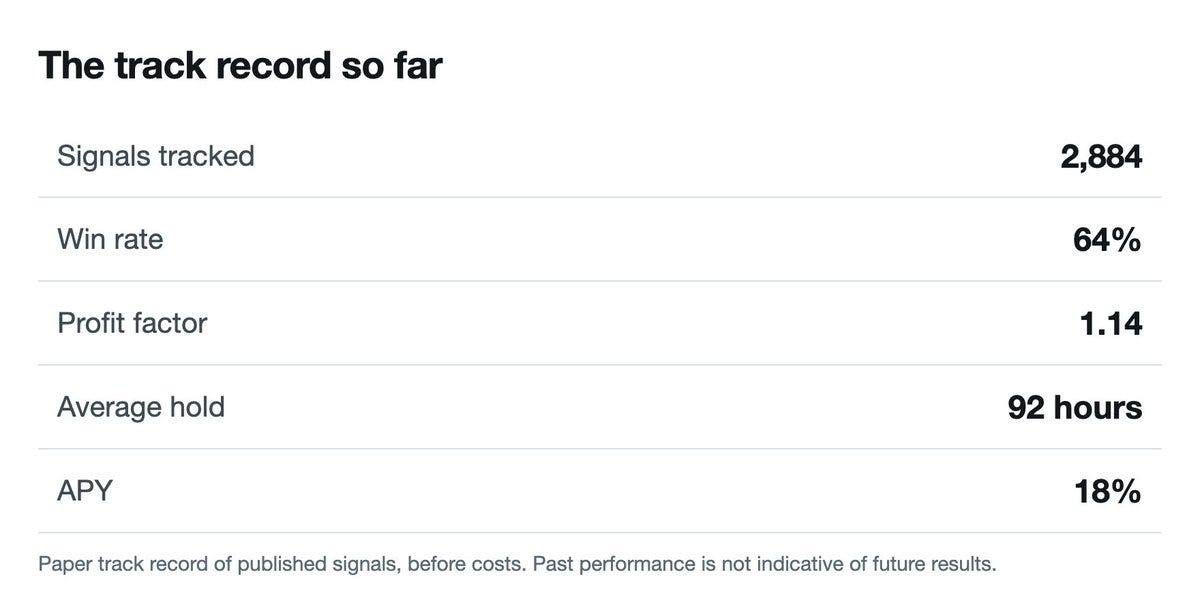
Since inception, every signal from Agent Pear has been labelled, leading to the following track record:
Read the full article here.
Deposits are open on the 16th of September until the $1 million cap is reached.
Derive is soon launching V3
One of the most awaited recent updates is Derive v3.
Derive has established itself as the main place to trade options onchain, with over 95% of onchain options premium volume in the past 30 days.
Nonetheless, options remain a highly underdeveloped narrative.
Every year, someone argues that this is the year when options go mainstream.
Seems like this might be the right time!
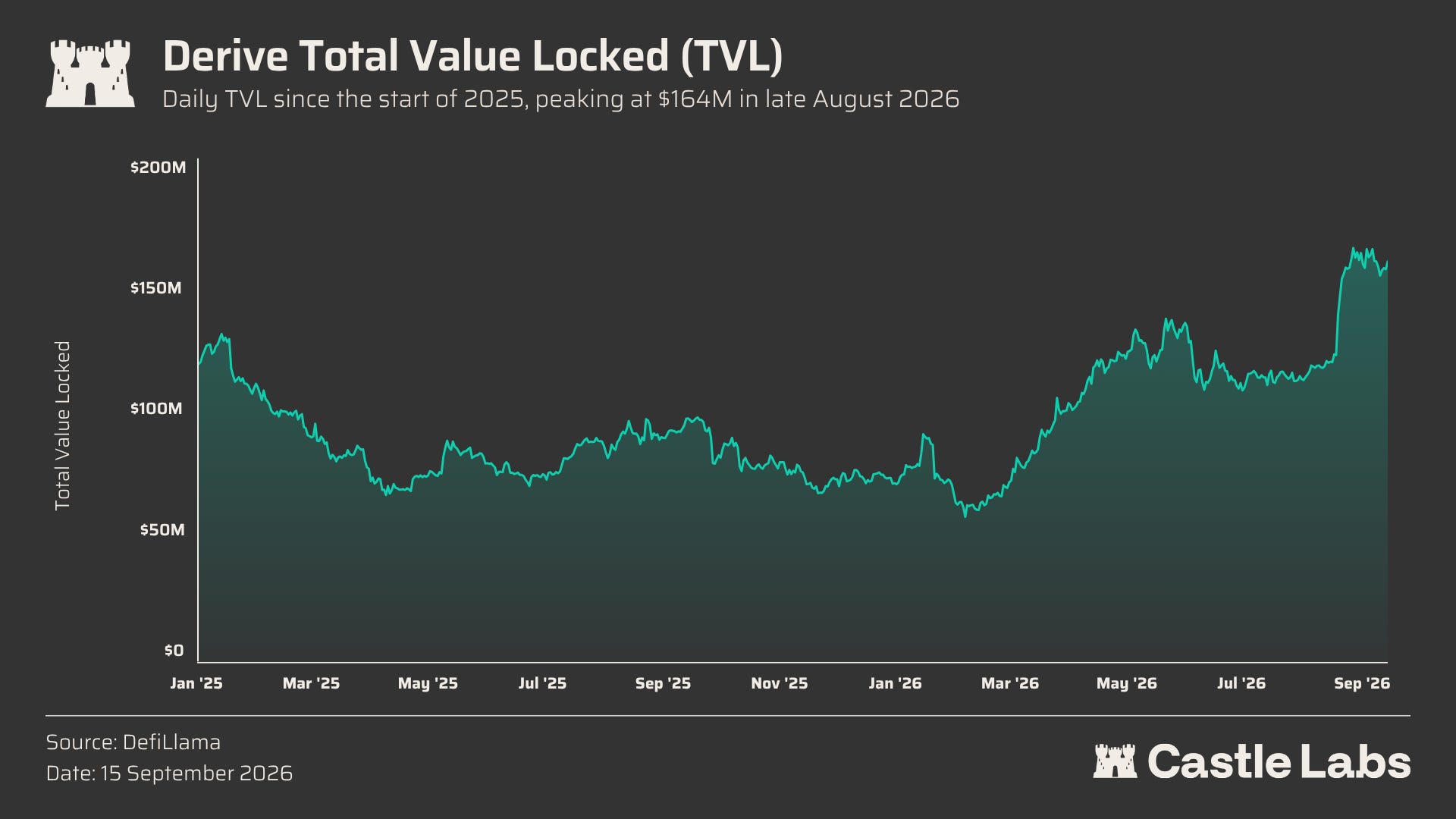
Derive is now at an all-time high in terms of TVL.
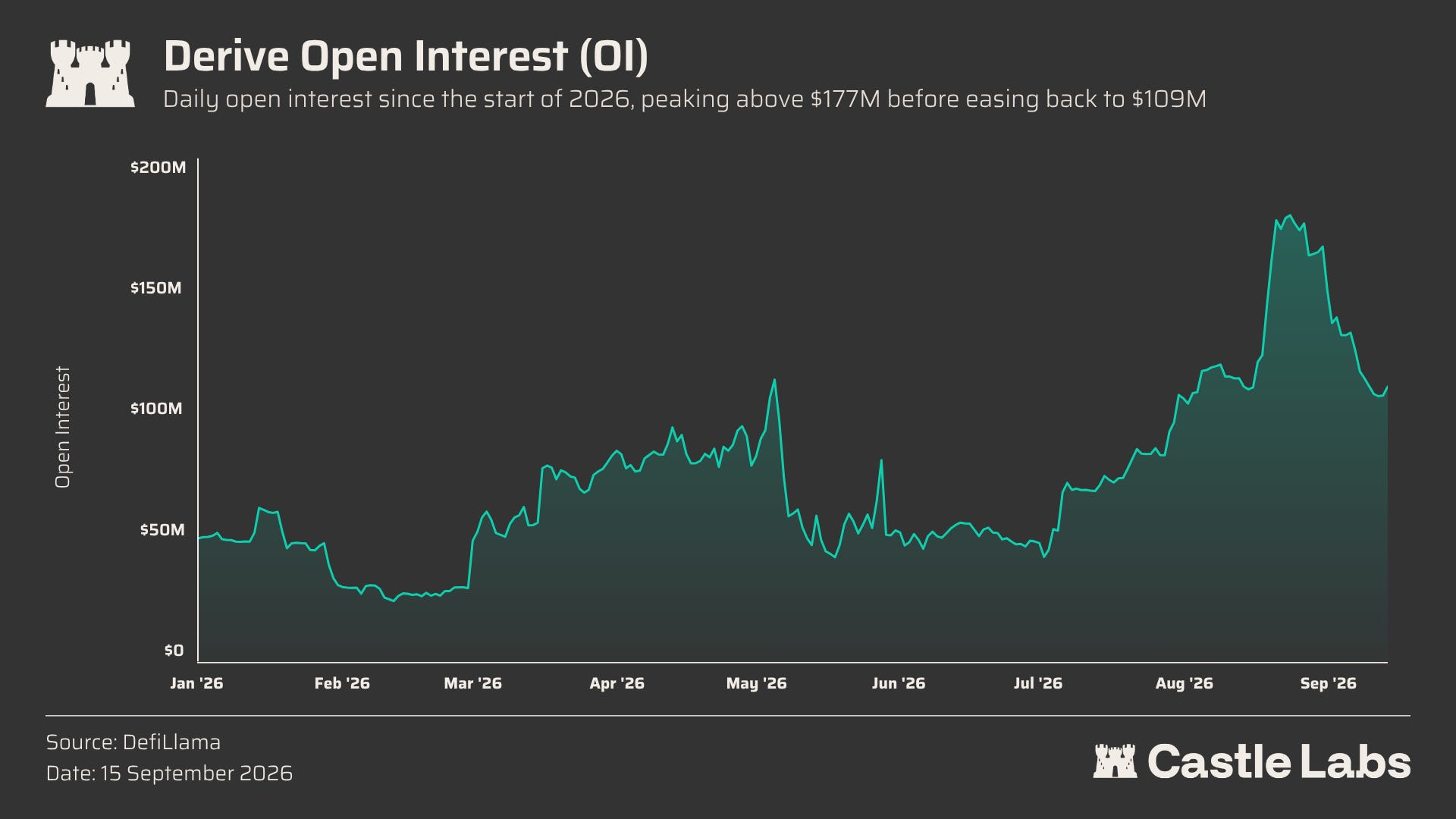
Open interest peaked too at the end of August at over $170 million.
More and more users on the timeline are buying ZEC and ETH options.
Derive has been teasing the launch of its v3 for a while; finally, they shared a post on their forum.
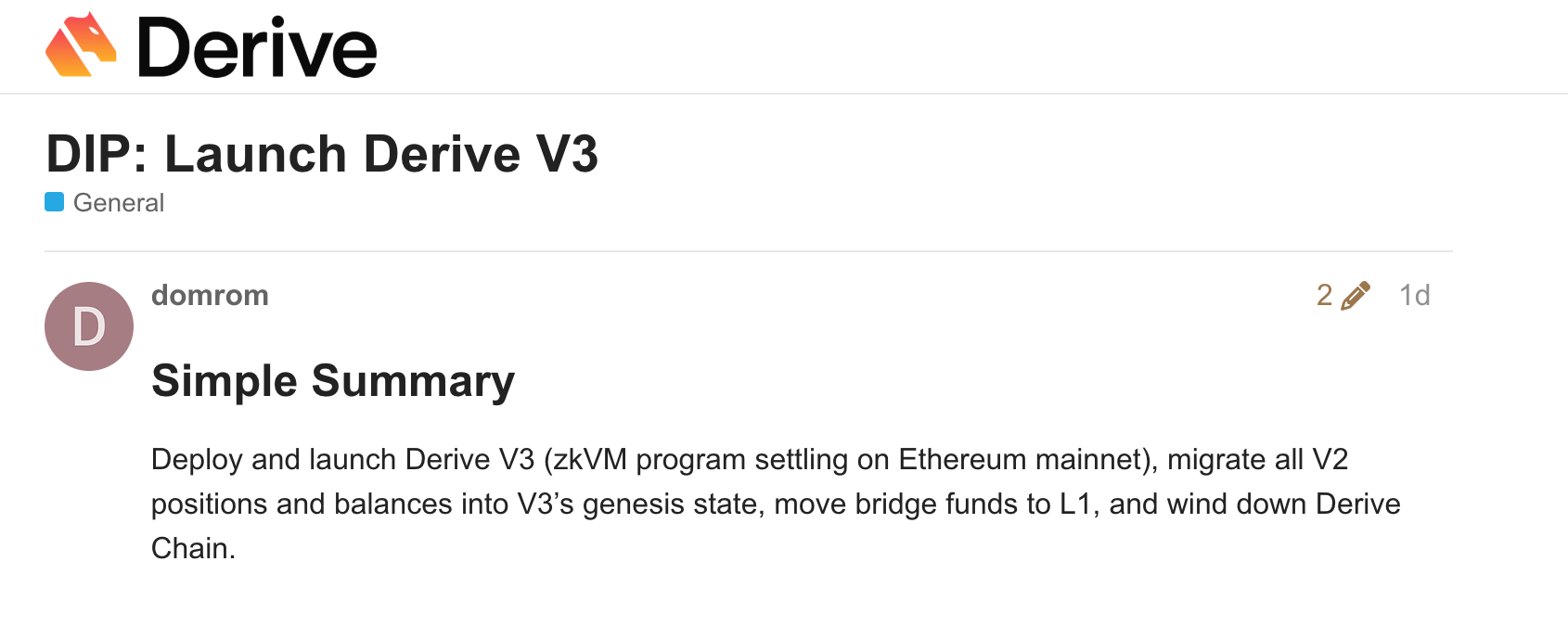
V3 is the next step to scale further and be able to onboard more “sophisticated users and institutions”.
So, what is new with V3?
Improved volume throughput
Faster development of products and features
Better wallet support for MPCs and multisigs
Easier integrations for builders, including custom bridge infrastructure
Path to e2e privacy
Risk isolation for RWA markets
Cross-currency margin
V3 introduces a zero-knowledge component (ZK). In v2, order matching happened offchain. In v3, the Derive matching engine runs inside a zkVM sequencer and is then verified on L1.
Orders are executed inside the zkVM, and only their proof is verified on Ethereum (allowing the confirmation of multiple trade batches with a flat gas fee). Users’ funds are kept in escrow in L1 contracts and require a proof-committed withdrawal to redeem.
Derive v3 uses Celestia for data availability, meaning processed states can be rebuilt and used to prove a batch. If designated sequences don’t work properly for a minimum pre-defined time period, submissions can reopen, and anyone can take over settlement and withdrawals (even without Derive).
Eventually, their goal is to reach L2beat stage 1 verification.
3 main roles are envisioned in Derive v3:
Sequencer: ordering in batches, submitting proofs and withdrawal outputs from the zkVM
Guardian: can refresh withdrawal parameters to process them smoothly or block them.
Owner: grants the powers to update the state root, setVKey, update proxies and unpause withdrawals
As onchain options grow, we are incredibly excited for Derive v3, and we believe the additional features and role of ZK will help it scale further and become more appealing to institutional investors.
On our Radar
The U.S. Senate is holding a cloture vote on the Clarity Act today at 2:15 PM ET. Expectations of passing this vote are low because Democrats rejected the latest draft Republicans released, which included stricter restrictions and additional powers for state attorneys to enforce compliance. After that, Democrats sent Republicans a counteroffer, whose contents aren’t disclosed yet. This vote doesn’t make Clarity law, but it limits debate and amendments, triggering the final vote. Chances of Clarity being signed into law dropped from 35% to 20% in a few days on Polymarket.
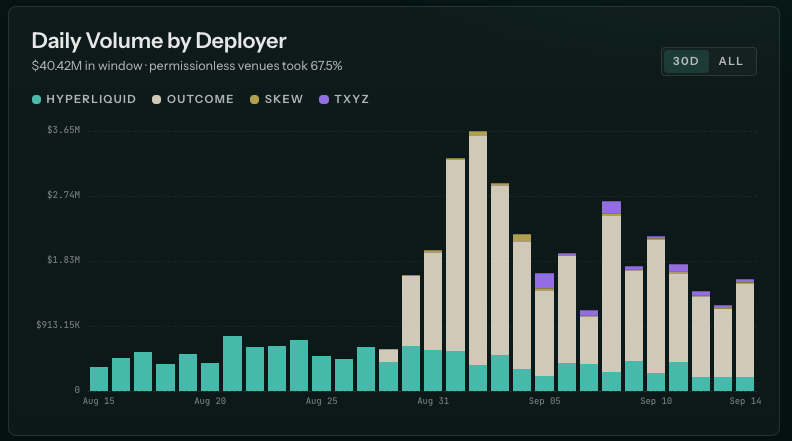
TradeXYZ went live with Events and entered HIP-4 markets, and at the end of August, Hyperliquid opened permissionless deployments. Most of the current HIP-4 is coming from Outcome, followed by Hyperliquid native deployments. HIP-4 markets are themselves small and only represented 0.04% of net volume produced by prediction markets in the trailing 30 days.
Arc mainnet is expected to go live tomorrow, 16th of September.
Initial expectations of possible success similar to the Robinhood chain have meant many have tried to bridge there earlier than when it went live. As a consequence, users ended up paying a hefty premium to get stablecoins there.
As always, when alpha is too public, it often gets diluted or disappears entirely.
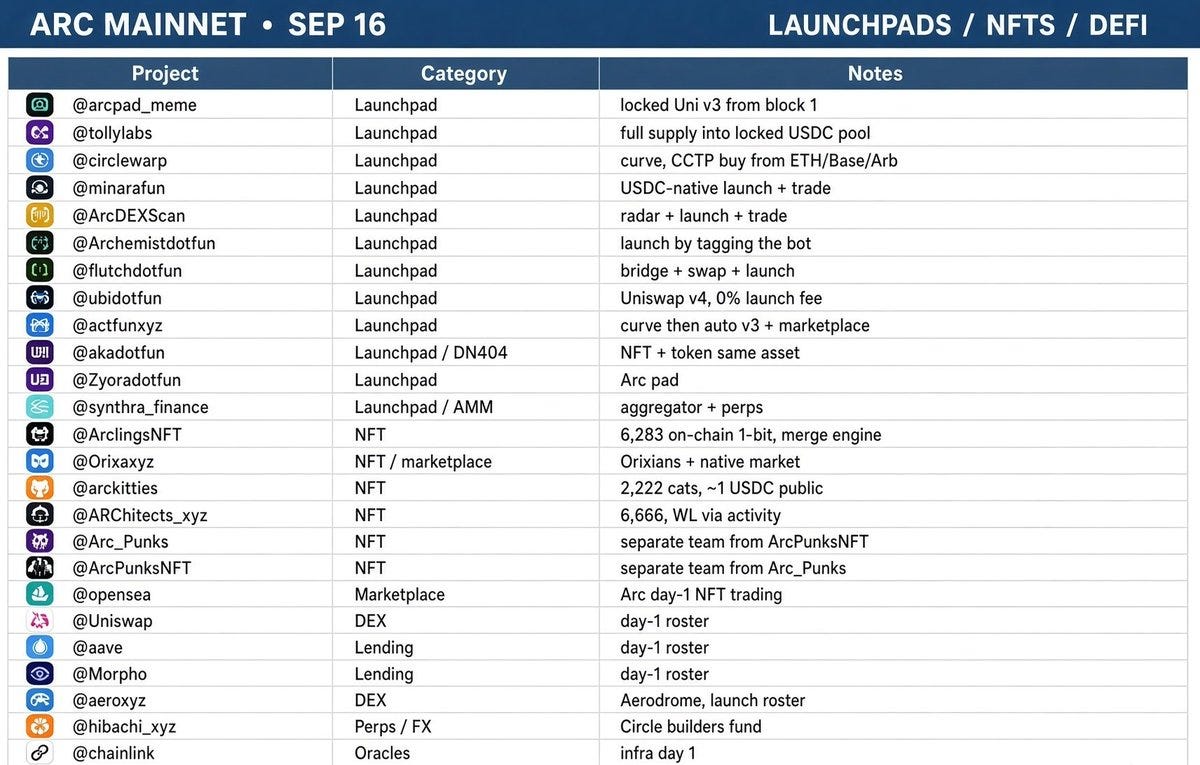
Sell shovels, I guess?
Expectations and hype on Arc are fairly high as people look for new venues that could replicate Robinhood Chain’s success. Personally, we believe that there is no such thing as public alpha.
We will watch closely how Arc’s launch goes tomorrow and whether they manage to set up a good number of initial projects which can help them get traction and a sustainable user base over time.
It does seem a bit forced.
Balancer is shutting down: one of the OG DeFi platforms is officially shutting down.
Balancer just published a governance post proposing to wind down the protocol and route treasury assets to $BAL holders.
The main reason for this decision is the fact that the business was not sustainable: Balancer’s monthly spending exceeds revenue. They spend about $150k/month, while protocol revenue was $30k in August and treasury yield was $25k.
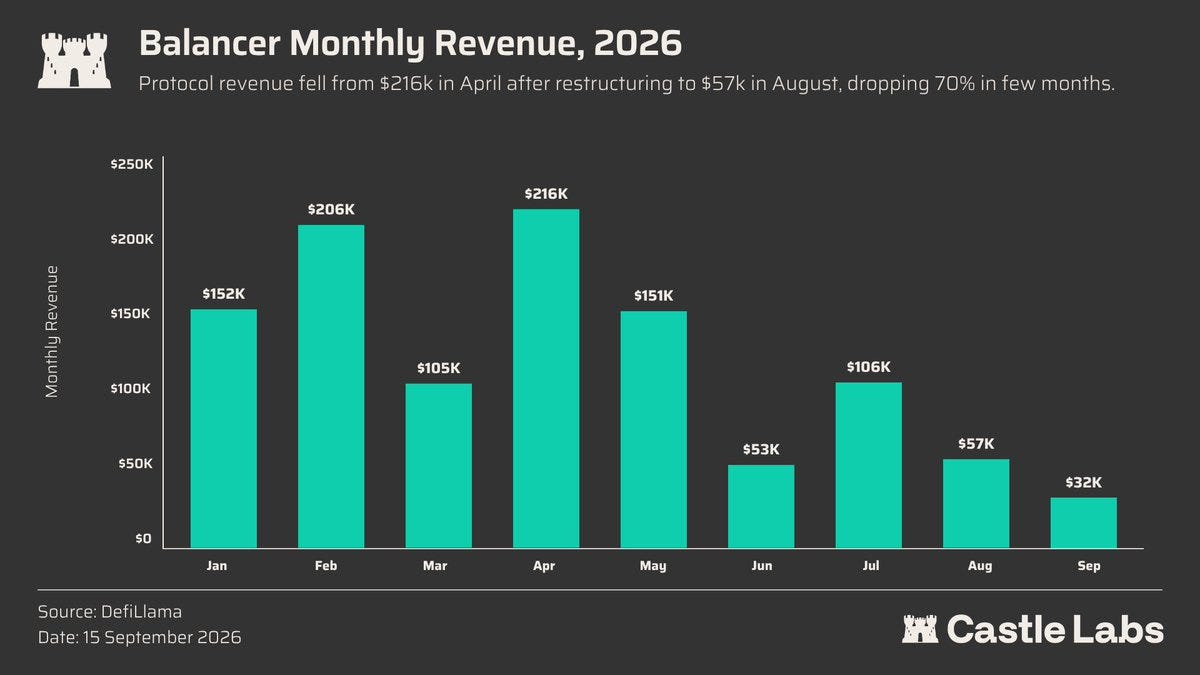
The remaining treasury balance is $9m, excluding $BAL, with each token priced at ~$0.13 based on circulating supply, while the market price is $0.11.
The initial distribution begins at the end of May 2027, and any unclaimed tokens are redistributed to those who redeemed.
Another one bites the dust.
We are going live with Mike Silagadze from EtherFi tomorrow at 10:30 AM ET; don’t forget to tune in. Expect to hear about the long term vision around the EtherFi card, their recent updates, and $ETHFI buybacks.


That’s a wrap!
See you next week.
Every week for the last 3 years, we have shared our research for free, directly in your email. Not a subscriber yet? Let’s fix it:
PLUS, don’t forget to join our Telegram channel for the latest updates from Castle and all our research: Link here

This newsletter includes a sponsored segment produced in collaboration with Theorem. We may discuss projects or tokens in which we hold positions. While we aim to provide informative content, our views are not financial advice. Please conduct your research and consult professionals before making investment decisions. Crypto markets are volatile, and past performance doesn’t guarantee future results. Invest responsibly, and be aware of the risks. Your capital is at risk, and we do not accept liability for any losses