

After a long wait, Monad is here, with the mainnet launch on the 24th of November.
The promise of an ultra-performing L1 is finally coming to fruition with the MON TGE and the upcoming mainnet.
To welcome users receiving MON tokens, a well-developed ecosystem is available, offering a wide range of activities to keep them engaged.
We make your job easier by covering the most interesting projects in the Monad Ecosystem, so that anyone knows how to utilise their airdrop across the ecosystem. Since the broader crypto community is eligible for the token airdrop, many users will be looking for available opportunities.
Even if you missed the airdrop (not much of a gmonad for you), this can serve as a guide to gain exposure to native protocols.
We make this report quite practical: the first part briefly introduces Monad, then we highlight some projects, and we end with closing thoughts on the mainnet launch.
Ladies and gentlemen, enjoy the ride.

Intro on Monad
To fulfil its vision of building a high-performance blockchain, Monad decided to develop its stack from scratch. Relying on existing infrastructure would have inevitably resulted in several bottlenecks, no matter how performant the chain was.
Without diving too deep, Monad’s tech stack is made unique by components including:
MonadBFT: Monad created an optimised version of the BFT consensus model that helps the network achieve 10k TPS and sub-second finality, even with a large consensus node set. Through this consensus model, Monad achieves speculative finality in a single round and full finality in two rounds, with tail-forking resistance. This means that the new leader of a block can’t fork away its predecessor’s block, potentially pursuing malicious intent.
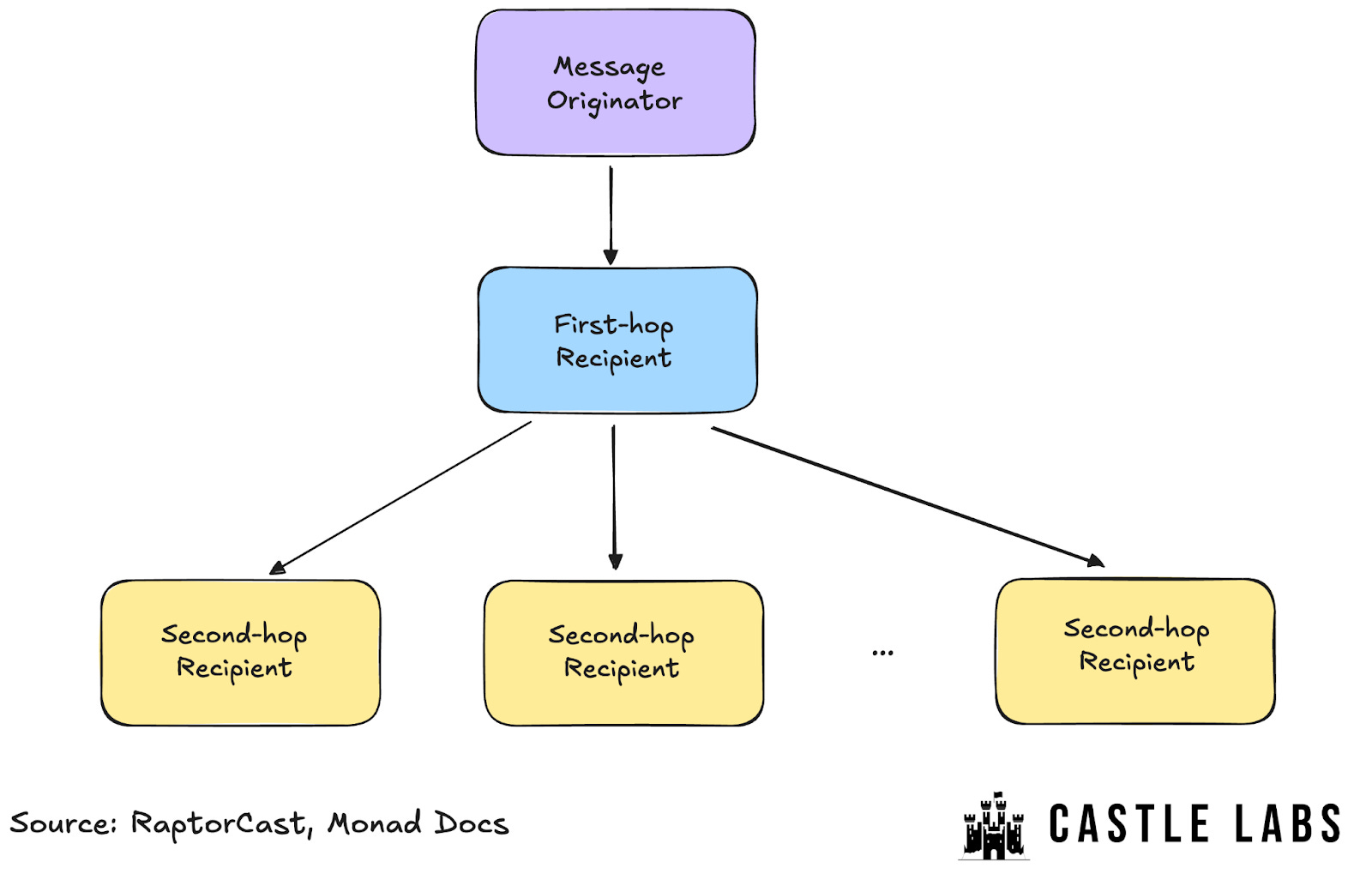
RaptorCast: Sending block proposals efficiently to all the validators in the network is essential for a high-bandwidth network like Monad. RaptorCast is designed explicitly for MonadBFT and addresses this problem. It is a specialised message-delivery protocol that converts block proposals into erasure-coded chunks, a process performed by the leader. Each of these chunks is sent to all validators through a two-level broadcast tree, where the first level is a single non-leader node for a set of chunks, the proportion of which is equal to the validator’s stake weight. These first-level nodes propagate the chunk to second-level recipients (second hops). Using this approach, Monad effectively reduces the latency at which the validators receive the block proposals to reach consensus on ordering the transactions.
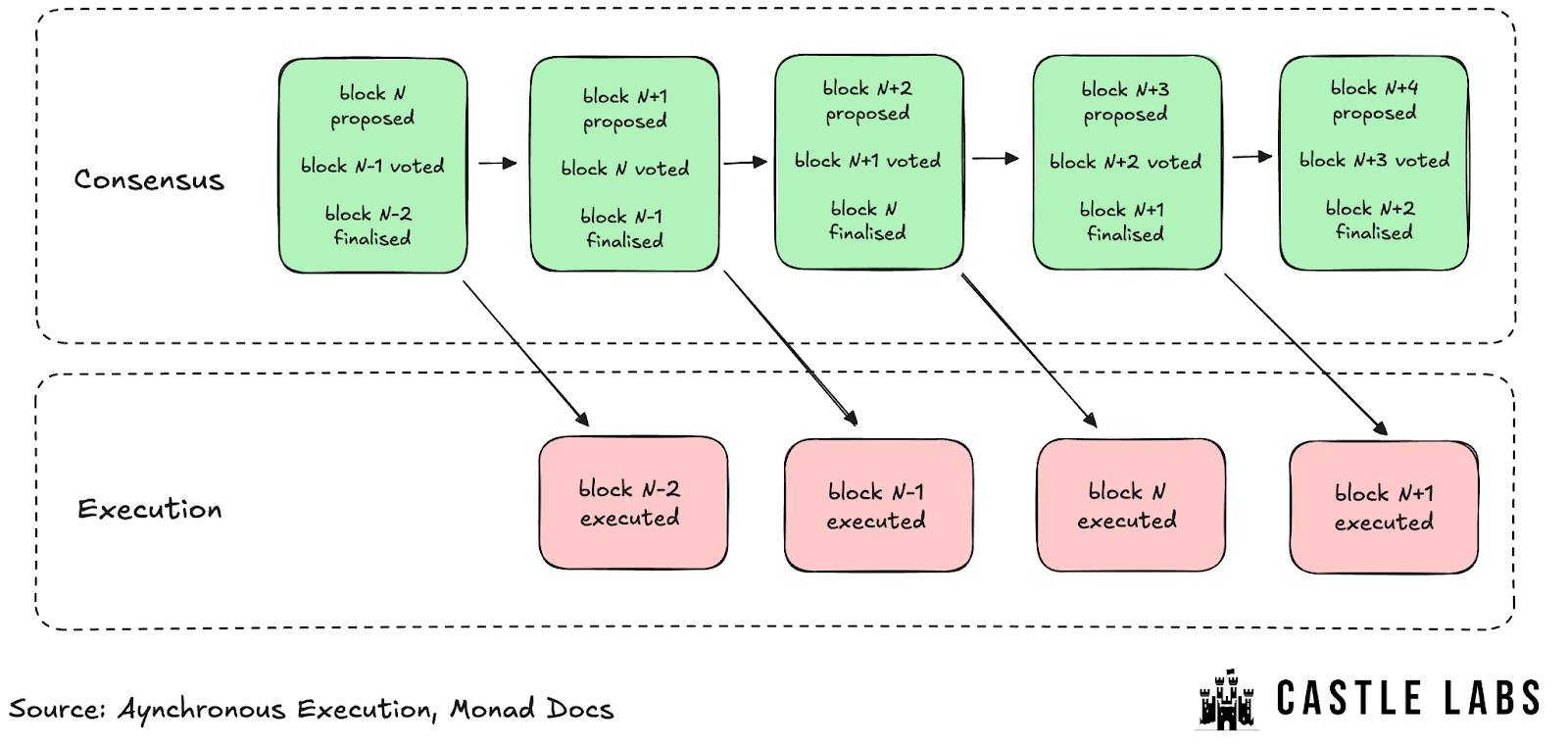
Asynchronous Execution: Monad decouples the consensus from execution. Monad reaches consensus on block ordering first, without executing the transactions. This way, when a block is finalised, every node in the network can execute the block transactions to produce the latest state. This is better than interleaved execution, where execution comes first, followed by consensus.
Monad DB: It is a custom key-value database built on a Patricia Trie data structure, which simplifies the synchronisation between readers (RPC requests) and the writer (execution). It is important to understand that many readers might need to access the database while the writer is updating it. MonadDB’s design ensures this by following an immutable Patricia Trie design: whenever data is updated, a new version of the nodes on the branch is created, while keeping the previous state persistent and open for read.
Transaction parallelisation: Most blockchains utilise the sequential execution of transactions, which guarantees correctness, but it’s slow in practice. To solve this, Monad adopts an optimistic execution approach, where all transactions, either conflicting or non-conflicting, are executed in parallel. In the case of conflicting transactions, such as two transactions which change the balance of the same account and might have been executed in a conflicting order, Monad fixes this by re-executing these transactions by tracking the state changes they perform.
Aside from being one of the precursors of high-performance L1s, Monad is also one of the first networks to place a strong emphasis on community participation.
Monad invented the Discord version of Kaito for its community. Many have grinded for years as part of their community, contributed in any way they could, and, in some cases, even become team members. While many have criticised the extent of this, there is no doubt that this focus has contributed to building an actually very loyal community.
Many networks face a similar issue when launching: not having enough applications live or enough unique applications for users to actually decide to stay after the mainnet launch or when the TGE goes live. To avoid this, there are different schools of thought on how to approach it. Some prefer to curate and incubate projects within their ecosystem, while others prefer to be completely agnostic to it.
Monad finds itself in a middle spot, letting things happen organically while also offering extensive support to ecosystem projects to set them up for success. However, the involvement is always in ecosystem coordination, never in venture or incubation.
Monad had ample time to launch with a vibrant ecosystem, which also underwent natural selection over time.
For any user wondering what to do with their MON aidrops, here’s the answer.
Big Part of the Legos: The Ecosystem Lake
As it stands, there are over 300 projects in the ecosystem, 78 of which are exclusive to Monad.
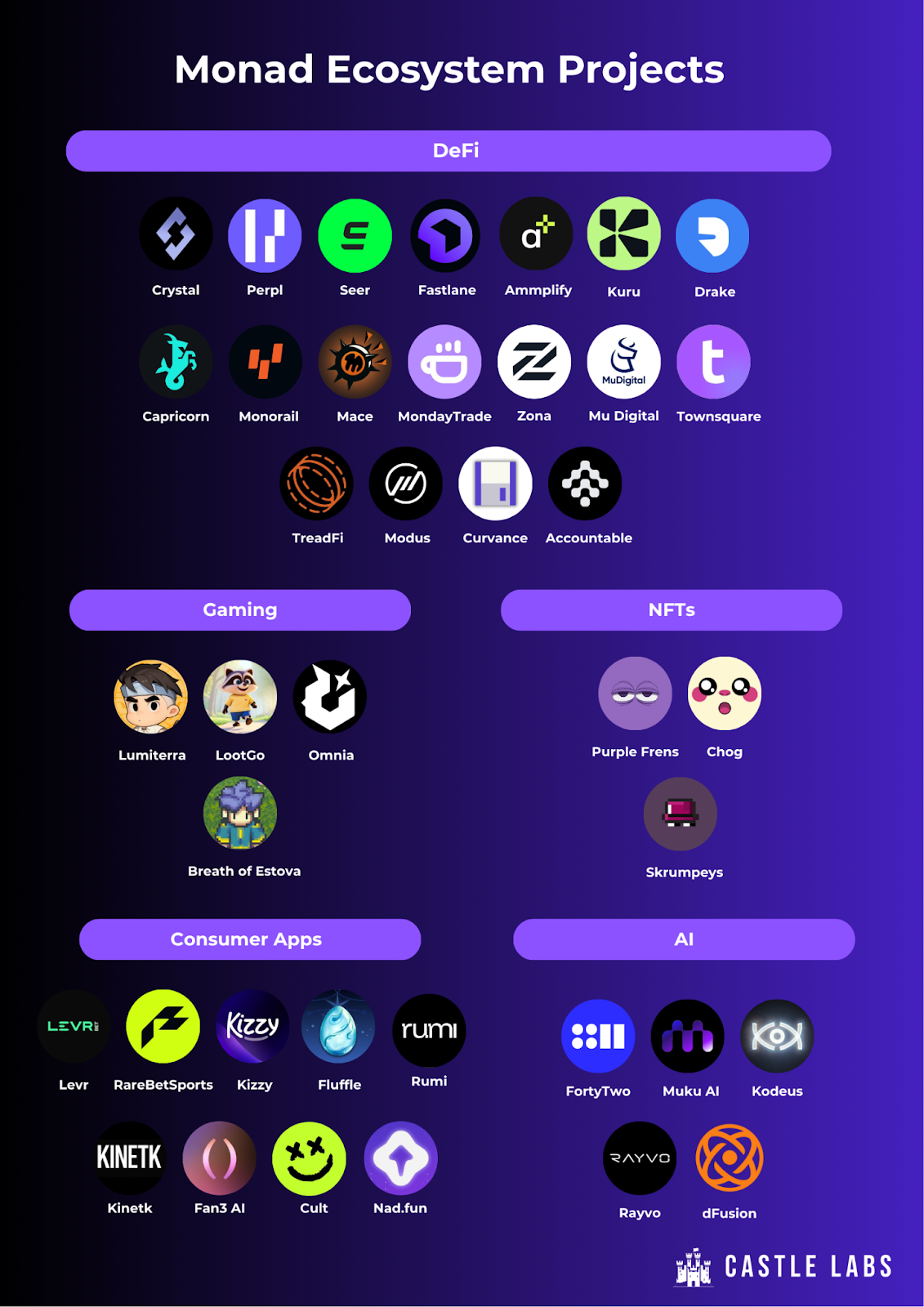
Due to limitations of time, we will only analyse a smaller portion of the total, divided across several verticals:
DeFi
Gaming
Consumer Applications
AI
NFTs
DeFi
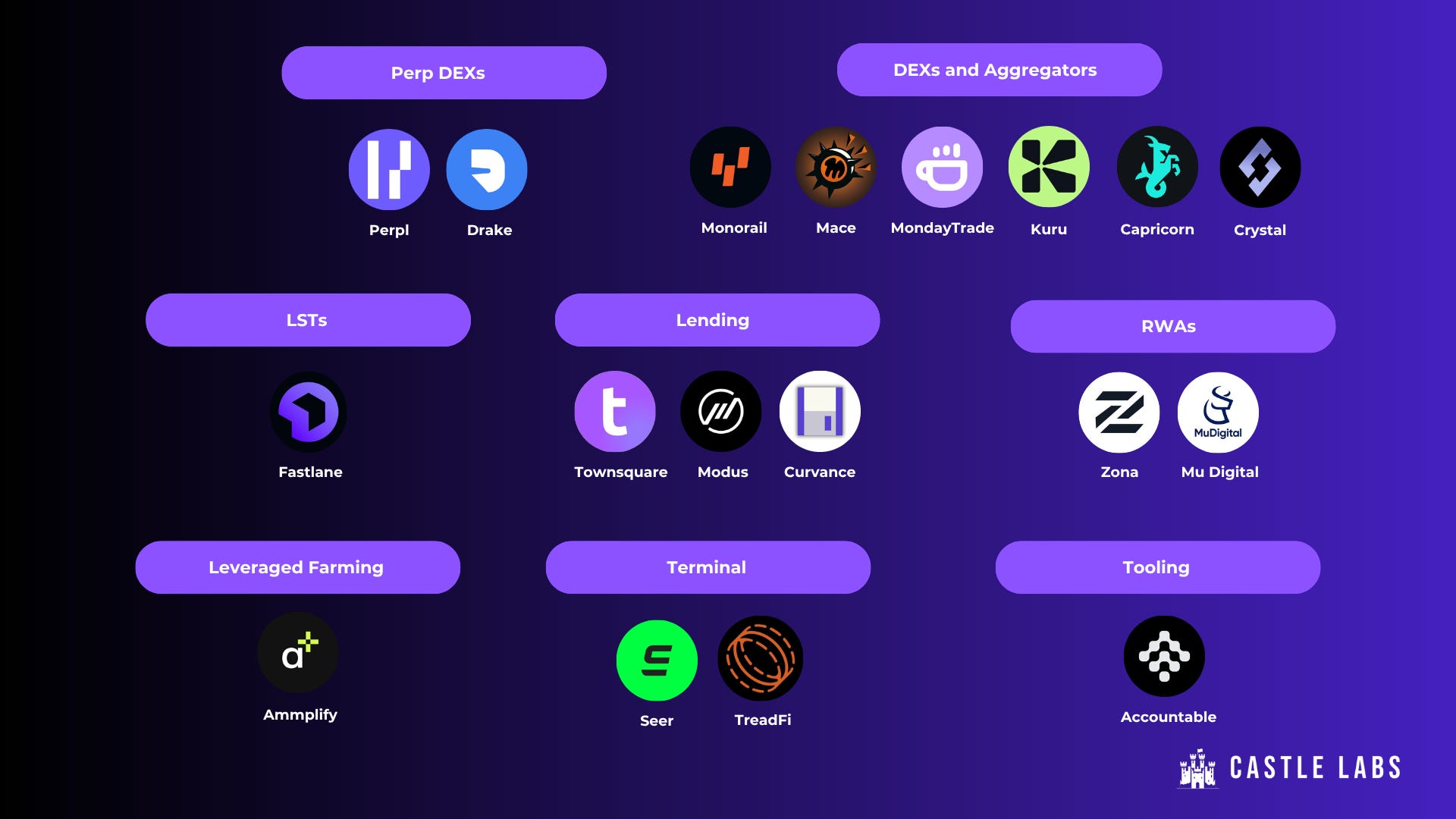
Perpl (https://x.com/perpltrade)
Perpl is a CLOB-based perpetual exchange. Perpl aims to provide deep liquidity and efficient markets for seamless trade execution while also focusing on a great user experience.
Perpl has gone live on testnet recently:
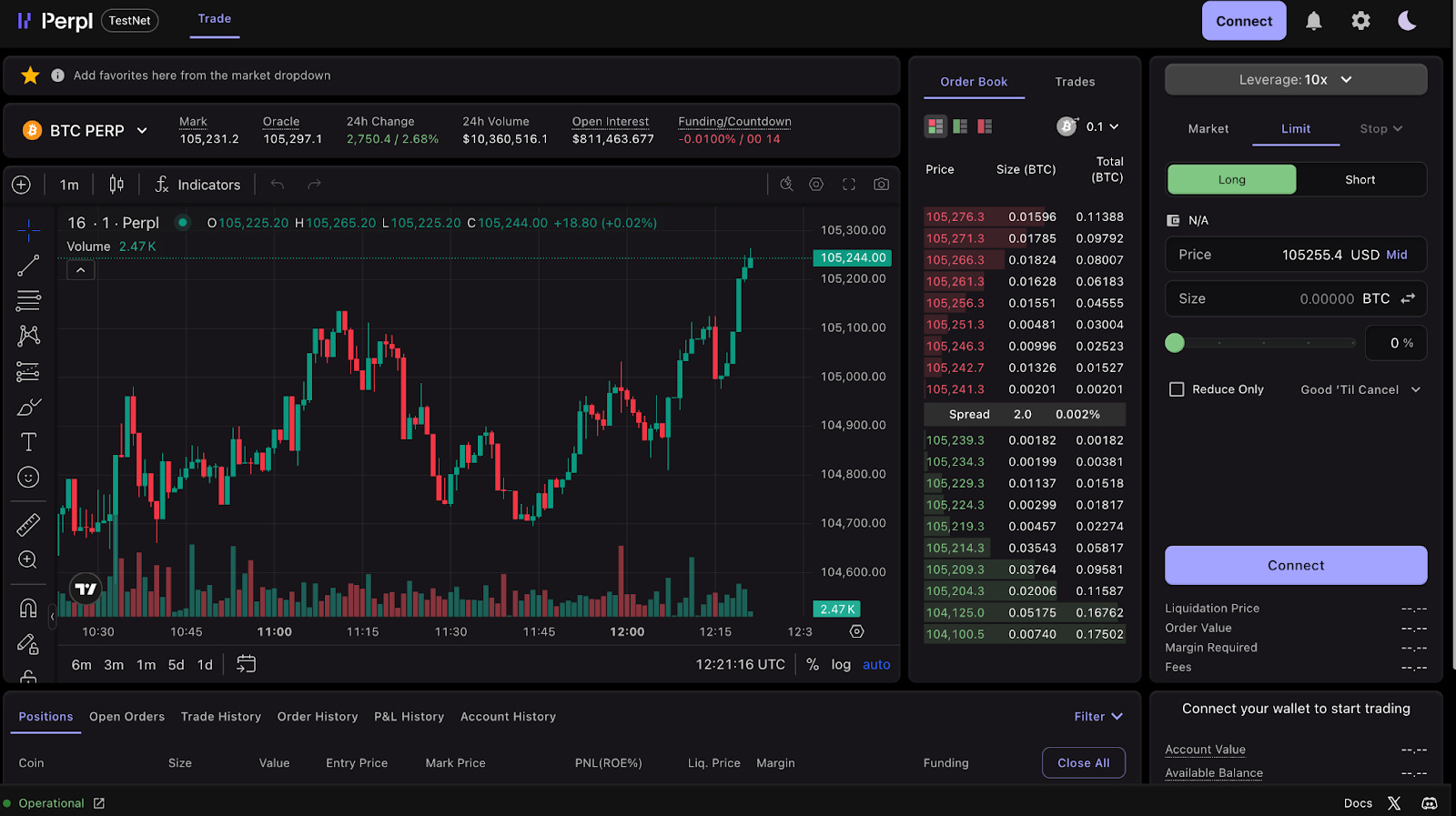
They go with the quote “Trade Perps on Perpl” and will deploy multiple markets on Day 1 of mainnet for trading. Moreover, they raised $9.25 million from DragonFly and Ergonia Trading.
Drake (https://x.com/DrakeExchange)
Drake is a hybrid perpetual DEX that utilises both the CLOB model and the vanilla AMM to provide liquidity in a specific market.
Drake positions itself with the quote “Putting the CEX in Perp DEX”, which is fair given that they prioritise best order execution through their hybrid model. In this model, CLOB liquidity is given priority, with AMM liquidity available as a backup to fulfil the order. In some cases, the model can split the order to tap into both CLOB and AMM liquidity, thereby obtaining the best possible prices.
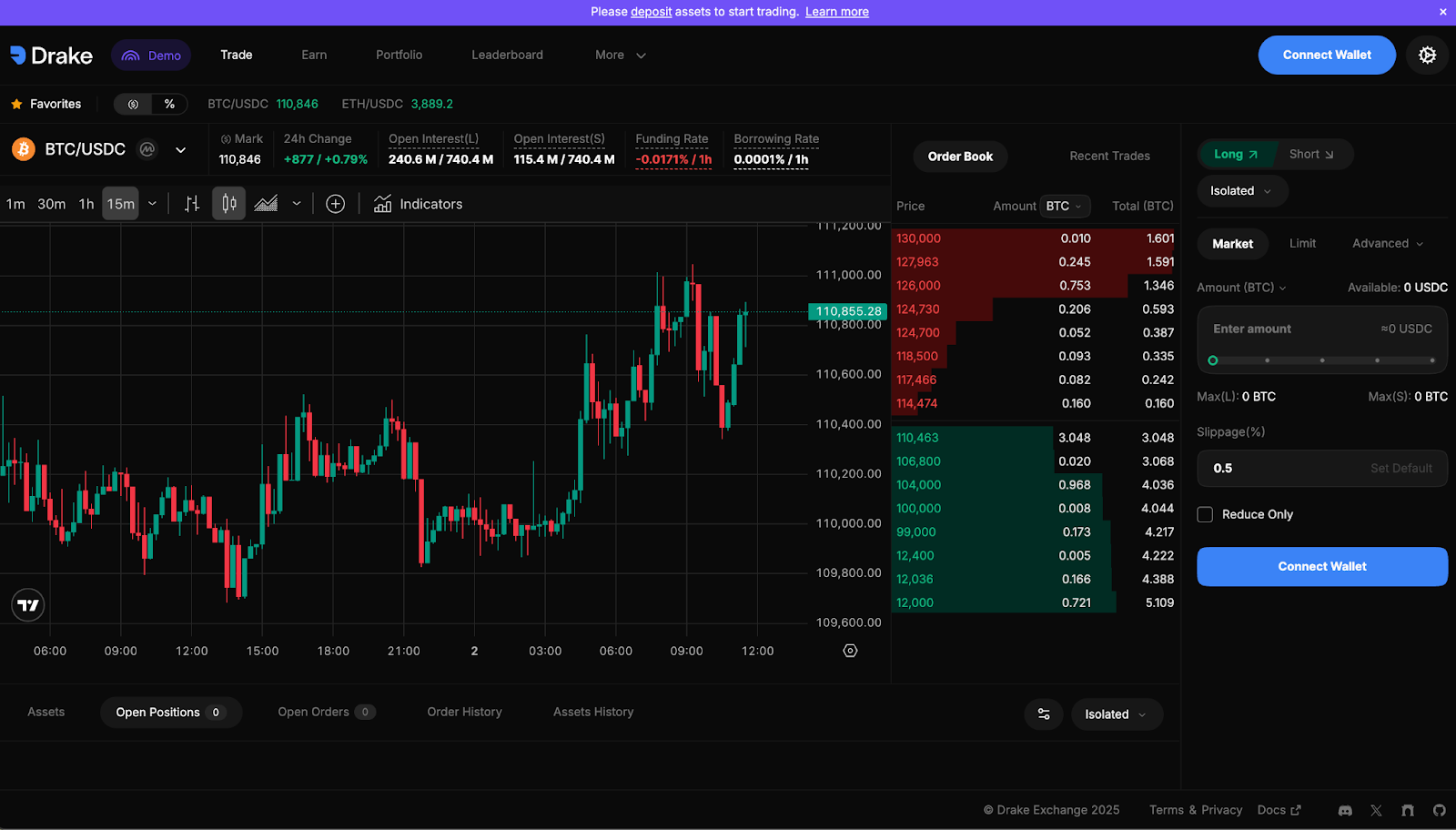
Another important feature of Drake is its Advanced Margin Systems, which enable a Cross Margin Portfolio and an Isolated Margin Portfolio with a Universal-Asset Margin Engine. This allows different collateral types to be utilised across positions, providing users with more flexibility in the assets they use as margin.
Monorail (https://x.com/monorail_xyz)
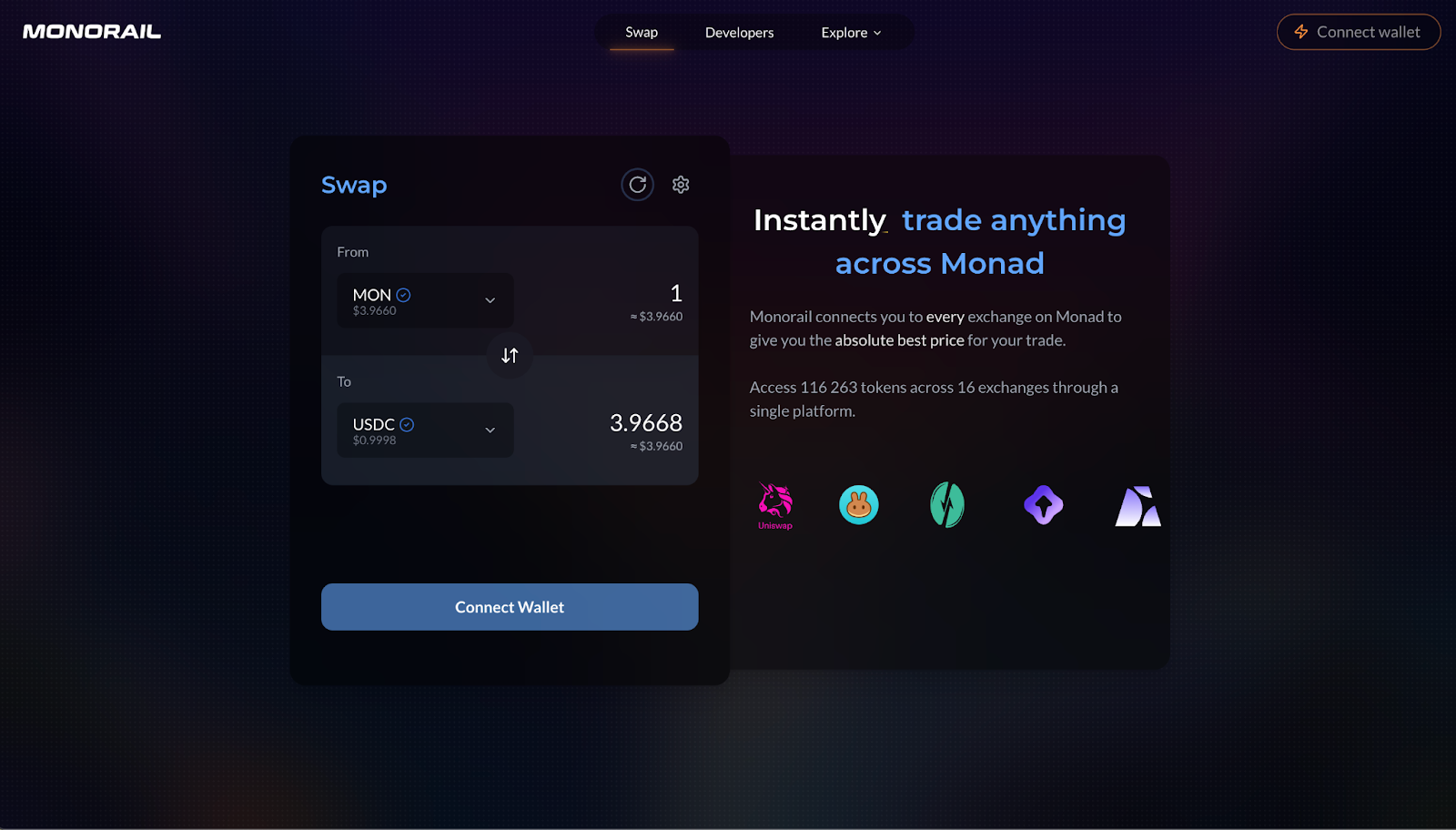
Monorail is a spot aggregator on Monad that routes orders to get users the best possible price on the chain. They currently connect 16 exchanges in their router.
Monorail aims to unify the AMMs and orderbooks into a single liquidity framework, called Synthetic Orderbooks. This liquidity aggregation framework optimally routes orders, achieving the least slippage and efficient execution through lower gas costs.
Here’s a quick look at their UI:
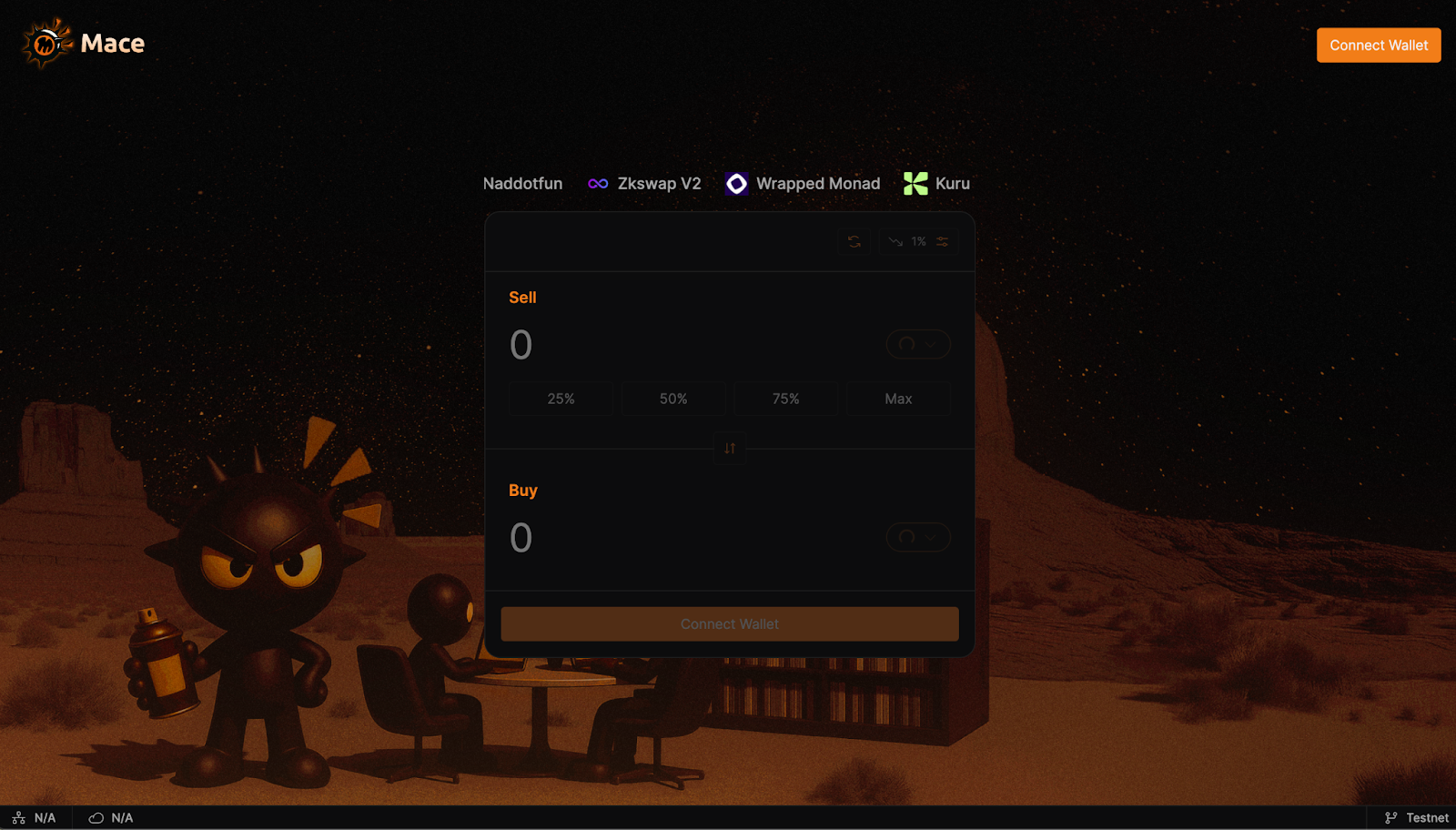
Mace (https://x.com/mace_ag)
Mace is another DEX aggregator on Monad that aims to connect liquidity across AMMs, order books, and CEX market makers through a Request for Quote (RFQ) system.
By routing liquidity through multiple routes, Mace aims to ensure the best possible trade execution, along with lower gas fees and deeper liquidity.
Here’s what their UI looks like:
Monday Trade (https://x.com/MondayTrade_)
Remember SynFutures, a perpetual DEX on Base and Blast?
Monday Trade is built on top of their stack.
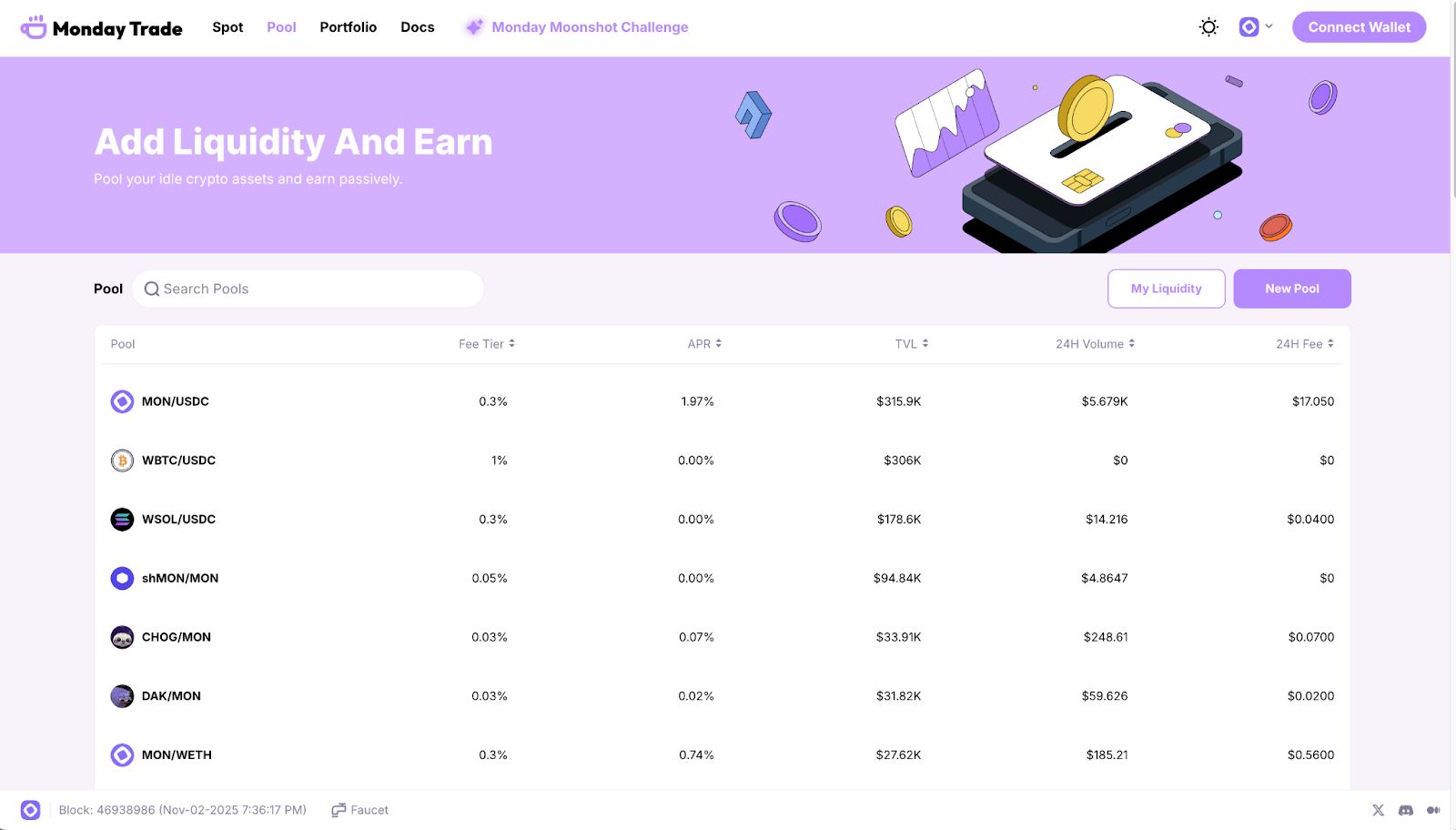
Monday Trade is a hybrid spot DEX on Monad, combining AMM liquidity with an onchain order book in a single venue. This hybrid model, combined with gas efficiency, makes Monday the ideal platform to execute trades smoothly without incurring high slippage.
Some examples of pools available on Monday:
Kuru (https://x.com/KuruExchange)
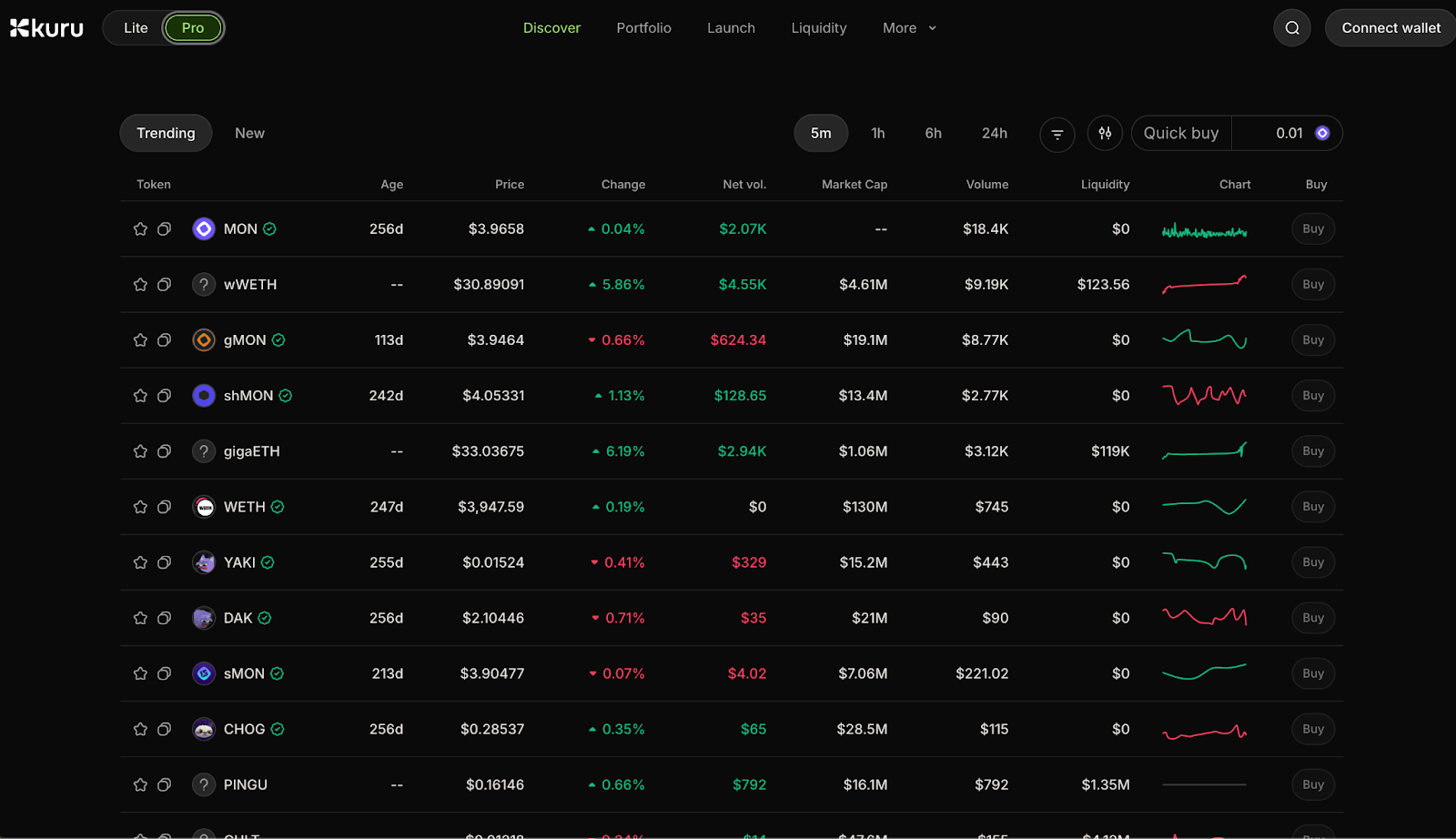
Kuru is a CLOB-based exchange for buying and selling tokens at speed. It also allows users to launch their own token, which makes it a good fit for the “Launchpad” category.
Users can also provide liquidity for various tokens trading on the platform at different fee ranges, similar to a traditional Automated Market Maker (AMM). This is particularly important for new markets or tokens where market makers may not be involved from the outset.
Kuru is well-funded, having raised $11.6 million in a round led by Paradigm.
Capricorn (https://x.com/CapricornDEX)
Capricorn is a prop AMM, which features HFT-grade execution for swaps on Monad.
It features CEX-level liquidity, minimised impermanent loss, LP shielding from toxic flow, tighter spreads, and guarantees composability with the rest of the Monad DeFi ecosystem.
Crystal (https://x.com/CrystalExch)
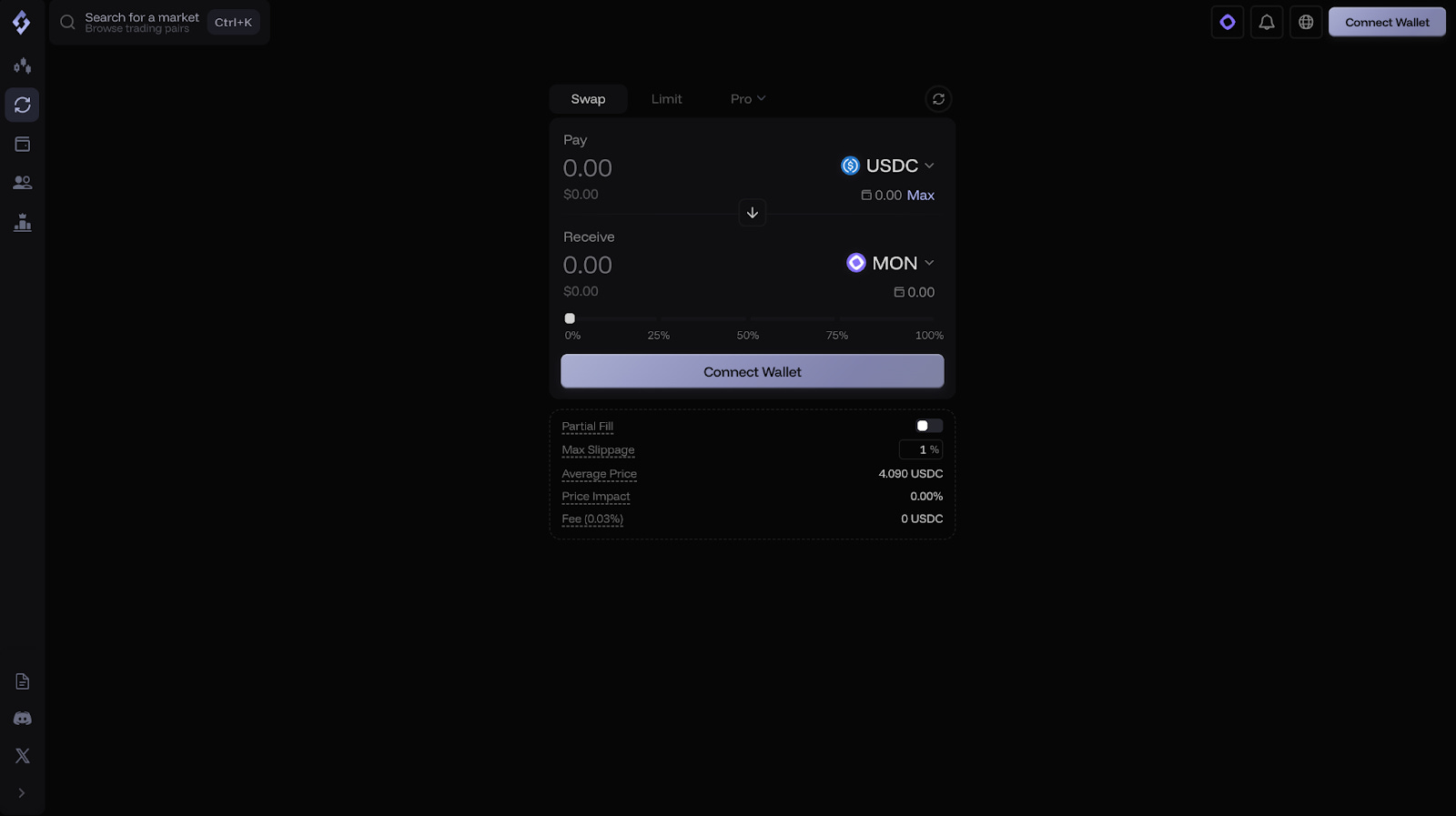
Crystal is an onchain central limit order book (CLOB) based spot exchange that delivers CEX-like performance on Monad. A key differentiator for Crystal is them using the CLOB model to serve as spot liquidity.
Here’s a quick look of their interface:
Fastlane (https://x.com/0xFastLane)
FastLane is building “shMON”, the Liquid Staking Token (LST) of Monad.
It aims to provide users with the best staking rewards on Monad and offer them a boosted yield on their Monad token. Fastlane will be the venue to earn that extra yield on top of your Monad while also securing the ecosystem.
They also released the shMonad RPC, an RPC infrastructure service introducing a Stake-Weighted Bandwidth Allocation system powered by shMonad.
Townsquare (https://x.com/TownSquarexyz)
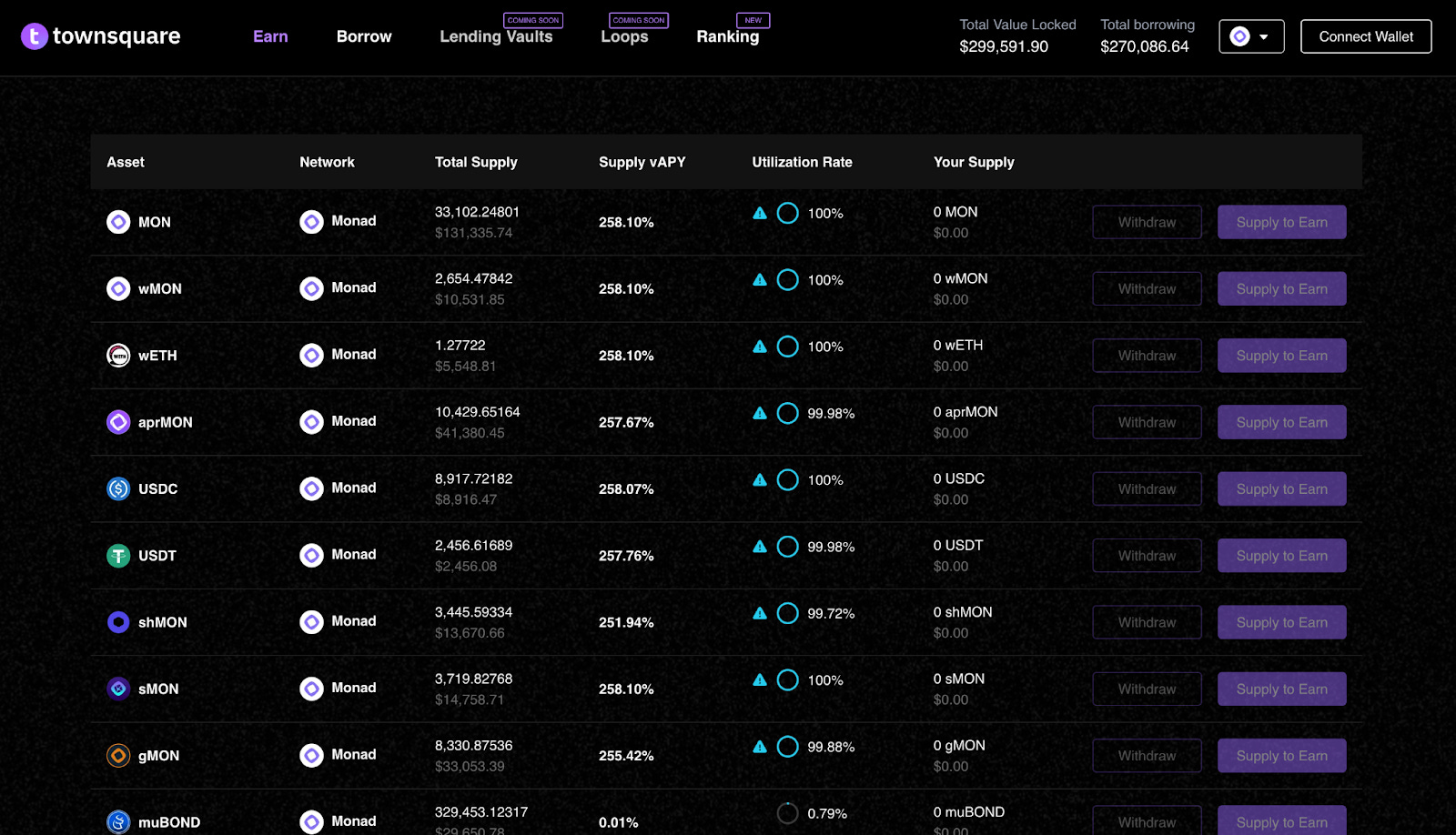
Townsquare is building a modular money market on Monad, which aims to enable crosschain borrowing on the platform, access to yield markets across chains, and create a complete lending and yield stack in a single platform.
Here is what the platform will look like, including some mockup examples of asset supported:
Modus (https://x.com/modus_finance)
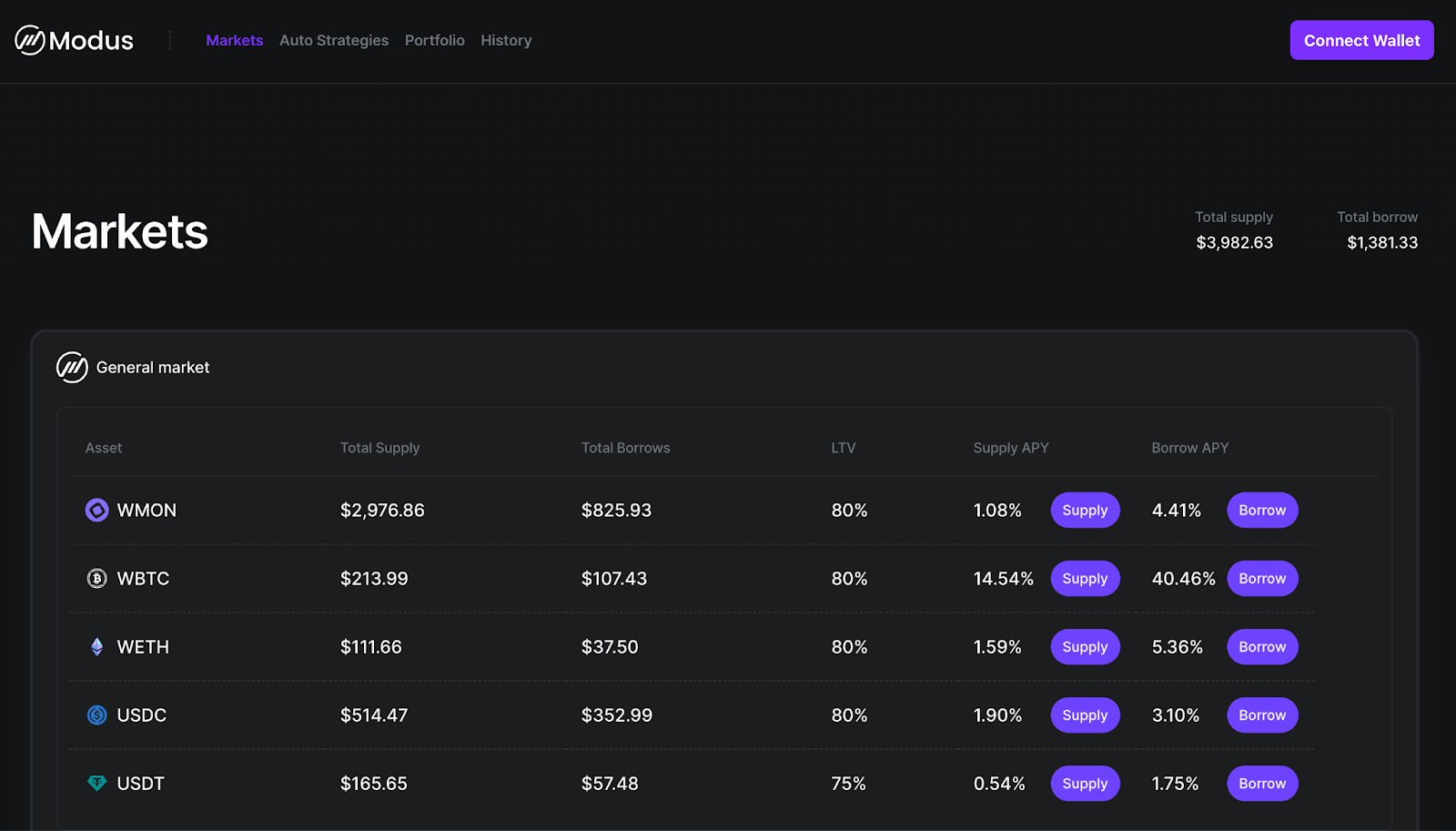
Modus is the native lending protocol on Monad. It features vanilla markets like any other lending protocol, with auto-looping strategies for LSTs to earn the maximum yield possible. It also introduces sealed-bid liquidations, which retain the captured value through liquidations within the protocol, preventing it from leaking to MEV bots.
Here’s what’s new in the platform:
Arbiter: Perform liquidations through sealed-bid auctions within the platform and trigger vault strategies like hedging on perpetual exchanges.
Sigma Vault: This is the vault which utilises Arbiter hedged perpetual positions and captures the funding rate, borrow/lend spreads, and liquidation rebates. The other arm of this hedged position is the users’ idle deposits, such as ETH and BTC.
Dynamic Yield Allocator (DYA): If there are any idle assets in the market, it redirects them to the highest-yield source available within the Modus ecosystem, i.e., Sigma Vault.
Tokenised Stock Lending Infrastructure: Modus will enable collateralising onchain stock counterparts to borrow assets against them.
Here’s a quick look at the platform interface:
Curvance (https://x.com/Curvance)
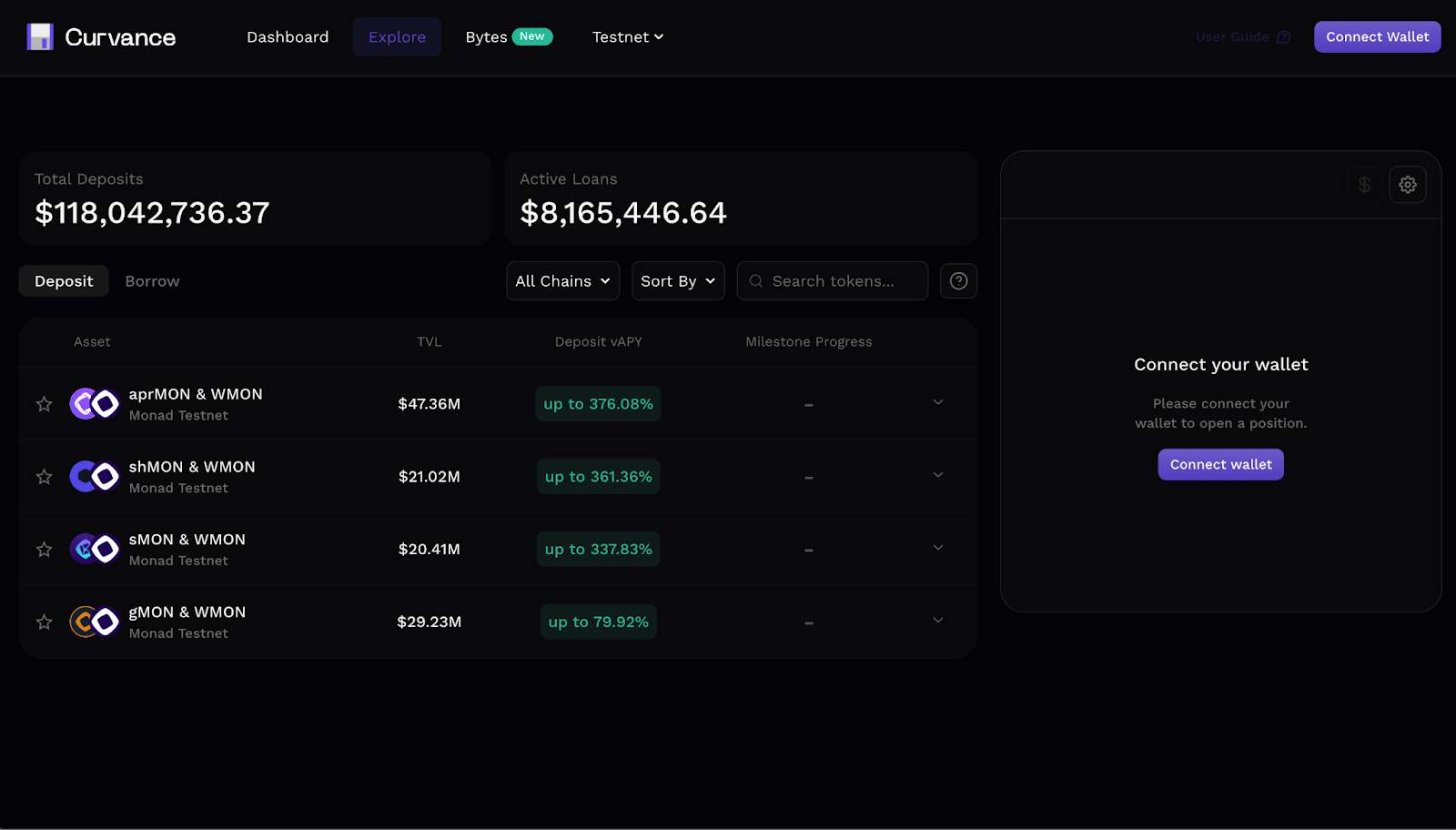
Curvance is the money market on Monad, where users can lend and borrow, deposit into auto-compounding vaults and optimised DeFi strategies, and gain broader DeFi exposure all in one place.
The platform also features isolated positions tailored to each asset for a risk-managed portfolio. Additionally, every market on Curvance utilises two oracles, which eliminates the single point of failure and protects users if one of the oracles fails.
Another notable feature of the platform is its auction-based liquidations, which enable liquidators to bid for the debt to be repaid, thereby reducing value leakage to MEV. This also makes it possible for LTVs as high as 97% on specific markets.
Here’s a quick look at the UI:
Zona (https://x.com/zona_io)
Zona is working to address the problem of composability for Real-World Assets (RWAs) in DeFi. The platform aims to enable users to borrow stablecoins against their RWA assets.
On top of it, Zona is also targeting to tap into the real estate market, a $300 trillion market. As part of their future vision, users will be able to borrow against properties, using them as collateral. They aim to achieve this through their proprietary real estate oracles, which frequently price properties.
As part of their vision, they already partnered with Agora, bringing AUSD to Monad.
Mu Digital (https://x.com/MuDigitalHQ)
Mu Digital is an RWA protocol that aims to bring Asia’s best yields onchain, which are, unfortunately, currently capped by the country’s borders and by High-Net-Worth Individuals (HNWIs).
Asia offers the best yield environment, coupled with factors such as high growth, high returns, good liquidity, safety, and diversification. Mu Digital is looking to source deals with returns of 8-20%. These yields will be sourced from Asian debt markets through large and reputable corporate borrowers, providing exposure to the APAC market onchain, which was previously inaccessible.
Ammplify (https://x.com/ammplify_xyz)
Ammplify is all about capital efficiency, focusing on building a Liquidity Provider (LP) amplifier that doubles the yield of LPs. In a regular Uni V3 pool, the liquidity out of the price range just sits idle and doesn’t accrue any yield.
Ammplify takes that idle liquidity and supplies it to other yield-earning venues, boosting capital efficiency and providing greater yield-earning opportunities to end-users.
They aim to compete with private money managers and curators, while reducing risks and maintaining self-custody and transparency.
SEER (https://x.com/seertrade)
Step up your onchain trading research with SEER. SEER Beta is currently live, giving exclusive access to holders of the SEER Founder Pass.
At its core, SEER is a platform combining social and onchain intelligence to provide the most informed trading experience for its users.
Users can check out their curated feed, chat, make voice calls, view onchain metrics, and see what’s trending, all in one place. It also allows users to create unlimited wallets and to route private capital. Additionally, SEER raised $300k through a recent echo round.
Tread Fi (https://x.com/tread_fi)
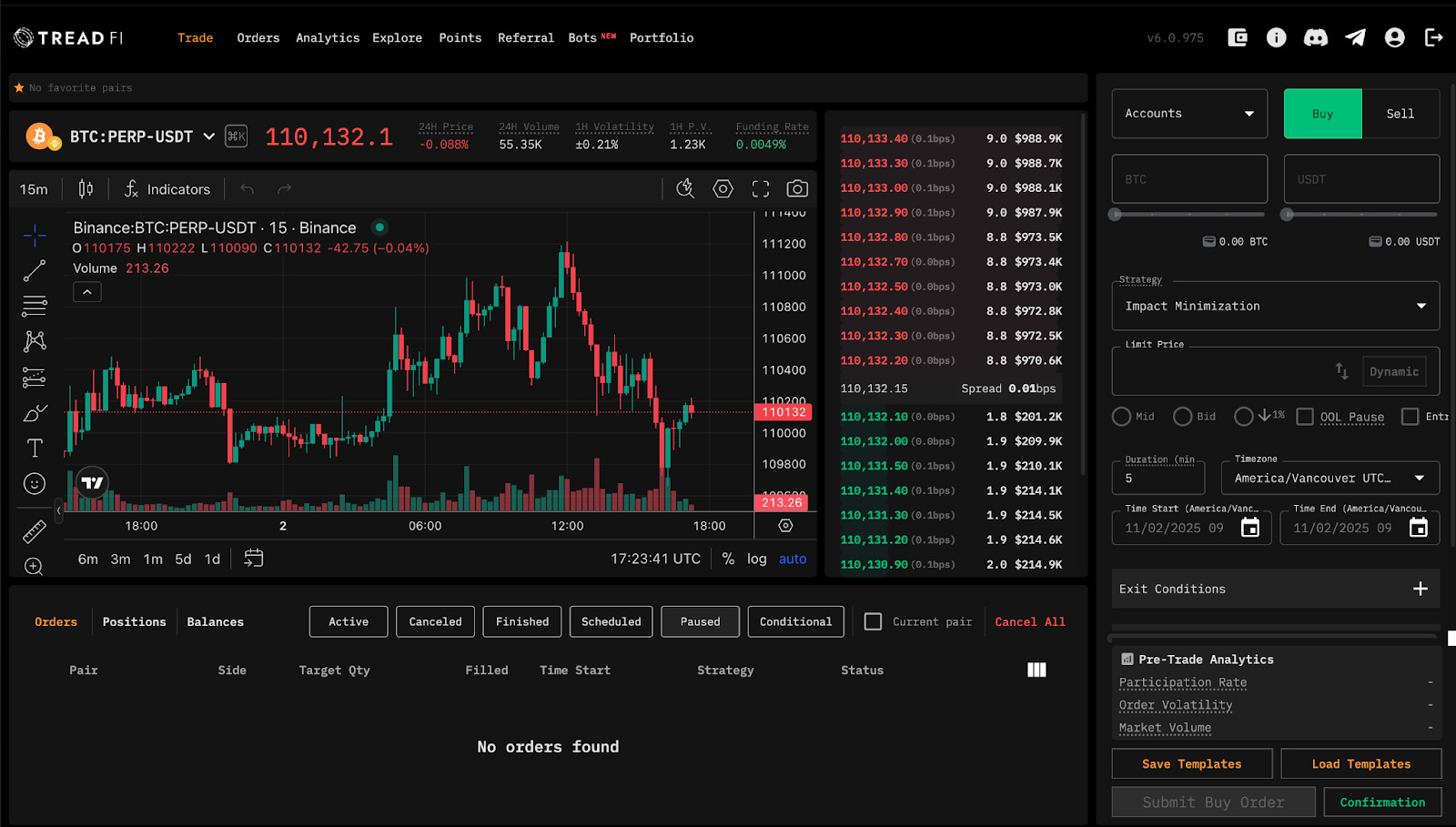
Tread Fi is a trading terminal which executes or routes perp and spot trades across multiple Decentralised Exchanges (DEXs) and Centralised Exchanges (CEXs).
It enables users to perform algorithmic trading with various algorithms and to manage positions across multiple exchanges, including Binance, Bitget, Hyperliquid, and more.
While Tread Fi is live across multiple exchange venues, it uses Monad to post trade data onchain to verify that it actually occurred. This is initially a nice feature for traders to attest to their profitability, with potential to evolve into more complex products (e.g., lending, dark pools).
Here’s a look at the platform:
Accountable (https://x.com/AccountableData)
Accountable aims to transform the way assets are verified.
It utilises a Data Verification Network (DVN) to verify data “directly at the source” while maintaining privacy preservation.
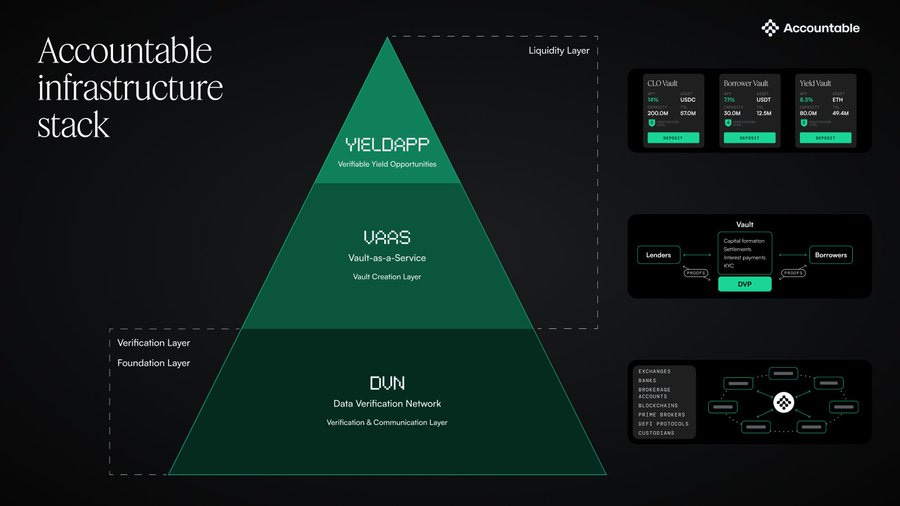
Instead of static proof of reserves, which often don’t include complete information about “liabilities or real-time solvency”, Accountable provides a continuous, live way to verify assets.
Initially, the team plans to focus on stablecoins, onchain treasuries, and institutional treasuries, with the long-term objective of creating a standard layer for verifying every asset, whether onchain or offchain.
Gaming
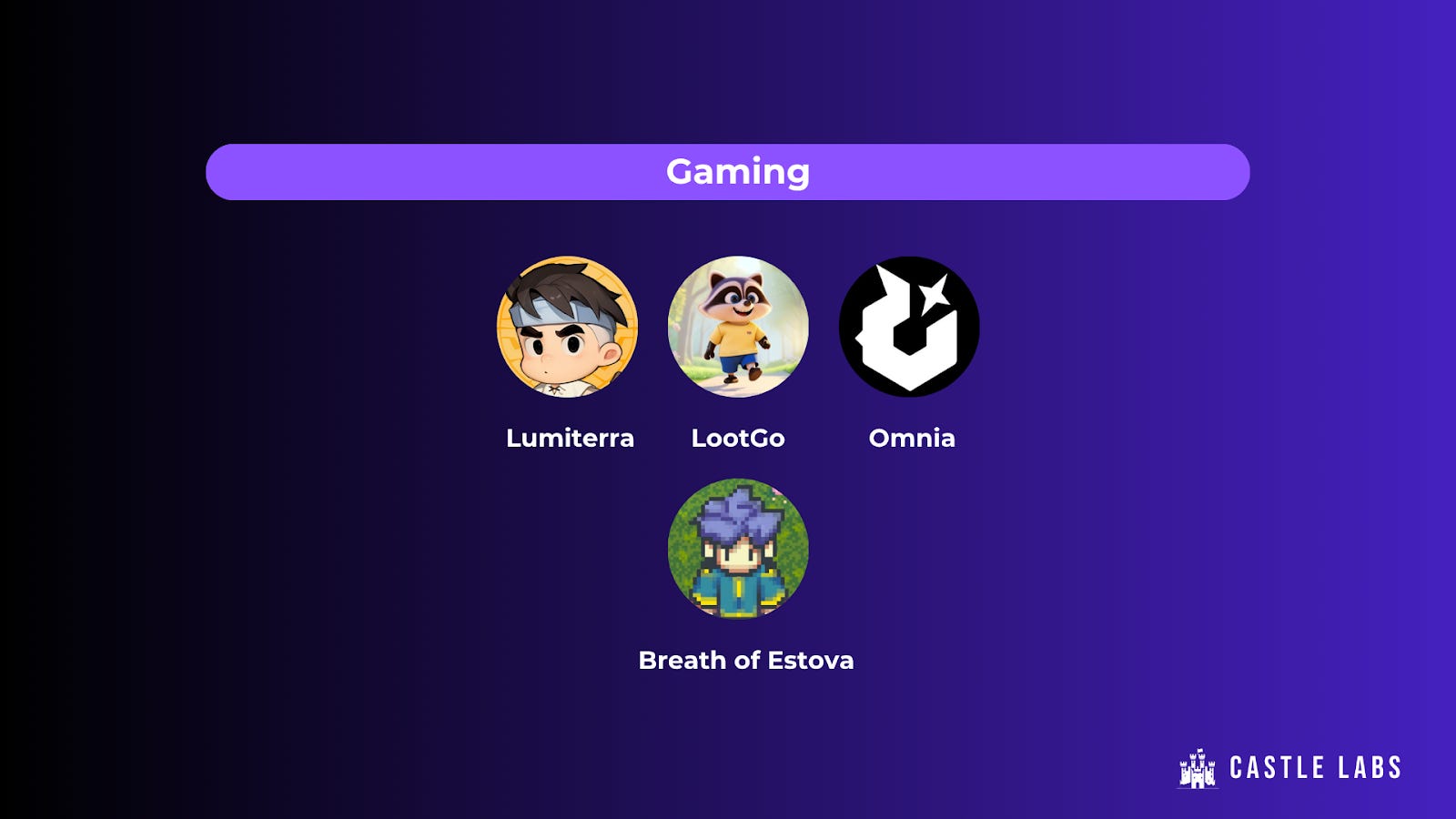
Lumiterra (https://x.com/LumiterraGame)
Lumiterra is a survival multiplayer game set in an open world.
This game in particular stands out because the team envisions the open world as AI-powered and evolving based on players’ choices. Through the game, users will be able to have AI agents “that develop alongside their playstyle and turn mastered skills into onchain assets”.
From Skills to Agents to Assets.
The game will be designed to have its own economy, allowing anyone to trade these assets across markets.
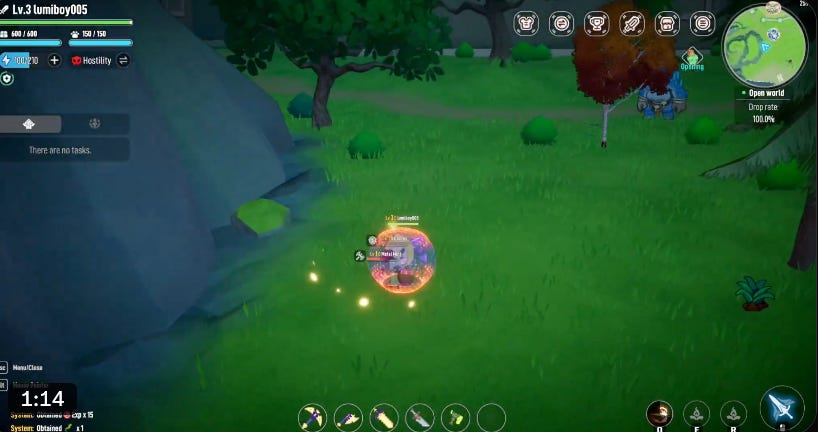
Here is a screenshot from their gameplay video:
LootGO (https://x.com/lootgo_official)
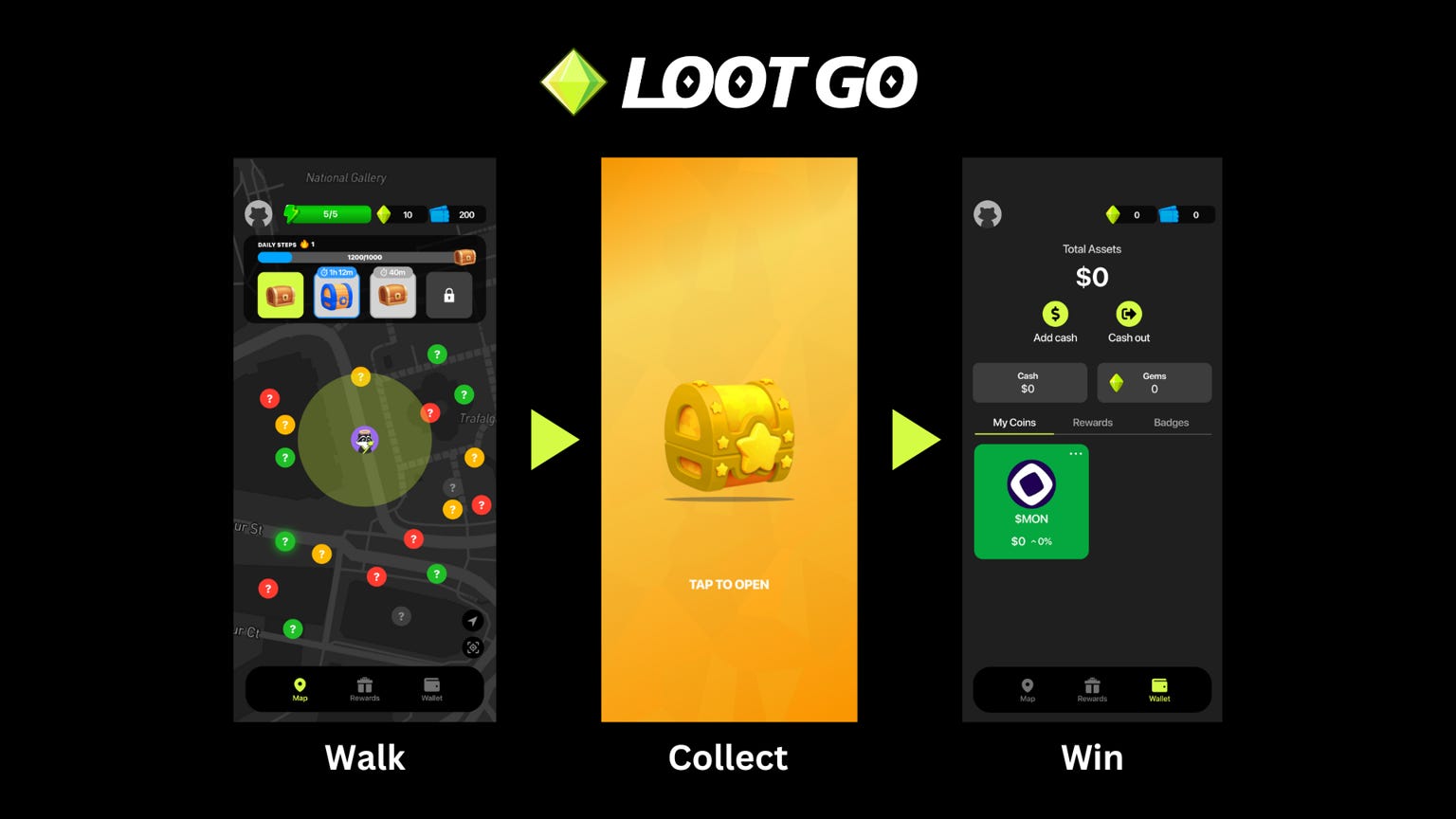
LootGO is a walk-to-earn treasure hunt game taking place in the real world. They have previously won Colosseum’s mobile track on Solana and also arrived as a finalist at the Monad Madness pitch competition.
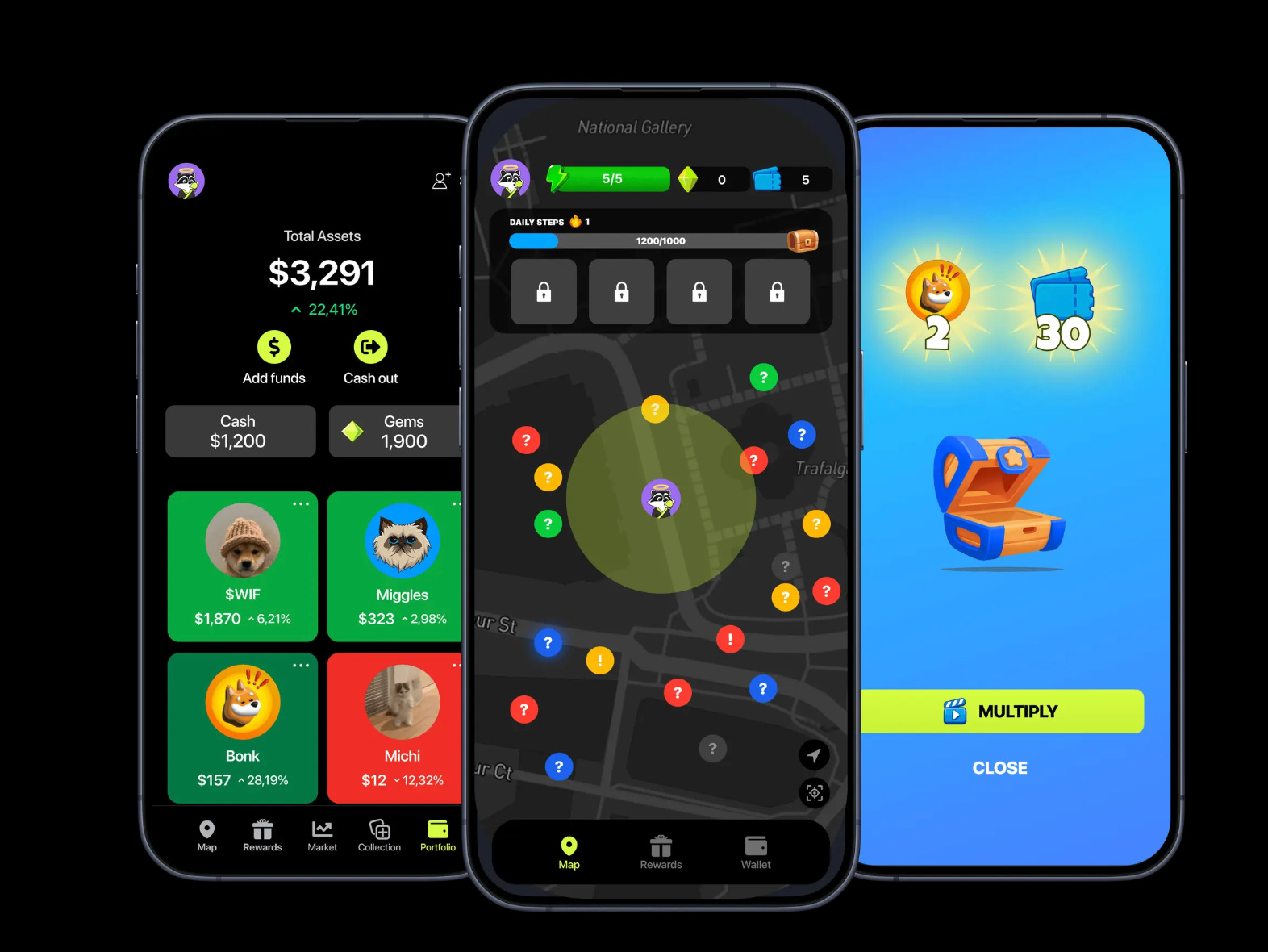
While other games are still in beta or not live, you can already play LootGO on both iOS and Android!
Similar to his famous bigger bro STEPN, LootGO lets you earn just by walking:
Omnia (https://x.com/ExploreOmnia)
Omnia is a game developed by the Sappy Seals NFT community.
The game is focused on adventure and pet battles.
The team conducted a playtest for the community a month ago. Those interested to learn more can find more information here.
Breath of Estova (https://x.com/BreathOfEstova)
Breath of Estova is a play-to-earn 2d MMORPG game on Monad. Here’s a screenshot of their gameplay:
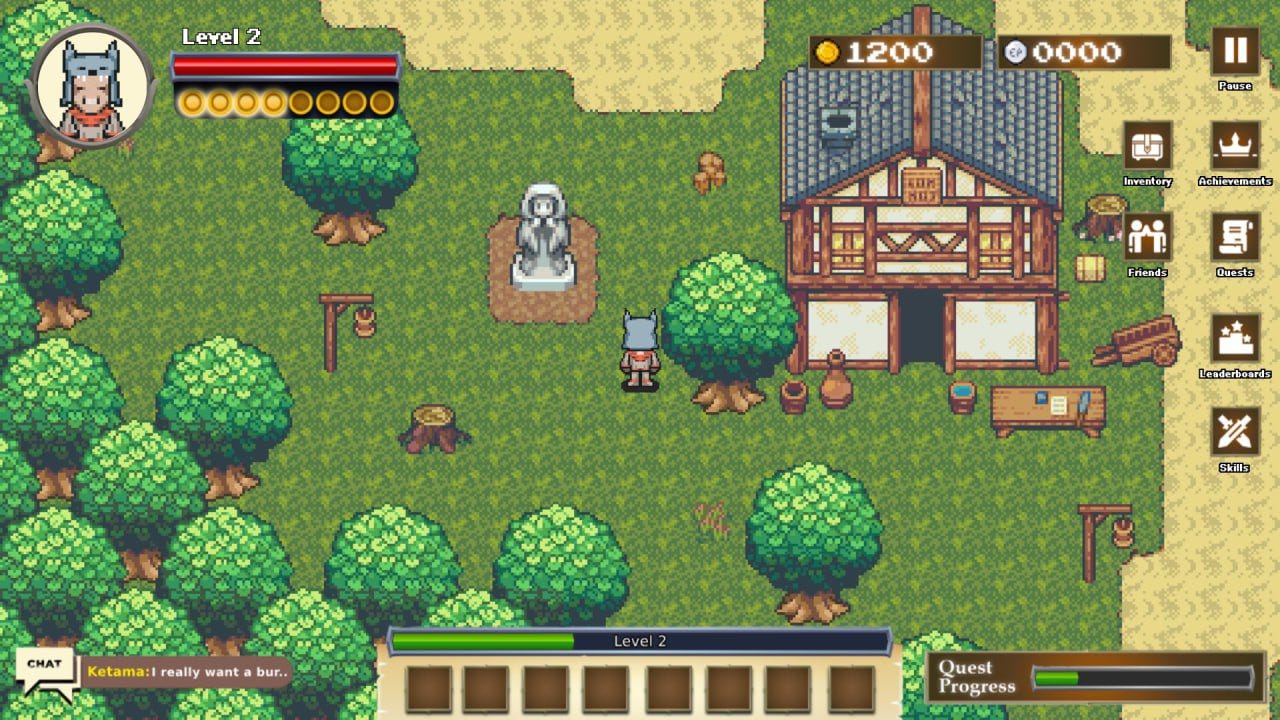
To solve issues of dilution faced by previous play-to-earn games, in-game $ESTOVA earnings are dynamically adjusted and “tied to progression and asset ownership, which limits large-scale farming and rewards dedicated players“. Additionally, they feature a burn mechanism.
The game also features a series of NFTs, as well as the ability for token holders to influence the game’s future development through governance directly.
NFTs
Purple friends (https://x.com/Purple_Frens)

Purple friend is one of the most iconic NFT collections on Monad because, well, they are purple.
There are 1111 unique NFTs in collections, with a few 1-of-1.
Aside from a deep focus on community, they’re also building an Internet Capital Market launchpad that will benefit NFT holders with staking rewards and 20% of the revenue generated.
Chog https://x.com/ChogNFT

Chog is one of the first meme/NFT projects in Monad.
The Chog founder was also among the largest recipients of the Monad airdrop. This will likely fuel speculation about this collection.
In particular, they recently announced the CHOG token, coming as soon as Mainnet goes live.
Skrumpeys (https://x.com/skrumpeys)

Skrumpeys are another OG NFT collection on Monad, based on pixelated art and minting on day 1 of the Monad mainnet.
Their Discord is very active and a good place to get started.
Consumer Applications
LEVR (https://x.com/levr_bet)
Levr is a leveraged sports betting application currently in beta. It is inspired by perp trading and enables users to bet on various sports events, such as NBA, NFL, NCAAB, and MLB, while taking a leveraged position on their bets.
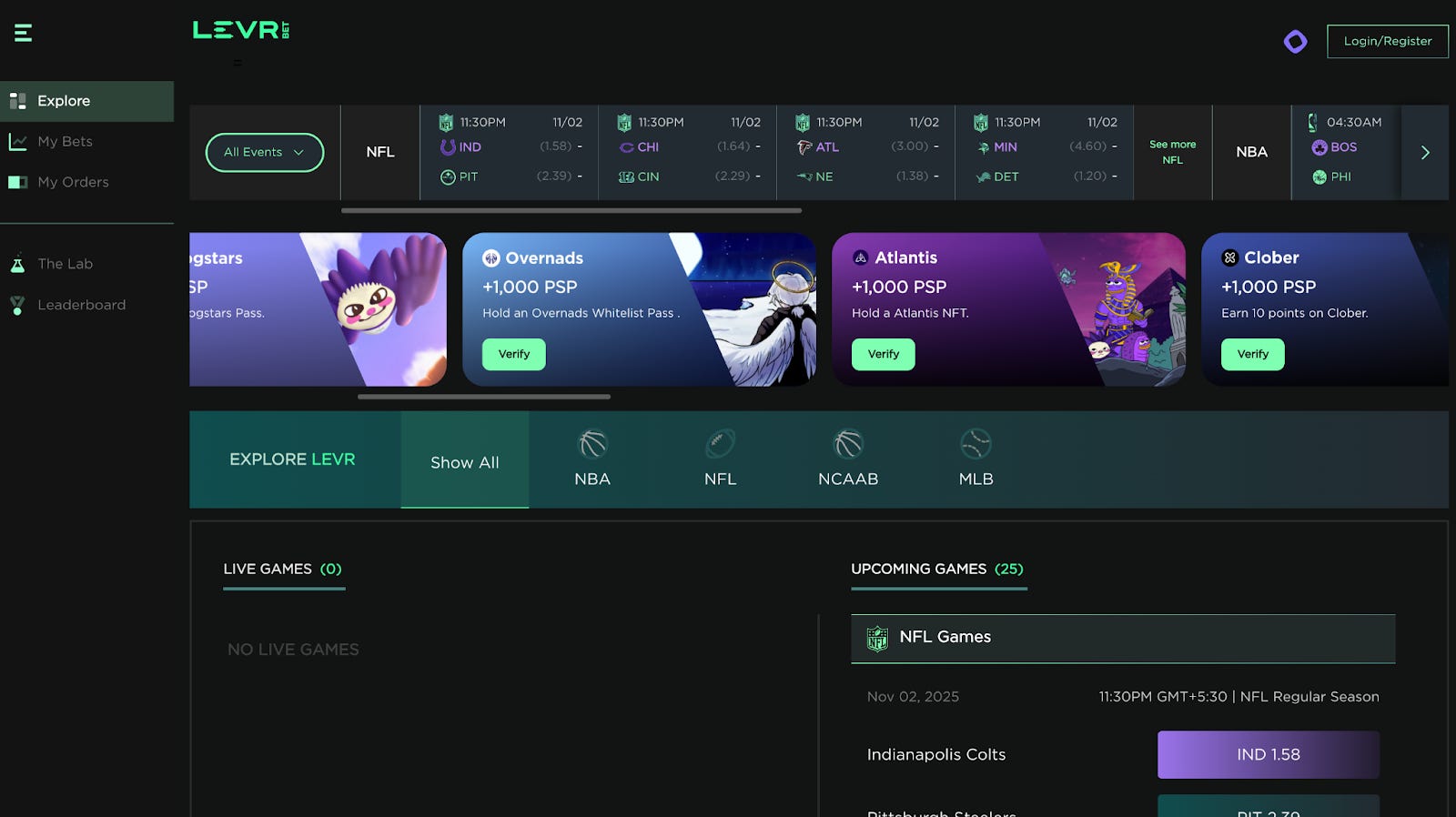
The leverage trading setup is what makes Levr a little different, as most prediction markets don’t offer it due to liquidity and risk management issues. Levr uses a pooled liquidity vault to back these markets. This pool backs multiple markets within the application, manages risk, and distributes rewards.
RareBetSports (https://x.com/RareBetSports)
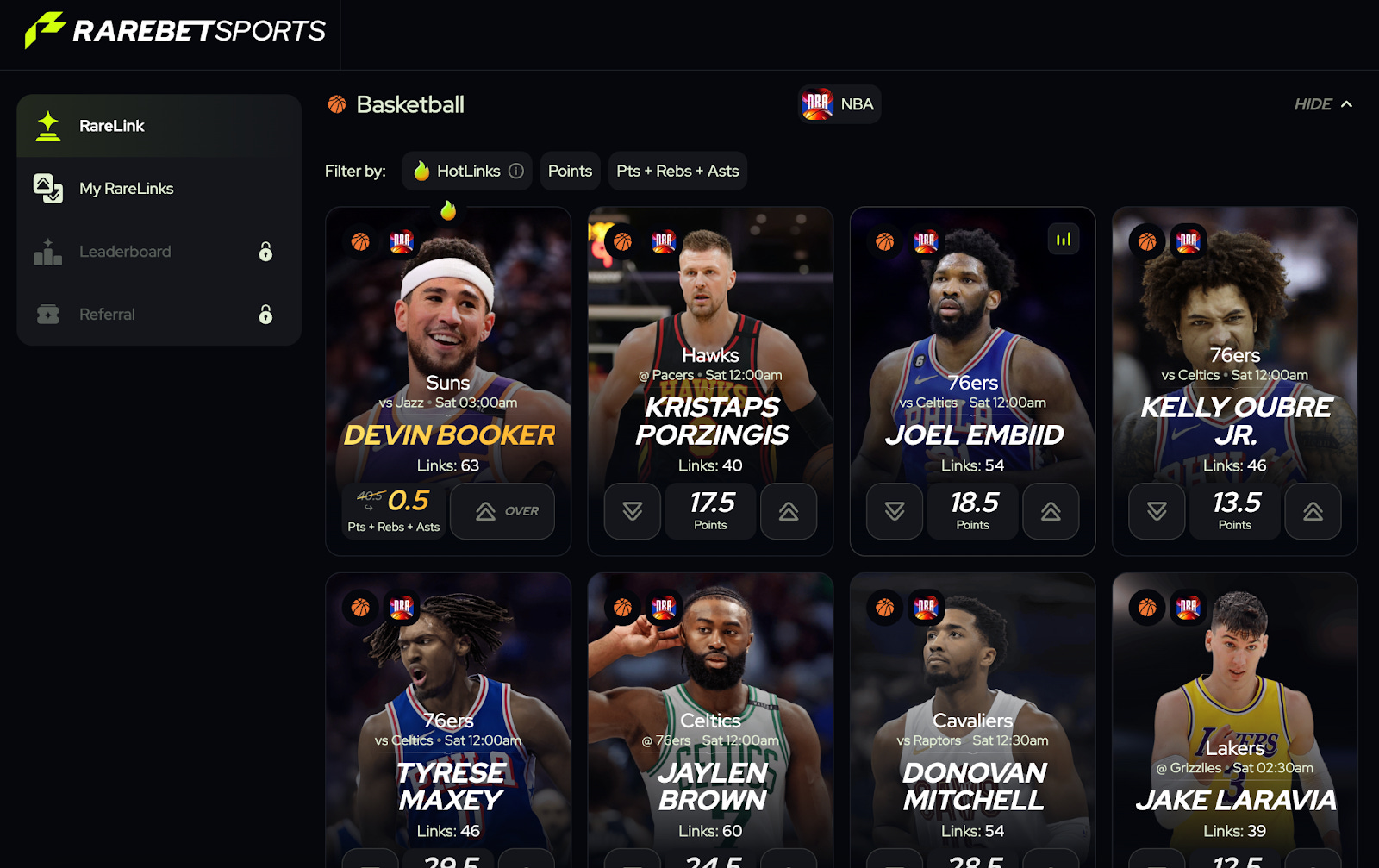
RareBetSports is another sports betting application among the consumer-facing applications on Monad.
Through this application, users can place bets on the performance of players across basketball and baseball, either individually or as a parlay.
Here’s a quick screenshot of their UI:
Kizzy (https://x.com/kizzymobile)
Kizzy is a social media betting app which enables users to bet on how their favourite influencers and celebrities perform on social media platforms. Users can place bets on influencers across various categories, including culture, politics, sports, and more.
Kizzy combines prediction markets and Sports betting by building something at the intersection of both, where users can predict on the performance of the content they consume daily from the influencers.
Fluffle (https://x.com/fluffleworld)
Even Monad has its own Fluffle, a gamified productivity platform that helps turn productivity into rewards.
Each focus session on the app contributes to earning rewards. Through activities such as staying off their phone, users earn coins, hatch dragons, grow their island, and unlock rewards for their actions.
On Fluffle, effort turns into habits, and users can get rewarded for it.
Rumi (https://x.com/RumiLabs_io)
Rumi provide users with rewards to watch content. It’s more of a “watch-to-earn” model. Rumi is a Chrome extension and rewards users just for streaming content.
Behind the scenes, Rumi is building an AI-powered media and advertising company. You can share data with Rumi in three modes:
Data Mode: Just share what you are watching that helps them rank content.
Audio Mode: It allows Rumi to access the audio of the content you are streaming, enabling it to map moments with their corresponding emotions.
Vision Mode: It lets Rumi also watch the content, identifying characters and moments within each piece of content.
As you might have already guessed, with the given three modes, Vision modes earned the maximum rewards, followed by the other modes.
Kinetk (https://x.com/KINETK_AI)
Kinetk brings AI-powered content protection for creators. The platform tracks IP across X, TikTok, and other social media platforms, and whenever a creator’s content appears on unofficial sources, Kinetk alerts the creator.
Fans3 AI (https://x.com/Fans3_AI)
Fans3 is creating emotionally intelligent AI personas that can interact with fans at all times and earn for themselves.
On the platform, users can subscribe to receive credits to access exclusive content from their chosen creator. This subscription also enables them to have unlimited chats with these AI personas and even conduct voice chats.
Cult (https://x.com/cultdottrade)
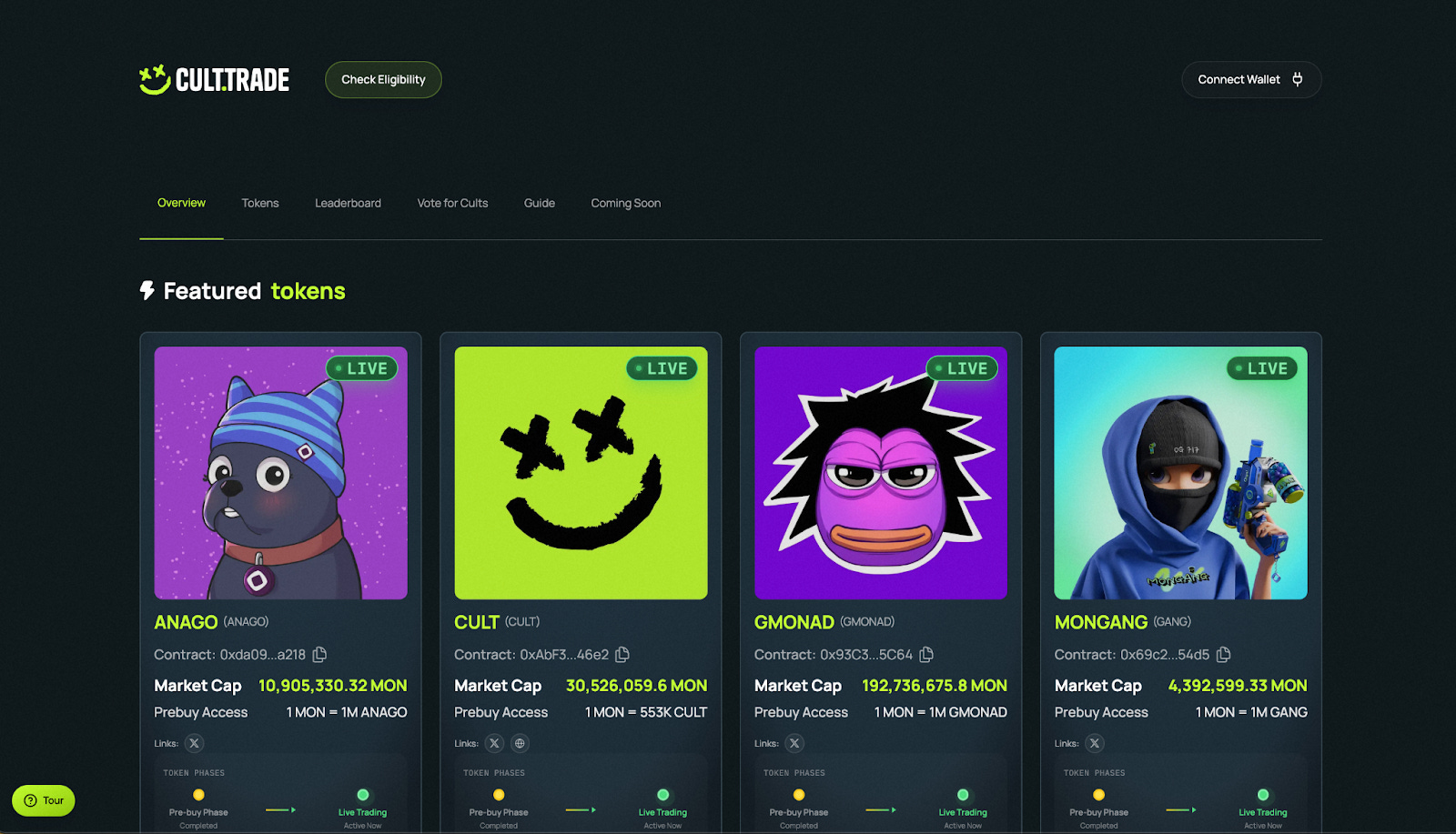
Cult is building a launchpad where users can participate and increase their reputation, earning rewards such as early access to future token drops.
This reputation can be built by frequently trading cult coins and holding them for longer periods. Upon building a good reputation through onchain activities, Cult provides users with “Diamond Hand Status,” which grants them exclusive perks as mentioned above.
A look into the platform interface:
Nad.fun (https://x.com/naddotfun)
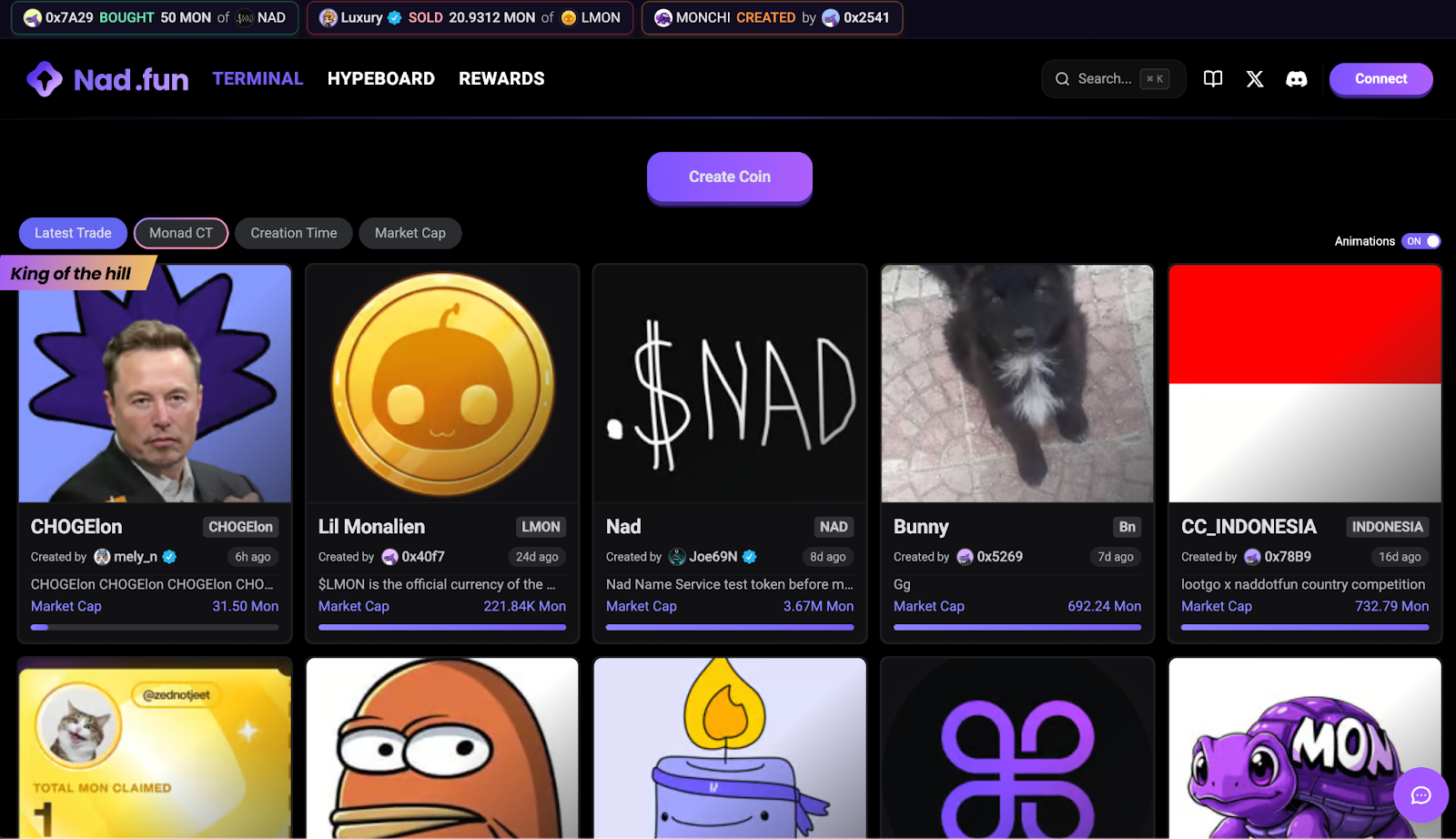
Nad.fun is the pump.fun of Monad, where users can seamlessly launch memecoins based on the current trending topic. It is pretty similar to how the pump platform functions, with a strong focus on revenue distribution among holders.
Just as Pump used Meteora to deploy liquidity, Nad uses Uniswap V3 for the migration once a token’s market cap reaches 432 MON.
Here is a preview of their UI:
AI
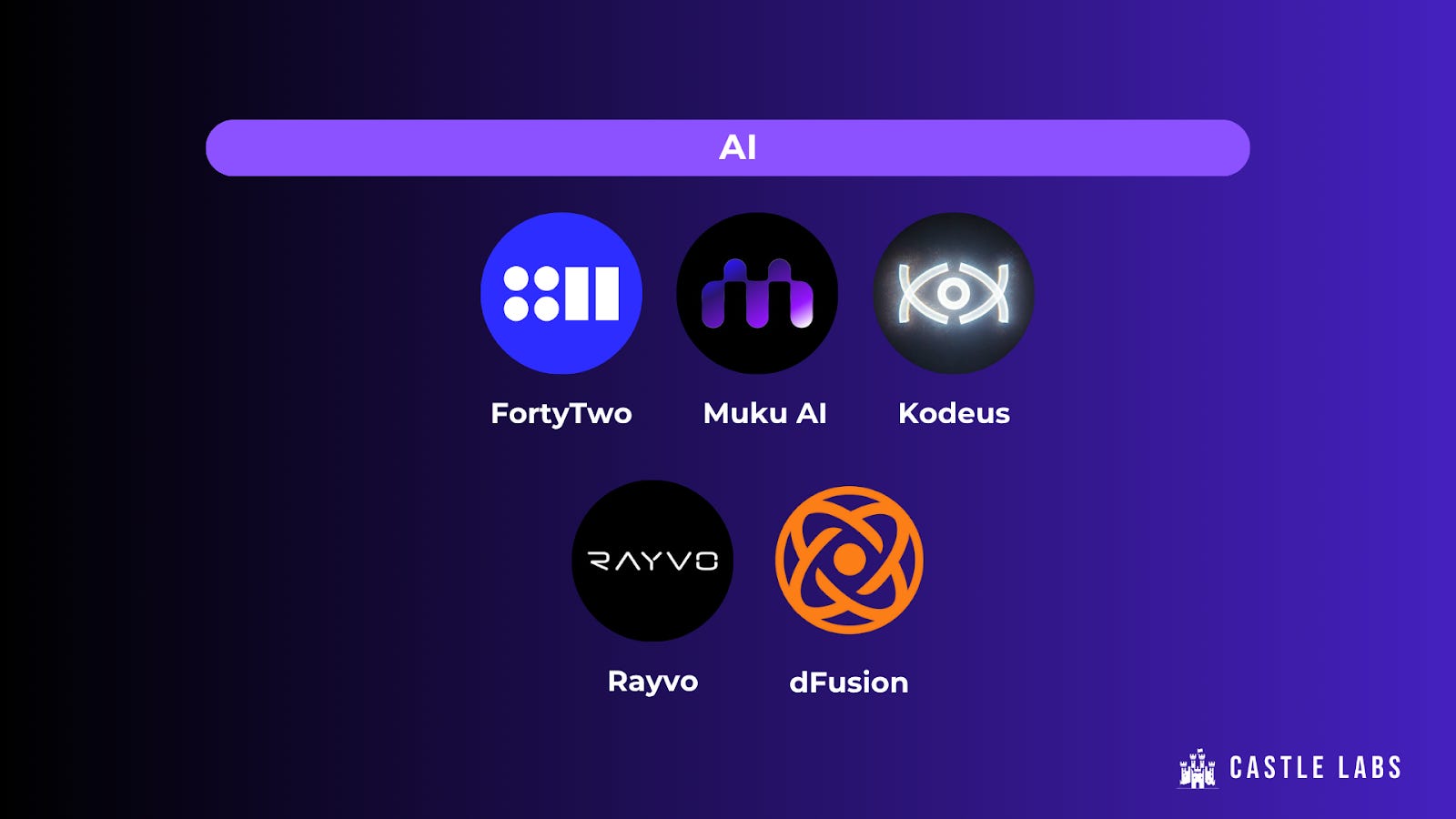
FortyTwo (https://x.com/fortytwo)
FortyTwo is an AI development lab with 10+ years of experience in AI research and development. Their vision is that collective intelligence is truly such only if it emerges from many interconnected models rather than a giant centralised one.
As mentioned in their paper, “Centralised intelligence has produced specialised tools and ambitious ‘God Models’”, each powerful in its own way. Decentralised intelligence, however, is opening new frontiers, most notably through swarm-based systems that scale not by making a single model bigger, but by allowing many models to work together as one.”
The protocol can generate datasets using swarm intelligence and has just released benchmarks showing the competitiveness of its model against a centralised one.
Now it boasts over 500 node operators, a GUI app, and a running network explorer.
Muku AI (https://x.com/Mukusongs)
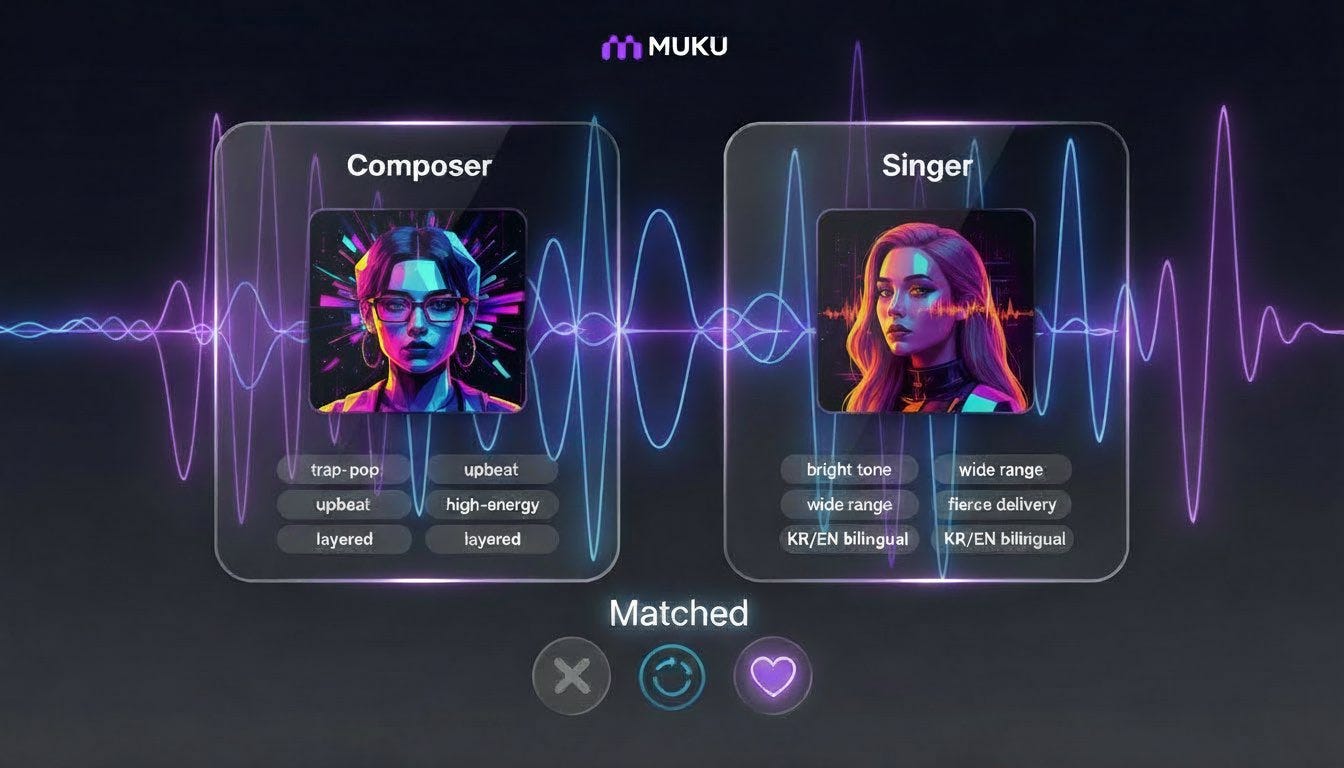
Muku AI is an artificial intelligence focused on the audio sector. It offers a way to match composers and singers with AI support.
Imagine competing with others to become the official voice for a song composed by AI (or other users). The picture below shows a mockup of the UX of their song “matching engine”.
We’ve already seen several experiments with AI music, and even though this niche has yet to achieve mainstream relevance, it’s incredibly interesting in terms of its distribution potential.
Kodeus AI (https://x.com/TheKodeusLabs)
Kodeus provides a framework for the creation of AI agents across multiple use cases:
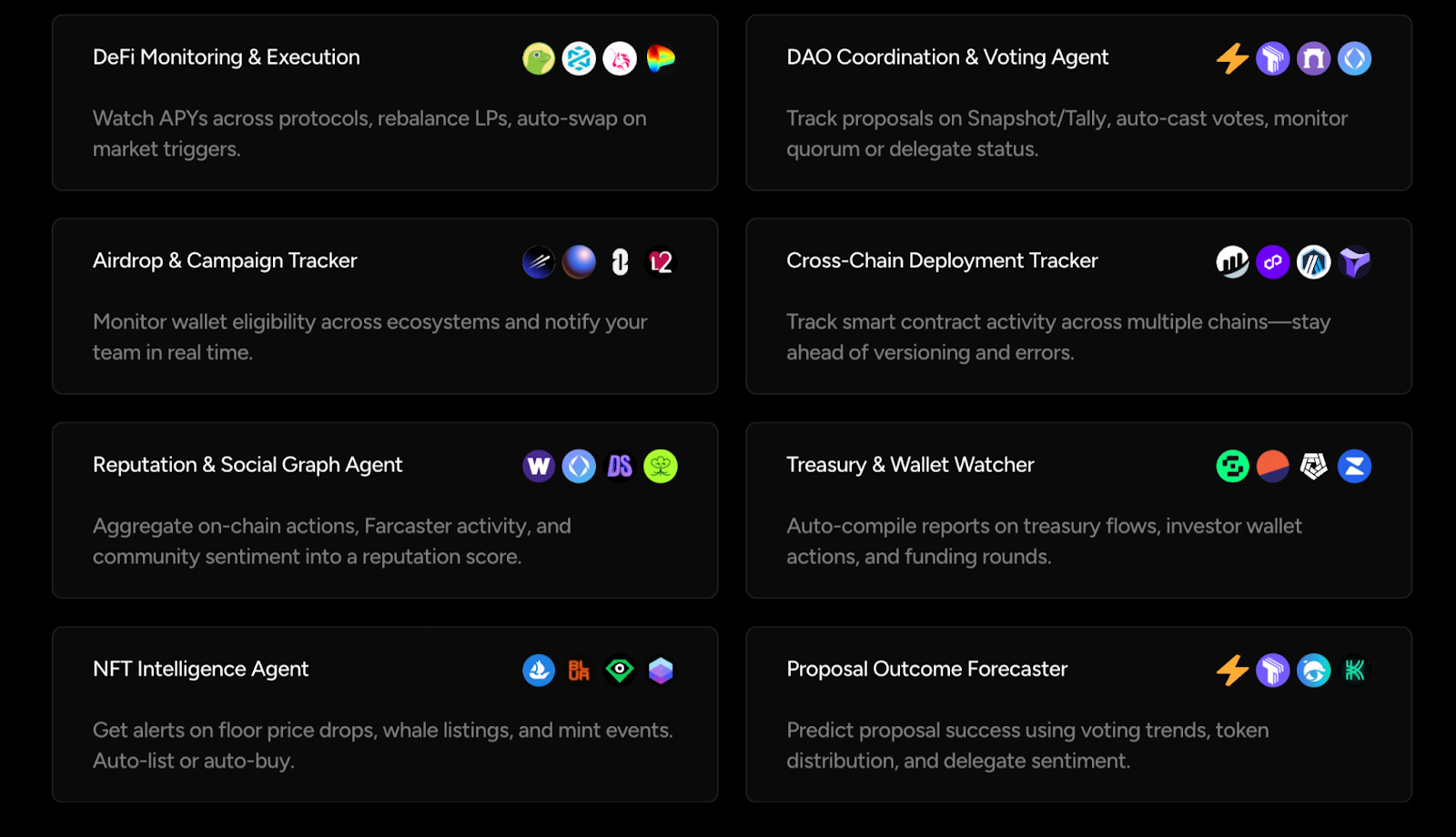
Agents can be developed simply, with plain-language inputs and provided with tools via MCP.
What’s particularly interesting is the possibility of embedding Kodeus agents within third-party apps through the Widget and Deep Link Deployment.
Rayvo (https://x.com/rayvo_xyz)
Rayvo is an AI protocol focused on POV data that helps robots understand and navigate the real world. This type of data is extremely difficult to obtain and provides robotics and AI systems with valuable insights into what it means to be human.
As part of this, Rayvo expects to release the first Web3 smart glasses, which will enable you to power AI agents with your POV data and deploy a voice-first agent directly within the glasses.
Dfusion (https://x.com/dFusionAI)
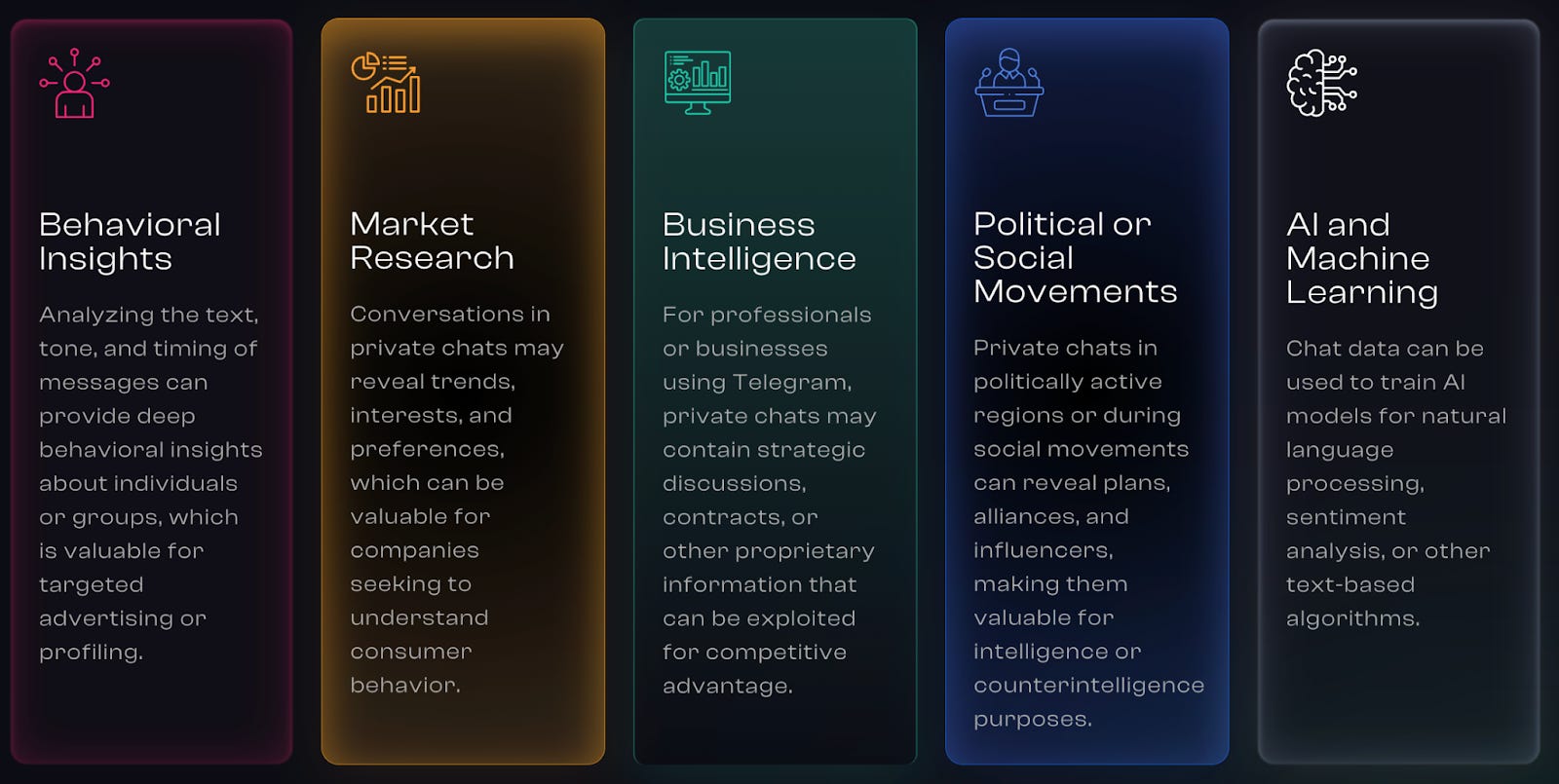
At the core of Dfusion is the “dFusion AI Social Truth Data Liquidity Pool (DLP)”, a decentralised layer of human-generated social data.
Users can choose to grant access to their Telegram chats in exchange for incentives to generate authentic human dialogue for training AI models and tools.
The data is loaded into your browser, encrypted, and pinned to IPFS; the encryption key is encrypted with the DLP’s public key, allowing the DLP to access it. The data is then analysed and scored in a Trusted Execution Environment (TEE)
Aside from this, users can also create their own subnet, setting their own incentives and attracting specific types of data that interest them. This allows the creation of specialised models on very niche aspects.
Closing Thoughts
We hope this report provides a good overview of the projects you can explore and enjoy!
Monad is launching with a fairly developed ecosystem, with many native protocols.
We notice how there are many interesting DeFi applications and consumer applications.
Prediction markets have smashed the door for consumer apps to become mainstream.
What else can we expect from Monad?
The same can be said for gaming: the presence of a strong community element and gamification, coupled with a performance-focused stack, makes Monad fertile ground for testing new gaming applications.
After reading this report, you should be spoiled for choice.
Something else we want to highlight is apps coming out of the Monad Momentum program. These are confirmed to be receiving rewards on Mainnet.
Considering the amount of MON supply reserved for ecosystem incentives, it’s something you might want to keep in mind (iykyk).
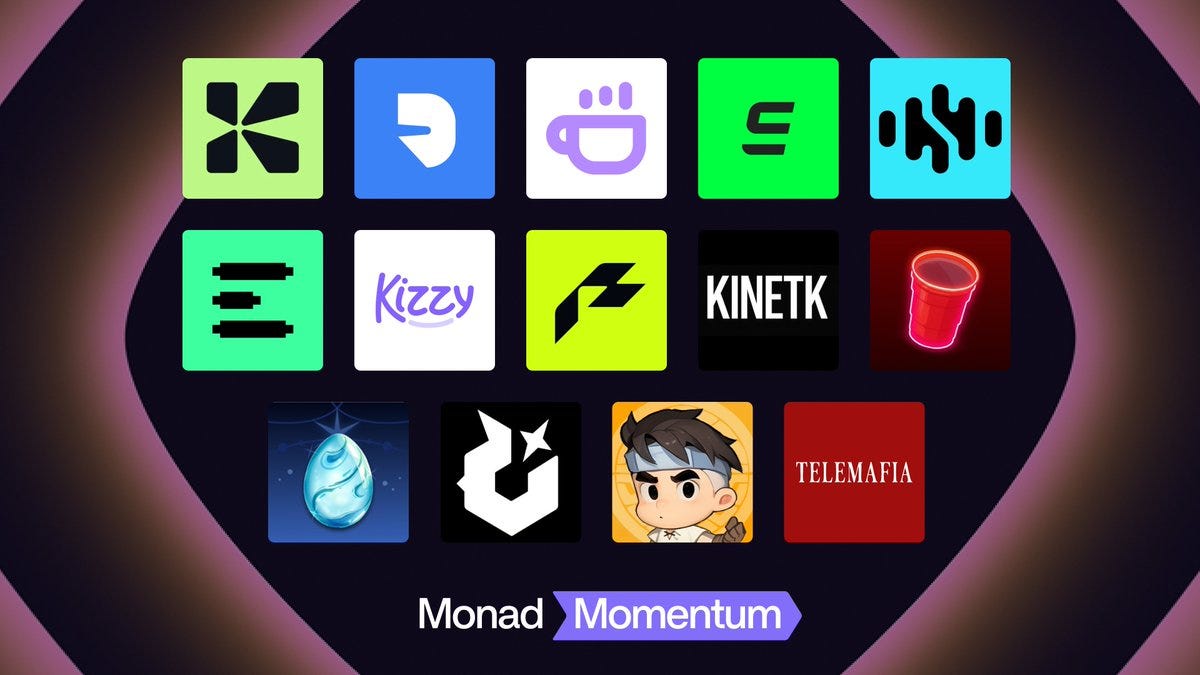
Obviously, due to time limitations, we might have missed protocols which are nonetheless important and interesting.
Anyone you think we should have included?
Let us know in the comments.


Couldn't agree more. This Monad guide is so important for navigating mainnet ecosystem.
Awesome overview, thanks!