


Every week, infrastructure is improving, more institutions are being onboarded along with their assets, and regulators are taking friendlier stances.
Despite this, the lack of positive price action for major assets is hard to ignore, with a Saylor-shaped black cloud over Bitcoin, and the ETH & SOL experiencing extremely low sentiment.
Here’s what we’ll cover in this edition:
EthLabs announced as a non-profit R&D lab to make Ethereum the settlement layer of the global economy
Bank of England reverses its stablecoin restrictions to open up viability to issuers
Mantle leads all L2s in RWA capital deployed as it crosses $90M in DeFi
Ambire goes live with EIP-7730 clear signing in an industry-wide effort
A new era for Ethereum
Anxiety and frustration have been circling the Ethereum camp in recent times, with ETH barely making a new ATH in the last cycle and the token trading at the same price as over 5 years ago, amid exits from the Ethereum Foundation (EF) and a realignment of its mission as an organisation.
We already covered Vitalik’s take on the EF’s purpose in the Chronicle, as they chose longevity over breadth, specialising in censorship resistance, capture resistance, open-source, privacy, and security (CROPS).
This week brought another exit, with Hsiao-Wei Wang, Co-Executive Director of the EF, stepping down. But a number of later announcements have begun to paint the picture that all this re-jigging of personnel and leadership positions did, in fact, have some sort of end goal.
Yesterday, the EF said that “realising Ethereum’s potential takes a coalition of organisations working together in pursuit of a shared vision.” This accompanied the announcement of EthLabs, a non-profit R&D lab for Ethereum and ETH.
So what exactly is EthLabs, who is funding them, and how are they different from the EF?
EthLabs is intent on making Ethereum the settlement layer of the global economy. They liken this to how the internet became the global network we use today.
They aim to work with all ecosystem participants and “turn what they actually need into protocol work, shared standards, infrastructure, and shipped products.” They are primarily funded by Bitmine, Sharplink, and Joe Lubin, with contributions from 50+ others.
From their statement, they believe in:
Credible neutrality (of the network)
ETH as an asset
DeFi
Real adoption
It is critical that this organisation does not overlap with the EF and its mandate, and, to be fair, at first glance, it appears they have aligned on this. The EF is taking a strong CROPS approach, focusing solely on the network’s fundamental resilience and longevity. EthLabs, on the other hand, looks to be tackling exactly what we have been begging the EF to do for years. More support for the onchain financial system, more value back to ETH, more people onchain and benefitting from it.
Now that the segregation of these two entities has been configured, their purposes set, and their funding secured, we need to see real results in the form we have never seen before from an Ethereum-aligned organisation. There is a real risk that this organisation does not differentiate itself meaningfully enough, with the majority of the team coming from the EF or core Ethereum R&D roles. They will say the EF and its mandate were holding them back, but we will need to see it to believe it.
You can read more about the EF’s strategy moving forward from Aerugo here.
GBP stablecoin cleared for growth
The UK has never been a great progressive when it comes to crypto-friendly regulation, but its stablecoin framework, when first published, was particularly restrictive:
£20,000 limit per individual
£10M limit per business
Minimum 40% of backing assets in central bank deposits (non-yielding)
Now, after pressure from the House of Lords committee and the wider crypto industry, the Bank of England (BoE) has U-turned, paving the way for viable stablecoin businesses in the UK.
Under the new rules, users and businesses will face no restrictions, and stablecoin firms (capped at £40B) will be allowed to allocate up to 70% of their reserves to yield-generating short-term U.K. government debt (T-bills) with yields of around 4%. While the issuer can collect this yield, no interest can be paid to users, though activity-based rewards are permitted.
Across the globe, activity-based rewards will become the regulatory standard, as is already the direction of the Clarity Act in the US. What’s yet to be seen is how creative the issuers and their partners can be in using this loophole to their advantage when designing onboarding and retention schemes, such as cashback and loyalty rewards to high-value users.
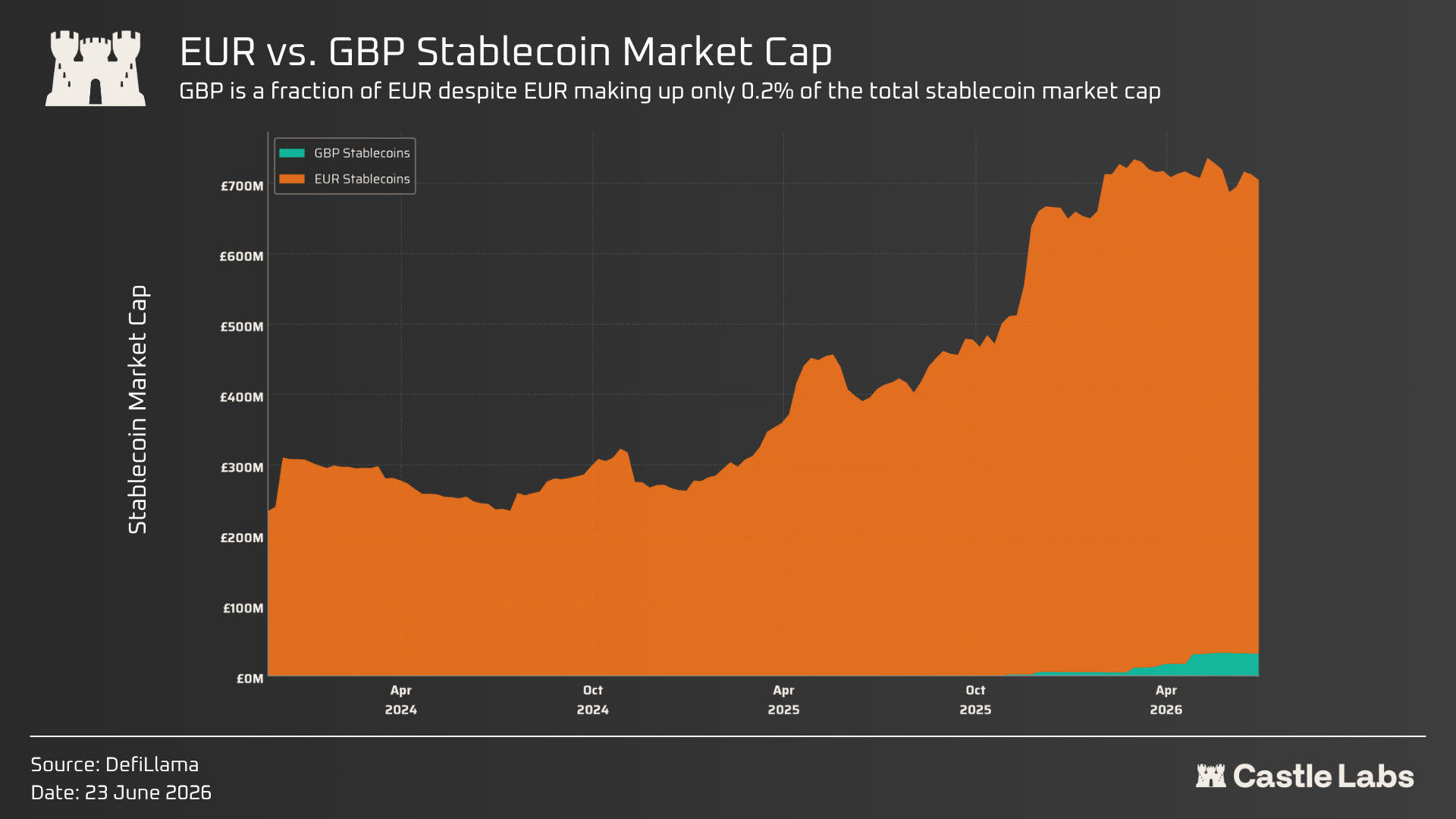
Stablecoins have been dominated by USD since their inception, with EUR becoming small runner-up in recent years, now sitting at $668M market cap (0.2% of total stablecoins). That puts into perspective just how far behind GBP is today, sitting at just $31.8M. The foundation is now being put in place, but does GBP have any chance of catching up to EUR, and will a heavyweight issuer like Circle deploy in the UK?
Non-USD stablecoins are vital for a balanced, global economy moving onchain. These currencies have completely different yield sources, users, and access to jurisdictions that the US does not. Each new non-USD stablecoin is a new opportunity for every business that operates within that currency’s orbit.
Mantle: where RWAs are deployed
RWA growth across the industry has been a major talking point in recent years, now sitting at an order of magnitude higher than it was 2 years ago, but people are starting to wonder: when will this capital actually become productive within the ecosystem, rather than simply residing onchain?
This is what Mantle has been focused on for some time now: ensuring RWAs have the distribution they need, and not simply stopping at tokenisation. As a result of their continued momentum, they are seeing success. Mantle now leads all L2s in RWA capital deployed across DeFi, with over $90M. Not only is this the largest L2 by total, but also by utilisation, with 38% of all RWAs on the chain deployed in DeFi.
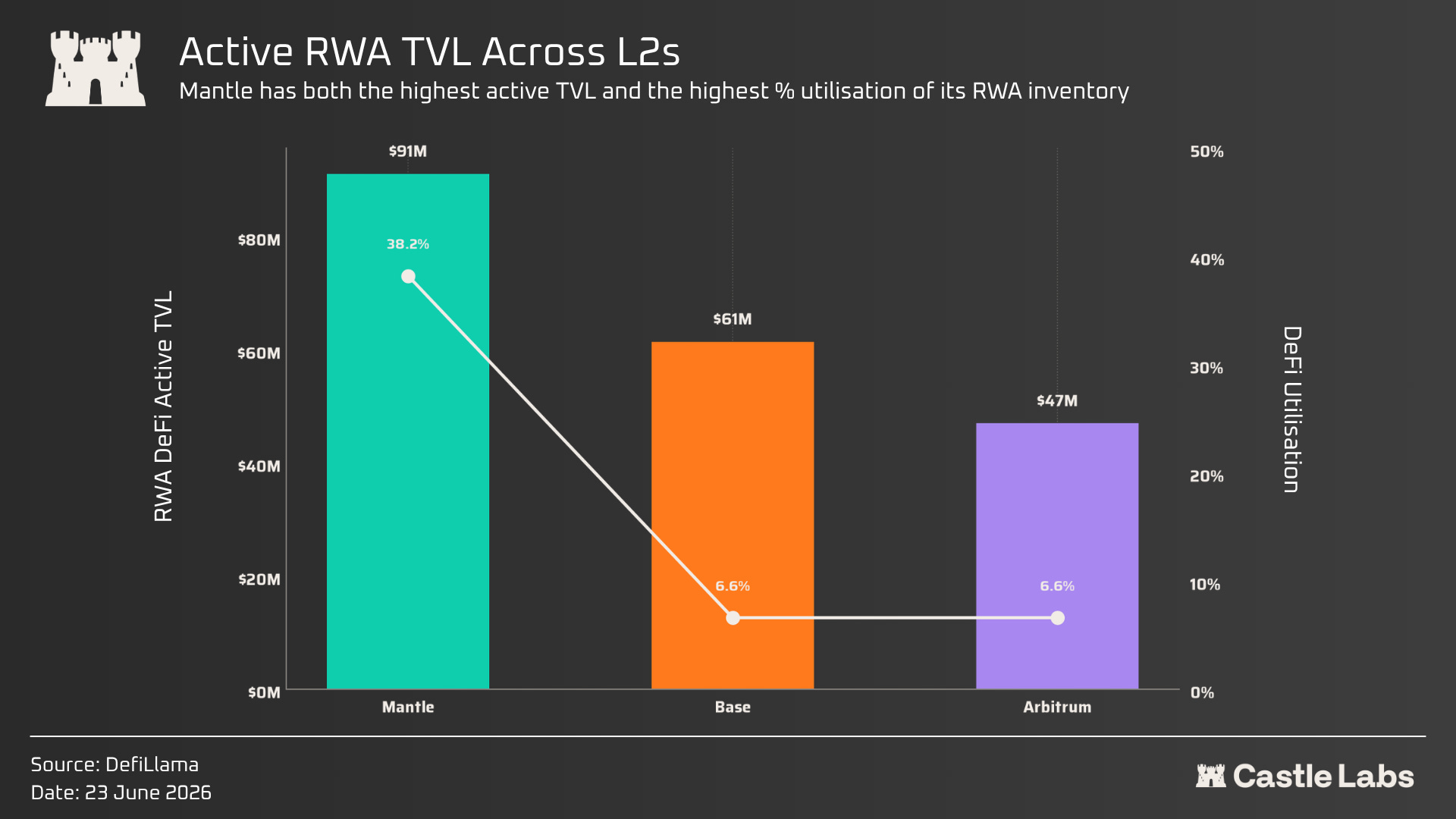
The greatest example of productive RWAs is Syrup USDT, a yield-bearing receipt token for USDT deposited into Maple’s Syrup lending vaults, which accrue interest from overcollateralized lending to institutional borrowers. Syrup USDT is the largest RWA by DeFi active TVL at $736M, with Mantle as the only L2 on which it is supplied, following a partnership last year among Bybit, Mantle, and Aave to bring institutional-grade DeFi liquidity onchain.
For RWAs to really thrive onchain and create a big enough moat vs offchain assets, the capital needs to be productive; not only does it need to move more frictionlessly, but it should also achieve higher capital efficiency through its use as collateral and other composable opportunities. Mantle is positioning itself well in this regard, but we want to see a wider array of RWAs make their way onto Mantle and into their DeFi ecosystem, further diversifying its inventory and solidifying its position as an RWA leader.
Clear signing is live on Ambire
We’ve all been there. Signing a transaction in your wallet with no clue what the raw data staring back at you means. Simply trusting that the smart contract and UI are safe, blind signing a transaction you cannot understand.
Clear signing fixes this by defining how apps describe transaction intent so wallets can show users what they’re actually signing.
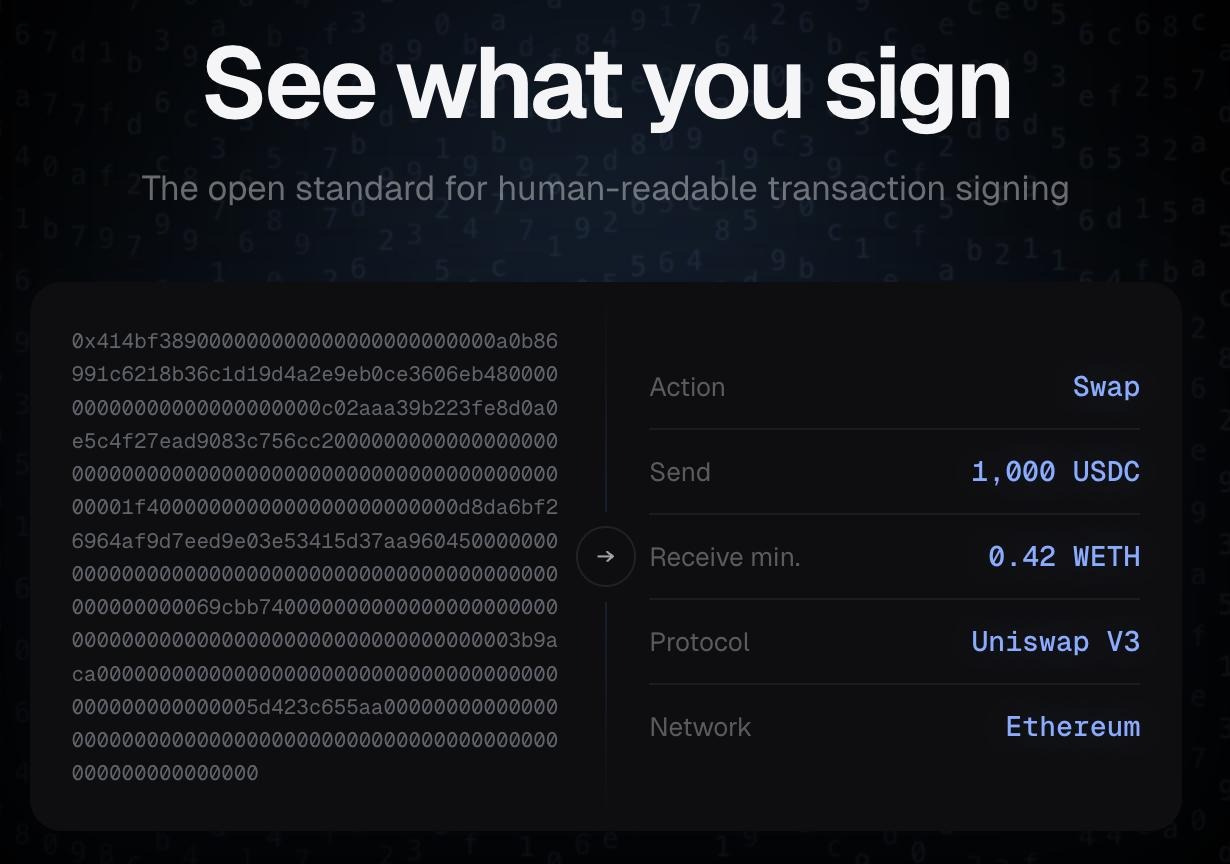
Transactions are complex, and there are millions of different transactions that need to be decoded. Almost every app uses different contracts, but after an industry-wide effort to standardise and publish clear signing metadata, instead of seeing long strings of numbers and letters, you’ll see:
Action type: swap, transfer, LP, token approval, etc.
Which asset and amount are involved
Who are you interacting with
What permission are you granting
Network fees
Until EIP-7730, there was no universal standard for clear signing. This is a huge unlock for wallets, which can focus on shipping a better product for their users instead of re-inventing the same thing as everyone else.
Ambire now supports clear signing with EIP-7730.

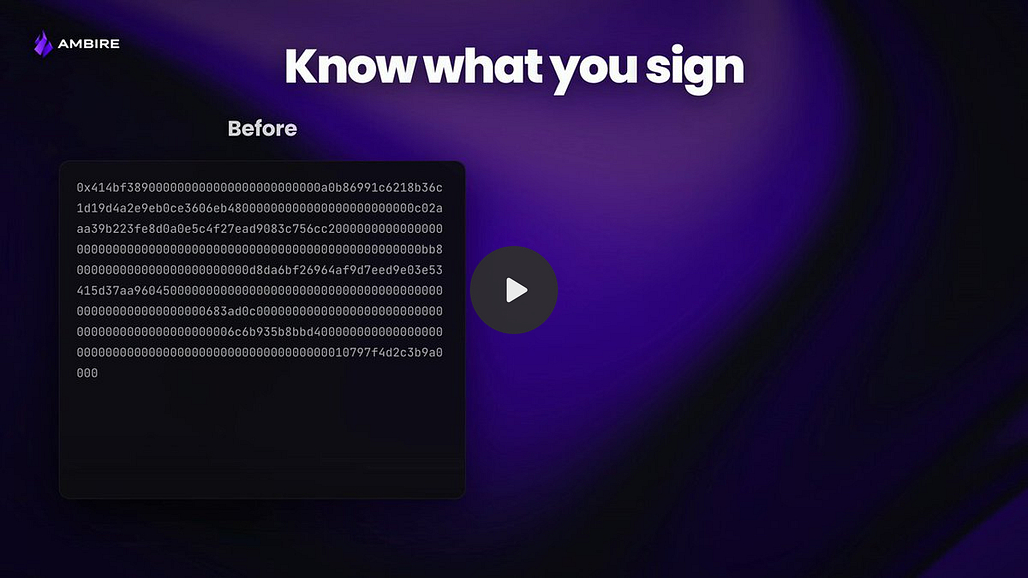
If you’re building apps or wallets in the Ethereum ecosystem, make sure to check it out, use of the standard, and contribute to the verification of apps and contract interactions:

What impact will the joint venture between OKX + NYSE (ICE) have on the growth and adoption of tokenised equities?
What share of payments and remittances from companies like MoneyGram, which just joined Solana as a validator, will run onchain in the near future?
What further growth and adoption will Coinbase and Base see after their flurry of announcements last week across their ‘system upgrade’, now offering tokenised equities, Pre-IPOs, options trading, and more
Don’t forget to join our Telegram channel for the latest updates from Castle and all our research: Link here

In our newsletter, we may discuss projects or tokens in which we hold positions. While we aim to provide informative content, our views are not financial advice. Please conduct your research and consult professionals before making investment decisions. Crypto markets are volatile, and past performance doesn’t guarantee future results. Invest responsibly, and be aware of the risks. Your capital is at risk, and we do not accept liability for any losses.