

Since the beginning of the year, crypto protocols have cumulatively made $7.42 billion in revenue.
Even after generating astonishingly good numbers, most tokens in crypto struggle to reflect their protocols’ success.
Not all revenues are the same.
This is a result of how the industry was built from the beginning, but the situation is evolving, and so are the questions being asked by investors when evaluating any token, focusing on the product’s revenue generation, spending, and tokenholder value accrual, marking a shift from gambling to investing.
At most times, tokenholders are looking to find the answer to the following:
How does the protocol generate revenue, and is that sustainable?
How do they distribute this revenue? And do tokenholders accrue value from it?
How much of the token value goes towards emissions, including inflation, unlocks, and incentives?
Is there any existing equity distribution that grants greater rights than those of the current holders?
Answering these four questions weighs the project in the eyes of any investor, but most projects can’t answer them definitively. Every token has a different value accrual mechanism, and some simply don’t have any. Even when there is a direct value shared with tokenholders, the token might not perform as expected.
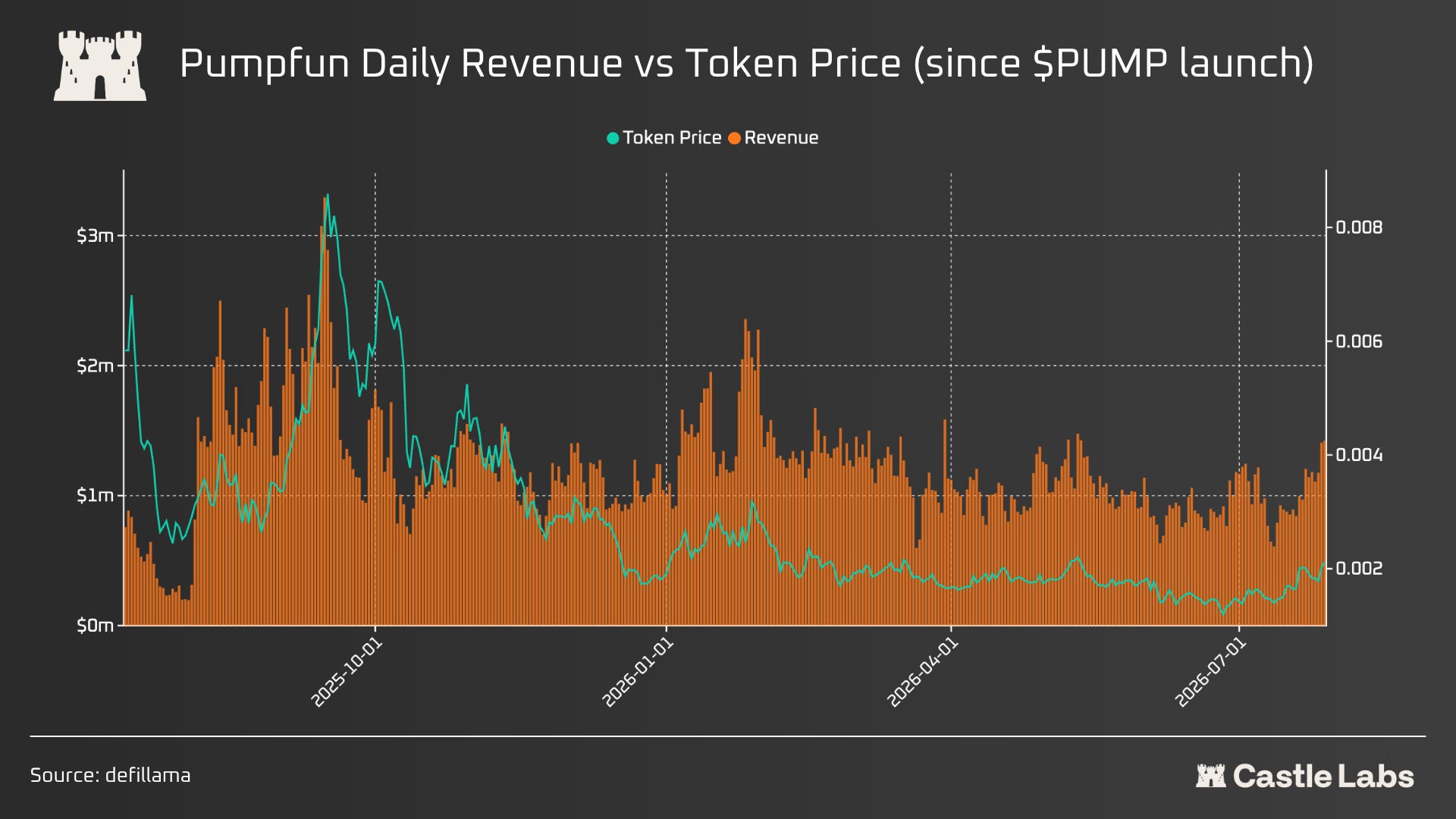
Take the example of PumpFun: since its token launched, the protocol has generated ~$450 million in revenue (1-year timeframe), but the token is in a never-ending downtrend due to a combination of factors, including the token’s unlock velocity, failed airdrop expectations and more.
In this piece, we highlight the different ways top protocols generate and distribute revenue, accounting for emissions and incentives to show the nuances investors should consider when evaluating a protocol or token.

Crypto Revenue Sources and Allocation
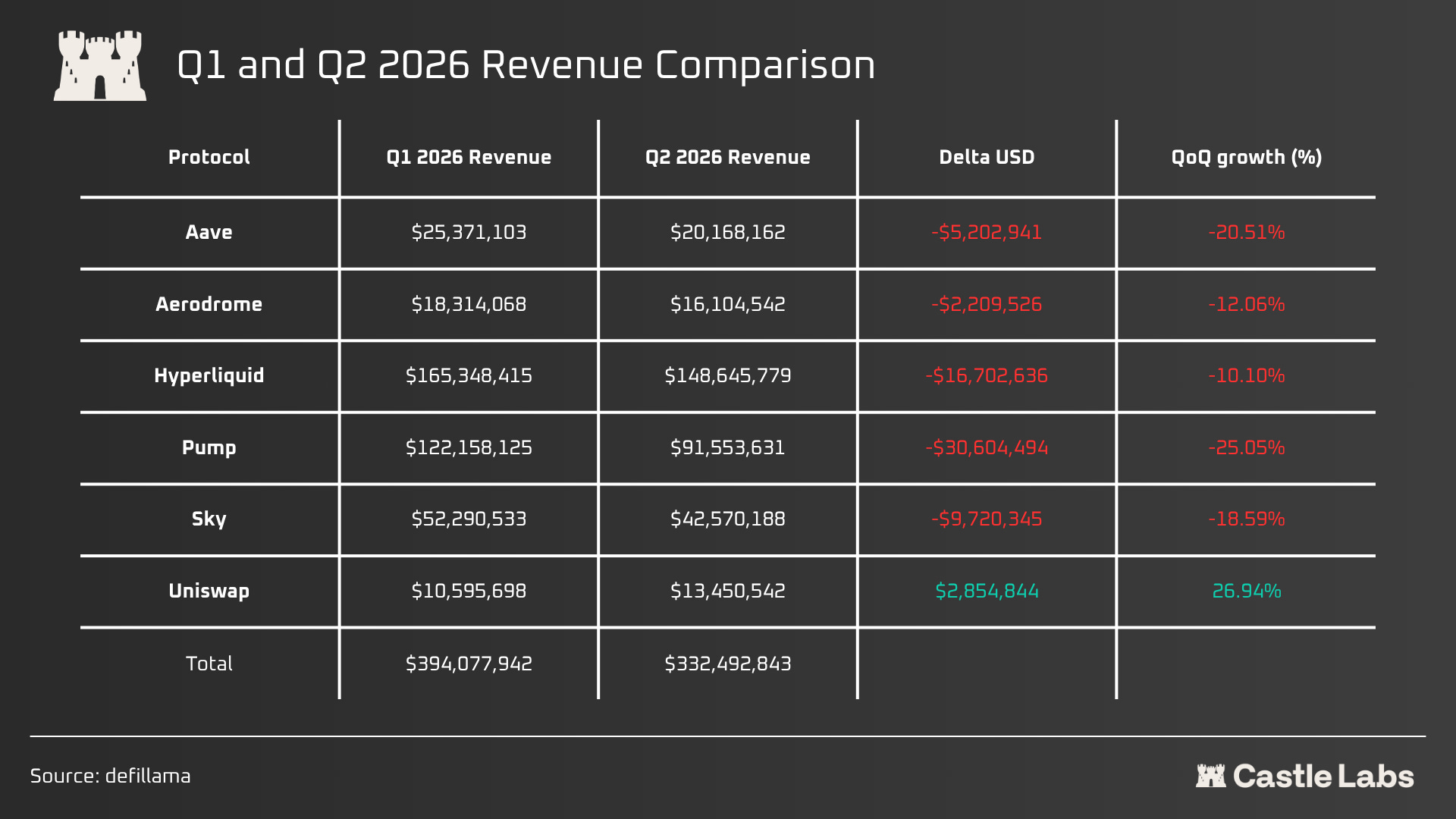
The base question before getting into the argument about value accrual to tokenholders is quantifying the revenue generated by major products and how it is distributed. For this analysis, we consider six protocols (Aave, Aerodrome, Hyperliquid, Pump, Sky, Uniswap), which collectively generated $726 million in revenue during H1 2026.
While higher revenues can be a sign of a sustainable business, seeing them in isolation isn’t enough. For one thing, to account for short-term fluctuations, revenue is better measured across different timeframes to assess its sustainability, so below we also compare Q1 and Q2 2026 revenue and measure the change between them. For most protocols, the delta was negative, reflecting weaker performance in Q2 due to overall market conditions.
Turning to revenue sources, Hyperliquid derives revenue from trading fees on its perp exchange (native + HIP-3), spot markets, ticker auctions, priority fees, and HyperEVM gas fees.
Aerodrome is a Decentralised Exchange (DEX) that generates revenue from fees on swaps and external voting incentives (bribes). Similarly, Uniswap charges fees on swaps contributing to its revenue.
Sky generates revenue from its different products: stability fees are charged on collateralised DAI/USDS loans, liquidation penalties, Peg Stability Module (PSM) trading fees, and interest earned from Direct Deposit Modules (D3Ms) and Real-World Assets (RWAs).
Continuing the list, Aave generates revenue from the interest rate spread (paid by borrowers), flash loans, liquidation penalties, and stability fees from its native GHO stablecoin. Pumpfun generates revenue from trading swap fees and graduation fees charged when newly created tokens reach a target market capitalisation.
Once we have highlighted how these protocols source their revenue, we now compare them with token emissions to explore whether and how they balance. While a protocol tokenholder’s revenue can be high, if token emissions are equally higher, the value of the accrual process reduces. A protocol could have $100 million in revenue, but that number means something completely different if it does so by minting $200 million in tokens a year. In addition, token emissions are also important to highlight because they show how much value is going toward inflation, token unlocks for the team or investors, and, most importantly, incentives.
The revenue allocation of most protocols is usually split between tokenholders and the treasury. The details come down to specific protocol mechanisms and the governance in place for handling this division.
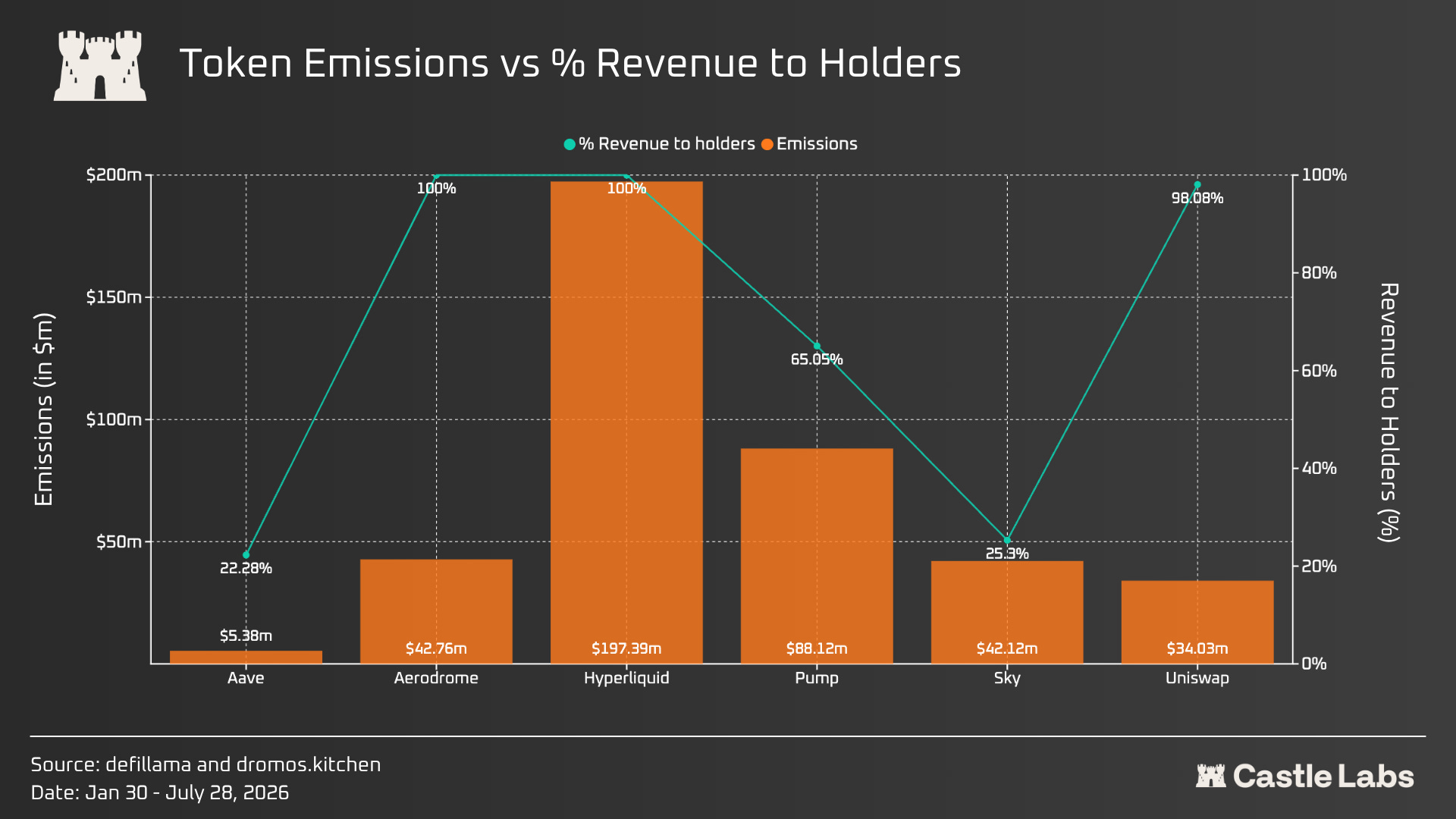
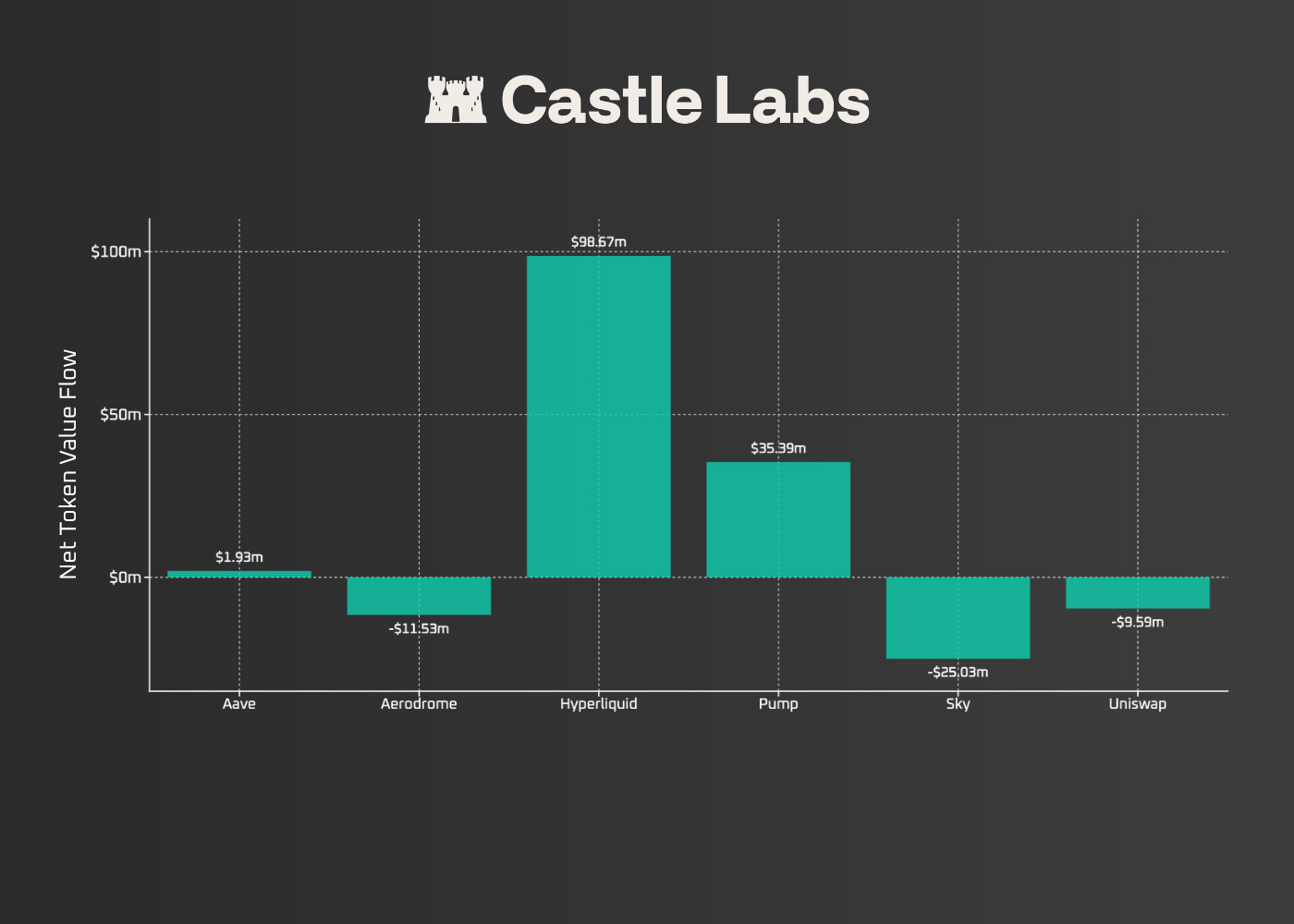
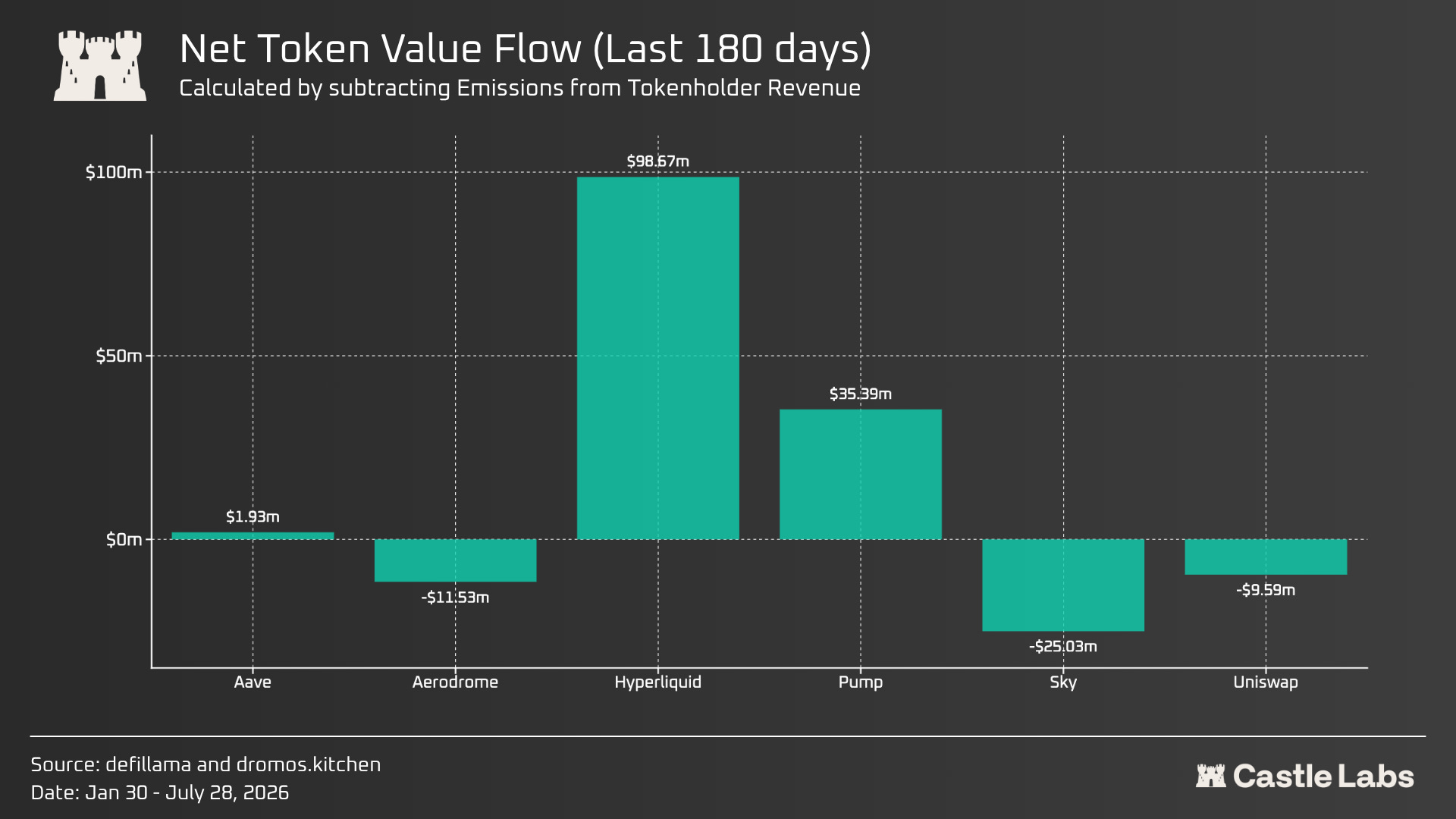
To demonstrate how emissions affect any token, we subtract emissions from Holder Revenue. For Aerodrome, Sky, and Uniswap, the net token flow becomes negative after this, even with revenue allocated to holders, indicating that these protocols are giving away more in emissions to maintain current revenue levels, reducing the net value flow to holders.
Currently, tokenholders accrue value in two major ways: Buybacks and Fee Distribution.
Buybacks
Buybacks are one of the easiest ways for projects to distribute value to tokenholders, albeit indirectly, by using revenue to buy tokens and burn them.
Buybacks usually return tokens to the protocol treasury for future incentives or even staking rewards; for example, Aave directs buyback tokens to the treasury.
To be more aligned, most protocols burn these assets, reducing the supply. Lighter, for example, burnt ~15.6 million LIT tokens it acquired through revenue (6.6% of the supply) worth $36 million.

Hyperliquid performs a buyback and burn programmatically and has, to date, burnt over 47 million HYPE tokens, about 4.72 % of its supply. Uniswap performed a 100 million UNI token burn in December 2025 and has, to date, cumulatively burnt 107 million UNI tokens (~11% of the total supply), sourced from the fees it enabled.
Burning isn’t necessarily present in all tokens and is highly nuanced in the way burns are carried out. In the past, for example, BNB used to run quarterly burns. However, these were often less effective than users expected, as they burned non-circulating tokens and thus had no real impact on market dynamics. Users have to look at the fine print on burns: where are the tokens getting burned from? Circulating supply or not?
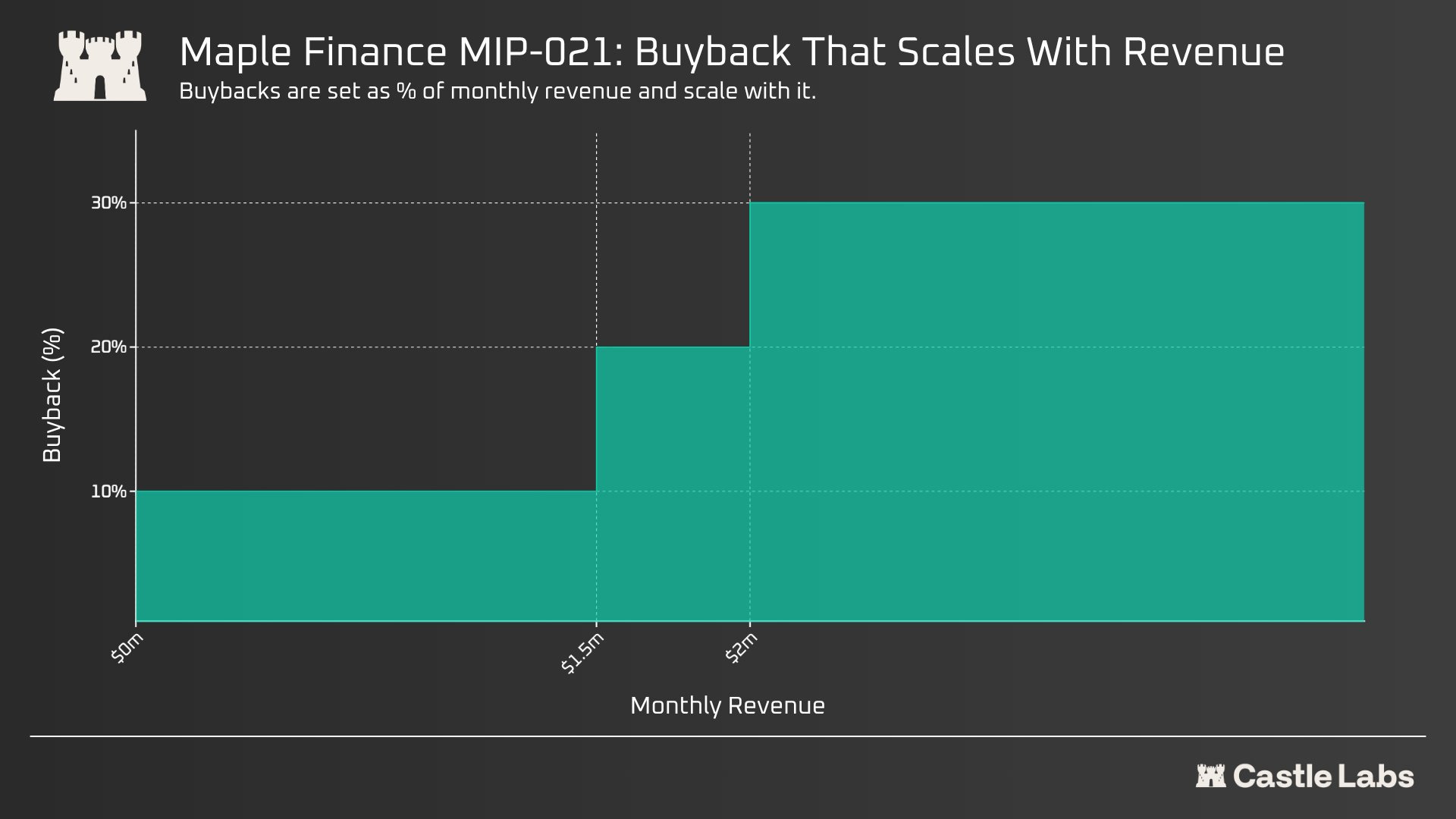
Every project performs buybacks differently. Maple Finance holders recently voted for a buyback program that scales with revenue and increasingly allocates more to the tokenholders as revenue grows. This was an update to their MIP-019, which previously set aside 25% of revenue for buybacks. At the given H1 2026 average revenue of $1.15 million, the buyback would be scaled down to 10%, which, as a holder, might not be the best news, but it passed with 99.97% of votes “for”.
Additionally, tokenholders can choose to stake their tokens with the protocol and earn staking yield from the treasury. After its recent tokenomics update, Lighter is targeting a staking yield of 6%, which, at the current staking level of 125 million tokens, would distribute 7.5 million LIT tokens yearly.
Similarly, over 430 million HYPE are staked, earning yield from the future emissions reserve at an estimated 2.1%.
Buybacks and burns alone won’t save a project from down-only tokenomics or declining revenues, and should be considered within a broader framework across the buy and sell sides of every single protocol. However, they can be leveraged to drive ecosystem growth and bootstrap liquidity while tapering slowly over time, leaving time for organic growth. Burns have a similar mechanism where they can use platform activity to counter inflationary tokenomics.
Fee Distribution
Other protocols, such as Aerodrome and Curve Finance, distribute fees directly using a ve-tokenomics (Ve) model. In this model, holders stake their tokens and convert them into vote-escrowed tokens (e.g., veAERO or veCRV).
It creates economic value for holders through different mechanisms:
Protocol Trading Fees: These protocols route 50-100% of the fees to ve token holders.
Boosting Yield: Holding these tokens also increases yield for Liquidity Providers (LPs) in the pools on these exchanges.
Bribes: Protocols pay cash incentives to ve holder in exchange for their governance votes to steer future rewards towards their specific liquidity pools.
Ve protocols are, in fact, characterised by an inherent design that drives strong emissions, which partially explains their high fee distribution growth through inflation.
Using these methods, these protocols have so far generated over $2.75 billion in tokenholder revenue, primarily driven by Hyperliquid and Uniswap (due to a 100m UNI burn in December 2025).
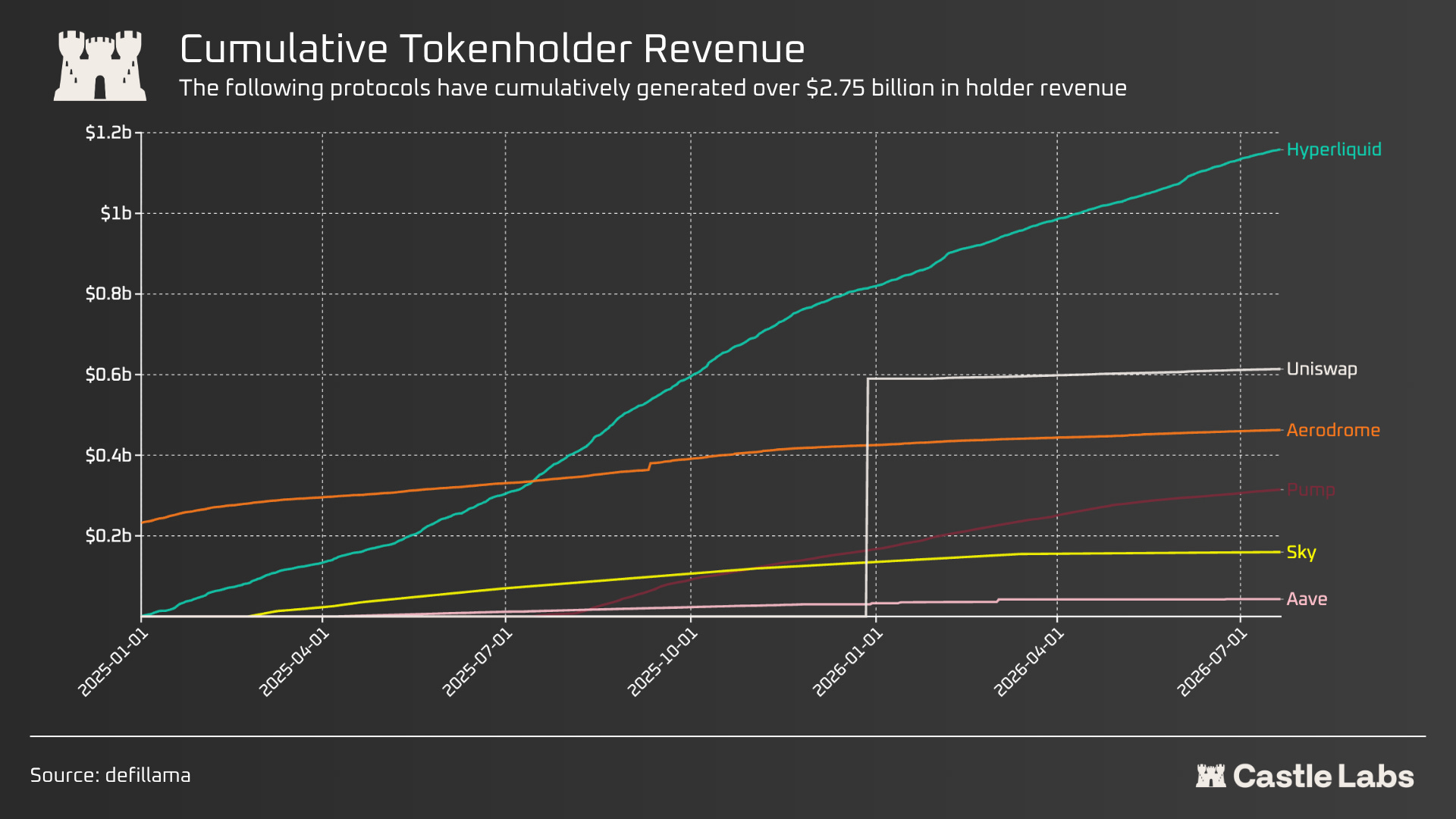
But as we mentioned, value accrual alone is not sufficient; emissions need to be balanced as well.
In the next section, we explore additional reasons beyond tokenholder revenue and emissions that can stunt a token’s growth.
Beauty of a Token
Over time, crypto products have grown and generated significant revenue, but revenue doesn’t necessarily mean the token will perform better.
Most of the tokens from revenue-generating products struggle due to the combination of the following reasons:
The revenue doesn’t flow to the token: Even when a protocol generates meaningful revenue, that value often sits with the treasury rather than reaching tokenholders. The way buybacks are used is important. Treasury retention is discretionary and depends on the protocol. Since there is no contractual obligation, protocols can pause, resize, or eliminate the buyback at any time. Though there is governance behind these decisions, most of the voting power is controlled by the project team.
There is an equity-token split that makes tokenholders secondary citizens: an increasing share of companies now operate a dual equity-and-token structure. One prime example of such a token is XRP. Ripple Labs stock has been performing well since 2025, up 105%, while the XRP token is down 45% over the same period. They issue both tokens and equity, but since tokenholders have no specific rights to the company’s revenue, there is no value accrual. In contrast, equity holders receive this value and do well.
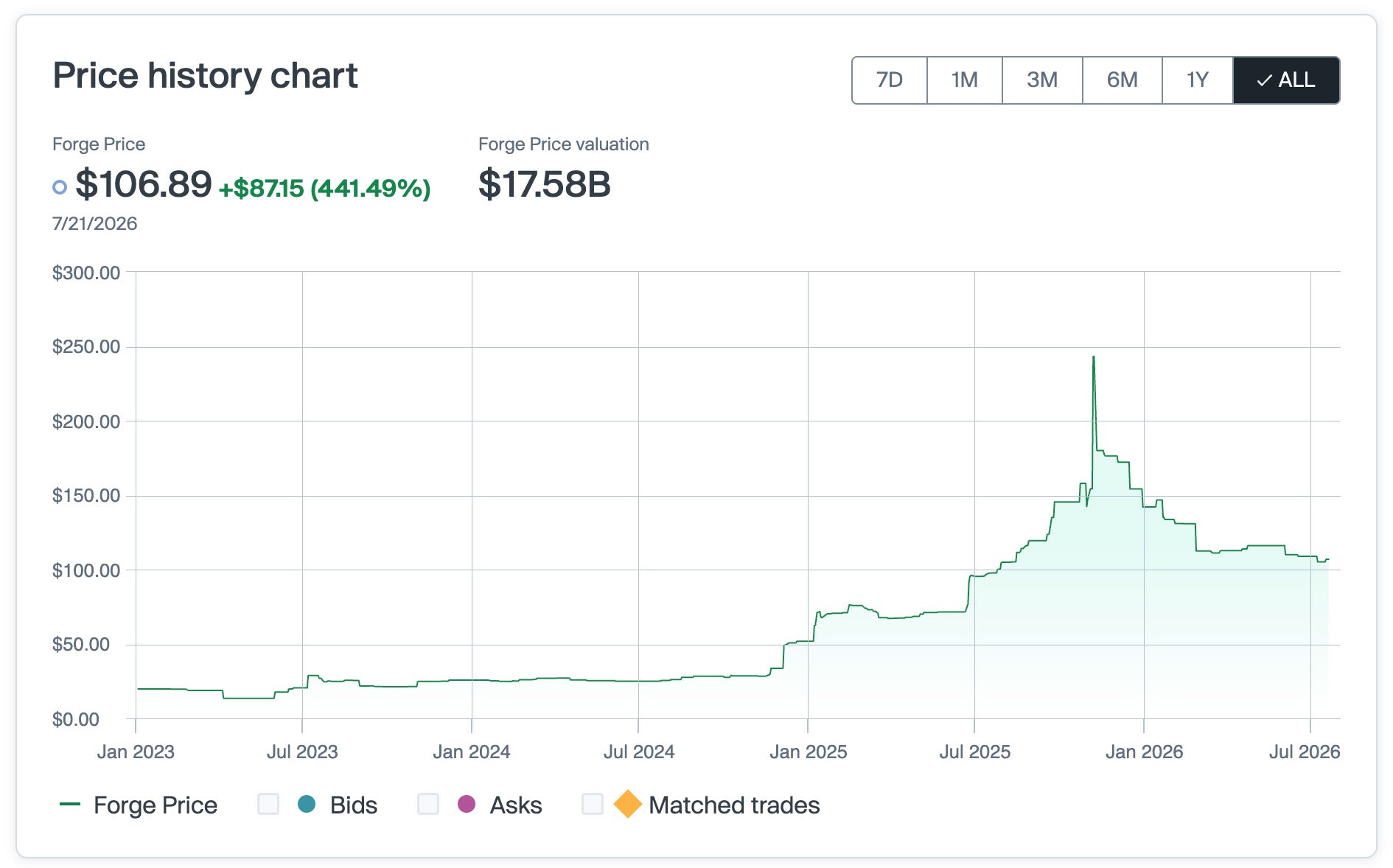
Higher unlock velocity increases expected sell pressure: Even when revenue sharing exists, a higher-rate supply unlock schedule can push the token down, as explained above in our discussion of token emissions. Another aspect that adds to this is the token’s low float and high FDV nature, because a huge amount of supply still needs to be unlocked and absorbed by the market, which could effectively reduce the P/S ratio of the protocol, making it look “cheap”, but in reality the circulating supply shock is expected in the future to become part of emissions.
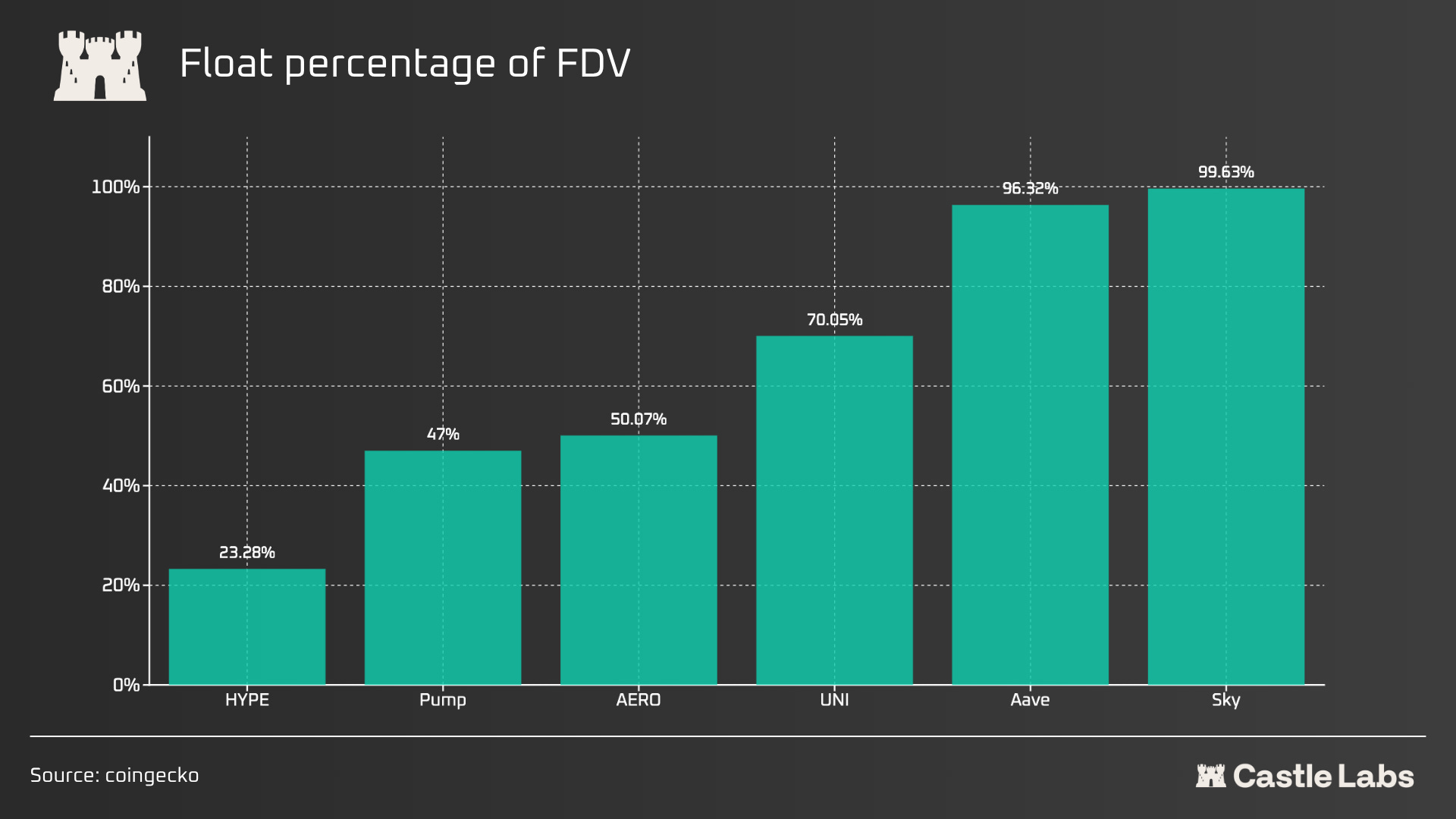
Combining these factors reflects the token’s true nature and explains price action in most cases, though additional factors may affect its performance.
The PUMP token is down 60% since its launch, even as the project has completed over $315 million in buybacks. On the other hand, HYPE is up 1,400% since launch and has returned $1.2 billion to shareholders through buybacks. Both have consistent buybacks, but the PUMP price is unsatisfying due to the team’s lack of communication, the lack of an airdrop, rapid unlocks, and market selling of tokens.
AAVE token has been struggling since the start of the year, performing $45 million in buybacks since the buyback program started in April 2025 (currently paused due to the Kelp DAO incident) due to multiple factors, including the DAO service providers like BGD Labs and ACI leaving, and the Kelp DAO incident’s impact on Aave and increasing institutional competition from Morpho.
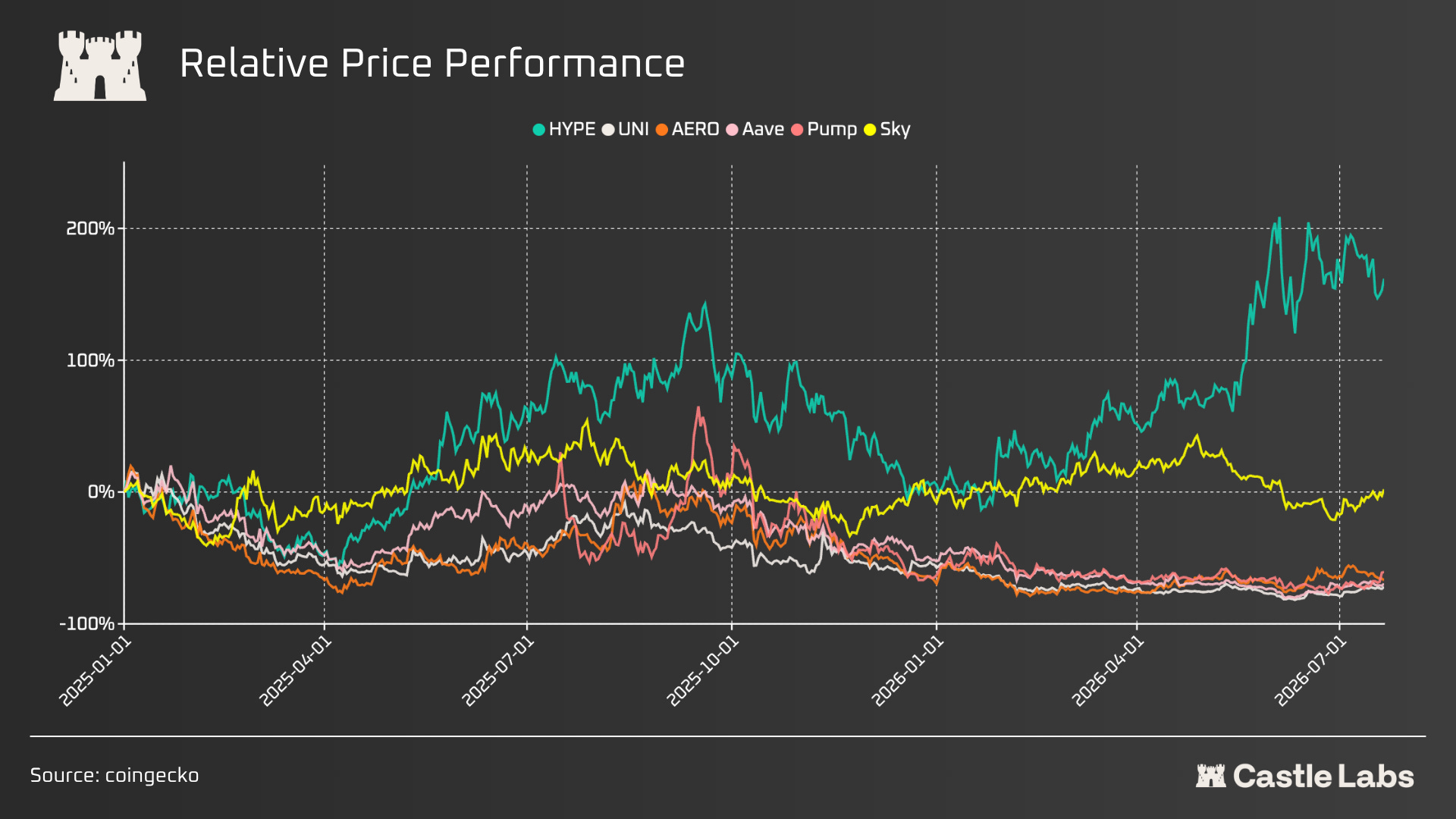
In the case of Aave, they also lost over $23 million performing these buybacks as the asset price declined. Their average buy price of AAVE was $182, while it currently trades around $90, suggesting that buybacks might not be the best path.
However, buybacks remain one of the most aligned solutions for a token to accrue value because they’re trackable onchain and the protocol has to buy the asset from the market, creating buy pressure funded by revenue. Thus, it creates a direct reinforcing link between growing protocol success (more revenue) and improved, more deflationary tokenomics with lower inflation. For crypto holders, this might be the most optimised way to ensure alignment between the protocol and the token. Still, as seen with Aave, they are at a 50% loss on their purchases, eroding the value they generated through the project’s success.
On the surface, a dividend can seem like a better option, as users could earn stablecoins tied to the tokens they hold and be free to do whatever they want with them. However, unlike buybacks, this has no direct impact on the token price, making the decision between the two a little difficult and highly context-dependent. If a protocol distributes fees, then its token might become useless (unless it has other values or utility). A counterargument is that since dividends are present, more people would want to invest in a given token.
As of today, most projects are conducting buybacks, indicating they see more value in them.
Closing Thoughts
Multiple protocols are earning good revenue, but not all of them accrue value to the token in the same way. Even if they do, it doesn’t necessarily lead to the asset’s price appreciation because there is often enough sell pressure from vested tokens held by insiders, negative news, incentives, the project’s overall sentiment, and the competitive landscape.
Looking at each of these different nuances individually tells a little story. Instead, investors should look at a broader analysis that includes how the protocol generates revenue, how it distributes it, and how it balances that with eventual emissions and incentives.
The first step for any protocol should be to become a successful business and make revenue. Then, it should ensure that it accrues to tokenholders in one way or another, whether through buybacks, dividends, or automated fee distribution.
In the case of Hyperliquid, we witnessed how protocols with a strong token and value-accrual process excel when alignment is embedded from genesis.
It distributed most of its revenue to its holders, with other projects like Aerodrome and Uniswap following suit.
Protocols are increasingly realising that a good token has good distribution, so we expect more alignment between protocols and users, and tokenholders to win more.
written by @Noveleader
Every week for the last 3 years, we have shared our research for free, directly in your email. Not a subscriber yet? Let’s fix it:
https://research.castlelabs.io/subscribe
PLUS, don’t forget to join our Telegram channel for the latest updates from Castle and all our research: Link here
Great piece as always